University of Vermont




Programs and prices, tuition fees in University of Vermont


Pathway
- Age of students: from 17 years old.
- Studying period: September–June.
- Duration of the program: from 1 semester to 1 year.
This format is designed to help students adapt to a new educational environment, which involves intensive study of a selected set of academic subjects and English during the 1-3 semesters. After completing the program, participants can continue their studies as full-fledged undergraduate students by enrolling in the second year of their field of interest.
Bachelor's Degree Program
- Age of students — from 18 years old,
- The studying period is four years.
UVM offers more than 100 basic and additional bachelor's degrees, allowing you to create a personalized curriculum and gain a wider range of professional knowledge and skills.
Some of the sought-after programs are:
- Agroecology, landscape design,
- Animal research,
- Art education,
- Art History,
- Biomedical and clinical sciences,
- Business Administration,
- Chinese language,
- Civil engineering,
- Communication sciences, speech disorders,
- Public entrepreneurship,
- Computer Science,
- Computer science, information systems,
- Pre-school education,
- Electrical engineering,
- Management of engineering projects.
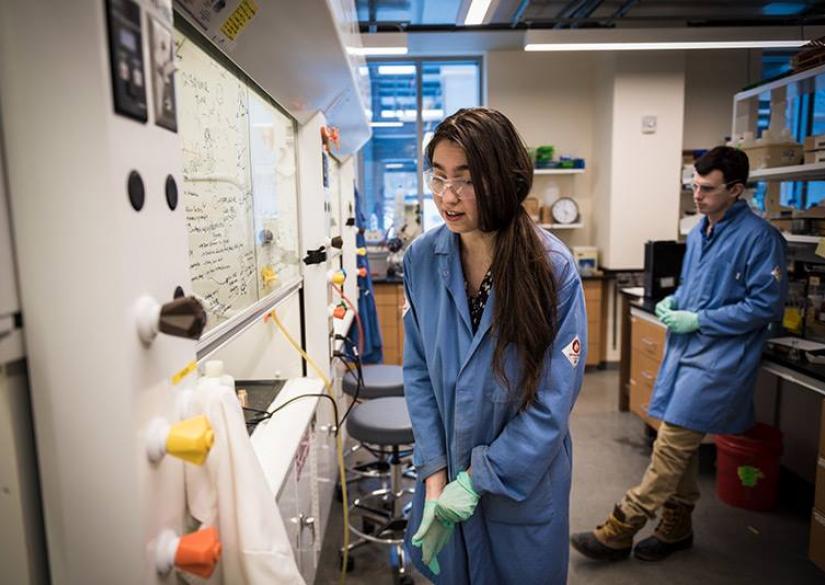
The studying lasts for four academic years and stipulates lectures, research and project activities, internships in specialized laboratories.
Upon completing the program, the student continues his academic career in a master's degree or gets a job in his specialty.
Pre-masters
- Age: from 20 years
- Dates: September-June
- Duration of the program: from 1 semester to 1 year.
The studying program is designed for admission to the master's degree. The course stipulates academic preparation in the subjects of the chosen direction and the study of English if necessary.
Master's
- Age of students — from 21 years old,
- The studying period is one to two years.
The University offers several dozen programs leading to obtaining high-quality professional skills. Some of the popular directions are:
- Biological sciences: animals,
- Accounting,
- Biomedical Engineering,
- Biology,
- Biostatistics,
- Chemistry,
- Civil and environmental construction,
- Communication Sciences,
- Disorders,
- Community development,
- Applied Economics,
- Computer science,
- Teaching methods, curriculum,
- Consulting services,
- Dietetics,
- Electrical engineering,
- English language.
The majority of the students' curriculum is occupied by project work and research, with industrial practice becoming a mandatory aspect. To obtain a Master of Science degree, students need to write an individual thesis and pass exams, after which they either continue their educational path in doctoral studies or occupy senior positions.
Doctoral Programs
- Age of students — from 23 years old,
- Duration of study — three years.
Doctoral programs will provide students with in-depth knowledge, a precise understanding of the profession they are interested in, and ensure high-quality professional skills for leadership, teaching, and research.
The following areas are available at the University of Vermont to obtain a PhD:
- Biology,
- Biomedical Engineering,
- Civil, Environmental Construction,
- Chemistry,
- Computational Research on Culture, Society,
- Computer Science,
- Counselor Preparation and Supervision,
- Educational Leadership, Policy,
- Electrical Engineering,
- Food Systems,
- Interdisciplinary Health Sciences,
- Materials Science,
- Mathematical Sciences,
- Natural Resources,
- Neurobiology.
For at least three academic years, students are engaged in individual research work, on which they write a graduation thesis and defend it before the qualification council.
Description of University of Vermont
- Location: Burlington, Vermont, USA,
- Year of foundation: 1791,
- Number of students: approximately 13,860,
- Language of instruction: English,
- Type of study: mixed.
The University of Vermont (UVM) is one of the leading research universities in the United States, offering more than 100 higher education programs at the bachelor’s, master’s, and doctoral levels.
Its history began in 1791, which makes UVM the oldest university in the state of Vermont and one of the first universities in New England. The first students were admitted ten years after the official confirmation of the institution’s establishment, and for a long time only one teacher, who held the position of director, was involved in teaching. Over the following decades, the University of Vermont expanded its academic facilities, teaching staff, range of programs, and additional academic services, becoming one of the top universities in the United States today. UVM regularly appears in national and international rankings compiled by assessment agencies that distinguish the high quality of teaching and individual attention to students.
The number of students at UVM is slightly over 13,860, with some of them representing a variety of nationalities and cultures. Each student works in a supportive environment that fosters the development of important academic, social, and professional skills, as well as the cultivation of strengths, talents, and interests. In addition to teaching scientific disciplines, teachers provide individual support, conduct career seminars, and help with finding internships and building a future professional path.
Educational process
The structure of the University of Vermont includes specialized offices and departments that provide comprehensive support on a wide range of issues: from adapting to the American education system, selecting suitable academic disciplines and extracurricular activities, to career guidance, internship placement, and employment opportunities, as well as additional professional development. Some departments are responsible for organizing unconventional classes, whether it's online learning or evening courses.
Faculties and colleges
Teaching is based at 9 specialized colleges:
- Agriculture, life sciences,
- Arts and Sciences,
- Education, social services,
- Engineering, mathematics,
- Nursing, health sciences,
- Business,
- Environment, natural resources,
- Higher and continuing education,
- Medicine.
Scientific achievements
UVM is among universities with very high research activity: in 2025, it attracted over $225 million from investors supporting the scientific work of students and specialists. Scientific work is carried out on the basis of each specialized college, as well as in specialized laboratories of centers and institutes at UVM.
Things to know about
Throughout its history, UVM has been a pioneer in many respects:
- Unique among state universities in the United States: it was planned and organized outside of the state itself,
- The first American higher education institution whose charter stated that "the rules, regulations and bylaws shall not give preference to any religion or denomination",
- The first American university to admit women (1875) and African Americans (1877).
Accommodation, meals, prices
The infrastructure of the University of Vermont includes more than 40 residences, partially integrated according to the profile of study: for example, students of the specialization "Art and Creativity" are housed in four residential buildings, and students of the direction "Innovation and Entrepreneurship" — in one. The residences are located within walking distance from specialized educational buildings and offer two-, three- and four-bed accommodation with full furniture, access to bathrooms, small kitchens, laundries and recreation areas. Each room has a microwave and refrigerator, sleeping and work areas, personal cupboards and storage cabinets. In addition to standard rooms, studio apartments have been prepared in the residences, providing students with a greater degree of independence and privacy.
While living on campus, students must make out one of the meal plans — each includes a certain number of meals per week and additional points for spending in university stores. Meal plans are used in any of the dining halls and cafeterias on the school grounds, offering a varied menu with dishes from different countries, dietary and vegetarian options.
Activities University of Vermont
The University of Vermont provides ample opportunities for obtaining additional knowledge, developing talents and individual abilities in sports, creativity, and social life. According to statistics, 83% of students participate in at least one of the more than 200 UVM themed clubs, which strengthens the friendly atmosphere and allows them to get to know each other better. Sport occupies an important place in the extracurricular life of students: every year, women's and men's national teams defend the honor of the University of Vermont at regional and national interuniversity competitions.
Under the guidance of experienced and qualified coaches, students can master one of 18 sports at both an amateur and more professional level.:
- Basketball,
- Cross-country,
- Hockey,
- Lacrosse,
- Football,
- Swimming, diving,
- Athletics,
- Skiing,
- Field hockey and others.
Trainings in dancing, wrestling, yoga, table and lawn tennis, squash and other areas are organized at the amateur level.
In addition to the active physical training of the sports sections, an annual hiking program takes place: students rent university equipment, gather in groups under the guidance of an experienced guide and explore the natural beauty of the region.
Thematic communities occupy an important place in the extracurricular development of students. Among the more than 200 destinations, they are especially popular:
- American Sign Language,
- Archery,
- Anthropology,
- Fine arts,
- Ballet,
- Literature,
- The Catholic Community,
- Ecology,
- Ethical fashion,
- Folk music,
- Game Development,
- Gardening,
- Japanese language, culture,
- Jewelry business.
All events that are organized during the year are covered by the student magazine and radio station, which are worked on by students from different courses and specialties.
Advantages
- Classification "R1: Very High Research Activity",
- #1 in the ranking of top public institutions with significant impact — Princeton Review 2025,
- #4 on the list of medical schools with the most diverse student community — US News&World Report 2024,
- 92% of undergraduate students receive financial aid,
- More than 100 scientific specialties based at 9 specialized colleges,
- Flexible learning formats, including evening and online classes,
- Cooperation with foreign universities and organizations under exchange programs, internships,
- Student-to-faculty ratio — 1:17,
- Active student life: varsity sports teams, dozens of thematic communities, creative groups and social clubs.
Facilities and equipment at University of Vermont
The campus of the University of Vermont is located in the small city of Burlington, which has a cozy and safe atmosphere. This is a very good location, because here university students can enjoy all the entertainment available in the city - go to cinemas, shopping centers, walk on the coast, use boat stations and much more.
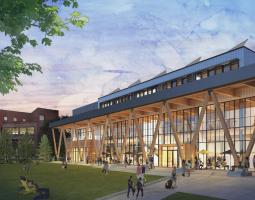
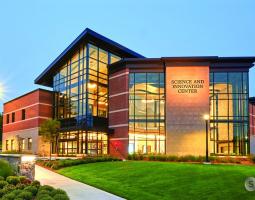
The campus of the University occupies a total area of 1.83 square kilometers near the picturesque Lake Champlain. The university has modern technical equipment and convenient infrastructure, including various facilities necessary for comfortable study and in general stay in the territory:
- Library
- Sports complex
- Laboratory of Rubinstein Ecosystems
- Water Laboratory on Lake Champlain
- 4 farms for agricultural research.
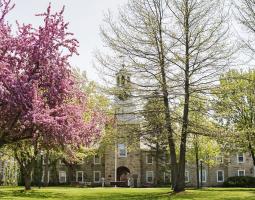
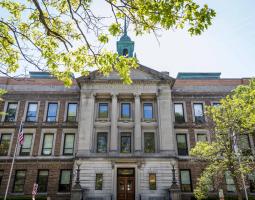
- Historic University Green Building
- Student Center *
- Fleming Museum of Art
- The unit of the largest hospital in Vermont is Fletcher Allen Health Care.
* The first in America received the prestigious gold award of the US Green Building Council LEED.
Admission dates and extra charges
The academic calendar covers almost the entire year, including two semesters and two seasonal sessions.:
- Autumn: August-December,
- Winter session: December-January,
- Spring: January-May,
- Summer session: May-August.
Classes in most programs are conducted on weekdays, and rest is organized on weekends and holidays.
An approximate list of additional expenses includes:
- Registration and administrative fees,
- Accommodation, meal plan, and related housing expenses,
- Some extracurricular activities, community contributions,
- Medical insurance,
- Additional academic support, including private lessons,
- Personal expenses.
Enrolment process
Applicants must complete an online application and a detailed registration form, provide the required documents, and pass an interview (entrance exams may also be required). The admissions committee evaluates candidates based on their previous academic achievements and communication with them, after which they are included in the list of students enrolled in the current or subsequent year.
Enrolment statistics
The admission process to UVM is classified as "more selective", which is confirmed by the annual enrollment of only 15-20% of applicants.
Perspectives
According to statistics from recent years, 94% of University of Vermont graduates were employed or continued their academic path within six months of completing the program. The list of alumni includes Fulbright scholars, Olympic champions, and Nobel laureates.
Entry requirements, how to apply, what is required to enrol
Admission of foreign applicants is based on the following criteria:
- Personal documents: passport, medical insurance and health certificates, visa or US residence permit,
- Academic certificates and assessment tables: certificate of full secondary education and preparatory courses / bachelor's degree / master's degree, depending on the chosen level of education,
- Language test results: TOEFL (from 80), Cambridge (from 180), Duolingo (from 110) or a recognized equivalent,
- At least one letter of recommendation from a previous place of study.
Some specialties have specialized requirements and criteria based on professional experience.
Scholarships University of Vermont
Almost all undergraduate students receive financial support in the form of a scholarship, grant or special assistance based on need. Scholarships are awarded to students with high academic scores or achievements in sports, creativity, science; the award covers part of the annual program cost and can be extended if excellent results are maintained. Students can also take advantage of external funding sources: federal loans and grants, private scholarships from partner organizations.
Literature and references
-
University of Vermont — Wiki

-
University of Vermont - Colleges — USNews.com
-
University of Vermont — Niche
-
University of Vermont — World University Rankings THE
-
217 University of Vermont — Forbes
-
University of Vermont : Rankings, Fees & Courses Details — Top Universities
-
University of Vermont | Liberal Arts, Research Institution — Britannica
Institution on the map
Residence permits, citizenship and other services
- Guardianship services during the studies
- Student supervision
Review about University of Vermont
Recommendations on when to apply
| Language courses, schools and children's language camps | Primary and secondary education - private schools | Preparation programmes for entering universities - higher education | Higher education (after completing accredited programs A-level, IB, High School) - Bachelor, Master, MBA |
| - we recommend to apply 6-9 months before the start of the course (some camps and schools offer discounts for early booking or for lengthy study programs) - there are some very popular and high demand children's camps, where the applications need to be submitted 1 year in advance (in particular Switzerland , Great Britain , USA , Canada , Austria) | - we recommend to apply one year before the start of the training program, - some schools have a specific time frame (September-November - please specify an individual school) - some schools require tests in several stages (UKISET, internal tests of the school: English, mathematics, logics, subjects, interview, some require a personal visit) | - we recommend to apply one year before the start of the program, - for Foundation and Pathway programs, IELTS and TOEFL certificates are usually required, respectively | - recommended submission one year before the start of the program, - the deadline normally closes in January, for TOP HEIs and, as a rule, in March in other universities - for a bachelor, a Foundation or Pathway preparatory program a completed A-level, IB, High School + IELTS / TOEFL are required - for Masters you need a graduated higher education, in some cases you need a pre-Masters program - MBA requires completed higher education, work experience preferably at least 2-3 years, etc. |