The Elms School


Programs and prices, tuition fees in The Elms School


Nursery&Pre-Prep
- Age of students — from 3 years old,
- Duration of study — four years.
The preparatory program includes education in the preschool department and grades 1-2 of primary school. Using a variety of materials and a playful approach to education, teachers develop children's strong reading, writing, and counting skills, ensuring comfortable and safe conditions for exploring the world around them. Some classes are held outdoors, which positively affects the broadening of children's horizons and their activity.
The curriculum includes a variety of subjects: English language, natural sciences, visual and performing arts, music, physical education, and others. Through research, games, and communication, students gain important knowledge that forms the basis for future academic success.
Prep, Elementary School: Grades 3-8
- Age of students — from 8 years old,
- Duration of study — six years.
The 3-8 grade program is based on creative development, including music, drama, and visual arts classes in the curriculum. At the same time, The Elms School stands out for its particularly strong academic preparation in standard subjects: English language, mathematics, natural and humanities sciences, and information technologies. Over six years, students complete a rich curriculum supplemented by an extensive range of extracurricular activities, which helps them become well-rounded, talented individuals with strong social and intellectual qualities.
Description of The Elms School
- Location: Colwall, Herefordshire, England,
- Foundation year: 1614,
- Number of students: approximately 170,
- Language of instruction: English,
- Type of education: mixed.
The Elms School — a private general education school for students aged 3-13.
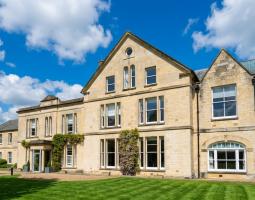
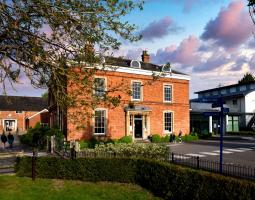
The institution began its history in 1614, making it the oldest preparatory school in Great Britain to have retained its original appearance. The official date of the opening of The Elms School in its current format, accepting and educating children as it does now, is considered to be 1867. Throughout its existence, the school has not changed location, focusing on improving infrastructure and landscaping the existing territory — today it provides students with extensive green areas for walks and games, modern technologies in classrooms, and a variety of facilities for intellectual, physical and creative development.
According to reviews from parents of students and assessments by national agencies, The Elms School has numerous advantages: a rich curriculum, personalized attention to each student, engaging extracurricular activities and modern campus facilities, thorough academic preparation, which allows students to continue their education at leading schools and colleges in the country.
The Elms School is not affiliated with any senior school. Its Headmaster is Ed Lyddon.
Educational process
An important element of education for each age group is outdoor activities: every week all students participate in gardening lessons, animal care and Forest School classes. This is a special place, safe and equipped for acquiring important practical skills:
- Construction of housing from available materials,
- Safe use of tools, proper starting and extinguishing a fire,
- Cooking in camping,
- Food foraging: identifying useful and dangerous mushrooms, berries, plants,
- Manual labor: knot tying, wood carving,
- Orientation.
Through teamwork and independent problem-solving, students develop leadership skills, learn about safety and responsible environmental practices, explore the world around them, and discover their own abilities.
For orienteering, children use maps, compasses, and natural cues. Farming lessons connect practical work with math and biology. Students learn about budgeting, pricing, marketing, and running a small agricultural business. They help with lambing, harvest the vegetables they have grown, and learn about pig breeding, farrowing, rearing, and the economics of meat production. Younger children feed and care for the chickens. To set the price of eggs from the school farm, students compare prices at local supermarkets.
Other aspects of education:
- In Early Years, children learn through practical activities and exploration guided by teachers,
- When needed, specialists work with students individually or in small groups. The English as an Additional Language program adapts to each child's pace,
- Sports are part of the daily school curriculum. Team sports begin in Year 2, while weekly swimming and drama lessons start at age three,
- In art lessons, children explore drawing, sculpture, printmaking, and mixed media, working with paint, collage, fabric, and other materials. After studying artists, art movements, and cultures, they try out the techniques they have explored,
- In Design and Technology, students design and make wooden toys and household objects. They learn to measure, saw, join components, and apply finishes,
- Weekly music lessons are offered for all ages. The school provides a total of 90 music lessons per week. Individual musical theater lessons combine singing, acting, and movement,
- The school helps families choose a senior school, prepare for entrance tests, and apply for scholarships.
Faculties and colleges
The academic system of The Elms School includes programs for preparatory preschool year and grades 1-8.
Scientific achievements
One graduating Year 8 cohort of 21 students received 15 scholarships and awards. Graduates receive senior school scholarships for achievements in academics, music, drama, and sports.
University destinations
Graduates of The Elms School go on to senior schools such as:
- Marlborough,
- Shrewsbury,
- Winchester.
Accommodation, meals, prices
The residence, located within walking distance of the educational building and agricultural facilities, can accommodate up to 50 students. Students can choose the most suitable accommodation option for themselves:
- Full board — permanent stay on campus,
- Partial board — pre-booked accommodation for one to three nights a week,
- Flexible board — periodic accommodation in the residence for one night with the possibility of urgently booking a room, out of turn.
The residential building includes furnished rooms, shared bathrooms and play areas. Qualified staff live in the residence with children, providing 24/7 support and ensuring safety.
Accommodation on campus provides balanced, varied three meals a day. The menu changes regularly, and dishes are prepared by qualified school kitchen cooks: children can choose options for hot meals and salads, healthy snacks, drinks and sweets. Students studying in a daytime format receive lunch and snacks and can bring their own packed lunches from home.
Activities The Elms School
The extracurricular life of The Elms School students is diverse: The Elms School offers a variety of sports sections, performing arts programs, opportunities to interact with animals and work on the farm. Starting in the third grade, students attend weekly classes on the farm, where they care for cows, pigs and sheep, and engage in plant and horticulture. Every year, The Elms School livestock participates in regional exhibition events, which are accompanied by students. Agricultural events are also held on campus, open to all visitors. The Elms School Show takes place in the fall, with displays of school-reared livestock and school-grown vegetables, as well as baking, craft, and equestrian competitions. At local shows, students can groom sheep for showing and lead cattle into the ring.
Another tradition of British schools is the equestrian section — students of The Elms School rent a pony or horse to practice skills of any level: from beginner to professional. Participation in the section provides an opportunity to compete in this area with pupils from other schools. Lessons are available from Year 4, individually or in groups organized by ability. The school provides 40 riding lessons per week. The school provides trained ponies for lessons, so children do not need to own one. They feed and groom the animals and muck out the stalls. Before the school day begins, students can bring ponies in from the fields and prepare the stables. They can take part in equestrian competitions from local to national level. Weekend rides in the surrounding countryside are organized for boarders.
Performing arts are represented by several areas: music and theater. Students interested in developing their talent in music can join the choir, orchestra or ensemble, attend individual lessons on musical instruments. Most participants in music clubs enjoy showcasing their talent at regular entertainment and cultural campus events, whether it's a concert to celebrate a holiday or a charity evening. Lovers of theatrical art have the opportunity to practice acting and oratory skills under the guidance of professional teachers, participate in and independently stage musicals, performances, theater competitions. The school also has student rock bands. Choirs are open to all students, with a repertoire of traditional choral works and modern songs. Every student participates in concerts and their year group's annual musical production. ElmsFest takes place in the summer, with performances by all age groups. The drama program also offers House drama competitions and informal showcases.
Other activities are available:
- Sports:
- Rugby,
- Hockey,
- Soccer,
- Netball,
- Cricket,
- Swimming,
- Tennis,
- Track and field,
- Pistol shooting,
- Table tennis,
- Badminton,
- Basketball,
- Rounders.
- After-school clubs for crafts, dance, and outdoor activities,
- Philosophy and robotics clubs,
- Optional practical activities in science, technology, engineering, arts, and mathematics for Years 5 and 6 on Saturdays,
- Humphrey’s Club, with extracurricular activities for Years 3 and 4 on Saturday mornings,
- Visits to art galleries and immersive art exhibitions,
- Camping with toasted marshmallows, storytelling around the fire, and games in the dark.
On weekends, students remaining in the residence can relax after a busy week and spend time with friends. Sunday morning begins with a leisurely late breakfast, followed by organized activities: ice skating, surfing, horseback riding, swimming, laser tag or a trip to the cinema. Mountain biking is another activity offered on Sundays.
Clubs and activities are organized every evening for boarders. After showers, they can play board games and card games with matrons.
Advantages
- A long history of successful academic activity,
- Average class size — 12 people,
- Flexible accommodation options adopted to the student's wishes,
- A wide range of extracurricular activities, including horseback riding and agriculture lessons,
- More than half of the students receive scholarships from the schools they enter,
- Individual attention to each student with consideration of his talents and strengths,
- Early Years is Montessori-accredited.
Facilities and equipment at The Elms School
The Elms School is located in the countryside of Herefordshire, near the town of Colwall, on a 40-acre estate. The Elms School is one of fewer than 100 schools in the UK that has its own farm! It is home to dozens of Hereford cattle, Gloucester Spotted pigs, Shropshire sheep, several pygmy goats and chickens. Nearby are gardens and greenhouses, an equestrian arena and spacious areas for walks, sports activities and outdoor recreation. The building includes classrooms, subject laboratories, a library and a computer room, a number of art studios with specialized equipment. Some sports classes take place in the large hall inside the building, others — on open grounds and the stadium, in the swimming pool.
The Elms School has its own small fleet of buses that serves five routes in Herefordshire, Worcestershire and Gloucestershire: the buses transport local children to and from lessons, are used during excursions, organized airport pick-ups and transfers.
Admission dates and extra charges
The academic calendar consists of three trimesters:
- Autumn: September-December,
- Spring: January-March,
- Summer: April-July.
Classes are held from Monday to Friday, and extracurricular activities are organized after their completion and on Saturdays. Rest is provided on weekends and holidays, during trimester breaks. Boarders and students in Years 7 and 8 also have lessons on Saturday mornings. Sports activities are organized for boarders on Saturday afternoons.
Breakfast is available from 7.30am for Year 1 and above. Afternoon clubs run from 3.45pm to 4.30pm. Extended Care runs from 4.30pm to 5.50pm and provides supper.
Approximate list of additional expenses includes:
- Registration, administrative fees and deposits,
- Accommodation,
- Meals,
- Kids' club before and after classes,
- Some extracurricular activities,
- Individual music lessons, horseback riding training and other clubs,
- Medical insurance,
- School visa support,
- Personal learning materials,
- Personal expenses.
There is no registration fee for Nursery. A registration fee applies from Reception onwards. An acceptance deposit applies for day and boarding places.
Enrolment process
The admissions committee invites everyone to the Open House and personal tours to answer all questions and show the school campus with all its advantages. Next, applicants need to fill out a registration form, provide the required documents and pay the fee, after which they will attend a trial study day, during which teachers will evaluate candidates in an informal setting. A decision on admission is made within several weeks and official invitations are sent at the beginning of the education.
Perspectives
100% of students successfully pass the Common Entrance exams in their final year at The Elms School, after which they move on to leading secondary schools in the UK. Schools that have accepted graduates from The Elms School in recent years include:
- Ampleforth College,
- Cheltenham College,
- Clifton College,
- Malvern College,
- St Mary’s Ascot School,
- Wellington College,
- Hereford Cathedral School,
- Radley College,
- Eton College,
- Sherborne School for Girls.
100% of its graduates gained admission to their chosen senior school.
Entry requirements, how to apply, what is required to enrol
To apply to The Elms School, international families need to provide personal documents: a passport, health insurance, a visa or residence permit. Depending on age, academic transcripts from the previous school may be required, as well as certificates from teachers, speech therapists, or psychologists.
The school is academically non-selective: admission depends on whether it can meet the child's needs. Registration alone does not guarantee a place. Children can enter during the academic year, subject to availability.
Students attending for more than six months need a Child Student Visa.
Scholarships The Elms School
The Elms School provides a discount program for military families, which will reduce tuition costs by 10%, and supports funding for families in difficult life situations.
Institution on the map
Residence permits, citizenship and other services
- Guardianship services during the studies
- Student supervision
Review about The Elms School
Recommendations on when to apply
| Language courses, schools and children's language camps | Primary and secondary education - private schools | Preparation programmes for entering universities - higher education | Higher education (after completing accredited programs A-level, IB, High School) - Bachelor, Master, MBA |
| - we recommend to apply 6-9 months before the start of the course (some camps and schools offer discounts for early booking or for lengthy study programs) - there are some very popular and high demand children's camps, where the applications need to be submitted 1 year in advance (in particular Switzerland , Great Britain , USA , Canada , Austria) | - we recommend to apply one year before the start of the training program, - some schools have a specific time frame (September-November - please specify an individual school) - some schools require tests in several stages (UKISET, internal tests of the school: English, mathematics, logics, subjects, interview, some require a personal visit) | - we recommend to apply one year before the start of the program, - for Foundation and Pathway programs, IELTS and TOEFL certificates are usually required, respectively | - recommended submission one year before the start of the program, - the deadline normally closes in January, for TOP HEIs and, as a rule, in March in other universities - for a bachelor, a Foundation or Pathway preparatory program a completed A-level, IB, High School + IELTS / TOEFL are required - for Masters you need a graduated higher education, in some cases you need a pre-Masters program - MBA requires completed higher education, work experience preferably at least 2-3 years, etc. |