The beginning of drinking establishments in Ireland was laid more than 5 thousand years ago, during the reign of the Romans in the UK. During this time, the concept of pubs, although it has undergone changes, but the main function has remained the same: people come here to spend time in a friendly company, drink whiskey, beer or another drink after a hard day's work. Unlike bars in other countries, Irish pubs have a high cultural and historical value, becoming the hallmark of the country.


Cultural significance of pubs
Historically, pubs in Ireland served not only as a place to rent a room to spend the night and drink, but also as a gathering point for Irish men who were mainly engaged in farming and fishing. Each of the several thousand establishments across Ireland has its own stories, which are captured in photographs located on the walls of the pub. The interior of the pub always creates a coziness to which you want to return regularly and share the latest news with your friends over a pint of beer. Over time, pubs began to open additional halls for games or for musicians, because until the XVIII century, drinking establishments in Ireland could do without them. Since the middle of the last century, the Irish have gathered in pubs to watch football matches and other sports together.

Traditional pubs rarely served full meals, it was possible to order a maximum of an appetizer with beer. With the passage of time and changing needs, the situation began to change, and menus began to appear in pubs, although still not rich.
How St. Patrick's Day was celebrated
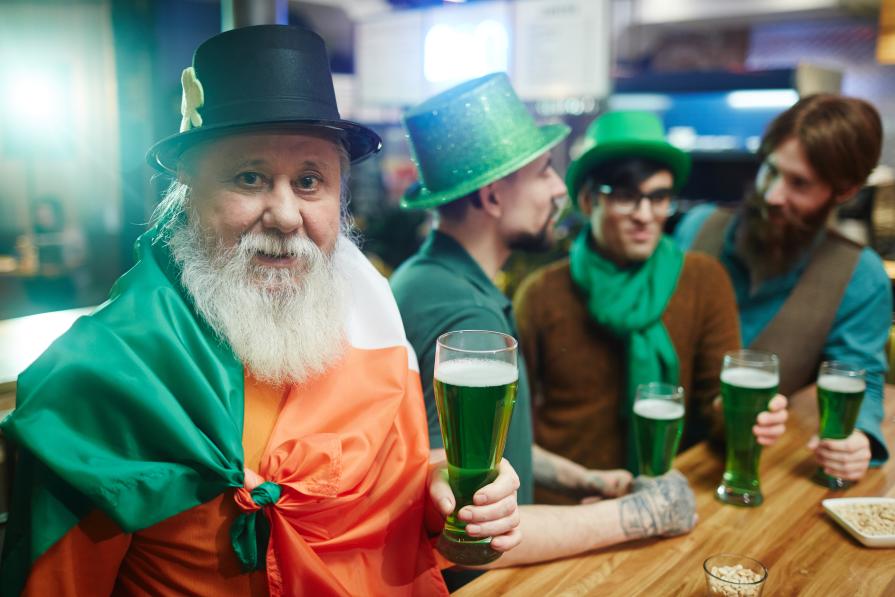
The traditional Irish holiday, on which everyone dresses up in green clothes, plays games and drinks a lot of alcohol, used to look very different. On the day when the holiday was celebrated, namely March 17, men hurried to the pub to pick up the "St. Patrick's Mug" - a pint of beer, at the bottom of which lies a sheet of clover. After the beer was drunk, the clover had to be spat out over his left shoulder. Women and children were engaged in the preparation of a festive dinner, consisting mainly of pork and potatoes. Such a modest celebration continued until the end of the twentieth century, because until that time the holiday was considered religious and did not allow strong festivities - St. Patrick's Day was celebrated in the family circle. Now the holiday has acquired a much larger scope, and tourists from all over the world want to visit Ireland to see the celebration with their own eyes.

The culture of drinking establishments in Ireland is highly valued by locals, and tourists too. Rich in a variety of beers and whiskies, pubs are forever entrenched in the history of the country as the most important cultural phenomenon, reflecting the life of the Irish for many years.
If you want to immerse yourself in Irish culture, improve your English skills, and experience the legendary hospitality of the Irish people firsthand, I highly recommend applying to language schools in Ireland. Ireland is one of the most popular destinations in the world for learning English, offering accredited language schools in cities like Dublin, Cork, Galway, and Limerick. Whether you are a beginner or looking to prepare for IELTS or Cambridge exams, Irish language schools provide small class sizes, highly qualified teachers, and immersive cultural activities — from visiting historic castles to, of course, experiencing traditional pub culture.