Uppingham School


In the process of preparing the material, we referenced the following sources: Wikipedia, GOV.UK
Programs and prices, tuition fees in Uppingham School


Quick overview: an educational program of middle school is designed for international students.
About the educational program of Grade 9: The main goal is the full and comprehensive development of academic knowledge and skills, preparation for training at the GCSE level and obtaining an educational certificate after grades 10-11.
List of subjects to study:
- Theatrical art;
- Biology;
- Art;
- Foundations of life;
- Greek language;
- Design of technologies;
- Geography;
- The history of antiquity;
- Mathematics;
- Information Technology;
- Italian language;
- English;
- Spanish;
- French;
- Latin language;
- Foundations of religion;
- German;
- Physical training and sports;
- Culture;
- Physics;
- Music;
- History;
- Chemistry.
About the educational program of 10-11 grades: the program is the preparation for the GCSE certificate of secondary education, which is highly regarded around the world and accepted by most educational institutions.
There are compulsory disciplines, classes are attended by all students without exception:
- French;
- Physics;
- English;
- Mathematics;
- Foundations of life;
- Chemistry;
- Biology.
Additionally, each student adds 3 disciplines to the personal curriculum from the list above:
- Physical training and sports;
- Design of technologies;
- Foundations of religion;
- Culture and history of antiquity;
- Latin language;
- Greek language;
- Theatrical art;
- German;
- Spanish;
- History;
- Art;
- Italian language;
- Music;
- Geography.
Quick overview: an educational program of 12-13 grades ( Sixth Form) is designed for international students. At the age of 16, students complete the compulsory secondary education and can enter the A-level course if they plan further education at the university.
About the educational program: A-level is designed for 2 years. For the first year (AS) students choose 4-5 subjects, of which only 3-4 are left for the second year (A-level).
Disciplines can be chosen from a fairly extensive list:
- Philosophy and the foundations of religion;
- English;
- Political doctrines;
- History and culture of antiquity;
- Latin language;
- Ancient history;
- Spanish;
- Higher mathematics;
- History of art;
- Economics;
- Drama art;
- Biology;
- Mathematics;
- German;
- Italian language;
- French;
- Design of technologies;
- Graphic arts;
- Geography;
- Greek language;
- Art;
- Physics;
- Music art;
- Physical training;
- Chemistry;
- History;
- Basics of business;
- Geography.
Description of Uppingham School
- Language of instruction: English
- Established: in 1584
- Location: United Kingdom, England, Uppingham
- Students age: from 13 to 18 years
- Educational programs: high school, GCSE, A-level
- Total number of students: 791 people, of which 175 are boarding.
- Type of study: mixed
- Type of accommodation: residence.
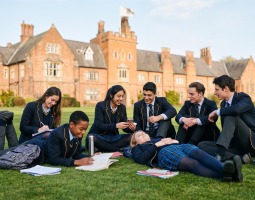
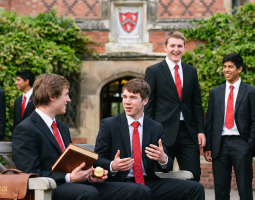
Uppingham School is a respected and prestigious boarding school that accepts children between the ages of 13 and 18 for various studying programs.
Initially, the school was founded solely as an institution for boys in 1584: in 1975, girls began to be accepted on the program of senior classes, and full-fledged mixed education from the age of 13 was introduced in 2001. Most of the students are British citizens, foreign students make up a small percentage.
The basis of the school policy is the quality education and the creation of strong social ties between students, the education of independent and strong personalities, the maintenance of a friendly and comfortable atmosphere, the development of honesty and devotion in children.
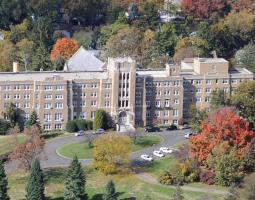
Uppingham School is located in the central part of England - the county of Rutland, the city of Uppingham. The road to London will take about an hour and a half.

Why are UK primary and secondary schools so highly regarded?
A primary aim is mastering English from a young age. Students in British boarding schools grow in independence, leadership, and self-reliance. Class sizes are small, allowing teachers to focus on individual needs more than in public schools. For working parents, the all-encompassing environment of boarding schools is appealing – offering everything from ballet to tennis and piano lessons within the school day, eliminating the need for additional travel. Many schools also provide comprehensive weekend programs, keeping kids engaged and safe on campus, though this varies by school.
Educational process
The school tailors the curriculum to each child's interests, aptitudes, and aspirations through innovative teaching and a wide range of options.
Enrichment activities are integrated into the school day and spread throughout the week, balancing lessons with additional pursuits.
The school does not offer extra private tuition outside the curriculum. Support is limited to the usual subject-specific support and additional language tuition.
Things to know about
- Uppingham School is a charitable company limited by guarantee, registered in England and Wales under company number 8013826 and charity registration number 1147280,
- The Villiers Quartet serves as Artists in Residence at Uppingham School. The Observer hailed the ensemble as “Champions of British Music.” Throughout the year, the quartet gives concerts, leads masterclasses, and teaches and coaches pupils,
- The school is led by Headmaster Dr Richard Maloney.
Accommodation, meals, prices
Uppingham and its immediate area have 14 boarding houses, one day house, and one Lower School house. The boarding houses include eight for boys ages 13 to 18 and five for girls ages 13 to 18, with separate houses for boys and girls who join in the Sixth Form. The coeducational day house serves pupils from age 13.
- For girls class 9 rooms are prepared for 4 people, in 10-11 class they occupy double rooms, and Sixth Form students occupy private bedrooms;
- Boys from 9th to 11th class occupy rooms for several people, and high school students can claim a single room.
Together with the children, the commandants live in their homes with their assistants: they monitor the order, discipline and cleanliness, provide round-the-clock safety of children. Between the houses there are constantly held various contests and competitions: it helps to bring together children living in the same hostel, to instill in them a spirit of camaraderie and healthy competition.
The international students are provided with a full, balanced meal on the full board basis. These are healthy and nutritious dishes that fully meet the needs of the young organism. Meals are organized in a spacious common dining room. There are separate tables for vegetarians, representatives of Islam and Judaism.
Each student has his class teacher and chief teacher, who changes every year: educators are responsible for academic successes and achievements, involvement in extracurricular life, guarantee the safety and comfort of the child. At any time they can contact the parents of the student. Also in the residences are on duty commandants and their assistants, who are always ready to help with the solution of any issue.
A housemaster or housemistress lives in each boarding house with their family, and the whole house eats together at every meal.
Tutors, house staff, matrons, and other supportive role models form an extended community of care in each house.
Subjects and sports
Activities Uppingham School
The co-curricular program includes creative arts, academic clubs, volunteering, fundraising, the Combined Cadet Force, and the Duke of Edinburgh's Award. Enrichment options include debating, drone racing, linguistics, a games club, philosophy, science reading, memory skills, songwriting, beekeeping, an electronics club, a classical film society, music groups, and sports.
Trips include educational and subject visits, Combined Cadet Force training camps, Duke of Edinburgh's Award expeditions, sports tours, and charitable volunteering in the United Kingdom and abroad. Recent academic trips have included mountaineering in Nepal, a classics tour in Greece, an art and theater tour of New York and the US East Coast, a history trip to Russia, an economics and business tour of Beijing and Shanghai, a choir tour of Italy, and a science trip to Florida.
The social program includes music concerts, day trips, sports competitions, theater visits, black-tie dinners, and house events. Most boarding houses hold an annual house concert for parents and staff, as well as formal and informal dinners for different year groups, barbecues, concerts, and DJ nights. Weekend activities include Masterchef competitions, sports fixtures, paintball, bowling, laser quest, and trips to cinemas and museums. Pupils also compete regularly against other schools in a range of sports.
Advantages
- 89% of English private schools based on A-level results (The Daily Telegraph, 2010)
- 98% of graduates enter selected colleges
- Most graduates choose music colleges and art schools
- The most developed and successful areas are languages, geography, history, medicine, history of science, engineering technologies, philosophy.
The entire school program fully corresponds to high national standards, taking into account the deeper study of exact sciences, and the learning of additional foreign languages is also encouraged. Studying takes place in a dynamic, interesting, lively form.
Facilities and equipment at Uppingham School
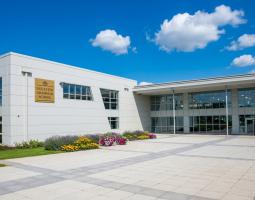
The school's sports facilities include the new Uppingham School Sports Centre with its Hospitality Suite, the Leicester Playing Fields and Courts, the Middle Playing Fields with a pavilion, and The Upper with its own pavilion and the pitch used by the school's first cricket eleven.
The Thring Centre is the social center for Sixth Form pupils. It has a sitting room, garden, pool table, table tennis, and other games. It is open to all Sixth Form pupils throughout the week and to Upper Fifth pupils on certain evenings, and it hosts regular discos, seasonal themed evenings, and concerts by school bands.
Admission dates and extra charges
Fees are due in advance on the last working day before each term starts. Each term's bill includes fees for the following term and extras from the preceding term.
Fees are paid by Direct Debit once per term. The school may agree to accept payment by direct bank transfer, normally for international payments because Direct Debit requires a UK bank account.
- The registration fee includes VAT, is payable on registration, and is nonrefundable,
- The Acceptance Deposit is payable for each pupil when a place is accepted,
- An additional Overseas Deposit is payable for each pupil residing outside the United Kingdom.
Extras:
- Registration fee (for a programme/course) 200 GBP
- Deposit for a course/programme 12906 GBP
Enrolment process
- Throughout the year, the school holds separate Visiting Days for entry to the Lower School (Years 7 and 8), Year 9, and the Sixth Form (Years 12 and 13),
- A Visiting Day begins at 9:30 a.m. with coffee, followed by a welcome from the Headmaster, meetings with senior staff, pupils, and the Admissions team, and a pupil-led tour that includes visits to at least two houses. The event ends at 1:00 p.m.,
- Individual visits can be arranged on any day during term time from Monday to Saturday, and the school asks families to give at least one week's notice. A visit can include a meeting with the Director of Admissions or Deputy Director of Admissions, a pupil-led tour, visits to two houses, a meeting with a housemaster or housemistress, and lunch in one of the houses,
- The date of registration is the main factor in house allocation. Applicants for Year 9 may state a preferred house when registering, and placement depends on availability and fulfillment of the criteria,
- Applicants with a sibling in the house receive priority,
- The school tries to avoid placing more than two boarding pupils from the same school in one house year group and aims to limit pupils whose first language is not English to one per language group each year.
Entry requirements, how to apply, what is required to enrol
- Candidates must register with the school before entering the scholarship process,
- Scholarship candidates are assessed through a test, examination, or observation, together with an interview and a reference,
- Candidates may sit scholarship assessments in no more than two disciplines, and if successful in two, they receive the scholarship for the discipline in which they achieved the highest level,
- Candidates seeking fee assistance should also be registered with the school and must meet the same entrance criteria as other applicants.
Scholarships Uppingham School
- Scholarships are awarded to pupils joining the school in Year 7, Year 9, or Year 12 in the Sixth Form,
- Awards are available in academic subjects, music, art, textiles, design and technology, sport, and drama. The Thring Award is available only to pupils entering Year 9,
- A scholarship awarded without a means test does not ordinarily exceed 5% of the school fees,
- When financial need is established, a scholarship may be supplemented through a means-tested award up to 110% of the school fees,
- A pupil may hold only one scholarship at a time so they can specialize in their area of talent,
- Families that cannot afford a place at Uppingham may be eligible for means-tested fee assistance.
Literature and references

Institution on the map
Residence permits, citizenship and other services
- Guardianship services during the studies
- Student supervision
Review about Uppingham School
Recommendations on when to apply
| Language courses, schools and children's language camps | Primary and secondary education - private schools | Preparation programmes for entering universities - higher education | Higher education (after completing accredited programs A-level, IB, High School) - Bachelor, Master, MBA |
| - we recommend to apply 6-9 months before the start of the course (some camps and schools offer discounts for early booking or for lengthy study programs) - there are some very popular and high demand children's camps, where the applications need to be submitted 1 year in advance (in particular Switzerland , Great Britain , USA , Canada , Austria) | - we recommend to apply one year before the start of the training program, - some schools have a specific time frame (September-November - please specify an individual school) - some schools require tests in several stages (UKISET, internal tests of the school: English, mathematics, logics, subjects, interview, some require a personal visit) | - we recommend to apply one year before the start of the program, - for Foundation and Pathway programs, IELTS and TOEFL certificates are usually required, respectively | - recommended submission one year before the start of the program, - the deadline normally closes in January, for TOP HEIs and, as a rule, in March in other universities - for a bachelor, a Foundation or Pathway preparatory program a completed A-level, IB, High School + IELTS / TOEFL are required - for Masters you need a graduated higher education, in some cases you need a pre-Masters program - MBA requires completed higher education, work experience preferably at least 2-3 years, etc. |