Tettenhall College


In the process of preparing the material, we referenced the following sources: Wikipedia, Weedon architects, GOV.UK
Programs and prices, tuition fees in Tettenhall College


Quick overview: a GCSE educational program for international students.
About the educational program: students form a solid foundation of knowledge on the basic subjects of the school curriculum and also receive useful academic skills necessary for continuing their studies at the university. Students learn:
- To work effectively, independently and in a team;
- To work with sources;
- To think critically and analytically;
- To write and present scientific works, research, etc.
Subjects for study available to students at this stage:
- English Language and Literature;
- Chemistry;
- Natural Sciences;
- Physical Education and Sports;
- Foreign languages;
- Design and technology;
- Mathematics;
- Religious Studies;
- Economics and business;
- Music;
- Biology;
- Latin language;
- Geography;
- History;
- Drama and theatrical art;
- Communication technologies and informatics;
- Art.
Some subjects are available for inclusion in the curriculum only if a certain educational groups of students are formed.
About the educational program: The A-level standard of British pre-university education is respected all over the world. The A-level certificate is accepted by most universities as an alternative to the entrance exams - this increases the student's chances of successfully enrolling in the chosen university for priority specialization.
The program is designed for 2 years. International students study 4 subjects of their own choice at the first year and 3 at the second. Disciplines for study are chosen in accordance with personal interests and inclinations. Students are guided by the knowledge they will need to successfully continue their studies in high school.
List of the subjects to study:
- English Language and Literature;
- Economics;
- Business;
- Chemistry;
- Biology;
- French;
- Accounting;
- Physical education and sport;
- Geography;
- Physics;
- Technology and Design;
- Religious Studies;
- Drama and theatrical art;
- Psychology;
- Communication technologies and informatics;
- Music Technology;
- Design and art;
- Music;
- Spanish;
- Mathematics;
- History.
Some subjects are available for inclusion in the curriculum only if an educational group is formed.
Description of Tettenhall College
- Location: Tettenhall, West Midlands, in central England,
- Ages: 2–18,
- School type: independent and co-educational,
- Attendance: day school and boarding,
- Enrollment: 520 students, 80% of whom are British.
Tettenhall College is an independent private co-educational school for children from 2 to 18 years old. You can study both on the day form and at the boarding school, the total number of students reaches 400.
Boys and girls study together in an inclusive community from early childhood through Sixth Form. The school combines academic study with learning support, university preparation, enrichment, sport, music and creative activities.
The educational institution is located near the village of Tettenhol and has one name with it. The village is 5 kilometers from Wolverhampton (West Midlands county), the road to London takes about 3 hours. To date, the total campus area reaches 13 hectares, and part of it belongs to a large nature reserve with a unique, picturesque nature.
The founders of Tettenhall College, a group of local industrialists and entrepreneurs, opened the doors of the school in 1863. The initial number of students was only 15 people: the school was founded as a male educational institution, but in 1969, like many schools in Britain and the world, switched to mixed education and began to take on the studying the girls. Now the school is widely known in its region and throughout the country due to the excellent living conditions and the effectiveness of educational programs. The main mission of the UK private school is formed in the slogan "A place where each student gets the best." The staff maintain a warm, friendly atmosphere: students feel at home here, have all the opportunities for comprehensive development, make new acquaintances and improve academic, sporting and creative abilities.
Children of any faith, confession can study here - the school respects all Christian traditions, the official religion is Anglicanism (but the school does not force all students to join the church).

How are the top UK boarding schools ranked, and how accurate are these rankings today?
Typically, these rankings are based on GCSE and A-level exam results. With the growing number of IB schools in the UK, IB results are also gaining significance. Rankings mainly assess the number of candidates and their outcomes, so they're accurate in that sense. However, they don't necessarily reflect the quality of teaching and learning. Some elite schools have very stringent admission criteria, not accessible to all.
Educational process
The school describes itself as inclusive and provides support for children with special educational needs. The Head of Learning Support oversees this work in Preparatory School, while the Head of Academic Support does so in Senior School.
Boarders attend formal Prep sessions every weekday evening, on Saturday mornings and Sunday evenings. Pupils use this time to complete homework, while Sixth Form students work independently and conduct research.
The Aspire program includes guidance for applications to Oxbridge, G5 and international universities. Support covers college selection, personal statement editing, references, recommendations for wider study, admissions test preparation with specialists and mock interviews.
New pupils can take part in an Induction Day, where they meet teachers and classmates. Parents receive progress updates after each learning cycle through My School Portal, are invited to parents’ evenings and hear from boarding staff, subject teachers and heads of section during the year.
Faculties and colleges
Teaching follows the British curriculum: GCSE and A Level, plus the school's own preparatory Pre-A Level course with two CTEC options.
Senior students also have the accelerated Aspire Programme, built around six core strands. Selection is strict: the school looks at attitude to study, attendance and strong academic results during the GCSE years, asks for a resume with a cover letter, holds an interview with the Head of Sixth Form, gathers feedback from subject leaders and takes outstanding GCSE or equivalent results into account.
Scientific achievements
The 2024 ISI inspection praised the teaching staff: teachers draw on their subject knowledge and on an understanding of what each individual student needs, and they plan lessons around a variety of activities.
The same report noted the wide choice of physical and creative pursuits in the school's enrichment program.
Things to know about
- Five principles sit at the heart of the school's values: ambition, character, community, creativity and opportunity,
- Boarders come from more than 25 countries across five continents,
- Uniform is sold in the school's own shop on site: a blazer, two pairs of trousers, a tie, one or two jumpers and three or four shirts normally cover it, while shoes, trainers and football boots are bought separately.
University destinations
The majority of students progress to university, and most of those universities are members of the Russell Group.
Accommodation, meals, prices
On the campus there are comfortable and safe residences. Pupils of primary grades live 3-5 people, high school students occupy rooms for 1-2 people: all rooms are beautifully furnished and equipped with everything necessary. Together with the children in the residence of Tettenhall College there are constantly living qualified and experienced caregivers, who monitor the observance of order and discipline, are ready to help in solving various household and administrative issues, provide complete safety for students.
Subjects and sports
Activities Tettenhall College
Sport is part of the timetable. Pupils in Years 6–9 have games twice a week. Boys play rugby, football and cricket, while girls play hockey, netball and rounders. Pupils also have one physical education lesson a week, with activities such as basketball, volleyball, swimming, badminton, squash, fitness, gymnastics, pickleball, track and field, tennis and outdoor pursuits.
From Year 10, pupils have one games lesson a week and choose from rugby, football, cricket, softball, rounders, swimming, squash, badminton, tennis, hockey, netball and track and field.
The enrichment program takes place every Thursday afternoon during term time. Students follow one activity for a full term before choosing another. Thursday sporting options include running, basketball, fitness, yoga, dance, modern pentathlon, horse riding, golf, climbing and girls’ football. Pupils aged 13 and over can also choose to join a tennis academy located a few minutes from campus, and a local Cadet Force is available.
Boarders have activities seven days a week, along with regular trips and outings. The weekend program includes go-karting, cinema trips, theme parks, cultural outings, paintball and visits to London. The school updates the selection each year with input from boarders.
Facilities and equipment at Tettenhall College
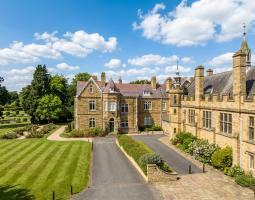
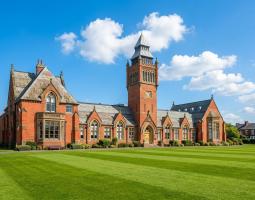
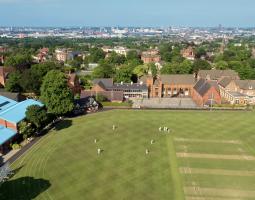
The school’s historic buildings stand within 33 acres of woodland and grounds. Both boarding houses are on the school grounds, with space for pupils to walk, play, relax and study.
Qualified nurses staff the school’s Medical Center. A boarder who becomes unwell during the school day can stay there and be admitted as an inpatient if needed. The library has a stationery shop, and Wi-Fi is available for laptops and mobile phones.
The school is in the West Midlands near Birmingham. It has good road and rail connections, London is less than two hours away, and Birmingham and Manchester international airports are within an hour. The campus also has easy access to major roads, motorways and public transport.
Tettenhall village has a green, a summer outdoor pool, independent shops, boutiques, restaurants, cafes, a supermarket, a post office and a pharmacy. The nearest bank and ATM are a minute’s walk from the school gates, while central Wolverhampton is 10 minutes away by bus or taxi.
Admission dates and extra charges
Fees are payable by the first day of each term unless monthly payment has been arranged through the School Fee Plan.
The non-refundable registration fee is 115 pounds for UK students and 175 pounds for non-UK students. The acceptance deposit is 500 pounds for UK pupils and 1,000 pounds for non-UK pupils. The deposit for entry to Nursery or Pre-School is 1,000 pounds, with 500 pounds deducted from the first term’s fees when the child enters Reception.
Travel to school sports matches, except optional trips, all timetabled sport and Wi-Fi are included at no extra charge. Boarding fees also include accommodation, meals, bedding and supervised study. Laundry is included for full boarders.
Additional termly costs may include:
- School buses and taxis,
- Individual music lessons,
- School trips and boarders’ outings,
- School photographs,
- Examination fees,
- English as an additional language fees.
The school normally seeks parental permission for any additional item costing more than 30 pounds.
Personal Accident and Dental Insurance is compulsory for all pupils and costs 5 pounds per term. Personal Effects Insurance costs 5.10 pounds per term and is compulsory for boarders. Optional private medical insurance is also available.
A sibling discount reduces the fees by 10% for a second child, 15% for a third and 20% for a fourth. The reduction applies to the youngest sibling.
Parents can use the School Fee Plan to pay fees and extras in monthly installments instead of making termly payments. This credit option is subject to the applicant’s status and is available only to people aged 18 or over.
Extras:
- Registration fee (for a programme/course) 120 GBP
- Application fee 1000 GBP
Enrolment process
Getting to know the school usually starts with a visit, either an open event or a private tour of the campus. For families overseas the school holds an online meeting or meets them in person in their own country during its international trips.
Visa applications for international students, both first-time applications and extensions made within the United Kingdom, are handled for the school by an immigration law firm that specializes in student visas and school licenses.
Entry requirements, how to apply, what is required to enrol
- A completed registration form and copies of recent school reports, where applicable,
- A medical form with vaccination details, completed before arrival. All boarders are registered with a local doctor’s surgery,
- For Preparatory School, from Nursery to Year 6, a taster day or taster session. Applicants for Reception and above complete informal assessments, and offers are based on teacher feedback and the latest school report,
- For entry to Years 7, 8 and 9, the College Entrance Assessment in January before a September start. Applicants must register well in advance,
- The Entrance Assessment takes a full morning. Tests delivered with Cambridge CEM cover numeracy, literacy and non-verbal reasoning, alongside a handwritten creative writing task, team exercises and other interactive activities. Individual offers are made after the assessments have been marked,
- Applicants from outside the United Kingdom complete the assessments remotely,
- Entry to Year 12 is based on GCSE or equivalent results, school reports and a successful interview with the Headmaster. Applicants need at least five GCSE subjects at Level 5, grade C, or above,
- Some Sixth Form subjects have additional requirements. Further Mathematics and science subjects require Level 6 in GCSE Mathematics. Physical Education requires club-level participation in at least one sport. Music requires instrumental or vocal ability at grade 5 or above and GCSE Music. Art and Design requires a strong portfolio if the applicant did not take the subject at GCSE.
Scholarships Tettenhall College
The school offers scholarships to Senior School pupils who demonstrate exceptional ability and potential. Scholarships provide a small reduction in tuition and are awarded after an assessment.
- Academic scholarships recognize exceptional entrance-test results, all-round ability and a strong attitude to study,
- Sport scholarships recognize a high level of athletic ability, participation and sportsmanship, particularly in the school’s main sports,
- Performing Arts scholarships are awarded after an assessment of ability and commitment in drama, dance or musical theater,
- Art scholarships are based on an assessment and a review of the applicant’s portfolio,
- Music scholarships recognize exceptional musical ability shown during the assessment and supported by Grade certificates. Recipients must be willing to learn a new instrument if the school asks them to do so.
Academic scholarships are assessed through the College Entrance Assessment, and the highest-performing applicants are invited to interview with the Headmaster before an award is decided. Assessments for Sport, Art, Music and Performing Arts scholarships take place during the week before the Entrance Assessment.
Bursaries support children from lower-income families and are means-tested rather than based on ability. Families with a combined income below 60,000 pounds can apply by completing a financial circumstances form. The amount depends on the family’s circumstances and contributes toward tuition.
Literature and references

Institution on the map
Residence permits, citizenship and other services
- Guardianship services during the studies
- Student supervision
Review about Tettenhall College
I study the A-level course at Tettenhall College - the trip was organized by Smart Products and Services company and parents were asked to leave feedback about their impressions. If you want to study abroad, but are afraid to organize everything yourself - contact Smart Products and Services!
Seriously, we did not regret at all. We were picked up by the school (and it was chosen for me, taking into account all my wishes), helped with the registration of documents and visas (they wrote to the consulate, transferred all the documents). Managers even offered to buy air tickets and help with the transfer. We took the transfer, and we took the tickets ourselves. At the same time, we were very surprised that the admission in the school is free, without a commission: we were told that Smart Products and Services works as official representatives, not intermediaries, therefore there is no commission.
A few words about the school: beautiful, convenient, technologically, difficult. I really liked the school and campus. Libraries, computers, interactive whiteboards, projectors, language laboratories, individual supplementary classes are all at our service. The only thing I did not prepare for - A-level is a really difficult program: I spend almost the whole day reading textbooks. But in the evening it is pleasant to warm up and walk, to kick the ball (in the school there is a football field). I hope that I will get involved - but it's also much easier to prepare for an English university.
Recommendations on when to apply
| Language courses, schools and children's language camps | Primary and secondary education - private schools | Preparation programmes for entering universities - higher education | Higher education (after completing accredited programs A-level, IB, High School) - Bachelor, Master, MBA |
| - we recommend to apply 6-9 months before the start of the course (some camps and schools offer discounts for early booking or for lengthy study programs) - there are some very popular and high demand children's camps, where the applications need to be submitted 1 year in advance (in particular Switzerland , Great Britain , USA , Canada , Austria) | - we recommend to apply one year before the start of the training program, - some schools have a specific time frame (September-November - please specify an individual school) - some schools require tests in several stages (UKISET, internal tests of the school: English, mathematics, logics, subjects, interview, some require a personal visit) | - we recommend to apply one year before the start of the program, - for Foundation and Pathway programs, IELTS and TOEFL certificates are usually required, respectively | - recommended submission one year before the start of the program, - the deadline normally closes in January, for TOP HEIs and, as a rule, in March in other universities - for a bachelor, a Foundation or Pathway preparatory program a completed A-level, IB, High School + IELTS / TOEFL are required - for Masters you need a graduated higher education, in some cases you need a pre-Masters program - MBA requires completed higher education, work experience preferably at least 2-3 years, etc. |