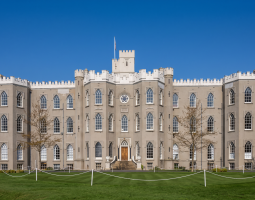
St. Columba’s College


Programs and prices, tuition fees in St. Columba’s College


About the educational program: The program of junior and middle classes is formed according to the state standards of British education. The course is divided into several stages:
- Form Primary (11-12 years);
- Form I (12-13 years);
- Form II (13-14 years);
- Form III (14-15 years).
The general list of subjects and disciplines studied is generally the same - with the age of students, the number of directions, their complexity, increases. In 11-12 years schoolchildren have the following subjects in the curriculum, which are all obligatory:
- Gaelic (it is not necessary, it can be optional for foreign students);
- Social and personal education and health;
- French;
- Natural Sciences;
- Mathematics;
- English;
- Latin language;
- Geography;
- Art;
- Religious studies;
- Spanish;
- Physical culture and sports;
- Computer science;
- Music art;
- History.
Form I (12-13 years) adds Spanish as an additional subject, and on Form II you can choose up to 2 optional courses:
- Classical civilization;
- Music art;
- Technical graphics;
- Art;
- Latin language.
Schoolchildren of 14-15 years necessarily begin the study of sociology and politics, faculties remain the same or can be replaced by new directions.
Brief information: This program is especially recommended for foreign students aged 15-16 (Form IV) who plan further study abroad. This is a feature of the Irish educational system: a transitional year will not only deepen and actualize academic knowledge, but also immerse themselves in the atmosphere of British educational institutions and fully adapt to the new field. In addition to lessons, children are engaged in charitable and social projects, develop their leadership skills, go on various excursions, actively engage in creative and sports clubs.
About the educational program: Mandatory subjects include English and Gaelic, a foreign language (French or Spanish), and mathematics. But international students can not learn the Gaelic language without fail, and attend it as an elective. The remaining 5 items are chosen according to the students' personal taste:
- Spanish;
- Career;
- Social and personal education;
- Business;
- Drama art;
- Classical civilization;
- Physical culture and sports;
- Geography;
- Chemistry;
- Health;
- Astronomy;
- Architecture;
- History;
- Art;
- Religious studies;
- Latin language;
- Music art;
- Physics;
- Computer science;
- Biology.
About the educational program: Stage V is designed for international children 16-17 years old, preparing to enter the university. Mandatory subjects include English and Gaelic, a foreign language (French or Spanish), and mathematics. But foreign students can not learn the Gaelic language without additional preparation, and attend it as an elective. Students choose three or four additional disciplines for themselves, focusing on personal interests and needs:
- Geography;
- Agriculture;
- Business;
- Chemistry;
- Art;
- History;
- Graphics and design;
- Biology;
- Classical civilization;
- Economics;
- Architecture;
- Latin language;
- Physics;
- Higher mathematics;
- Music art.
Also, weekly lessons are organized for personal and social upbringing and health, an additional lesson on religious studies are provided. Student can add to the personal curriculum two lessons per week in higher mathematics, art, physical education and sports, art history, geology or computer science. In case of successful completion of the course, students receive a prestigious Leaving Certificate, which is recognized and appreciated all over the world.
Description of St. Columba’s College
- Founded: 1843,
- Age of students: 11-18 years,
- Total enrollment: approximately 350 students, with over 80% boarding,
- Location: Dublin, Ireland,
- Language of instruction: English,
- Accommodation: seven-day boarding in on-campus residences,
- Programs: Junior Cycle, Transition Year, Irish Leaving Certificate,
- Type of education: mixed,
- Director: Dr. Lindsey Haslet Warden.
St. Columbas College is one of the best Irish boarding schools. It was founded in 1843. Today, about 295 people study here, 80% of them live in school residences at a boarding school. From the very beginning of the foundation, the staff of the institution strives not only to give the children academic knowledge and skills, but also to instill a love for learning, self-development, and motivation to achieve personal goals and results. Today, it is one of the best and most prestigious schools in Ireland and the British Isles.
The educational establishment was founded in 1843 in the county of Meath (Stakallan town), but in 1849 it moved to the territory closer to Dublin. Campus St. Columba's College is located close to the center of the Irish capital, just a few kilometers away, and is located among the famous scenic Dublin hills near the bay. The distance to the center of Dublin is 10 kilometers, to the international airport - only 30 kilometers, which greatly facilitates the transfer. The total area reaches 150 acres - it is home to ancient buildings of high architectural value (Victorian and Georgian era of construction) and well-kept green gardens, lawns and groves. Students like to relax in the fresh air, play sports and play active games, spend time in the sun and make picnics. Of particular value is the old chapel, created in 1880 by the great architect William Butterfield - today here are held general meetings, concerts and church services.
Just a short walk from the campus there is a bus stop: a regular bus runs to and from the city center.
St. Columba's College demonstrates the high quality of academic preparation - it is considered one of the strongest in Ireland and the territory of the British Isles. The school is part a of the prestigious educational organization HMC (the Headmasters '& Headmistresses' Conference). Many graduates become known and sought after by specialists in their industry - it is enough to mention the following names:
- Adam Clayton (guitarist of the Irish group U2, known all over the world);
- Stephen Darcy (an actor who gained fame after the release of the series "Tudors");
- Minister of Northern Ireland Bryan Faulkner;
- Michael Yates (politician of the Republican Party of Ireland) and many others.
Graduates show excellent results in exams - in recent years the average score of the certificates was 452, which is equivalent to three A scores on the A-level scale. According to data for 2014, 34% of students received 500 points, 73% - 400 points, which is much higher than the average for the country.
The full study program takes 7 years - Junior School and Senior School:
- 11 years - Form Primary (primary grades, equivalent to 6th grade in the British system);
- 12-15 years - Form I, Form II, Form III, preparation for the receipt Junior Certificate;
- 15-16 years - Transition Year (fourth grade, compulsory for all students);
- 16-18 years - Form V, Form VI (senior classes, obtaining the Leaving Certificate).
Classes are formed in small groups, and the older students, the less their group is - from 15 to 10 Person in each. Approximately 80% of pupils are international students. Students Columba's College at all levels instilled independence, the ability to work attentively and persistently, to observe the rules of conduct and etiquette. Mentors, teachers and educators constantly monitor the progress of students and their involvement in school life - a special Department for Academic Support has been set up for this. Parents receive a full account of the child's progress and successes every trimester. For high school students, a special Career Department has been created: it helps the student to decide on personal inclinations and talents, abilities, choose a future profession and a priority university; For the same purpose, graduates of the last year are assigned a personal mentor who helps to apply to the selected institutions.
Educational process
The average class size is 14 students. The student-to-teacher ratio is 8:1.
Most teachers live on campus and are available to students in the evenings and on weekends. All boarding staff are also teachers rather than separate residential personnel. Regular parent meetings are held throughout the year to discuss individual student progress. Teachers write detailed subject reports following end-of-term examinations. Effort grades are issued approximately every three weeks and sent to parents electronically.
The college has nurses available around the clock, a school psychologist, and a Cúram Team dedicated to student well-being. A local general practitioner visits the college weekly and on request. The well-being program is delivered through SPHE, CSPE, religious education, SEN, and career guidance, significantly exceeding the 300-hour requirement for the Junior Cycle.
Faculties and colleges
St. Columba’s College offers a wide range of academic disciplines at both Junior Cycle and Senior Cycle levels. The curriculum is defined by the NCCA.
In Form I, students study:
- English,
- Mathematics,
- French or Spanish,
- Irish (unless exempt),
- History,
- Geography,
- Science,
- Computer science,
- Art,
- Music,
- Graphics,
- Religious education,
- SPHE,
- Physical education.
In Forms II and III, the range of disciplines expands to include business studies and CSPE.
Transition Year provides modules in public speaking, digital literacy, linguistics, horticulture, dance, and yoga, as well as Early University Entrance courses at DCU. TY students are required to engage in self-directed learning and complete online TEFL or AI courses.
In Forms V and VI, students prepare for the Leaving Certificate, typically studying seven disciplines. Compulsory disciplines are English, mathematics, French or Spanish, and Irish (unless exempt). Optional disciplines:
- History,
- Geography,
- Biology,
- Chemistry,
- Physics,
- Business,
- Economics,
- Art,
- Classical studies,
- Music,
- Design/communication graphics.
Things to know about
- A student who attends St. Columba’s for six years visits the school chapel more than 1,000 times,
- The school’s Charity Regulatory Authority Number is 20005306,
- St. Columba’s College has hosted the ResearchEd Ireland conference twice.
Accommodation, meals, prices
There are seven residences for students on the territory of St. Columba's College, the age and sex of children are taken into account in the resettlement: for the youngest - a residence for 20 seats, and for senior students of the hostel can accommodate up to 45 people each. There are also two day pupil houses. Over 80% of students board on a seven-day basis. Each boarding house has a Housemaster or Housemistress, an Assistant Housemaster/Housemistress, and a team of House Tutors. Day pupils are assigned to one of two houses—Kilmashogue for boys and Clonard for girls—each with a Housemaster and support staff.
Beresford House is a junior girls’ boarding house for Form I, accommodating 25 students including boarders and day pupils of various nationalities. In Beresford House, Form I girls live alongside a group of approximately twelve Form V and VI students. Tibradden House is located in the center of the campus and accommodates the youngest boys (Form I). Glen, Grange, Gwynn, and Stackallan are for senior boys. Hollypark and Iona are for senior girls. Glen provides four common rooms with kitchen facilities. Gwynn House has a common room with a kitchen and a kitchenette for senior students. Each form in Hollypark has its own common room with a kitchenette.
Catering partner Baxter Storey provides healthy and balanced meals. Dining includes a substantial breakfast, a homemade snack during mid-morning break, a two-course hot lunch with a salad bar and fruit, cookies at 3:30 PM, a hot supper after games, and an evening snack after prep. The college has a self-service laundry accessible to students three times a week: once for regular clothing and twice for sports kit.
In general, the residence provides cozy, comfortable rooms for 2-6 people, amenities are included. In each hostel, the manager and his assistant live together with the children: they monitor the observance of order, cleanliness, discipline, form a warm and friendly atmosphere of each house, guarantee the full safety of children, help them solve administrative and everyday issues.
In the general spacious dining room meals are organized on the principle of a full board: mainly they are dishes of traditional British and Irish cuisine, there are rations for vegetarians or for representatives of certain religions (Muslim, Jewish).
Subjects and sports
Activities St. Columba’s College
St. Columba's College is very strongly developed school of dramatic skill - the level of students' preparation almost corresponds to the profile faculties of colleges and universities! You can attend classes in acting and stage language, create scenery and costumes (the size and fullness of the local dressing room can surprise even a professional actor). Every year, performances and large concerts are organized - for the last seven years the most notable of them was the Showbuild project (it was implemented by the English Actiontrack team).
Much attention is paid to sports, individual and team play: hockey, rugby, cricket and track and field are the most priority and popular. In winter, cross-country running and trekking are also popular. The institution has a developed sports infrastructure, all necessary fields and sites, equipment. The main sports building was rebuilt in 1998: there are basketball, cricket, football, volleyball and hockey games, aerobics studios, a gym. There are also two hockey grounds, 5 tennis courts, a golf course, cricket and rugby fields, and a spacious outdoor pool. All classes and trainings are conducted by professional instructors (often invited professionals from Dublin) and senior teachers.
At all levels (from primary to practically professional) musical art is taught, it can even be chosen as an examination subject. Regular performances are arranged and joint concerts, evenings and performances. Every second pupil has the skills to play musical instruments: it can be a cello, a violin, a guitar, an organ, a piano, a saxophone or a clarinet. In addition, the theory of music is taught, lessons are being conducted on vocals. The main musical building is Cadogan, which was recently restored and renovated and now provides an opportunity to learn how to play percussion, wind and harp.
A separate building is also available for creative arts and fine arts - a former gymnasium, it was updated and modernized in 2000. Here you can master photography, painting or ceramics, pottery. Cognitive, interesting excursions to museums, art galleries, exhibitions and performances are arranged for artistically gifted children. St. Columba's College remembers in its walls such famous artists as Patrick Pye, Patrick Scott and Paqui Smith, fashion designer Mark O'Neill. The quality of academic training is so high that many students after graduating successfully enter art colleges and universities - both in Ireland and the UK, and abroad.
St. Columba’s College requires six days of sports participation for all students. Major team sports include tennis. Archery, polo cross, and badminton are also available.
On average, about a dozen plays are staged and over 30 musical performances or concerts are held each year. At the 2026 Music Prize Concert in the BSR, 17 students performed before guest adjudicator Jonathan Browner. The Transition Year English Evening is the longest-running TY event at the college. Its 30th edition took place in 2025. Productions are also organized for Form I and Form II students.
TY students complete work experience programs during holiday periods, attend career-focused courses (RCSI Mini-Med, Law Library course), and participate in the Columban Award Scheme and Gaisce President’s Award. The year concludes with an outdoor adventure trip to Delphi Adventure Centre in Connemara. Art students engage in drawing, design, printmaking, batik, and 3D construction. Form V students undertake a mandatory four-day field trip to the Burren region for ecology and biology fieldwork.
Inter-house competitions are held in sports, general knowledge, and singing. The school participates in the Team Hope Christmas Shoebox Appeal charity campaign. A Pupils’ Council operates. The annual Book Week includes the Drop Everything And Read initiative, when the entire school pauses lessons for reading. During Mental Health Awareness Week, activities included morning walks, yoga, mindful breathing, stone painting, sound bathing, and a coffee morning for sixth formers.
Facilities and equipment at St. Columba’s College
Almost every classroom includes a multimedia board and a projector, there are functional scientific laboratories (practical lessons are usually held there, especially in the natural sciences), a sports center, creative workshops, a music school and a theater with the necessary modern equipment. The whole territory has access to wireless high-speed Internet, pupils are provided with modern tablets with school applications and programs. There is also a beautiful library built in 1994 - its fund has more than 11,000 different sources and books. A separate Cadogan music department has been set up, a drama hall for performances, musicals and concerts, the Center for Art.
The St. Columba’s College campus spans 140 acres at the foot of the Dublin Mountains with views of Dublin Bay. The grounds contain over 60 buildings, many of which are protected structures, including the historic Stackallan House and the recently refurbished Whispering House. The main campus building is Beresford House.
Academic facilities include a library (open daily from 8:45 AM to 10:00 PM with a qualified librarian), and the Big School Room. The medical center is housed in a purpose-built facility on the college grounds.
Sports facilities include a Cricket Pavilion. The campus provides a Deer Park used for educational walks and well-being activities. As part of the refurbishment of older classrooms, an Innovation Center dedicated to sustainability education is planned. 680 solar panels with a capacity of 280 kWp are installed on the sports hall roof, generating approximately 200,000 kWh of electricity annually. The college aims to eliminate fossil fuel use entirely by 2030.
Admission dates and extra charges
The academic year is divided into three terms: Michaelmas (September to Christmas), Hilary (January to Easter), and Trinity (after Easter to late June). Breaks between terms include three weeks at Christmas and Easter and ten weeks in summer. Mid-term breaks occur in the first and second terms. There is no mid-term break in the third term. Additional Exodus days off are scheduled throughout the year.
Wednesday and Saturday are half-days with lessons ending around 1:00 PM, typically followed by matches. The whole-school chapel service begins at 8:20 AM, and lessons start at 8:45 AM. The morning consists of three lessons, followed by a break, then two more lessons, lunch, and two final afternoon lessons.
Some services are not included in tuition fee and paid additionally:
- Registration fee,
- Consular fee (payable in Embassy);
- Visa fees and services;
- Educational deposit (refundable);
- For students of the Transition Year - additional excursion program;
- Transfer in both directions;
- Flight tickets,
- Medical insurance;
- Supplement for accommodation during the Christmas and Easter holidays (if necessary);
- Uniform;
- Teaching aids, books and materials;
- Courier delivery of the original invitation.
Enrolment process
- All applicants must visit the college before enrollment. Candidates are invited to meet the Warden and tour the campus.
Enrolment statistics
The college typically allocates around 100 places for day pupils.
Perspectives
Graduates of St. Columba’s College enter leading universities in Ireland, the UK, Europe, and North America. Most apply simultaneously through the Irish CAO system and the British UCAS system. The Irish Leaving Certificate is recognized by universities in the UK, Europe, the USA, and Ireland.
Leaving Certificate results are consistently high: the 2018 average score was 483 points, and 48% of students scored above 500 points. In the 2026 examinations, 50% of art candidates received H1 or H2, 15% of biology candidates received H1, and 100% of physics students received H1–H3.
Scholarship recipients have entered Trinity College to study medicine.
Entry requirements, how to apply, what is required to enrol
- Recommended entry age is Form I (12 years). Admission is also possible to Form II, Form IV (Transition Year), and Form V (start of the two-year Leaving Certificate program),
- Entry to Forms III or VI is not recommended as students take state examinations at the end of those years,
- For Form I entry, students take English and mathematics assessments,
- Students for whom English is not a first language must take English and mathematics assessments.
St. Columba's College accepts international students aged 11 to 16 years. The following documents should be provided:
- Report card for the previous 2 years;
- Characteristic from the class teacher and 2 teachers (preferably in English and math);
- All certificates, awards, medals, letters of appreciation confirming achievements in various spheres (academic, creative, sports);
- Certificate about birth;
- A small essay written by the student himself (about himself, his goals and achievements, his family and friends, his hobbies);
- IELTS / TOEFL certificate, if they are not available, you can write a test directly at the school.
St. Columba's College can organize entrance exams - most often tests in English, mathematics and passing a personal interview.
Scholarships St. Columba’s College
St. Columba’s College offers several types of scholarships and financial support:
- Junior Scholarships are awarded to top candidates based on Form I entrance test results, valid for three years (duration of the Junior Cycle),
- The Form III Scholarship may be awarded to successful Form III students (internal candidates only). It applies to the final three years of study (Forms IV, V, and VI),
- The Warden may additionally grant awards for special talents (e.g., sports) or significant contributions to boarding school life,
- The Old Columban Society (alumni association) awards a scholarship to a child of an alumnus upon the Warden’s recommendation for one year,
- Boarders may occasionally be awarded bursaries based on family financial circumstances.
Institution on the map
Residence permits, citizenship and other services
- Guardianship services during the studies
- Student supervision
Review about St. Columba’s College
Recommendations on when to apply
| Language courses, schools and children's language camps | Primary and secondary education - private schools | Preparation programmes for entering universities - higher education | Higher education (after completing accredited programs A-level, IB, High School) - Bachelor, Master, MBA |
| - we recommend to apply 6-9 months before the start of the course (some camps and schools offer discounts for early booking or for lengthy study programs) - there are some very popular and high demand children's camps, where the applications need to be submitted 1 year in advance (in particular Switzerland , Great Britain , USA , Canada , Austria) | - we recommend to apply one year before the start of the training program, - some schools have a specific time frame (September-November - please specify an individual school) - some schools require tests in several stages (UKISET, internal tests of the school: English, mathematics, logics, subjects, interview, some require a personal visit) | - we recommend to apply one year before the start of the program, - for Foundation and Pathway programs, IELTS and TOEFL certificates are usually required, respectively | - recommended submission one year before the start of the program, - the deadline normally closes in January, for TOP HEIs and, as a rule, in March in other universities - for a bachelor, a Foundation or Pathway preparatory program a completed A-level, IB, High School + IELTS / TOEFL are required - for Masters you need a graduated higher education, in some cases you need a pre-Masters program - MBA requires completed higher education, work experience preferably at least 2-3 years, etc. |