
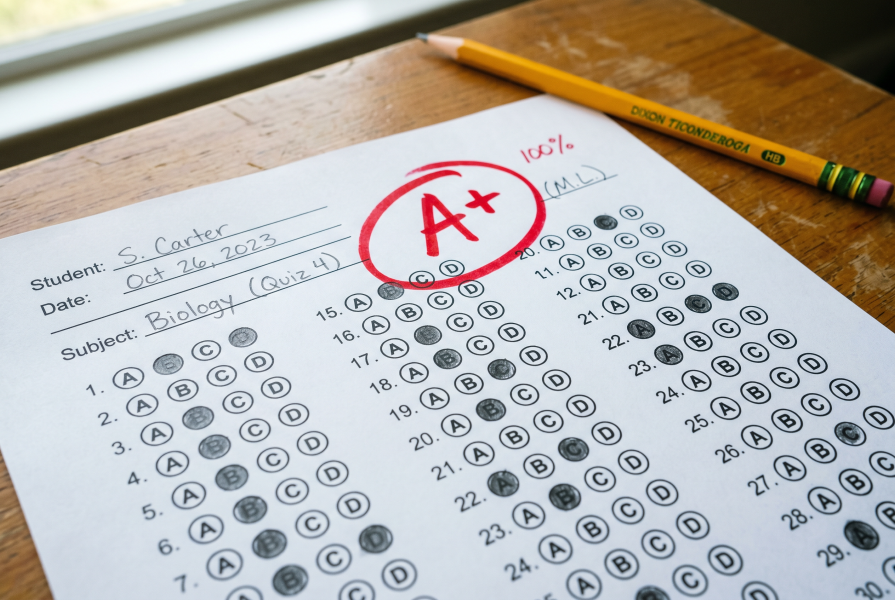
Grading has long been an integral part of education systems worldwide. In primary schools, high schools, and even universities, grading is done to assess the academic performances, give feedback, and help evaluate a learner’s progression. Despite being considered as one of the most reliable forms of evaluation in academic settings, the use of grades continues to be controversial, with some people suggesting that it generates stress and fails to recognize the abilities of the learners.
As education continues to evolve, understanding the purpose, limitations, and impact of grading has become increasingly important for students, educators, and parents alike.


Why Grades Matter
The key reason for which grades exist is the assessment of how well a particular student grasped all the information given to them in a particular course.
Also, there are a number of other functions that grades perform. First of all, they help students learn what their strengths and weaknesses are and help teachers assess the results of teaching. Furthermore, grades are the basis for such things as graduation, scholarship, entering a college or university, or job positions.
Many students see grades as an excellent motivator, providing them with some goal to strive for in their studies.
More Than Just Test Scores
Modern-day education is beginning to realize that not everything can be tested on the basis of examination. Many schools have started evaluating their students on the following bases:
-
Examinations
-
Coursework and essays
-
Research
-
Group work
-
Presentations
-
Laboratory work
-
Classroom performance
This will help in judging not just academic knowledge, but practical, analytical, and communication skills as well.

The Challenges of Traditional Grading
The grading system is one of the most important tools used in evaluation, yet it is subject to several criticisms. The first criticism involves using only a grade or a numerical symbol to evaluate a student's performance.
There are students who learn fast, learn in different ways, and show their knowledge differently. It means that some students might be graded better than others due to their style of learning and knowledge demonstration.
Another criticism of a grading system involves the issue of inconsistency when assessing the same assignment.
The Pressure of High Grades
Grades tend to have quite an emotional connotation. The students are likely to equate their academic performance with their self-worth, which results in stress, anxiety, and fear of failure.
In an extremely competitive educational system, the desire to get the best grades can lead to exhaustion, demotivation, and preoccupation with performance rather than actual learning. Some students will even choose to shun difficult disciplines because of the fear of poor grades.
Modern educational psychology tends to pay increasing attention to the fact that mistakes are an integral part of the learning process.
Grades and Motivation
Grades have varying effects on the motivation of students. They can be sources of motivation through instilling a sense of determination and commitment among others. Improvement in grades motivates one towards working hard.
The concentration on grades might however result in a loss of focus. This is because the primary aim will be getting good grades and not learning how to master the topic.
It is claimed by many teachers that learning is maximized through a combination of grades and constructive criticism regarding what has been achieved and what needs improvement.
Alternative Approaches to Assessment
In response to concerns about traditional grading, many schools and universities are exploring alternative assessment models.
Some are putting more importance on continuous assessment, wherein the learners are being assessed constantly all through the duration of the course instead of depending on exams at the end of the course. There are some institutions that practice competency-based assessments in which the learners are evaluated based on their competency instead of comparing them among themselves.

Other evaluation methods like narrative assessment, portfolio assessment, and pass/fail system are also gaining popularity in some educational institutions.
The Role of Feedback
Grades are more meaningful when they are coupled with constructive feedback. While grades provide an idea of how well one did in class, constructive feedback sheds light on what went wrong and how improvement is possible.
Constructive feedback helps students:
-
Recognize areas where they lack information
-
Gain better study techniques
-
Feel confident in their approach
-
Create academic goals for themselves
-
Think about the entire process of learning
Numerous education scholars consider constructive feedback to have more influence on the development of students than grades alone.
Preparing Students for the Future
Academic performance remains important for higher education admissions and many career opportunities. However, the competency skills valued by employers have become more diverse than ever before. Communication, teamwork, adaptability, innovation, and problem-solving skills are some of the competencies that have become more valuable in today’s job market.
For this reason, most schools are attempting to strike a fine balance between assessment of academic knowledge and skills development among the learners.
Looking Ahead
The development of technology and data analytics is revolutionizing how student performance is evaluated. The use of artificial intelligence, personalized learning systems, and digital tools for assessment will enable teachers to evaluate the performance of students constantly and give personalized attention to each of them.
The future grading system will be more dynamic and will incorporate both academic and skill assessments, project work, and personalized assessments of students' performance.
Conclusion
Grades continue to play an essential role in education by measuring academic progress, supporting admissions decisions, and encouraging student achievement. At the same time, they have clear limitations and cannot fully capture every aspect of learning, creativity, or personal growth.
As education evolves, many schools and universities are seeking a more balanced approach that combines grades with meaningful feedback, diverse assessment methods, and opportunities to develop practical skills. By focusing not only on performance but also on continuous learning and individual development, education systems can better prepare students for success both inside and outside the classroom.