Massachusetts Institute of Technology Camp


Programs and prices, tuition fees in Massachusetts Institute of Technology Camp


Autonomous and Self-Driving Robotics Lab
- Skill level: Beginner-Advanced
- Direction: Coding, Robotics
Arduino is a microcontroller popular in robotics: students will learn how to create circuits and program a device to perform certain actions. MicroPython is a tool that gives the robot vision: it is a small camera embedded in the device - it will allow the device to make decisions depending on the situation (go around obstacles, stop, and so on). Students work in groups and in 2 weeks create their own robotics project.
Students will learn:
- Fundamentals of Electrical Engineering
- Create autonomous robotics and computer vision
- Encode devices
- Build robots
- Teamwork and critical thinking.
Machine Learning: Coding Deep Neural Networks
- Skill level: Beginner-Advanced
- Course duration: 2 weeks
- Direction: Robotics, coding
- Tools: NVIDIA Jetson Nano, PyCharm, TensorFlow.
Modern computers are powerful devices that can perform millions of tasks. Students of this course will teach their devices not only to perform tasks, but also to learn: by creating an environment for learning in a certain field, students will endow the computer with new features, for which they will later be rewarded with unique services that help in modern life. Examples of computer studying are Siri, Snapchat filters.
Students will learn:
- Create neural networks with the TensorFlow tool
- Implement Computer Learning Using the Python Tool
- Optimize Learning Speed
- Develop coding and computational thinking skills
- Teach computer models different skills.
Hackathon: Team-Based App Creation with Unity
- Skill level: Beginner-Advanced
- Course duration: 2 weeks
- Direction: game development, coding
- Tools: Unity, C #, Adobe Photoshop.
Students will learn how, using modern tools, to create applications for smartphones and tablets. In the first week of the course, theoretical knowledge will be gained regarding Unity, C #, and the Adobe Photoshop graphic tool. In the second week, students will begin to create their own project: it will be a mobile application or even a colourful game - it will be possible to realize almost any idea.
Students will learn to:
- Create mobile apps
- Work with C # Tools
- Design workflows
- Work in a team.
Cybersecurity Lab: Encryption and Steganography
- Age of students: 15-18 years
- Skill level: Beginner-Advanced
- Course duration: 2 weeks
- Direction: Encoding
- Tools: Python, PyCharm, HARP prototype.
Students will receive modern knowledge about computer codes, information flows, cryptographic elements: the work is based on texts, audio and video information. In the course, students will learn how a character set is converted to a video clip or other product, and will learn how to create ciphers on their own. During the course, knowledge that is rare and expensive for the modern labour market will be acquired.
Students will learn to:
- Use Python to encrypt and decrypt messages
- Apply multiple encryption methods
- Hack hardware devices and solve cryptographic puzzles
- Develop security skills and analytics.
C ++ Game Programming: Algorithms and AI
- Skill level: Beginner-Advanced
- Course duration: 2 weeks
- Direction: Encoding
- Tools: C ++, Microsoft Visual Studio.
The C ++ programming language opens up a ton of possibilities: students will gain effective knowledge that allows them to create applications and 2D games. During the second week, students will be taught to introduce artificial intelligence into their project, which will help to create maps and look for ways. Students will master the algorithms that are the basis of many modern games, will have the opportunity to attend 12 exclusive online master classes.
Students will learn:
- Read user input and print formatted output
- Implement a game loop
- Use algorithms to help to solve many game problems.
Game Engine Development With C ++
- Age of students: 15-18 years
- Skill level: Beginner-Advanced
- Course duration: 2 weeks
- Direction: Encoding
- Tools: C ++, Microsoft Visual Studio.
Students will learn the C ++ tool that underlies many game engines: in 2 weeks, teachers will teach you how to create games from scratch, to analyze code, and to optimize it. Students will compare the code of different games, making a comparative table, finding ways to quickly solve the necessary problems. The knowledge gained during the course is enough to develop your own project and introduce new content into it.
Students will learn to:
- Read user input and print formatted output
- Add graphics and controls to the game
- Develop an API to create game engine content
- Implement a game loop
- Create the base code used in various games.
Description of Massachusetts Institute of Technology Camp
- Age of students: 7-17
- Co-ed programs
- Weeklong camps and 2-week academies
Summer Camp focused on computer science in Cambridge, MA is a unique opportunity for international students to study various programming directions and to obtain valuable knowledge and active rest during the summer holidays. The summer camp for young programmers is a special platform where children learn about innovative, state-of-the-art achievements in technology, exact sciences and programming, prepare to enter the best profile universities of the United States and the world, make their first steps towards a successful career and sought-after specialty.
Summer camp is available for children from 7 to 17 years. All specialists who work with children are highly qualified instructors. The majority of camp children are Americans, foreign students make up only 6%. Despite the young age, the participants of the summer camp achieve impressive successes and results:
- A special service for LEGO lovers
- A School of Coding for Children
- One of the children became a guest speaker at the professional prestigious Game Developers Conference (GDC) and soon begins to work in the sphere of game development.
Even short-term summer courses at the one of the most famous university in the world is a great advantage!. Students can choose among more than 60 different subjects, specialties and directions. Full linguistic and cultural immersion, as well as life on a traditional campus, will prepare children for further study abroad.
Note: there are no English lessons in the American camp - the student must already have a sufficiently high level (from B2, or Upper-Intermediate), to study a course in the relevant technological disciplines.
You can choose the most relevant and priority for you topics and intensity of classes: there are developed courses for beginners and programmers, and for already experienced students, and for high school students who plan to enter profile universities.
Educational process
Participants spend about five hours a day at the computer, with breaks for recreational activities. Groups are divided first by age and then, when needed, by experience level. Instructors monitor how children interact and may move a participant to a different seat or class section.
All instructors are adults based in the USA. They receive training in safety and first aid, as well as in-person and online instruction on adapting course material to children's needs. Individual accommodations and extra support are discussed before camp begins.
The academy offers intensive, hands-on programming workshops with assignments and a pre-college focus. Teens learn through interaction with their peers, can choose what to learn, and meet technology industry professionals. During the session, they create a finished portfolio project. Examples include a Unity game, a trained machine learning model, or a working VEX robot.
Academy teens have more freedom than younger school students. For example, their later bedtime gives them more time to work on personal projects and research.
Sample day camp schedule:
| Time | Activities |
|---|---|
| 9:00 | Morning announcements, icebreakers, and team-building activities |
| 9:30 | Classes begin in the selected courses |
| 12:00 | Lunch |
| 13:00 | Classes resume in the labs |
| 14:30 | Computer break, walks, and board games |
| 15:15 | Work resumes on course projects |
Sample academy schedule:
| Time | Activities |
|---|---|
| 8:00 | Wake up and have breakfast in the campus dining hall |
| 9:00–12:00 | Classes, studio visits, and/or talks by industry guest speakers |
| 12:00 | Lunch in the dining hall |
| 13:00–14:00 | Free time for campus walks, gaming tournaments, or outdoor activities |
| 14:00–18:00 | Classes, course work, studio visits, and/or meetings with industry professionals |
| 18:00 | Dinner |
| 19:00 | Portfolio work, outdoor activities, hackathons, and gaming tournaments |
| From 20:00 | Relax and spend time with friends |
| 22:00 | Lights out |
At the end of the course, participants take home a USB drive containing their project files and receive software installation and setup instructions so they can continue working independently. Staff take photos of children during activities and regularly post new pictures. At the Friday Family Showcase, academy participants show their final projects, while families discuss the session content and skills gained with staff.
Faculties and colleges
The academy offers the following courses:
- AI Academy: Vibe Coding & App Engineering — developing apps with artificial intelligence,
- BattleBots® Academy: AI Vision Robotics & CAD — robotics with computer vision and computer-aided design,
- NVIDIA® Academy: AI and Machine Learning,
- 3D Printing Academy: Design & Build a Product Line,
- Unreal Engine Academy: Game Development Studio.
Things to know about
- The iD Tech network has 750,000 alumni,
- The iD Tech network has a 4.3-star rating on Trustpilot,
- iD Tech partners with BattleBots® and NVIDIA®.
Accommodation, meals, prices
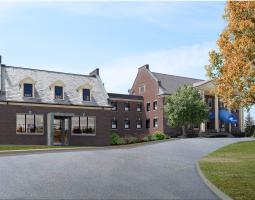
iD Teen Academies is available only as a residential program. Participants stay in residence halls at Bentley University during the earlier sessions and at Boston University for the final session. Residences are equipped according to the most modern standards, always maintained in proper technical condition and are located not far from classrooms. Boys and girls stay in separate areas of the residence halls. The staff of the camp and the staff of the residences monitor the order and safety around the clock and are always ready to help children to solve all the issues.
- Dorms with furniture,
- Bathrooms (separate or shared),
- Common areas (kitchen, living room),
- Recreation areas and games,
- Internet access.
Participants can request a particular roommate, and the organizers make every effort to accommodate the request. Otherwise, a roommate is assigned based on the participant's age and gender. During breaks, teens can use their own phones to stay in touch with their parents.
Participants in residential programs eat breakfast, lunch, and dinner in campus dining halls. Staff accompany them to meals and help them navigate the food stations. Vegetarian options are usually available at every meal, but specific menu items cannot be guaranteed in advance. Arrangements for allergies and other dietary needs are agreed on before camp begins.
Day campers can have lunch in the campus dining hall.
Activities Massachusetts Institute of Technology Camp
The camp staff organizes leisure activities for children on campus and might also organize supervised excursions off campus. Children might also visit nearby attractions that are walking distance from the camp locations. An intensive extra-curricular life will not let anyone get bored, help you to relax and gain strength before new activities.
Advantages
- A large number of professional programs,
- Qualified instructors and camp staff,
- Latest software and hardware,
- Practical focus,
- Comfortable accommodation and full board,
- Intensive extra-curricular life,
- Day camp combines hands-on education with university campus exploration,
- Staff follow American Camp Association accreditation guidelines.
Facilities and equipment at Massachusetts Institute of Technology Camp
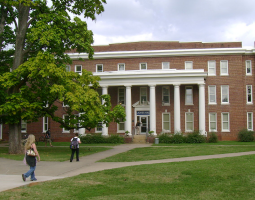
Classes take place on a campus spanning more than 150 acres. Computers, equipment, and software are provided in the camp's teaching labs. The summer camp provides access to the university infrastructure. Classes are held in well-equipped, bright and spacious classrooms. Students use the highest quality and professional software. Modern infrastructure includes:
- Scientific centers,
- Computer and technical laboratories,
- Open areas and walking paths,
- Canteens, cafes and restaurants.
The nearest airport is Boston, with the code BOS, 6 miles from the venue. The estimated travel time is 15 minutes by car or 40 minutes by public transit.
Admission dates and extra charges
The programs of the summer camp run from June 20 to August 13 and have different dates for each individual camp and program. Each iD Tech Camps day camp session lasts one week. Each iD Teen Academies session lasts two weeks. Exact course dates, tuition, and availability can be confirmed.
The cost of the summer program in the USA varies depending on its duration. The following options are included in the price:
- Studying the program,
- Teaching aids, books and materials, using electronic sources and the Internet,
- Accommodation and meals on campus, full board — for the residential academy,
- Leisure and recreational activities, excursion program,
- Full security guarantee.
The following components are paid additionally:
- Registration fee,
- Meals and accommodation at the weekend,
- Round trip air tickets,
- Round trip,
- Visa fees and services, translation and document verification,
- Consular fee (paid at the Embassy),
- Personal pocket expenses,
- Compulsory medical insurance.
Monday through Thursday, day camp runs from 9:00 a.m. to 4:30 p.m. Check-in begins at 8:30 a.m., and children can be picked up until 5:00 p.m. On Friday, camp ends after Family Showcase, which runs from 2:00 to 3:00 p.m.
Headphones are not provided. Participants may bring their own if they wish.
Extras:
- Registration fee (for a programme/course)
Perspectives
At the end of a weeklong course, each participant receives an iD Tech diploma and a transcript listing the material they learned during the week.
Academy graduates receive an iD Tech diploma. Their course-specific portfolio can be used for college applications and when applying for internships or jobs.
Entry requirements, how to apply, what is required to enrol
- iD Teen Academies programs are for teens ages 13–18,
- Every camper agrees to the Code of Conduct.
Institution on the map
Residence permits, citizenship and other services
- Guardianship services during the studies
- Student supervision
Review about Massachusetts Institute of Technology Camp
Recommendations on when to apply
| Language courses, schools and children's language camps | Primary and secondary education - private schools | Preparation programmes for entering universities - higher education | Higher education (after completing accredited programs A-level, IB, High School) - Bachelor, Master, MBA |
| - we recommend to apply 6-9 months before the start of the course (some camps and schools offer discounts for early booking or for lengthy study programs) - there are some very popular and high demand children's camps, where the applications need to be submitted 1 year in advance (in particular Switzerland , Great Britain , USA , Canada , Austria) | - we recommend to apply one year before the start of the training program, - some schools have a specific time frame (September-November - please specify an individual school) - some schools require tests in several stages (UKISET, internal tests of the school: English, mathematics, logics, subjects, interview, some require a personal visit) | - we recommend to apply one year before the start of the program, - for Foundation and Pathway programs, IELTS and TOEFL certificates are usually required, respectively | - recommended submission one year before the start of the program, - the deadline normally closes in January, for TOP HEIs and, as a rule, in March in other universities - for a bachelor, a Foundation or Pathway preparatory program a completed A-level, IB, High School + IELTS / TOEFL are required - for Masters you need a graduated higher education, in some cases you need a pre-Masters program - MBA requires completed higher education, work experience preferably at least 2-3 years, etc. |