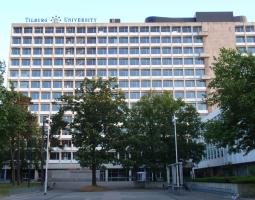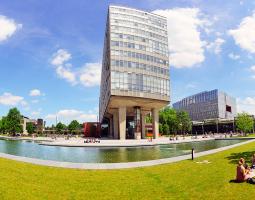
Maastricht University (UM)



Programs and prices, tuition fees in Maastricht University (UM)


Information on the program can be found on the official website of the school.
Information on the program can be found on the official website of the school.
Description of Maastricht University (UM)
The University of Maastricht or Maastricht University (UM) is a non-profit public higher education institution located in the city of Maastricht (the Netherlands). Maastricht University was founded in 1976. It is a young European university, invariably part of the top 20 universities in the country. At the same time, up to 16,300 students study at the university and employ about 4,300 employees. The institution is distinguished for its innovative model of education, an interdisciplinary approach, and also an international character.
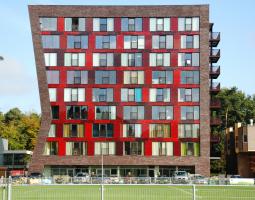
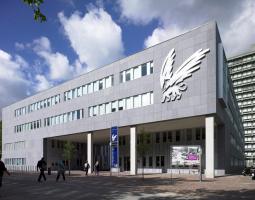
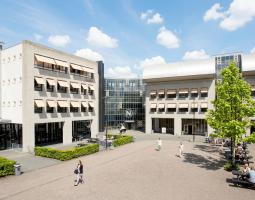
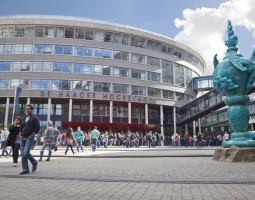
Over the past decades, Maastricht has evolved from a quiet provincial town into a vibrant international student city, in which more than 10% of the town's residents are students, and almost half of them are guests from other countries. It is a beautiful city for living with a picturesque city center, historical buildings, elements of modern architecture create a positive atmosphere. The campus is located within the city and contains all the necessary infrastructure necessary for full study, recreation and development.
Students can study before or after sessions, work in one of 175 study spaces or work with other students on a project or assignment, and during a break visit one of the many cafes on campus.
Those wishing to go in for sports can train in gyms, stadiums or enroll in one of the university sports teams.
Maastricht University students have the opportunity to live in a hostel or rent an apartment with other students. The average rent is from 300 to 400 euros per person. Most students live in the center of the city, but it is possible to rent housing in the suburbs.
Most of the hostels are within walking distance or bicycling from university buildings, which is very convenient for students.
Education at the university requires careful preparation for classes, reading books and collaborating on projects. The university library provides many halls with workplaces for individual studies. Almost half of them are equipped with computers, and free Wi-Fi allows you to work on your own laptop.
Educational process
- A full academic year across all programs is worth 60 ECTS credits. A full-time student must earn at least 30 such credits per academic year.
- During the course of study, students must earn half of the credits for the corresponding semester. For example, if the second semester is worth 30 credits, students must earn 15.
- Some programs have a mandatory continuation recommendation for first-year students.
- Students who have experienced unacceptable behavior or unequal treatment may contact a confidential advisor.
Faculties and colleges
The university's undergraduate programs are divided into three groups by enrollment type.
- Open enrollment (no competitive selection, only meeting general requirements):
- Arts and Culture,
- Biomedical Sciences,
- Business Analytics,
- Business Engineering,
- Circular Engineering,
- Computer Science, Data
- Science and Artificial Intelligence,
- Digital Society,
- Dutch Law,
- Econometrics and Operations Research,
- European Public Health,
- European Studies,
- Health Sciences,
- Regenerative Medicine and Technology,
- Sustainable Bioscience,
- Tax Law,
- Urban Sustainability Studies,
- competitive selection (motivation letter, CV, interview) — there is no limit on the number of such programs you can apply to simultaneously:
- Economics and Business Economics,
- Global Studies,
- Maastricht Science Programme (Liberal Arts and Sciences),
- University College Maastricht (Liberal Arts and Sciences),
- University College Venlo (Liberal Arts and Sciences),
- numerus fixus (fixed number of places with competitive selection) — you may apply to no more than two fixus programs in the Netherlands, and if accepted into both, you may only attend one:
- Brain Sciences, European Law School (places are allocated by lottery, which does not take the applicant's academic performance into account),
- Geneeskunde (medicine),
- International Business, Psychology.
Separately, Maastricht University Brussels Hub offers part-time PhD programs for working professionals — the PhD Programme for Professionals in European Studies is available, with individual academic supervision tailored to each participant's work schedule.
Things to know about
- Building 001, which houses AMIBM, was built in 1940 and is considered the oldest building on the Brightlands Chemelot Campus.
Accommodation, meals, prices
Housing search near the university is centralized through the Maastricht Housing platform, which aggregates listings from UM Guesthouse, housing associations, real estate agencies, and private landlords. The platform offers furnished and unfurnished rooms, studios, and apartments for short-term and long-term stays.
UM Guesthouse offers fully furnished rooms and studios for short-term accommodation; bookings can be cancelled free of charge up to one month before check-in.
Through the Hospi Housing service, homestay accommodation is available: a private room with a shared kitchen and bathroom.
Students admitted to University College Venlo, Sustainable Bioscience, or the pre-master's program in Health Food Innovation Management can apply for one of 28 furnished student studios on the campus in the center of Venlo — with a private kitchen, bathroom, and living area, close to shops and restaurants.
Activities Maastricht University (UM)
UM SPORTS offers daily group training sessions and courses, including cross-training, mobility development, fitness fundamentals, and Olympic weightlifting technique. For an additional fee, students can enroll in courses at various levels in tennis, squash, climbing, weightlifting, and other sports.
- the sports program includes American football, athletics, badminton, basketball, hockey, climbing, football, lacrosse, volleyball, chess, padel, water polo, dance, esports, cycling, rowing, sailing, rugby, fencing, and swimming,
- Maastricht University has 32 student sports associations.
Advantages
Maastricht University supports its students in setting goals and drawing up effective plans for the future, offering vocational guidance, internships and a practice-oriented learning environment, providing ample opportunities for the development of professional competencies. The management of the educational institution closely cooperates with the business sphere, ensuring the employment of its graduates.
Thanks to its high-quality research and programs, as well as close attention to social interaction, UM quickly established a solid reputation. Today he is considered one of the best young universities in the world.
Innovative model of education and international orientation
The university is a European pioneer of problem-oriented learning. This educational model has been working since the foundation of the university.
Located in the heart of Europe, the university is actively developing exchange programs. Almost half of the students and a third of the teaching staff come from abroad, representing more than 100 different nationalities. Most UM curricula are taught in English.
The university conducts extensive research and development activities. Scientific research is interdisciplinary in nature and is directed towards European integration, sustainable development, healthy aging and the impact of technological progress on society. The researchers work in close cooperation with national and international institutions, companies and industry.
Facilities and equipment at Maastricht University (UM)
UM has six faculties and five centers managed as a whole. The office of the University of Maastricht advises and supports the executive university council, which includes the administration and management of the university. The University Council is the central representative body of employees and students.
The university offers a wide range of educational programs.
Admission dates and extra charges
Candidates holding a degree from a country outside the EU/EEA pay a fee of €100 when applying to bachelor's, master's, or pre-master's programmes. Bank charges are paid separately.
The fee covers administrative costs for the assessment of prior education. Applications will not be considered without payment.
Once studies at UM commence, the fee is refunded; however, bank charges are not reimbursed. A refund is only possible if studies begin in the academic year for which the fee was paid, and it is made exclusively to a bank account within the SEPA system.
Enrolment process
Some open-admission bachelor's programs offer an optional Matching procedure (candidate-to-program matching). It may include an interview, an online questionnaire, or another activity. Smapse specialists will guide you through every stage of the application process.
Entry requirements, how to apply, what is required to enrol
Every year the university holds an open house. Future applicants can visit the university at this time, talk with teachers and students. This will help them to choose the place of their studies.
Enrollment in the University of Maastricht occurs on the basis of previous academic achievements and examinations. The admission committee does not take into account gender identity, religious beliefs and citizenship of applicants. The list of documents included in the application package is posted on the website of the educational institution. The entrant must complete five stages of the enrollment procedure:
- Registration through the site.
- Loading documents into MyUM.
- Obtaining approval from UM.
- Filling out the form.
- Completion of registration and payment of education.
Education for foreign citizens studying at the undergraduate is 8,779 USD / year. Education in the magistracy will cost foreigners at 13,168 USD / year. The cost of living is from 696 to 1327 USD / month.
For foreign students who want to study in Maastricht, various grants and financial assistance from the university are available.
Scholarships Maastricht University (UM)
- Maastricht University offers various types of financial aid, the availability of which depends on citizenship or place of residence,
- The UM Student Support Fund (StOF) helps cover additional study-related expenses in cases of illness, special family circumstances, disability, or pregnancy.
- Financial support is also available for those serving on a council, a governing body of an academic program, or a student organization, as well as for elite athletes.
Institution on the map
Residence permits, citizenship and other services
- Guardianship services during the studies
- Student supervision
Review about Maastricht University (UM)
Recommendations on when to apply
| Language courses, schools and children's language camps | Primary and secondary education - private schools | Preparation programmes for entering universities - higher education | Higher education (after completing accredited programs A-level, IB, High School) - Bachelor, Master, MBA |
| - we recommend to apply 6-9 months before the start of the course (some camps and schools offer discounts for early booking or for lengthy study programs) - there are some very popular and high demand children's camps, where the applications need to be submitted 1 year in advance (in particular Switzerland , Great Britain , USA , Canada , Austria) | - we recommend to apply one year before the start of the training program, - some schools have a specific time frame (September-November - please specify an individual school) - some schools require tests in several stages (UKISET, internal tests of the school: English, mathematics, logics, subjects, interview, some require a personal visit) | - we recommend to apply one year before the start of the program, - for Foundation and Pathway programs, IELTS and TOEFL certificates are usually required, respectively | - recommended submission one year before the start of the program, - the deadline normally closes in January, for TOP HEIs and, as a rule, in March in other universities - for a bachelor, a Foundation or Pathway preparatory program a completed A-level, IB, High School + IELTS / TOEFL are required - for Masters you need a graduated higher education, in some cases you need a pre-Masters program - MBA requires completed higher education, work experience preferably at least 2-3 years, etc. |