Kensington School Madrid, Private School Kensington in Madrid





Programs and prices, tuition fees in Kensington School Madrid, Private School Kensington in Madrid


Nursery/Early Years
- Age: 18+ months/
- Duration of study: 3 years 6 months when enrolling at 18 months/
- Language: English.
The early stage of education covers the path from Pre-Nursery to Reception and is based on the British Early Years Foundation Stage system. The program helps children develop speech, communication skills, physical coordination, independence, the basics of reading, writing and mathematics, and explore the world around them through creativity and play.
The key feature of this stage is learning through exploration, play and the child's own independent activity. The program combines the British Early Years approach, elements of the Inspired Early Years Framework, and the ideas of Reggio Emilia: children are encouraged to ask questions, experiment with materials, discuss their observations, and learn through interaction with the environment. Teachers tailor lessons to the interests of the group and help children gradually develop speech, thinking, social skills and self-confidence.
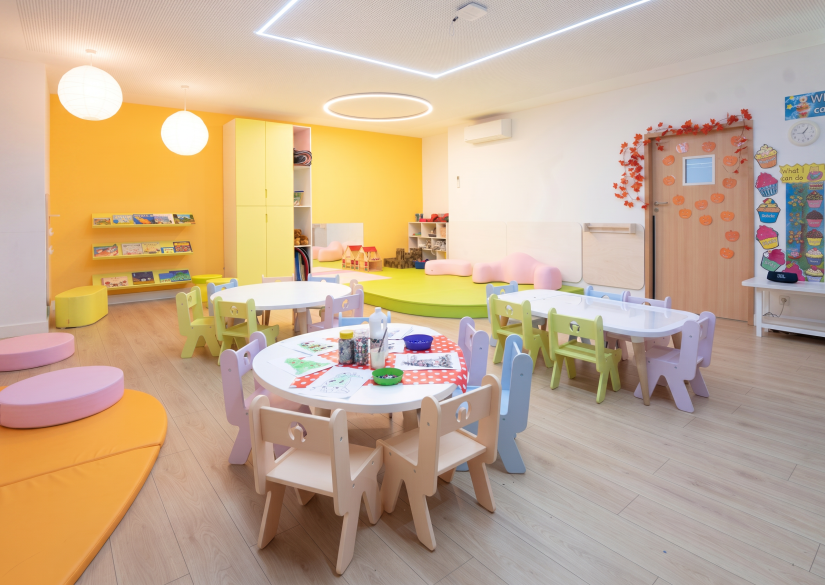
During the day, children alternate between teacher-led sessions, free play, and collaborative projects. The classroom space is organized so that a child can independently choose an activity, move between play and learning zones, and work with materials, books and educational resources. An important role is played by the atelier — a dedicated creative environment where children explore different techniques and materials, develop imagination, fine motor skills and the ability to express their ideas through art.
Primary School
- Age of students: 5+.
- Duration of study: 6 years.
- Language: English.
Primary school covers Year 1–Year 6 and is based on the British curriculum while maintaining strong Spanish language preparation. In the early years, children develop key academic skills — reading, writing, mathematics, and natural sciences — entirely in English and to the same standards used in schools in the United Kingdom.
From Year 3, learning is structured as the integration of two educational cultures: the British curriculum remains the academic foundation, while Spanish language and literature take a full place in the timetable. This format allows children not only to progress confidently within the English system, but also to navigate the Spanish-language environment freely, developing their written and spoken language to a high level. In parallel, Kensington introduces elements of digital literacy: students learn the principles of safe internet use, how to use technology mindfully, understand the risks of online communication, and handle personal information responsibly.
The school places emphasis on an individual approach: teachers help students strengthen their knowledge in challenging subjects and discover their strengths, so that the transition to the next level is as smooth as possible. Great attention is paid to developing independence: children learn to track their own progress, take responsibility for their assignments, and work effectively as a team.
Secondary School: Years 7–9
- Age of students: 11+.
- Duration of study: 3 years.
- Language: English.
At this stage, learning becomes more subject-based and closer in structure to senior school. The program corresponds to lower secondary within the English national system and covers English language, mathematics, natural sciences, humanities, technology, foreign languages, sport, and creative subjects. At the end of Year 9, students decide on their future pathway: they may choose the English route with preparation for IGCSE or continue studying under the Spanish LOMLOE program.
At this level, the school's emphasis on multilingualism is especially evident. As early as Year 7, students regularly study in English, Spanish, and French; French becomes a full part of the curriculum, with learning accompanied by preparation for the international DELF A1 examination.
Great attention is paid to personal development and social responsibility. Within Citizenship, students discuss the structure of society, rights and responsibilities, and issues of equality, tolerance, and safe behaviour. PSHE classes follow the ICARE program, based on the values of integrity, collaboration, acceptance, respect, and empathy. From Year 7, students participate in the Traversía program, which accompanies them through to the end of Bachillerato and includes leadership projects, volunteering, mentoring, and participation in school life.
Psychologists and IT specialists conduct classes on digital safety, social media communication, and interaction within the school community; students learn to work through conflict situations via role-playing exercises, discussions, and written reflection.
IGCSE
- Age of students: 14+.
- Duration of study: 2 years.
- Language: English.
After Year 9, students begin the IGCSE program — a British academic course for Year 10 and Year 11. Over two years, students study specialized subjects and prepare for IGCSE examinations, the results of which are recognized by schools and universities worldwide and open the path to further pre-university education.
The course is based on subject specialisation and preparation for external examinations. Students work with academic English, mathematics, natural and social sciences, languages, and specialist subjects. Spanish remains a priority: the program maintains strong Spanish instruction so that students stay connected to the local education system and can choose between Spanish and international university pathways.
Teaching stipulates Kagan Collaborative Learning: students work in teams, distribute roles, explain material to one another, and learn to take responsibility for shared outcomes. This format is well suited to teenagers who need not merely to memorise a topic, but to learn to argue a point, listen to a partner, and quickly identify gaps in their own understanding.
Students continue to improve their English and prepare for Cambridge English international examinations, including First Certificate, Advanced, and Proficiency levels. French is taught with a focus on DELF standards, using current materials, articles, and documents. In the 2025 IGCSE examination session, 41% of all grades were A*, 58% fell in the A*–A range, and 78% in the A*–B range.
Spanish ESO
- Age of students: 14+.
- Duration of study: 2 years.
- Language: Spanish.
Spanish ESO includes 3º and 4º ESO — two years of study under the Spanish state curriculum following Year 9. The program is structured in accordance with LOMLOE requirements, providing official academic preparation for subsequent transition to Bachillerato and entry into Spanish universities.
The key profile is a combination of the Spanish academic system with an enhanced focus on foreign language study.
- English is taught by native speakers with experience preparing students for Cambridge English exams, including First Certificate and Certificate in Advanced English.
- The French course is oriented toward DELF standards and stipulates the development of conversational practice, work with current texts, media, and authentic materials.
At this level, Kagan Collaborative Learning is used: group work helps teenagers practice argumentation, oral communication, and accountability for shared results. This format helps identify gaps in understanding more quickly and develops argumentation skills. From 3º ESO, classes in public speaking and emotional intelligence are also available: academic support, preparation for external exams, and projects that develop independence and responsibility.
Spanish Bachillerato
- Age of students: 16+.
- Duration of study: 2 years.
- Language: Spanish.
Spanish Bachillerato covers 1º and 2º Bachillerato — the two final years of the Spanish school curriculum. Students prepare for the EvAU exam while also studying English and French in depth: in the English option, the school prepares students for Cambridge Proficiency, and in the French course — for DELF B2.
At the senior school stage, emphasis is placed on small-class learning, personal guidance, and university selection support: students are helped to choose subjects, develop a preparation strategy, understand the requirements of Spanish universities, and manage their study workload effectively before exams. The program stipulates a technology specialisation, preparation for external certifications, development of self-discipline and self-management skills, and participation in team projects and volunteer initiatives. Additionally, from 3º ESO through 1º Bachillerato, students attend classes in public speaking and emotional intelligence.
The program's results are consistently high. In 2025, all graduates passed the PAU; the highest score was 13.63 out of 14. More than half of the students scored above 11 points, and the average score was 8.22 out of 10. Kensington also notes leading positions in UCM rankings over many years.
Diploma Program
- Age of students: 16+.
- Duration of study: 2 years.
- Language: English.
The Diploma Programme at Kensington has been running since 2023, covering the last two years of secondary education, and is designed for high school students who plan to enter universities abroad and want to receive an international education in English.
The course focuses on in-depth study of selected subjects, developing analytical thinking and independent learning skills. High school students prepare for international exams, conduct research projects, and learn to apply knowledge from different subject areas within a unified academic context.
In the upper years, the emphasis is on individual student support: Kensington helps students select subjects based on their chosen field of study and university requirements, manage their workload, and prepare for admission. The studying process is added with personal and social initiatives: the Travesía program, volunteer projects, classes in public speaking, and emotional intelligence development.
Description of Kensington School Madrid, Private School Kensington in Madrid
- Year founded: 1968.
- Location: Pozuelo de Alarcón, Madrid, Spain.
- Number of students: 1100.
- Type of study: mixed.
- Type of institution: private international day school.
- Language of instruction: English and Spanish.
International private school in the Madrid suburb of Pozuelo de Alarcón, one of the first Spanish schools with an international British program, founded in 1968. Since its opening, education here has been based on a combination of an English language environment, a British educational program, and strong Spanish academic preparation, allowing graduates to continue their education both in Spain and in other countries around the world.
Today Kensington is part of the international Inspired network.
Three blocks stand out in the curriculum: language preparation, academic support, and the development of personal responsibility. The school has tutors and a psychological service, a well-thought-out model for supporting students in choosing a career and academic track, and the special program Travesía helps students develop leadership qualities, collaboration skills, and social engagement.
Educational process
The educational process at Kensington combines elements inherent to both British and Spanish traditional schools, taking the best from each tradition. Classes are conducted in English, while students also study Spanish and French.
Tutors, educators, and career and academic counselors help students choose subjects, prepare for exams, gather application documents, and build a study plan for the upper grades. Special attention is given to language support: students prepare for Cambridge English, DELF, and other international exams, and improve their academic writing and public speaking skills. During the studies, students are helped to analyze university requirements in Spain, the United Kingdom, and other countries, write personal statements, submit documents, and navigate application deadlines.
Things to know about
- Kensington School was one of the first schools in Spain to combine the British and traditional Spanish curriculum.
- For the youngest children, the school has created an atelier space — a creative environment inspired by the Reggio Emilia approach, where children learn through exploration of materials, movement, play, and collaborative activities.
- Upper school students combine preparation for Spanish final exams with studying for international language certificates Cambridge English and DELF.
Accommodation, meals, prices
Children eat on campus, which has its own kitchen where meals are prepared daily. The menu is developed by a children's nutrition specialist taking into account the students' ages and balanced diet principles; special dietary options are available for children with celiac disease, diabetes, food intolerance, allergies, and for vegetarians.
A school bus network is provided, circulating through various districts of the Spanish capital and connecting the campus in Pozuelo de Alarcón with residential neighborhoods of the capital and nearby suburbs; several routes have been established for the convenience of families from different parts of the city.
Activities Kensington School Madrid, Private School Kensington in Madrid
Within the Inspired model, the school combines three areas: academics, sports development, and performing arts. The timetable and extracurricular program include music, theatrical productions, creative projects, public speaking, and STEAM subjects. In the lower years, the focus is on developing communication, confidence, and an interest in collaborative work, while older students' schedules already include debates, project-based activities, and other, more independent formats of participation in school life.
From Year 7 to 2º Bachillerato, the Travesía program operates, aimed at developing leadership, responsibility, and social skills. Through it, students participate in volunteer initiatives, mentoring, team projects, and school community events. Senior students can take on leadership roles and support younger pupils.
As part of the personal development program, Kensington pays attention to emotional well-being, digital safety, and responsible behavior: students study the principles of safe internet use, social media communication, cyberbullying prevention, digital reputation management, and mindful behavior in the digital environment.
Sports life includes training, team sessions, and school events for different age groups. Through the Inspired network, students gain access to international sports camps, academic exchanges, and a network of summer camps around the world.
Advantages
- Operating since 1968, with more than half a century of conducting British education experience in Spain.
- Part of the Inspired network, giving students access to international exchanges, summer programs, and group resources in academic and professional consulting.
- It accepts children from 18 months and accompanies them through the end of secondary school, allowing them to complete their entire educational journey within a single system.
- Multilingual teaching model: the main languages are English and Spanish, with French studied as an additional language.
Facilities and equipment at Kensington School Madrid, Private School Kensington in Madrid
Pozuelo de Alarcón is considered one of the most affluent suburbs of the capital: it is home to international schools, sports clubs, tennis centers, and family residential complexes. The campus is easily accessible by car via the M-40 and A-6 highways, as well as by school buses that run through various districts of Madrid and the western suburbs.
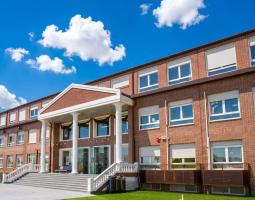
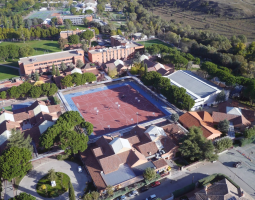
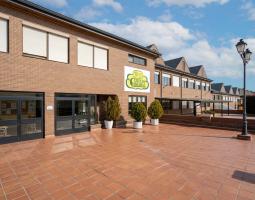
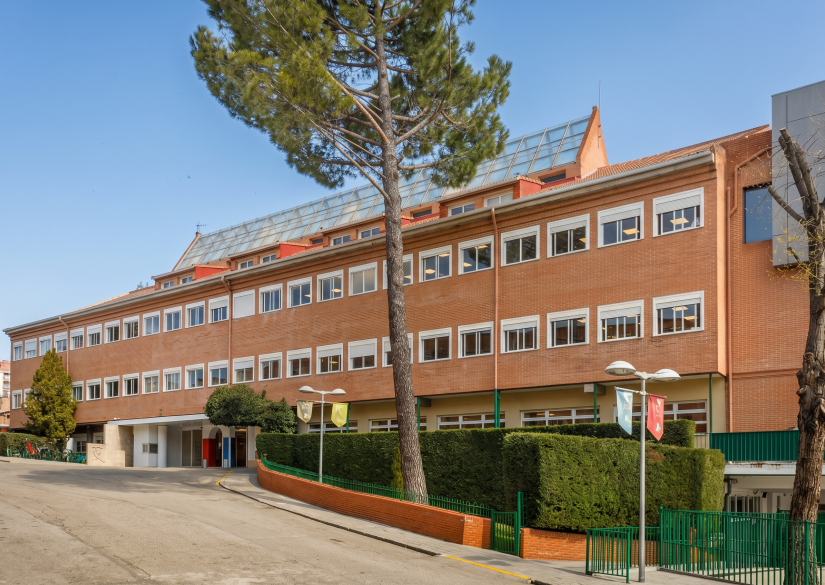
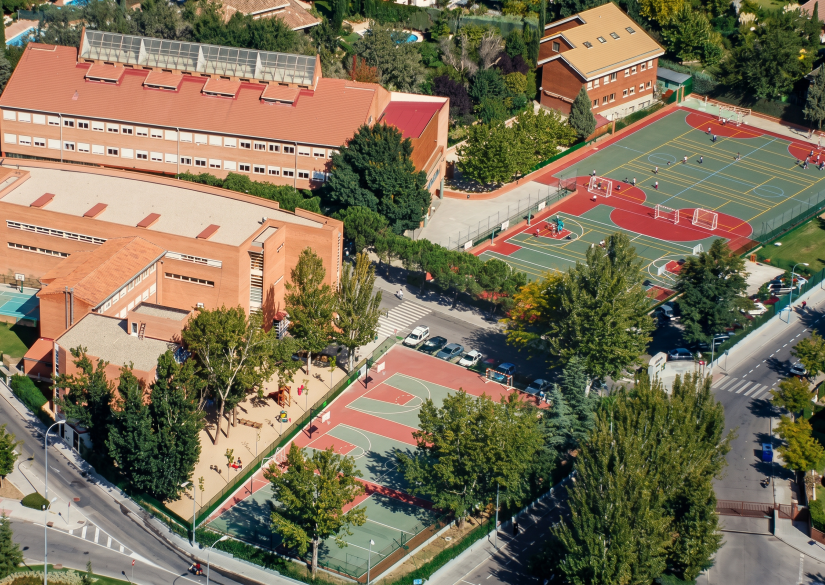
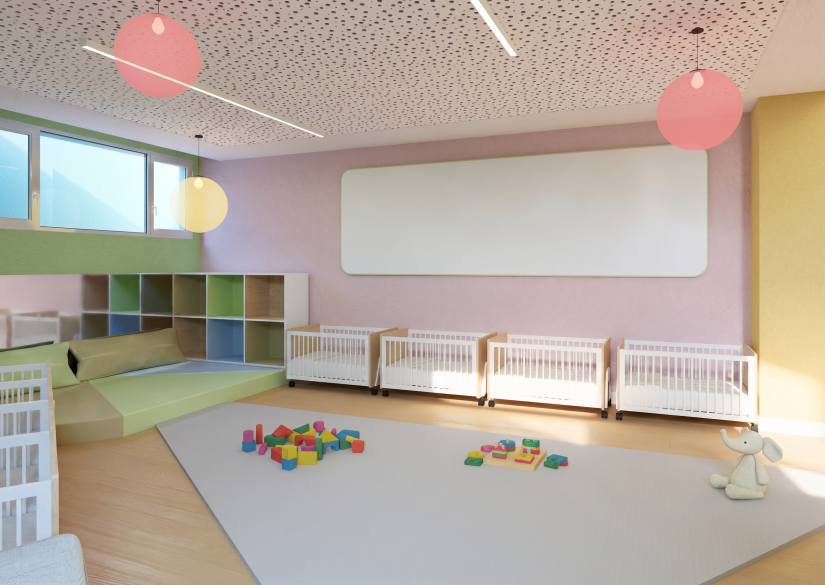
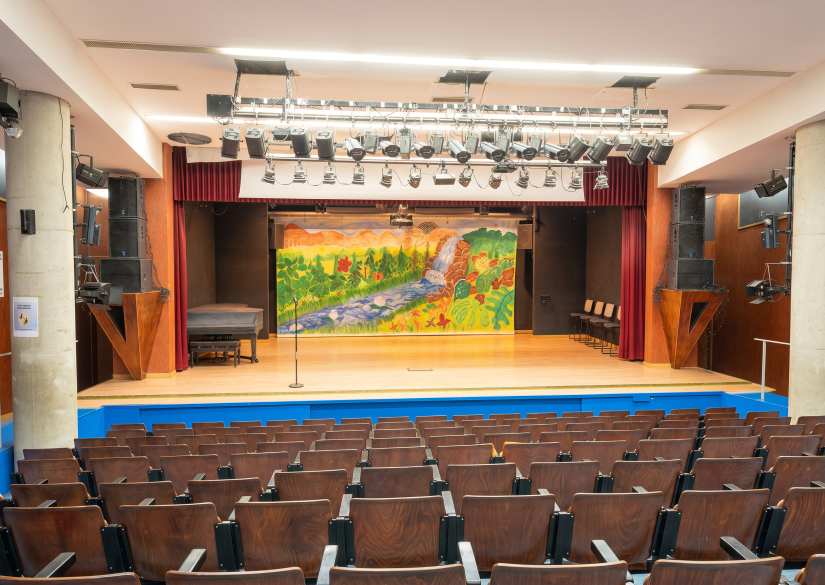
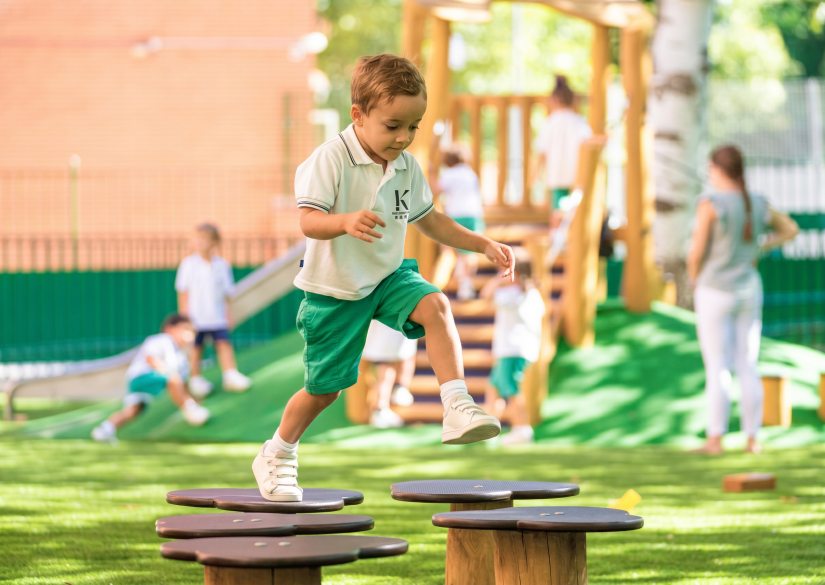
The infrastructure includes modern classrooms, science laboratories, a library, spaces for art and music, an auditorium for school events, and play areas. A separate educational environment has been created for early-age children: specialized classrooms, a creative atelier space, materials for development in the Early Years Foundation Stage, and a dedicated outdoor play area for Pre-Nursery.
The premises housing the primary school have been adapted to meet the requirements and standards of both the British national curriculum and the Spanish curriculum. As students grow older, they engage in laboratory-format work, study with subject-specialist teachers, and develop soft skills.
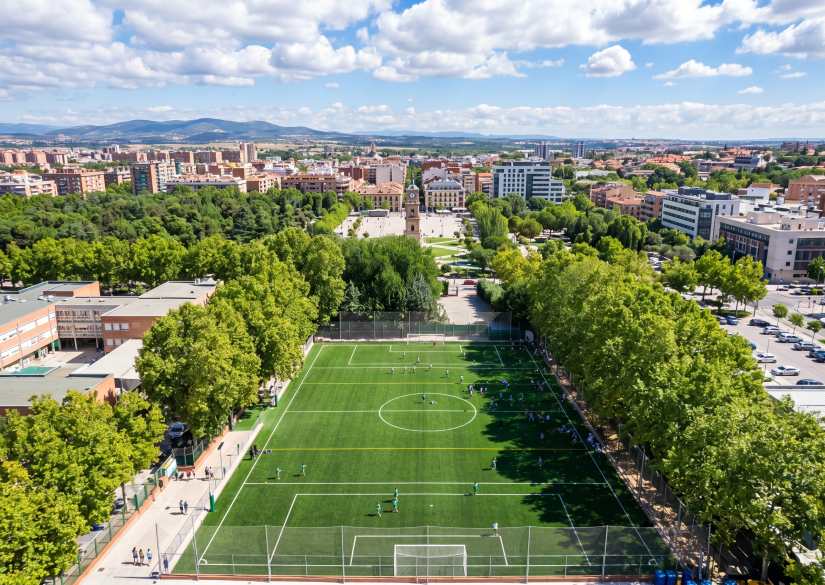
For sports, there is a multi-purpose indoor gymnasium equipped for basketball and five-a-side football, outdoor play and sports areas; in addition, students have access to a public stadium (located 6 minutes' walk from the campus), a swimming pool, and other sports facilities nearby.
Admission dates and extra charges
Tuition is paid by trimester: invoices are issued in September, January, and April.
Additional expenses include:
- Registration fee,
- Meals, accommodation,
- School bus,
- Educational materials,
- English-language textbooks,
- Insurance,
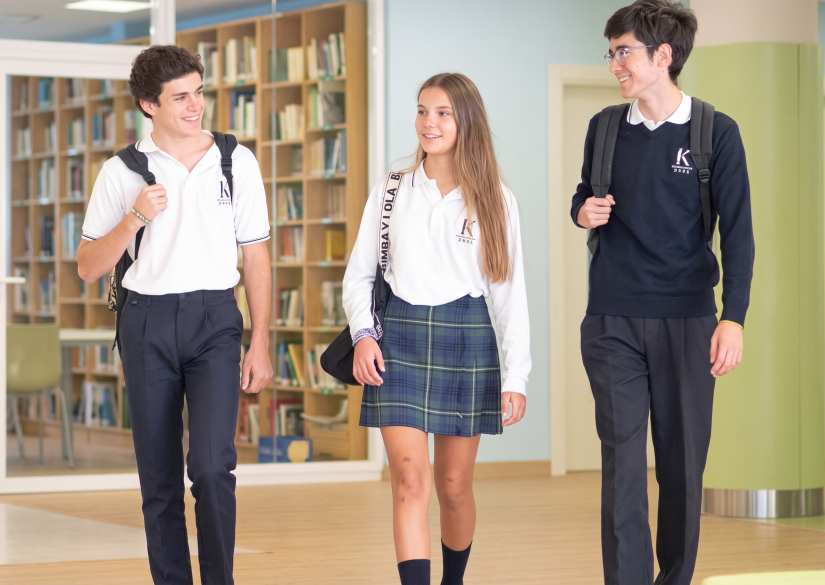
- Uniform, if required for a specific grade level.
You should also budget for pocket money.
Enrolment process
Admission begins with an initial inquiry to the school. After reviewing the program, parents can visit the campus, attend an open day, or meet with representatives to discuss the appropriate level of study. This is followed by the document submission stage, after which Kensington assesses the student's age, previous educational experience, and helps determine the most suitable academic pathway. Upon confirmation of a place, the family pays a registration fee and receives a calendar, uniform requirements, and information on meals, buses, and learning materials.
Perspectives
Kensington prepares graduates for admission to British and continental higher education institutions. Students in the Spanish track prepare for the EvAU exams, while students in the international track use their Diploma Program results for admission abroad. The school guides upper school students in choosing universities, helps build their academic trajectory, and advises on preparing the application package for university.
Entry requirements, how to apply, what is required to enrol
Kensington typically requests copies of the child's passport or ID, previous school reports, medical information, and, if necessary, references from the previous school. The set of documents and the format of the assessment depend on the child's age and the chosen program. For younger students, the school may conduct classroom observation or a trial day, while older students typically face English and mathematics tests followed by an interview with an academic coordinator.
To enroll in international programs in the upper grades, a student must demonstrate confident English and strong academic performance; for the ESO and Bachillerato programs, the level of Spanish is also important.
Scholarships Kensington School Madrid, Private School Kensington in Madrid
Kensington is a member of the international academic project Inspired, under which the special Nsouli Scholars Program scholarship operates for talented students with high academic or sports achievements, as well as distinctions in music and dramatic arts. It provides full tuition coverage for selected candidates during their studies at schools in the Inspired network.
When multiple children are enrolled simultaneously, a sibling discount applies: the third child receives a 50% tuition discount, and the fourth and subsequent children receive a 100% tuition discount. The discount does not cover additional expenses.
Institution on the map
Residence permits, citizenship and other services
- Guardianship services during the studies
- Student supervision
Review about Kensington School Madrid, Private School Kensington in Madrid
Recommendations on when to apply
| Language courses, schools and children's language camps | Primary and secondary education - private schools | Preparation programmes for entering universities - higher education | Higher education (after completing accredited programs A-level, IB, High School) - Bachelor, Master, MBA |
| - we recommend to apply 6-9 months before the start of the course (some camps and schools offer discounts for early booking or for lengthy study programs) - there are some very popular and high demand children's camps, where the applications need to be submitted 1 year in advance (in particular Switzerland , Great Britain , USA , Canada , Austria) | - we recommend to apply one year before the start of the training program, - some schools have a specific time frame (September-November - please specify an individual school) - some schools require tests in several stages (UKISET, internal tests of the school: English, mathematics, logics, subjects, interview, some require a personal visit) | - we recommend to apply one year before the start of the program, - for Foundation and Pathway programs, IELTS and TOEFL certificates are usually required, respectively | - recommended submission one year before the start of the program, - the deadline normally closes in January, for TOP HEIs and, as a rule, in March in other universities - for a bachelor, a Foundation or Pathway preparatory program a completed A-level, IB, High School + IELTS / TOEFL are required - for Masters you need a graduated higher education, in some cases you need a pre-Masters program - MBA requires completed higher education, work experience preferably at least 2-3 years, etc. |