Colegios Ramón y Cajal, Private School Ramon y Cajal





Programs and prices, tuition fees in Colegios Ramón y Cajal, Private School Ramon y Cajal


Infantil, Preschool Department
- Age of students — from 4 months,
- Duration of study — up to three years.
The preschool education program is designed to develop curiosity, learning through play and interaction in a safe and natural environment. English and French are taught from an early age, allowing students to develop language and communication skills. The curriculum is based on languages, fundamentals of mathematics and natural sciences (studied at a level of complexity depending on the age group).
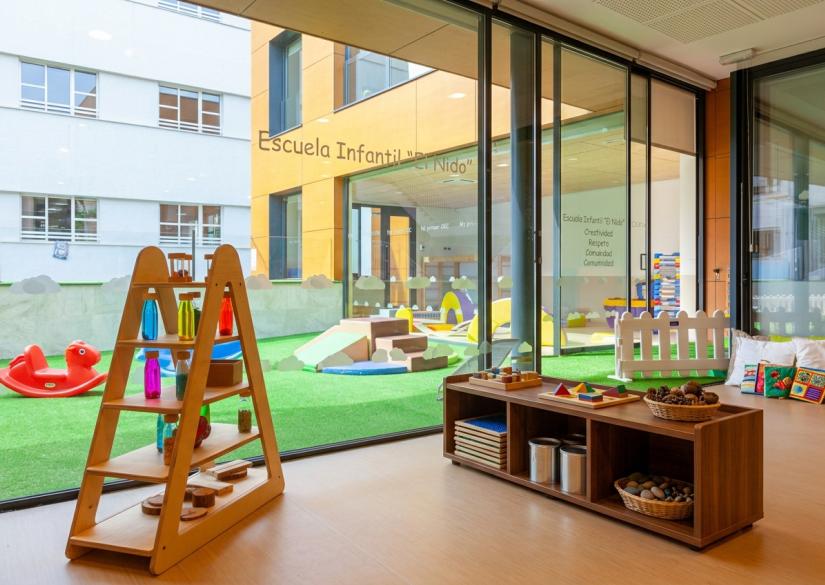
All preschool students learn through play and exploration, interact extensively with each other and with adults, and study both in specialized classrooms with various materials and in outdoor areas.
Primaria, Primary School
- Age of students — from 6 to 12 years,
- Duration of study — six years.
The primary school curriculum builds on knowledge gained in the preschool department and expands it. Students develop cognitive, social and emotional skills through interdisciplinary projects and research, while also building an academic foundation: numeracy, reading, writing, communication, and teamwork skills. As the child grows, humanities, technology, and civic education are introduced into the program.
Close attention is paid to creativity: performing and visual arts, music, physical education, and an emotional intelligence course.
ESO, Secondary School
- Age of students — from 12 to 15 years,
- Duration of study — four years.
In the first three years of secondary school, students study a number of core subjects: Spanish and English, mathematics, natural sciences, physical education, and others. Moving to the second level of the academic plan, in grade 10, students combine core subjects with specialized ones:
- Compulsory: Spanish and English, geography, history, mathematics, physical education,
- Elective specialized — up to three subjects: biology, physics, chemistry, Latin, economics, music, fine arts, and others.
By allowing early specialization, the curriculum prepares students for the transition to upper school, where a more rigorous academic system awaits them.
Bachillerato, High School
- Age of students — from 15 to 16 years old,
- Duration of study — two years.
The National Diploma Program involves studying a semi-specialized curriculum that combines compulsory and elective subjects. Among the compulsory ones are:
- Spanish language, literature,
- Philosophy,
- English language,
- Physical education,
- History of Spain,
- History of Philosophy.
Students are offered several specializations to choose from, involving the study of relevant academic disciplines. For example, by choosing «Science and Technology», students select courses in mathematics at two difficulty levels, physics, chemistry, biology, geology, or engineering.
International Diploma
- Age of students — from 16 to 18 years,
- Duration of study — two years.
The two-year International Diploma program involves an individual curriculum including six subjects of choice: three — to be studied at standard level, and three more — at advanced level. The disciplines are grouped into six academic groups, and one must be chosen from each.
In addition to the disciplines, senior students develop three competencies:
- Extended Essay — a written research paper on any academic topic related to one of the chosen subjects,
- Theory of Knowledge — a reflective work on the nature of knowledge,
- Creativity, Activity, Service — participation in school life: sports, creative, and social activities.
The International Diploma allows students to enter leading universities around the world, including Ivy League and Russell Group institutions.
Description of Colegios Ramón y Cajal, Private School Ramon y Cajal
- Location: Madrid, Spain,
- Year founded: 1961,
- Language of instruction: English, Spanish,
- Type of study: mixed.
Colegios Ramón y Cajal is an international school offering programs for all academic stages of secondary education for children from 4 months to 18 years old. Instruction is conducted under the Spanish national and international diploma programs.
Founded in 1961 by José Luis Sanz Sánchez, the institution is focused on providing the best international education to local and foreign students. Throughout all its years of existence, Colegios Ramón y Cajal has adapted to innovations in the field of education, thanks to which it today offers broad academic opportunities and effective preparation for entering leading universities worldwide. Its students receive a high level of qualified support, a strong foundation of knowledge and skills, and an understanding of their strengths and talents — to this end, Colegios Ramón y Cajal organizes individual consultations, specialized assistance programs, and a wide range of extracurricular creative, sports, and social activities.
Educational process
At Colegios Ramón y Cajal, the Center for Educational Research (CRC) operates, where a team of educational psychologists provides specialized support to each student: from the earliest years, they observe the pupils in order to timely identify potential learning needs and adapt the curriculum to their individual characteristics. In addition to helping students, the team of experts advises families and teachers to help students fully unlock their potential. For high school students, a university admissions counseling department is available, which holds events to facilitate career choices.
The curricula of all academic departments include the Crecemoción project — an emotional intelligence development program in the classroom.
Faculties and colleges
The academic system of Colegios Ramón y Cajal consists of the following stages:
- Infantil — from 4 months to 6 years,
- Primaria — from 6 to 12 years,
- ESO — from 12 to 15 years,
- Bachillerato — from 15 to 16 years,
- International Diploma — from 16 to 18 years.
Things to know about
The buildings of Colegios Ramón y Cajal are built in accordance with standards and innovative technologies in the field of ecology:
- Double cross ventilation in each room,
- Floor heating and cooling system using aerothermal energy and solar panels,
- Wall painting with natural paints free of parabens,
- Acoustic insulation made of natural fibers,
- Furniture made of natural wood and recycled plastic.
Accommodation, meals, prices
Colegios Ramón y Cajal does not have its own residences and operates as a day school.
During the school week, students are offered balanced nutrition: full lunches, healthy snacks, and a variety of drinks. Meals are prepared according to a menu developed by nutritionists and qualified chefs: it takes into account not only the different taste preferences of students, but also their dietary, medical, and religious needs.
Activities Colegios Ramón y Cajal, Private School Ramon y Cajal
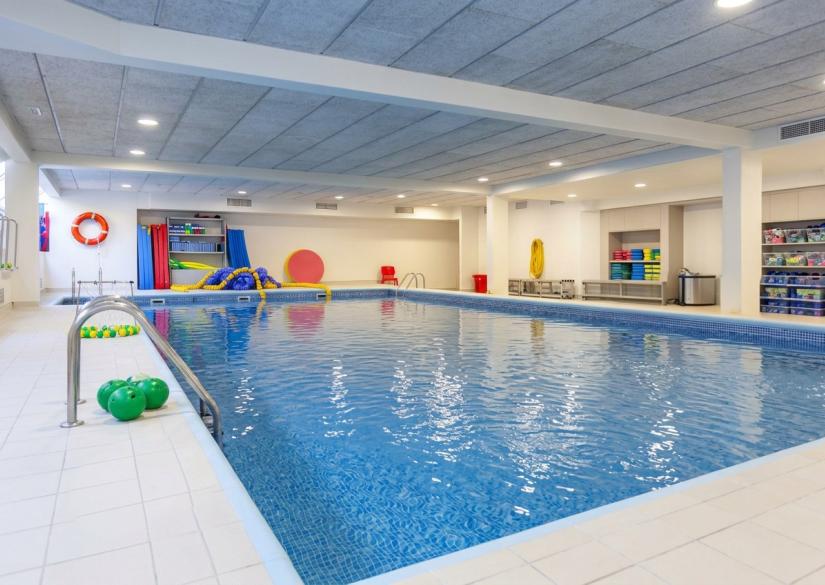
The extracurricular development program is adapted for students of different ages, offering each academic division appropriate clubs, sections, and activities. For example, preschoolers spend a lot of time on swimming and physical education in general (multisport), while elementary, middle, and high school students can choose from an extensive list:
- Tennis,
- Basketball,
- Yoga,
- Rhythmic gymnastics,
- Volleyball,
- Football,
- Karate,
- Judo.
In the same format, with a gradual expansion of available directions, other clubs and circles also operate:
- Painting,
- Journalism,
- Robotics,
- Emotional development,
- Cooking,
- Chess.
Colegios Ramón y Cajal has a strong performing arts program: participants will learn to play one of a dozen musical instruments, acquire skills in solo and ensemble vocal performance, theatrical production organization, and acting. Among the courses offered:
- Musical instruments: piano, violin, cello, guitar, flute, clarinet, saxophone, ukulele, percussion, and others,
- Orchestral performance,
- Pop music,
- Music production, composition,
- Choral performance,
- Ballet,
- Contemporary dance,
- English-language theatre.
Advantages
- #1 among schools in Spain according to El Mundo,
- One of the 30 innovative schools in the country according to El Español,
- It is included in the list of the best schools of 2026 according to ABC, Micole,
- The level of academic activity has been awarded the EFQM +600 quality mark,
- Winner of the National Award for Outstanding, Innovative and Sustainable Management,
- More than 90% of high school students are admitted to their chosen university programs,
- Multi-level extracurricular support.
Facilities and equipment at Colegios Ramón y Cajal, Private School Ramon y Cajal
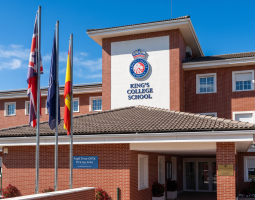
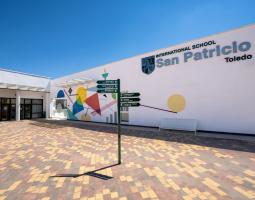
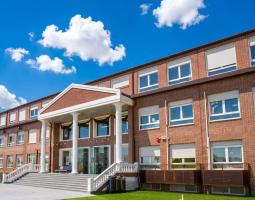
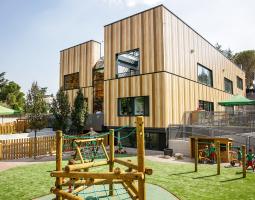
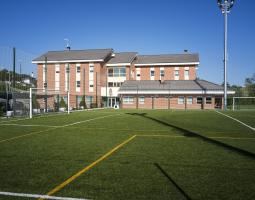
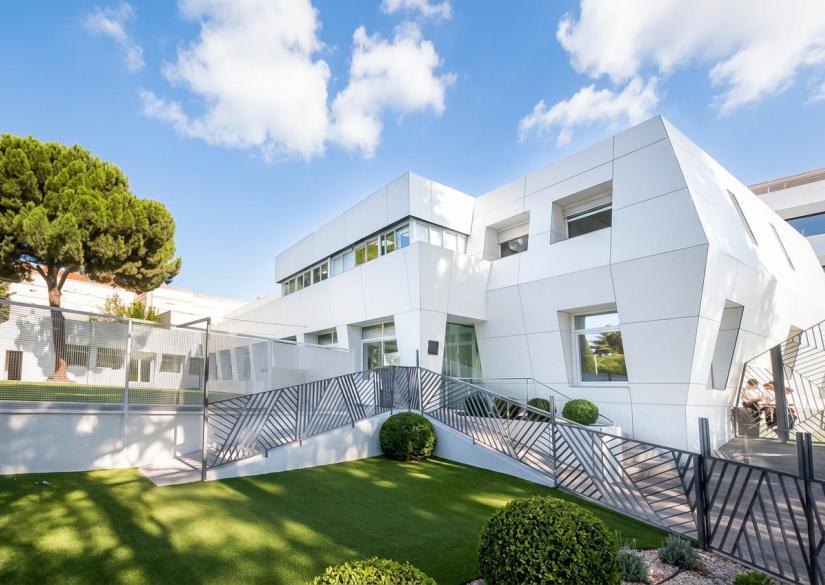
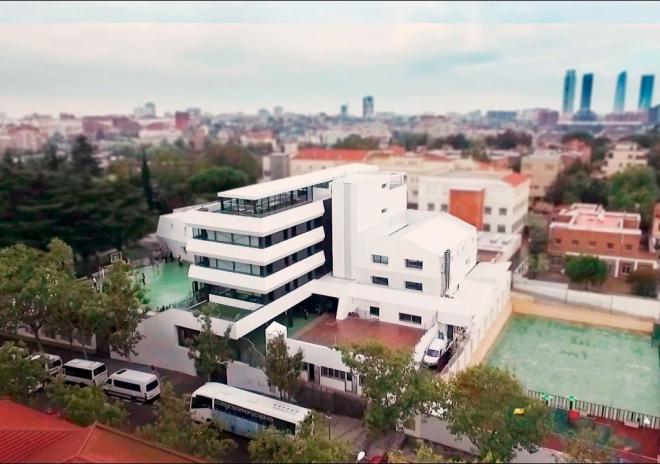
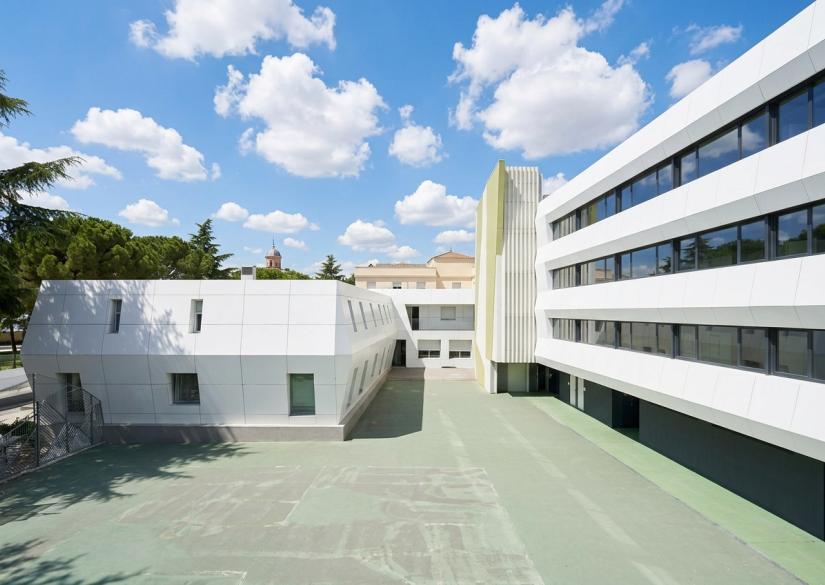
The Colegios Ramón y Cajal campus is located in the very center of Madrid, near public transport stops and urban infrastructure. The main building, renovated in 2015, houses administrative offices and classrooms for primary, middle, and senior grades. Just a few meters away are the buildings of two preparatory departments, where specialized spaces and safe playgrounds have been created for the youngest pupils.
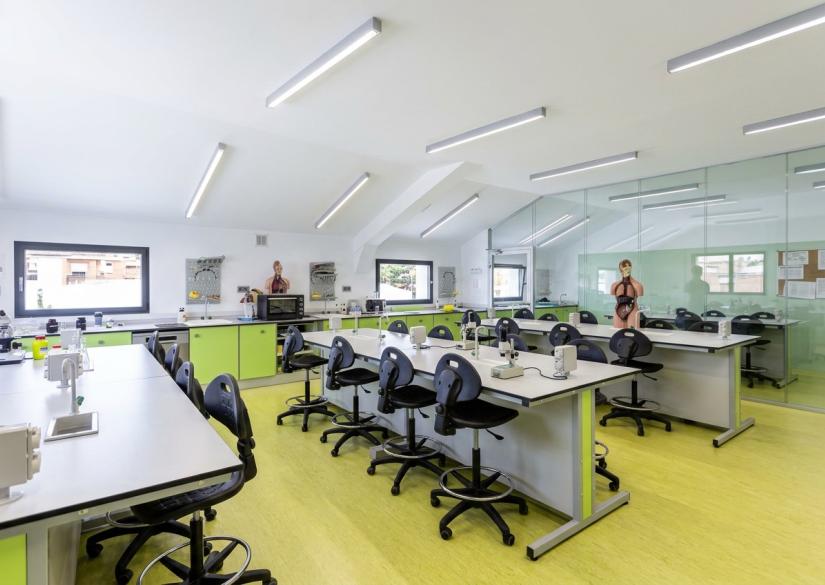
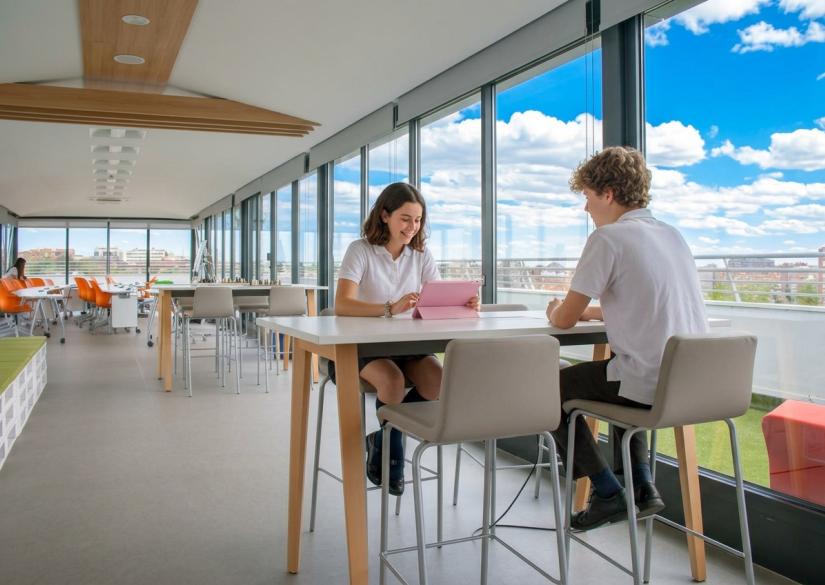
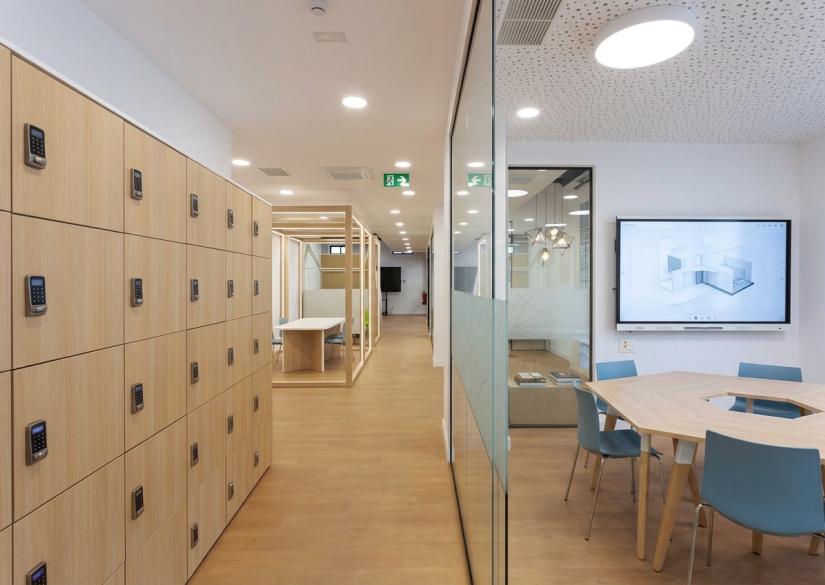
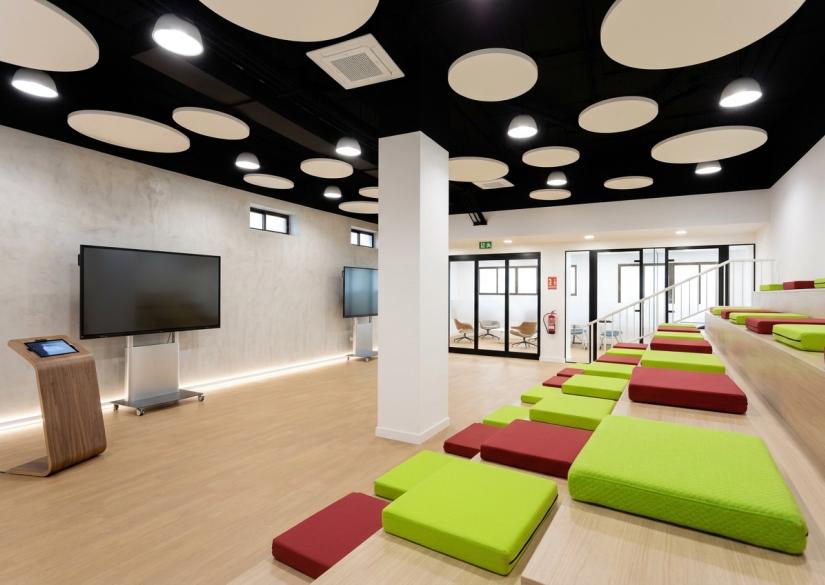
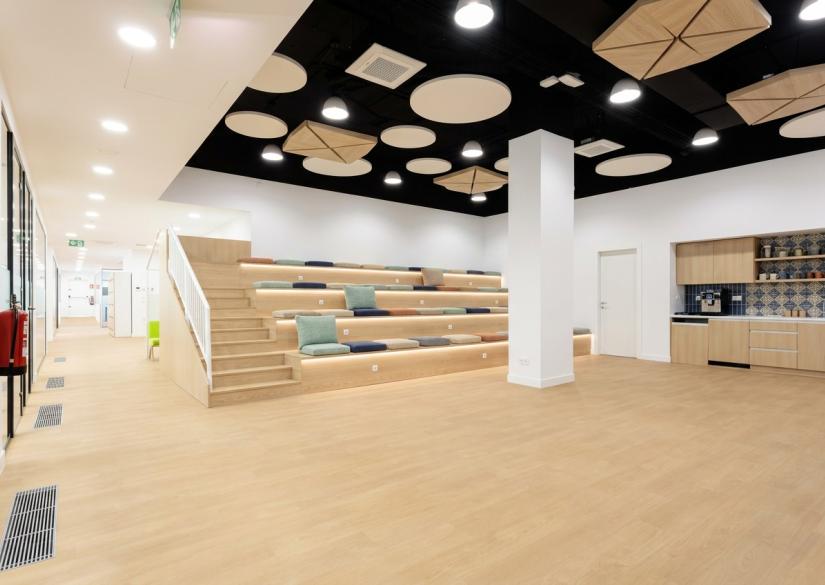
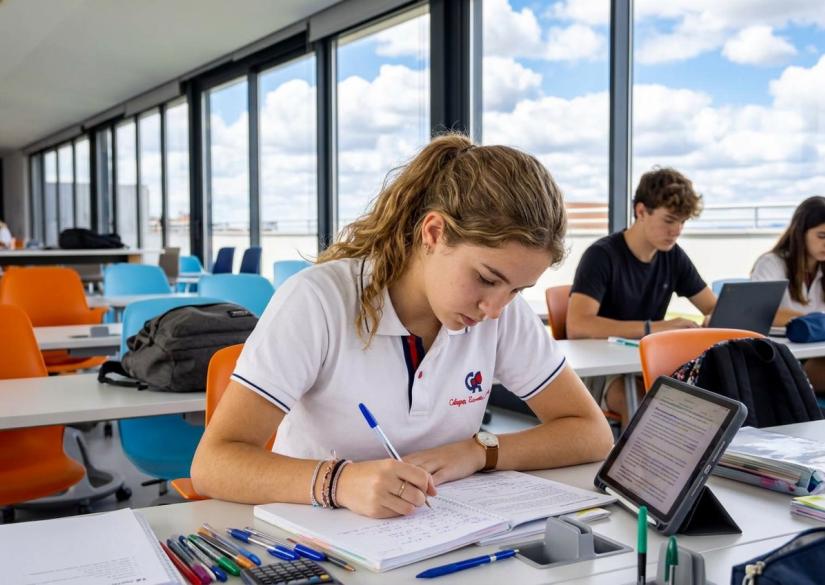
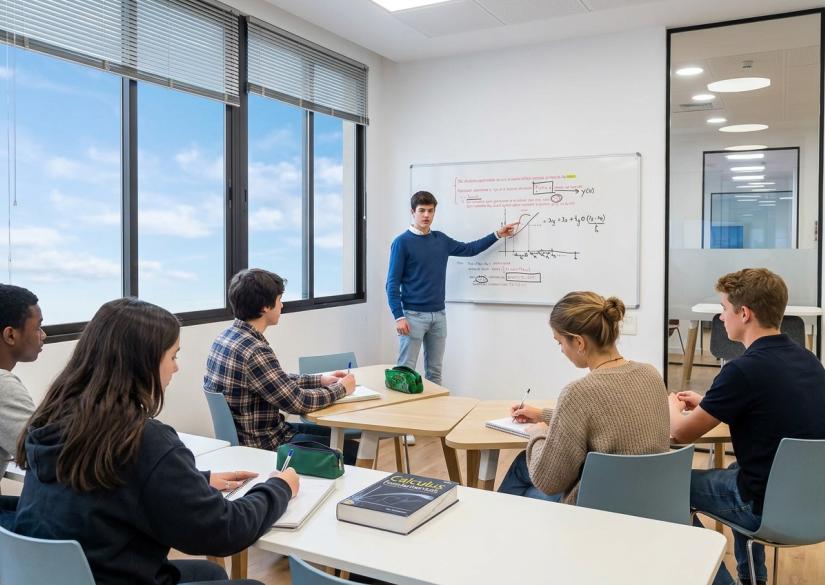
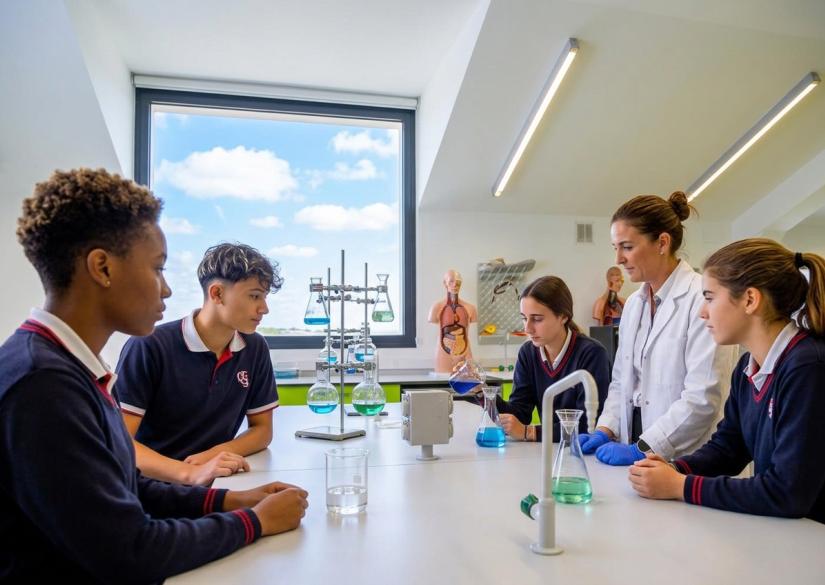
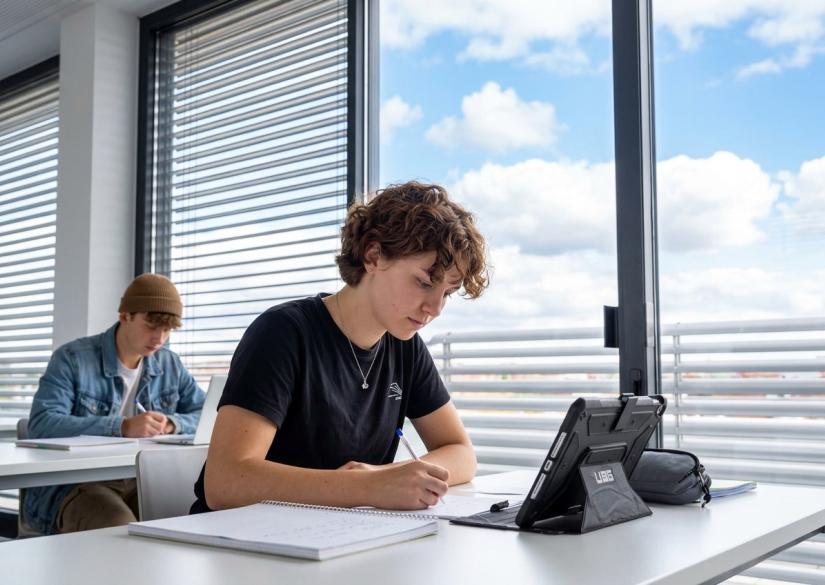
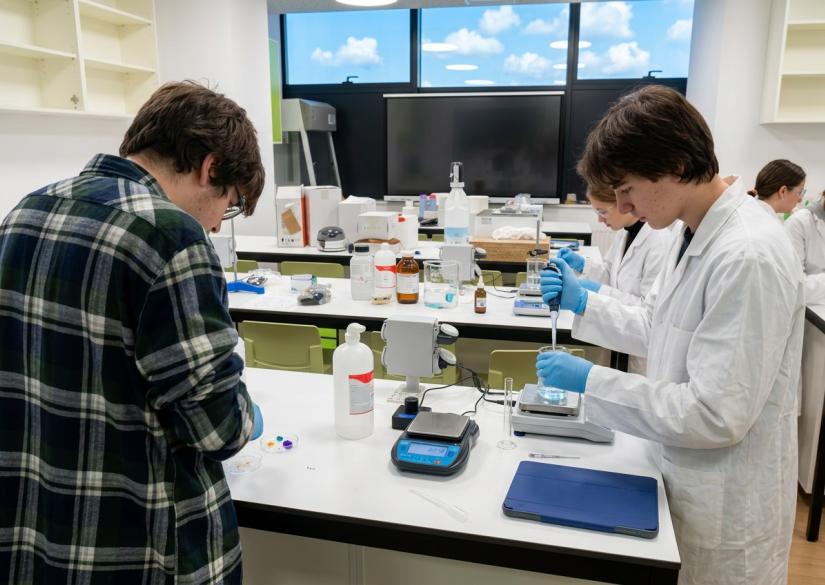
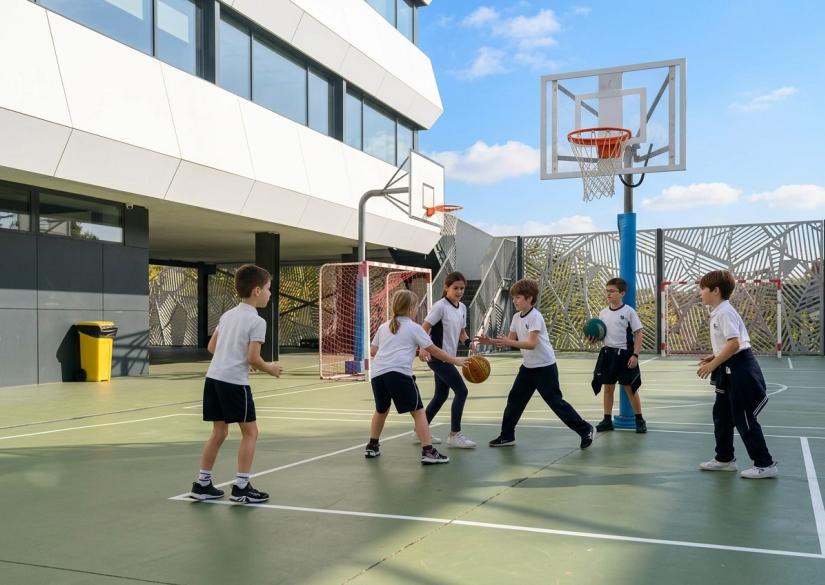
The rooms are adapted to the age-related needs of students, include appropriate equipment and flexible desk arrangements that support group and individual work. In addition to the main classrooms and science laboratories, the infrastructure includes creative studios and workshops, computer rooms, a library, a dining hall, and a number of sports facilities.
Colegios Ramón y Cajal minibuses transport students to and from school during the entire school week (the number of routes and stops is regularly updated).
Admission dates and extra charges
The academic year runs from the beginning of September to the end of June. Classes are conducted Monday through Friday, with rest on weekends, national and international holidays, and during seasonal vacations.
The list of additional expenses will include:
- Registration and administrative fees,
- Meals (in some cases),
- Some extracurricular activities,
- Personal educational materials,
- School uniform,
- School bus,
- External exams,
- Personal expenses.
Enrolment process
Before submitting an application, families of prospective students may visit the campus to meet the teachers and tour the facilities. For convenience, communication is also organized in an online format to reach a larger number of applicants.
The admission process consists of several stages:
- Submission of the completed registration form and required documents,
- Payment of enrollment fees,
- Completion of cognitive, language, and mathematics tests,
- Receipt of results and an official invitation to enroll.
Perspectives
Thanks to comprehensive development through extracurricular clubs and activities, effective academic preparation, and additional support, students achieve excellent results in their final exams: according to recent statistics, 90% of senior students are admitted to their chosen specialized university programs around the world (often their first-choice institutions).
Entry requirements, how to apply, what is required to enrol
To study in Spain, foreign applicants need a visa or residence permit, a passport, and medical insurance. When applying, the admissions committee expects personal documents of the child and one of the guardians/parents. The following must also be provided:
- Academic transcripts for the previous two academic years,
- A recommendation letter from the previous place of study.
Scholarships Colegios Ramón y Cajal, Private School Ramon y Cajal
Students have access to the international Nsuli Scholarship, through which 50 outstanding students can continue their education at one of the 80 Inspired schools around the world. The award provides full funding for all remaining academic stages until the completion of secondary education.
Institution on the map
Residence permits, citizenship and other services
- Guardianship services during the studies
- Student supervision
Review about Colegios Ramón y Cajal, Private School Ramon y Cajal
Recommendations on when to apply
| Language courses, schools and children's language camps | Primary and secondary education - private schools | Preparation programmes for entering universities - higher education | Higher education (after completing accredited programs A-level, IB, High School) - Bachelor, Master, MBA |
| - we recommend to apply 6-9 months before the start of the course (some camps and schools offer discounts for early booking or for lengthy study programs) - there are some very popular and high demand children's camps, where the applications need to be submitted 1 year in advance (in particular Switzerland , Great Britain , USA , Canada , Austria) | - we recommend to apply one year before the start of the training program, - some schools have a specific time frame (September-November - please specify an individual school) - some schools require tests in several stages (UKISET, internal tests of the school: English, mathematics, logics, subjects, interview, some require a personal visit) | - we recommend to apply one year before the start of the program, - for Foundation and Pathway programs, IELTS and TOEFL certificates are usually required, respectively | - recommended submission one year before the start of the program, - the deadline normally closes in January, for TOP HEIs and, as a rule, in March in other universities - for a bachelor, a Foundation or Pathway preparatory program a completed A-level, IB, High School + IELTS / TOEFL are required - for Masters you need a graduated higher education, in some cases you need a pre-Masters program - MBA requires completed higher education, work experience preferably at least 2-3 years, etc. |