INTO George Mason University






In the process of preparing the material, we referenced the following sources: Wikipedia, U.S. News, Top Universities, THE, Forbes, data USA, yahoo!finance
Programs and prices, tuition fees in INTO George Mason University


Undergraduate Pathway
The preparatory program includes intensive language education and the study of profile and general studying disciplines. Students get acquainted with the peculiarities of American culture, learn oratory. Special disciplines are chosen in accordance with the priority direction of the subsequent education in the university. The program is available to those wishing to enter the humanitarian field, social sciences, get a degree in engineering and informatics, natural sciences, the development of society, business.
Studying under the Undergraduate Pathway lasts 1-2 semesters. Classes begin in January and August. For admission, you need knowledge of English at the level of not less than IELTS 5.5-6.5, TOEFL 60-80 and the GPA score of 2.5, as well as complete secondary education and the successful completion of the 4-5 level of Academic English.
Upon completion and studying, the student must earn 30 credits. This opens the way to the second year of the university. 29 or fewer credits allow you to study at George Mason University from the first year. Accelerated studying in the preparatory department provides for obtaining at least 16 credits. At the same time, the entrant is enrolled for 2 semester of 1 year of study at a bachelor's degree.
Graduate Pathway
- Age of students — from 20 years old.
- Duration of study — one to two semesters.
Preparatory courses are aimed at students who want to improve their level of academic knowledge and English proficiency in order to enroll in master’s programs at GMU. Dozens of fields are available for preparation, including:
- Accounting,
- Bioengineering,
- Biostatistics,
- Bioinformatics
- Management,
- Business Analytics,
- Communications,
- Computer Science,
- Computer Engineering.
- Analysis,
- Conflict resolution,
- Data analysis engineering,
- Digital forensics Economy,
- Educational psychology,
- English language,
- Linguistics,
- International relations.
Upon completion of the course, students will have an excellent foundation of specialized knowledge and skills to continue their academic path at the master’s level or to start working.
Academic English Program
- Age of students — from 17 years old,
- Duration of study — one to three semesters.
A universal program is aimed at applicants for undergraduate and graduate students who do not speak English well enough. Preparatory studying takes place at 6 levels. Basic knowledge of English serves as a criterion for enrolling entrants into groups. The program is available to those wishing to study at the university and own English at a level from A to B2.
The program includes a basic English course, lessons on developing communicative skills, electives. The transition to the next level is carried out when the student receives AB scores on the final testing
The International Year One Program
- Age — from 18 years old,
- Duration of study — one year.
International Year One is a special program for international participants, which allows them to complete an adaptation course, acquire the necessary academic knowledge, and transfer to bachelor’s degree programs. The study lasts for one year.
Six fields are available for preparation:
- Business,
- The science,
- Engineering,
- Computer science,
- Statistics,
- General research course,
- Human and social development,
- Humanities and social sciences.
During the program, students study a number of academic disciplines, actively develop their English language skills, and master research methods.
All students receive assistance and support from teachers, staff, and mentors for all academic, everyday, and personal issues that arise, and they receive consultations on employment and career development, which in the future helps them to navigate the labor market well, understand its rules, and be able to develop a long‑term career strategy.
After successfully completing the course, students move on to the next semester in their chosen bachelor’s program and continue their studies.
Bachelor's program
- Age — from 18 years old.
- Duration of study — three to four years.
GMU offers students from all over the world a wide range of high‑quality bachelor’s programs in various fields. Over the course of three to four years, students participate in such academic activities as:
- Lectures, including interactive ones,
- Work with sources and literature,
- Lecture and seminar classes with experts and specialists,
- Seminars,
- Independent work, group work,
- Laboratory experiments and research.
List of the popular bachelor’s degree programs includes:
- Anthropology,
- Computer science,
- Management in the field of arts,
- History of arts,
- Astronomy Biology,
- Business analytics,
- Public health,
- Computer science,
- Analysis, conflict resolution,
- Cybersecurity engineering,
- Dancing,
- Criminology, law, society,
- Digital media, web design,
- Earth sciences.
All students acquire a broad range of knowledge and learn to apply this knowledge in practice through internships and practical education at companies and organizations at the local and international levels. International students additionally receive assistance in career development and study the rules and norms accepted in the US labor market.
After successfully completing their studies, the student is awarded a bachelor’s degree in a specific field of science, which provides the opportunity either to start working or to continue their education in master’s programs.
Master's program
- Age of students — from 21 years old,
- Duration of study — one to two years.
The Master’s program department at GMU offers more than 130 programs across various fields. Master’s program fields include:
- Accounting,
- Anthropology,
- Industrial and organizational psychology,
- Engineering physics,
- Art education,
- Sports training,
- Bioinformatics, computational biology,
- Communications,
- Computer science.
- Criminal justice,
- Analysis, conflict resolution,
- Criminology, law, society,
- Creative writing,
- Digital forensics,
- Educational psychology.
The master’s program has a solid scientific foundation and unique achievements; some of the best specialists in the state (and the entire country) work here; thanks to their high level of professionalism and carefully designed courses, students acquire the maximum amount of useful knowledge and skills. A large portion of the time is spent on independent work, working with sources and literature, laboratory experiments, and research. Masters, despite having a clearly defined specialization, are always specialists with a broad profile, as the level of their education allows them to be well‑versed in many areas at once without compromising quality. During their studies, students master a large number of both theoretical and practical disciplines.
Obtaining a master’s degree significantly expands employment opportunities and professional activities. A GMU diploma is highly valued by employers, and its holders easily find prestigious jobs. Graduates also have the opportunity to continue their studies in the doctoral program.
Doctoral Programs
- Age of students– from 23 years old,
- The duration of training is from three years.
To obtain the degree of Doctor of Science, students will have to conduct individual research work under the guidance of professors, researchers, and personal consultants. For 3+ years, the student will focus on data collection, data analysis, statistics citation and other specialized tools to provide a unique dissertation at the end of the studies.
Some specializations in which you can get a doctoral degree:
- Health care
- Electrical Engineering, Computer Engineering,
- Information Technology,
- Linguistics
- Musical Art,
- Neuroscience
- Mathematics
- Ecology, public policy,
- Culturology,
- Criminology
- Physics
- Nursing,
- Political science
- Statistical Sciences,
- Psychology.
The qualification will give graduates the opportunity to greatly expand employment opportunities and move up the career ladder.
Description of INTO George Mason University
Location: several campuses in the state of Virginia, USA,
Year of foundation: 1957,
Number of students: approximately 40,000,
Language of instruction: English,
Type of education: mixed.
George Mason University (GMU) is a public research university with several campuses in Fairfax, Arlington, and Prince William, as well as international study campuses. It is considered the largest public institution in terms of student enrollment among universities in Virginia.
In 1957, GMU was founded as a branch campus of the University of Virginia: the school consisted of a single building with only 17 students. Fifteen years later, on April 7, 1972, George Mason College separated from the university, becoming an autonomous educational institution. Since then, having undergone several reorganizations, GMU has grown into a large institution serving more than 40,000 students from all 50 U.S. states and 130 countries.
Thanks to its long and rich history, the university is now a desirable place for education among both local and international students. GMU regularly appears in the rankings of the country’s leading higher education institutions, particularly distinguished by the quality of its educational process and its active research activities. Despite its focus on modern educational trends, GMU staff carefully preserve the traditions that have been accumulated over the entire history of the university.
GMU offers hundreds of academic degrees at the bachelor’s, master’s, and doctoral levels. The balanced yet rigorous curricula for students are complemented by extensive extracurricular opportunities to develop their personal talents and abilities. Thus, a fairly large proportion of the student community actively participates in exchange programs between students from international universities, internships at local partner organizations, and in one or more types of creative activities, sports, or charity work.

What advice do you have for potential applicants before applying to US universities?
Choose a university that really suits you - do not try to "adjust" yourself to a prestigious or ranked university. If you are not sure of your capabilities, do not dwell on the first top 10: believe me, many opportunities of less prestigious universities will be able to give you what you need to develop and become a specialist.
Educational process
Students at GMU have extensive opportunities to gain knowledge not only in specialized classes but also outside the classroom. The university offers exchange programs with foreign universities, internships, part‑time jobs on campus during their studies, and much more to develop the talents and abilities of its students.
From the moment they submit an application for admission until they find employment in their field of study, students are surrounded by comprehensive support from teachers, administrative staff, and consultants; they can turn to the relevant university authorities with any question or request contacts for external assistance if necessary. From obtaining a visa, adapting the curriculum to suit their needs, finding internships or additional electives, students can rely on the GMU educational staff.
Each student is assigned an Academic Advisor, with whom it is recommended to meet at least once a semester to discuss academic needs, program progress, goals, and opportunities. Consultations are held face-to-face or remotely, by appointment or in a drop-in format. Each GMU college and school also offers its own consulting services designed to the specifics of its programs.
Faculties and colleges
GMU comprises 10 specialized schools that educate students in the following fields:
- Jurisprudence,
- Conflict resolution,
- Education,
- Human development,
- Engineering,
- Computer science,
- Humanities,
- Social sciences,
- Public health,
- Sciences,
- The arts,
- Performing arts,
- Politics,
- Public administration.
- Business.
In total, the university offers 78 bachelor's degree programs, more than 130 master's and doctoral degree programs (94 master's degree and 38 doctoral degree programs), as well as over 100 postgraduate certificate programs. The university also has a law school. In addition to degree‑granting programs, GMU also offers non‑degree education: invited students from other universities who are not pursuing a degree, talented high school students, members of the local community, and GMU staff can enroll in undergraduate courses across the university’s nine colleges, while qualified participants can enroll in master’s and doctoral‑level courses without formal admission to a program.
Scientific achievements
Cutting-edge research conducted at GMU has led to revolutionary advances in cancer diagnosis, Lyme disease treatment, concussion treatment protocols, early detection of COVID-19. It is thanks to its active research activities that the institution has R1 status, which earns it the title of a "highly active research university".
Under the leadership of the educational institution, there are three research institutes:
- Sustainable development of the Earth,
- Biomedicine
- Autonomy, robotics.
Researchers are engaged in the development of solutions, technologies and innovations in areas such as artificial intelligence, national security, digital landscapes, medicines for improving lives.
Things to know about
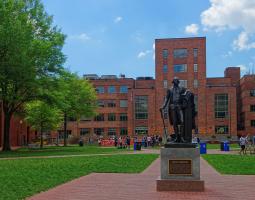
On the main campus and in the academic area in Korea, there are two identical statues of George Mason. The tradition associated with the statue is to rub the big toe of George’s left bronze leg on the way to class, especially before taking an exam, and prospective students often rub it for good luck when touring the university, in order to be admitted. The tradition is so widespread among students that the toe had to be reinforced to better protect it from damage.
The campus features the shopMason program: thanks to Patriot Perks, students receive more than 150 discounts at local establishments, as well as on concert and sports event tickets. Free university shuttles run between campuses, metro stations, stores, and shopping centers, and there are also student car‑sharing programs and bike and electric scooter rental services.
Accommodation, meals, prices
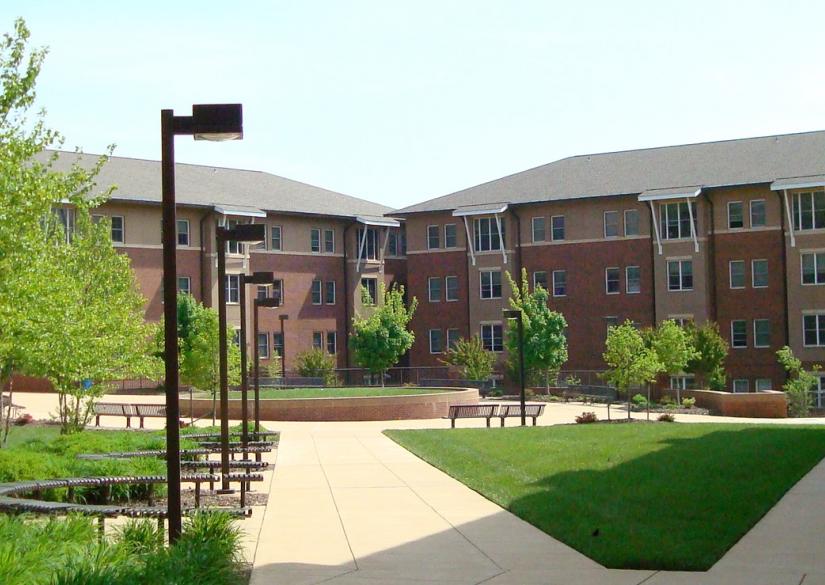
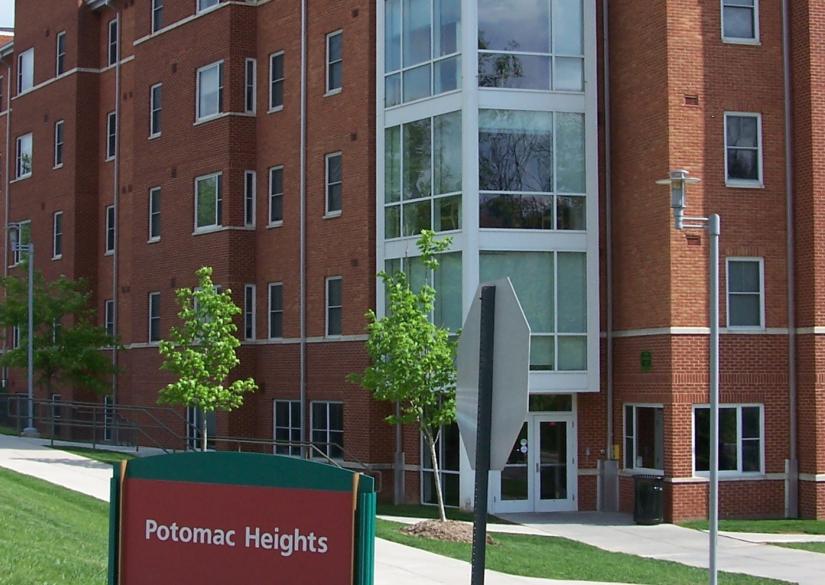
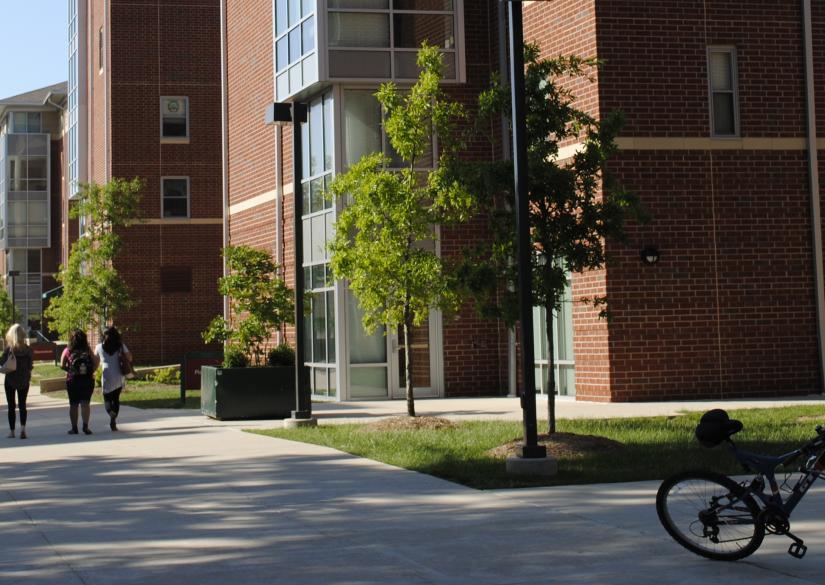
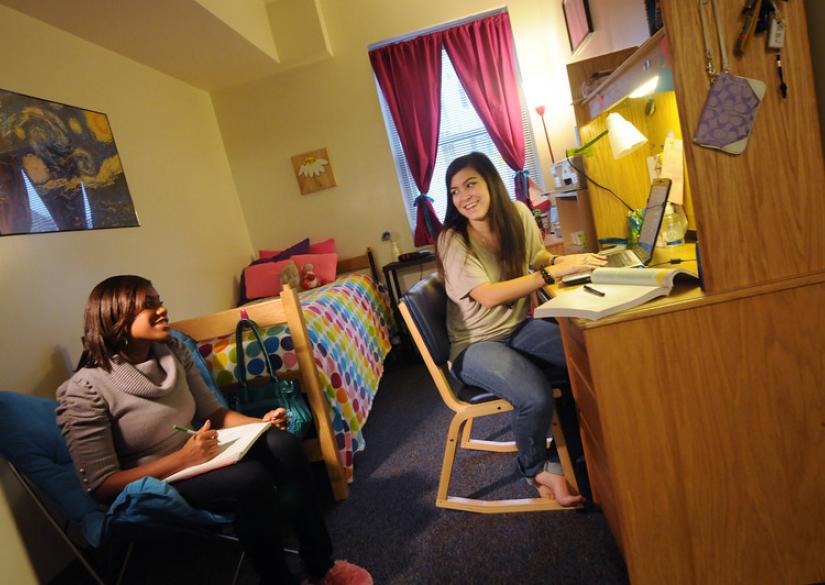
On the GMU campus, there are more than 40 residences offering various room types: from standard and suite rooms to apartments. Many of the living spaces are new or recently renovated, which guarantees they are spacious, modern, and comfortable. The residences are divided by purpose: for first‑year students, adult learners, and graduates.
- More than 75% of all first‑year students live in five residential complexes consisting of several buildings. Each building offers amenities, including high‑speed internet access, free laundry services, and common recreation areas. Most bedrooms are designed for two- or three-person accommodation, with a small number of single- and four-person rooms available. The bedrooms are accessed from the main corridor, and the bathrooms are shared by all residents.
- Twelve residences are intended for second-year students and above: they live in apartments or townhouses and occupy single-, double-, or triple-person rooms with private or shared bathrooms. Townhouses offer a more autonomous living experience, providing students with living rooms, kitchens, verandas, and bathrooms to share with one or two roommates.
- Graduate students, faculty members, and university staff are accommodated in two residential buildings on campus and in several buildings outside the campus.
- For those pursuing a master’s or doctoral degree, single- and double-occupancy studios are available, offering a full range of amenities for a comfortable life: fully furnished bedrooms, kitchens, bathrooms, and a living room.
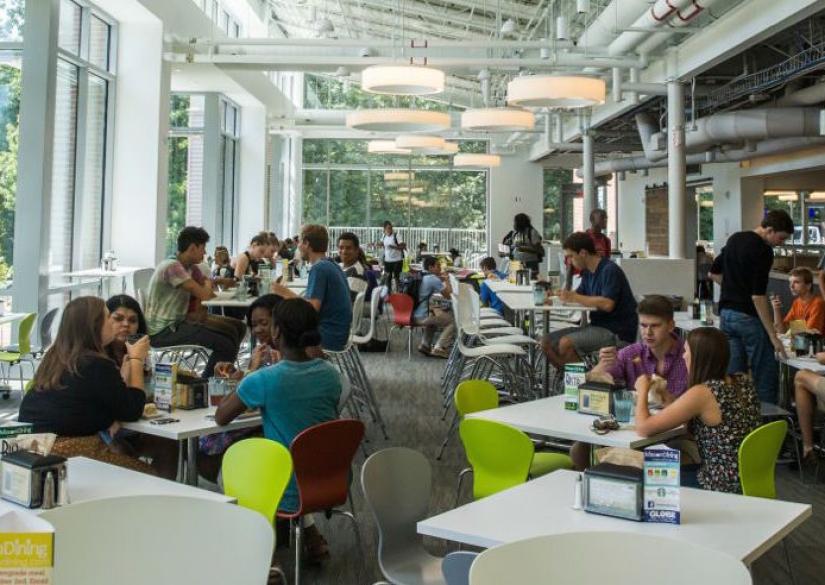
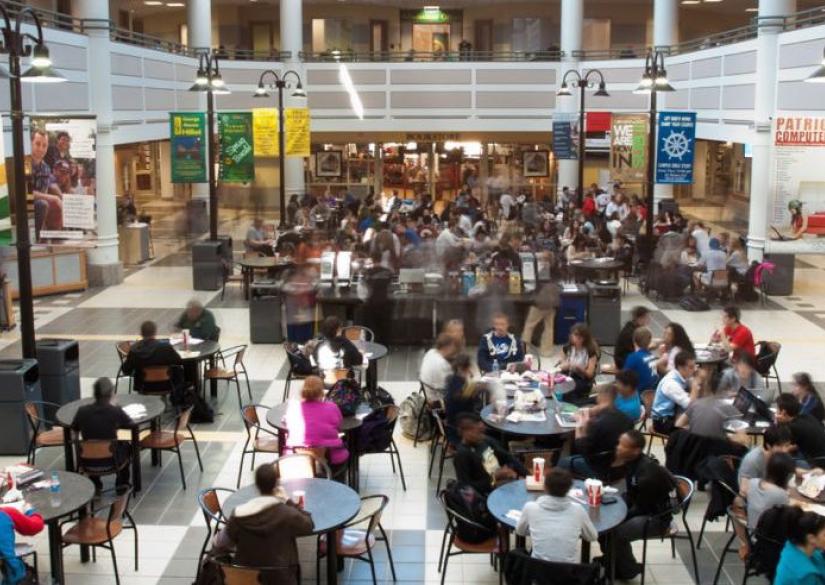
Thanks to more than 30 catering points on campus, some of which are open 24/7, GMU students have a wide selection of dishes based on international cuisine. Each establishment offers not only a standard menu but also themed and holiday dishes, drinks, and desserts. Most cafeterias cater to specific dietary needs, providing students with vegan, vegetarian, and dietetic meals.
Over 6,000 campus students in Fairfax live in residences (40 buildings) on the university campus.
Subjects and sports
Activities INTO George Mason University
Extensive opportunities for discovering talents, implementing ideas and gaining new experience include sports, creative, and volunteer activities.
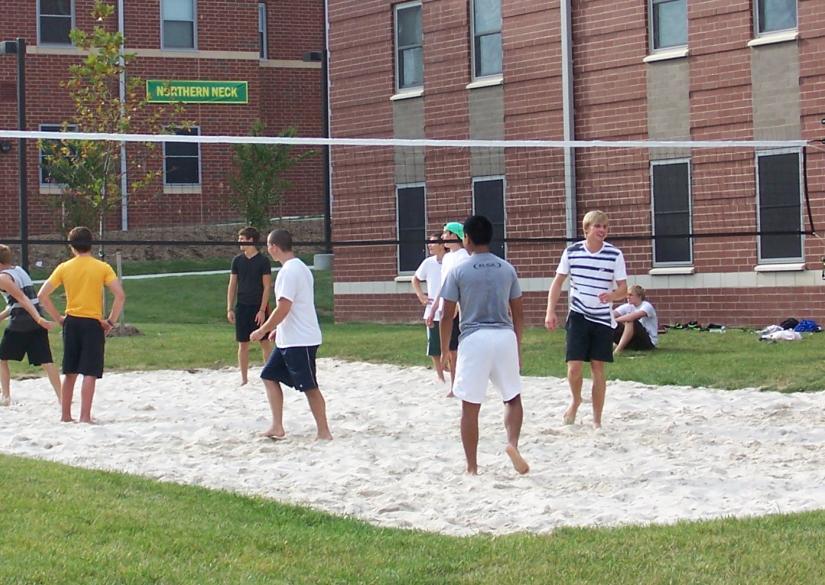
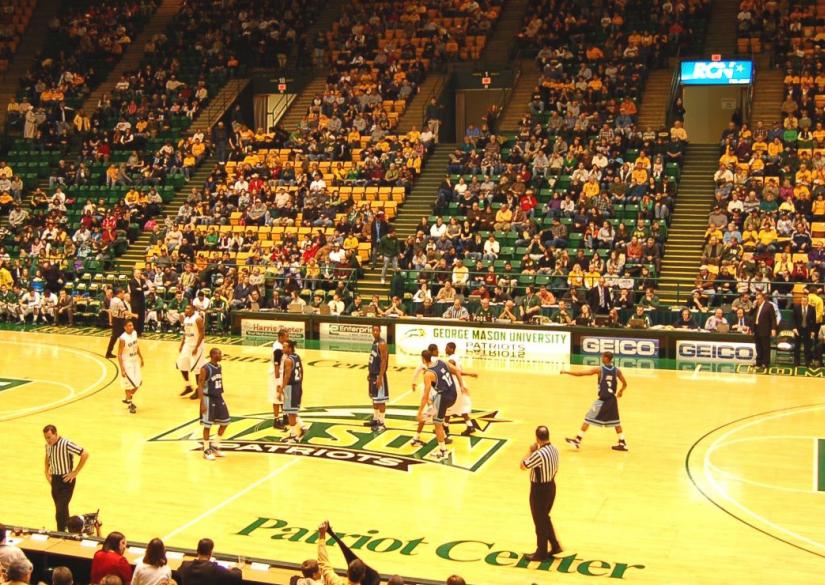
GMU has 34 sports clubs, with more than 800 students taking part each year. Training in intra-university and regional sports is organized, which allows students to realize their potential at a more professional level. As many as 22 GMU track and field teams compete in Division I, the highest level of intercollegiate competition.
Sports areas imply training of students of the same sex, sometimes jointly:
- Baseball,
- Basketball,
- Lacrosse,
- Soccer,
- Swimming,
- Diving,
- Tennis,
- Volleyball,
- Athletics,
- Struggle,
- Softball,
- Rowing.
More than 350 student clubs reflect a variety of student hobbies: they are small communities in which students find like-minded people, gain new experience in their favorite hobby, and promote ideas. List of thematic clubs includes:
- Christian Fellowship,
- Podcasting,
- Muslim Students Association,
- Outdoor adventure club,
- Volunteering
- Student Media,
- Anime, computer games,
- Arabic calligraphy,
- Ballroom dancing,
- Yoga, vegetarianism,
- Board games,
- Book Club,
- Catholic Ministry,
- Chess
- Chinese Cultural Club.
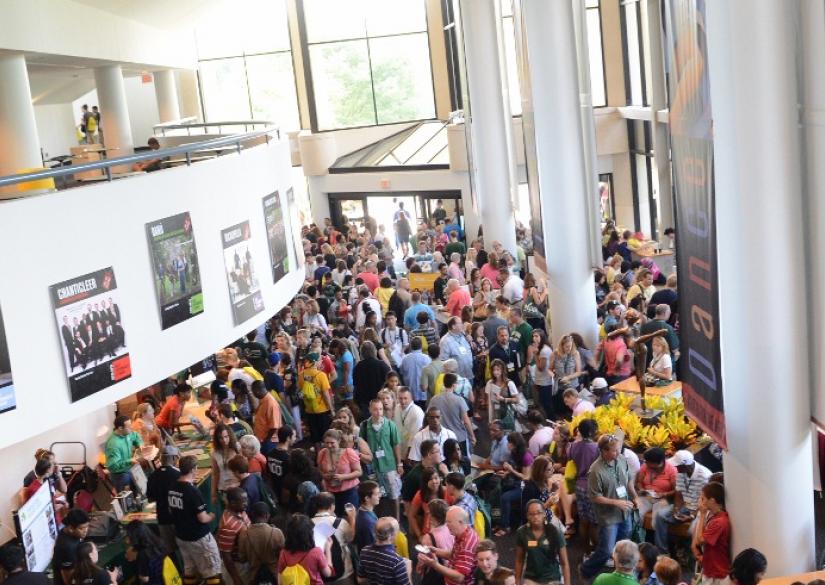
Both among the thematic communities and at a larger level, there are musical and theatrical groups. Participating in most events on campuses, students not only organize festive programs, but are also responsible for the technical part of the events: light, sound, decorations, costumes, photo and video reports.
Advantages
- The largest public university in the state,
- National R1 rating — “Very high research activity”,
- In 30% of classes, there are fewer than 20 students, which gives teachers the opportunity to provide individual attention to each student,
- Student-to-faculty ratio — 17:1,
- No. 25 among the best national universities according to US News & World Report,
- No. 1 on the list of state universities in terms of innovation,
- Eight higher education programs are recognized as the best among their peers in Virginia,
- The National Science Foundation ranks GMU 10th among U.S. public universities in terms of the growth of scientific research over the past decade.
- Students gain experience through research, fieldwork, internships, service‑learning, and study abroad programs,
- GMU is one of only four Division I institutions in the country that can boast a perfect score of 100 on the Athlete Ally sports equity index,
- Partnership with organizations such as Starship Robot and BurnAlong enables students to use the latest technologies, enhancing their learning experience,
- According to the Carnegie Foundation’s classification, GMU is among the only 187 universities in the United States with R1 status (very high research activity) and at the same time belongs to the highest category of Opportunity Colleges and Universities within the same foundation.
- GMU is the youngest university in the country among those with R1 status.
- It is recognized as the most ethnically diverse state university in Virginia and ranks 7th among US universities in this indicator, and also graduates more students of Latin American and Asian descent than any other university in the Mid-Atlantic region,
- In 2021, the main campus in Fairfax received ArbNet Level II accreditation, officially becoming the Arboretum (Arboretum) with an area of over 900 acres.
Facilities and equipment at INTO George Mason University
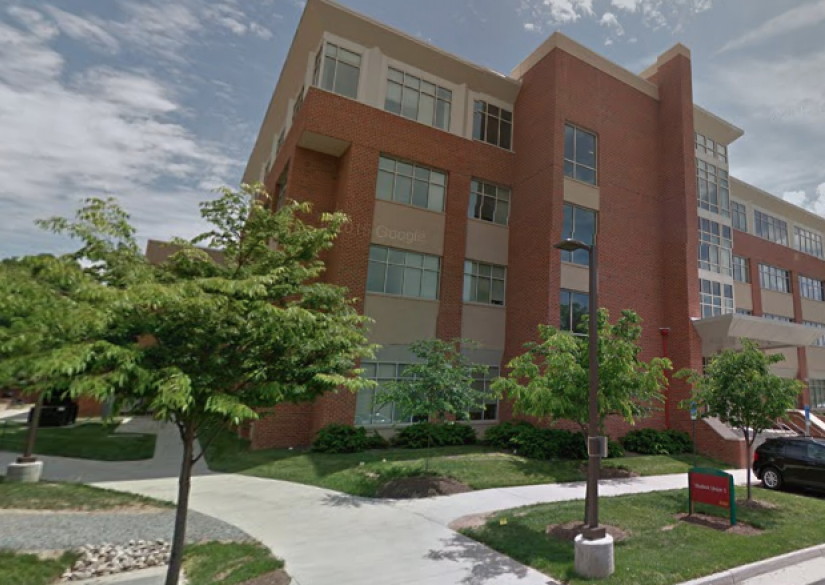
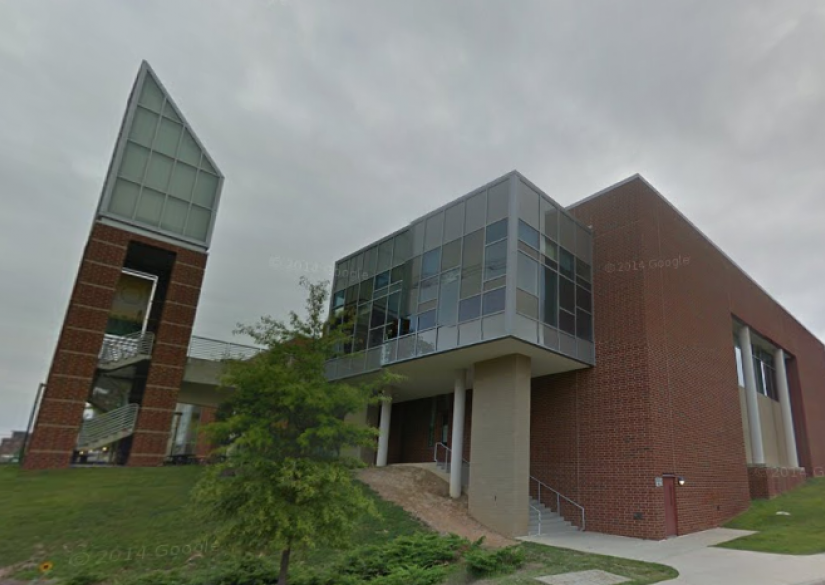
GMU carries out its educational activities in several locations: at regional campuses in Fairfax, Arlington, and Prince William, at the international branch in Songdo, South Korea, and at educational campuses in Herndon, Lorton, Woodbridge, and Front Royal. Each university campus plays an important role in the economy and community of the surrounding region.
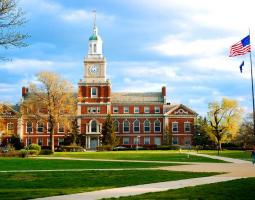
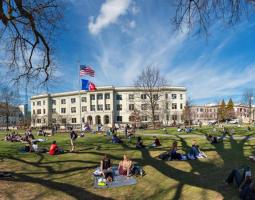
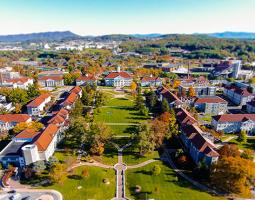
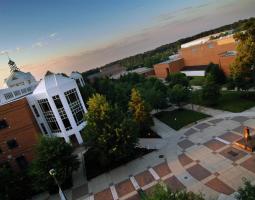
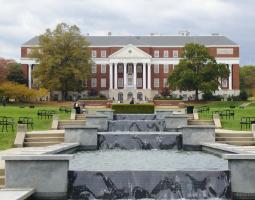
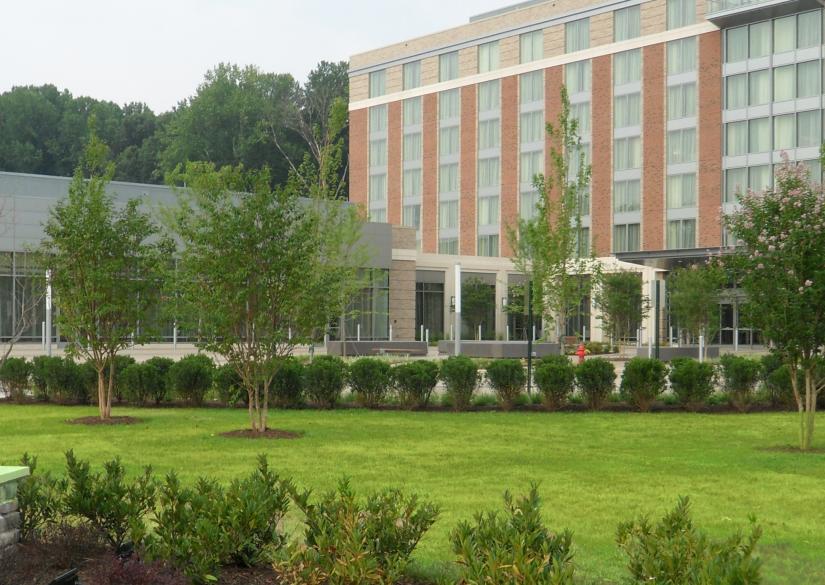
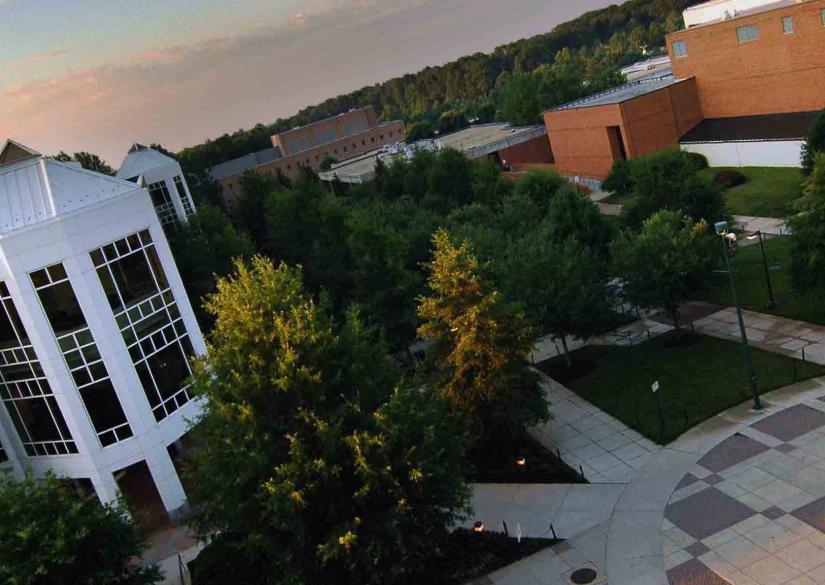
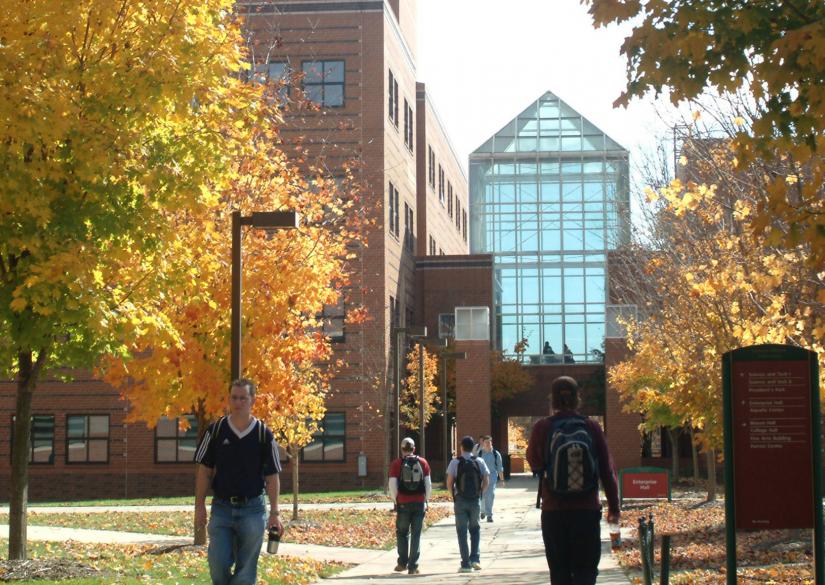
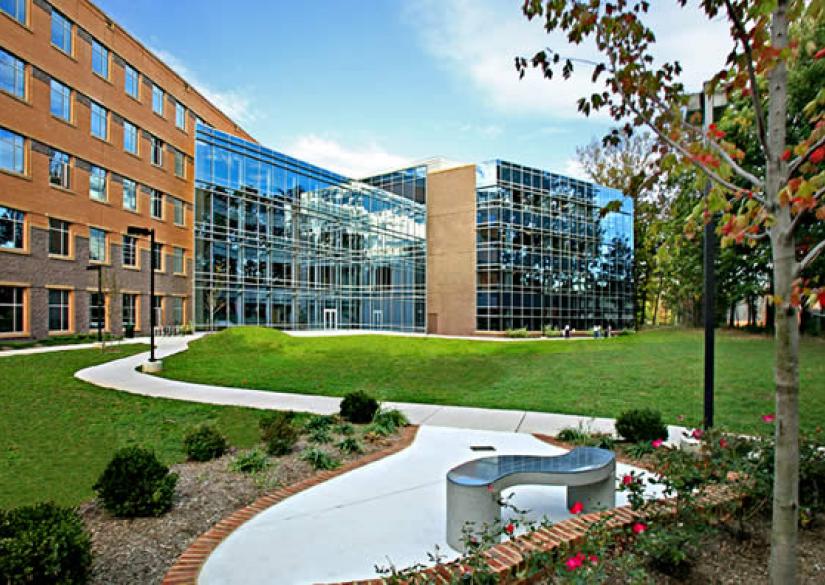
The main campus is located in the city of Fairfax, Virginia. The educational campus, which covers 677 acres of wooded land, is located just 20 miles from the center of Washington. It houses most of the academic buildings and residences, as well as:
- The Arts Center and EagleBank Arena, which offer numerous opportunities to explore art, sports, and entertainment,
- The Mason Observatory,
- The Aquatic and Fitness Center, which provides modern training equipment and pools for amateur or professional swimming.
- The Recreation and Athletic Complex, with an area of 120,000 square feet, boasts three gyms, two racquetball courts, two squash courts, and a two‑story fitness area. Additional equipment and a workout space are also available at Skyline Fitness near the residences.
Located in Arlington, Virginia, the Mason Square Campus is a center for education, research, and business development. Fuse at Mason Square, a LEED Platinum‑certified university building in Arlington, is a symbol of GMU’s commitment to sustainable development. The infrastructure of the campus includes: research and development laboratories, classrooms, offices, corporate innovation centers, incubators, conference rooms, and retail spaces. In 2024, George Mason announced the commercial opening of this innovation center. The data visualization laboratory will support interdisciplinary research in the fields of virtual and augmented reality and 3D inventions.
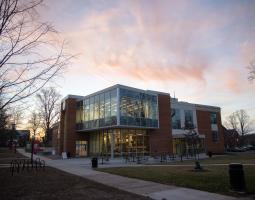
SciTech Campus covers 134 acres in Innovation Park, the largest research and business park in Northern Virginia. The campus serves more than 4,000 students across five innovative facilities specially designed for classrooms, laboratories, libraries, recreation, arts, and much more. The new Life Sciences and Engineering Building: its area is 132,000 square feet, and the building itself combines classrooms, auxiliary spaces, and highly specialized educational laboratories for practice‑oriented learning; engineering laboratories and areas for student design competitions are located on the ground floor, with access to the campus’s external walkways, which makes students’ work visible directly from the premises. The science and technology campus also features the following facilities:
- A 300‑seat Verizon auditorium,
- The Freedom Aquatics and Fitness Center,
- The Hylton Performing Arts Center,
- The Biomedical Research Laboratory,
- The EDGE Health and Community Center,
- Graduate Student Residences (Beacon Hall).
Educational activities are also carried out at such venues as:
- The educational site in Korea, Mason Korea Campus, hosts more than 700 students representing more than 20 countries, who are currently studying six undergraduate disciplines. Mason students living in Korea have the opportunity to spend a year studying at a college in the United States, and many stay to continue their postgraduate studies.
- The Smithsonian‑Mason School of Conservation is a 1,200‑acre institute in Front Royal, Virginia, where students are taught and mentored by scientists from the Smithsonian Institution.
- The Potomac Science Center, located in Belmont Bay in Woodbridge, Virginia, is a 50,000‑square‑foot research center that houses laboratories for teaching and research, lecture halls, and event spaces. It also houses the Center for Environmental Research and Education and the Center for Geospatial Intelligence.
In addition to students, the university community includes more than 10,000 faculty and staff members. The GMU library system unites five campus libraries: Fenwick Library in Fairfax, Mason Square Library and the law library in Arlington, as well as Mercer Library in Manassas. Students and staff can borrow books from libraries at other universities around the world through the interlibrary loan program, book group study rooms (up to four hours per day), and seek advice from librarians either in person or remotely. In January 2016, the Fenwick Library doubled in size: a research commons center, a new reading room that can be transformed into an event room, a separate area for graduate students, expanded spaces for digital scholarship and a specialized department for special collections and archives were added to the building, with a total library capacity of 2,000 seats.
Admission dates and extra charges
The academic calendar consists of several semesters:
- Autumn: September–December,
- Spring: January–March,
- Summer: April–July.
For some programs, the semester dates may differ, as new students are admitted throughout the year. Classes are held on weekdays: from Monday to Friday, and sometimes on Saturday. Days-off are organized on weekends, during international and national holidays, and during seasonal holidays. The list of additional expenses will include:
- Registration fee,
- Deposits,
- Accommodation,
- Meals,
- Some extracurricular activities,
- Additional academic opportunities,
- Individual support,
- External exams,
- Health insurance,
- Personal educational materials,
- Study equipment,
- Personal expenses.
Enrolment process
Most of the stages of admission can be completed remotely with the support of the admissions staff. Future students will have to folloe next steps:
- Fill out a detailed registration form, provide documents,
- Pay the application fee,
- Pass an interview, possible entrance tests,
- Receive an official invitation to enroll,
- Make deposits to book a place on the course, in the residence,
- Arrive on campus and start studying.
Enrolment statistics
More than a third of new GMU students are transferred to the university each year from other colleges and universities (transfer students).
Perspectives
According to annual statistics:
- 87% of graduates report positive career outcomes within six months of completing their studies,
- 83% of graduates are employed in Virginia, Maryland, or Washington, D.C.
- GMU graduates earn one of the highest starting salaries among graduates of Virginia public universities, with $74,000 in 2023.
Among the famous graduates of the university today are:
- Justin Boer is a professional baseball player,
- Karl Rove is a senior adviser to President George W. Bush,
- Anna Escobedo – former U.S. Treasurer,
- Carolyn Kreiter-Foronda – Virginia State Poet Laureate
- Kathleen L. Casey is the U.S. Securities and Exchange Commissioner.
Entry requirements, how to apply, what is required to enrol
International applicants wishing to enroll in GMU must provide:
- A full package of personal documents, including a passport, health insurance, visa or residence permit,
- High School Diploma with Evaluation Certificates/Bachelor's Diploma with Transcripts,
- Two letters of recommendation from teachers of the previous educational institution,
- Language test results: IELTS (from 6.5), PTE Academic (from 59), TOEFL (from 80) or equivalent,
- Resume,
- Individual achievements, if any,
- Additional certificates, portfolios, or other materials required for admission to the chosen program.
All documents must be translated into English.
Scholarships INTO George Mason University
Many GMU students receive financial aid: grants, scholarships, loans.
The university's foundation awards millions of dollars in scholarships each year to incoming freshmen: these awards not only recognize strong academic talent and achievement, but also the personal characteristics of students.
Grants are provided to students who find themselves in a difficult financial situation, they cover part of the cost of tuition or other expenses for one year, and can be extended if the situation remains unchanged.
Partner organizations, state and federal agencies offer students the opportunity to cover part of the costs with the help of student loans, loans.
Literature and references
-
George Mason University — Wiki

-
George Mason University — U.S. News & World Report L.P.
-
George Mason University
-
#93 George Mason University — Forbes
-
George Mason University — THE - Times Higher Education
-
GEORGE MASON UNIVERSITY — data USA
-
George Mason University is Virginia’s Top University for Social Mobility and a Top 50 National Public University
Institution on the map
Residence permits, citizenship and other services
- Guardianship services during the studies
- Student supervision
Review about INTO George Mason University
I was surprised that in the absence of a link to the American city (such as New York, Boston or Chicago) there is a university with excellent technical infrastructure. The nearest town, Fairfax, is very calm, beautiful. At the same time, the university itself, in my opinion, is equal with giants from capital cities. I had the opportunity to compare: I took an educational tour of the campuses of American universities.
Another significant advantage - teachers. A very strong preparation: they constantly go to various conferences and teach businessmen, conduct master classes and open tables, workshops. Almost everyone can find publications in scientific journals, participation in research, awards. We know that our teachers are invited to other places to teach (perhaps even more prestigious), therefore it is especially pleasant and respectful to study with them here.
Recommendations on when to apply
| Language courses, schools and children's language camps | Primary and secondary education - private schools | Preparation programmes for entering universities - higher education | Higher education (after completing accredited programs A-level, IB, High School) - Bachelor, Master, MBA |
| - we recommend to apply 6-9 months before the start of the course (some camps and schools offer discounts for early booking or for lengthy study programs) - there are some very popular and high demand children's camps, where the applications need to be submitted 1 year in advance (in particular Switzerland , Great Britain , USA , Canada , Austria) | - we recommend to apply one year before the start of the training program, - some schools have a specific time frame (September-November - please specify an individual school) - some schools require tests in several stages (UKISET, internal tests of the school: English, mathematics, logics, subjects, interview, some require a personal visit) | - we recommend to apply one year before the start of the program, - for Foundation and Pathway programs, IELTS and TOEFL certificates are usually required, respectively | - recommended submission one year before the start of the program, - the deadline normally closes in January, for TOP HEIs and, as a rule, in March in other universities - for a bachelor, a Foundation or Pathway preparatory program a completed A-level, IB, High School + IELTS / TOEFL are required - for Masters you need a graduated higher education, in some cases you need a pre-Masters program - MBA requires completed higher education, work experience preferably at least 2-3 years, etc. |