For partners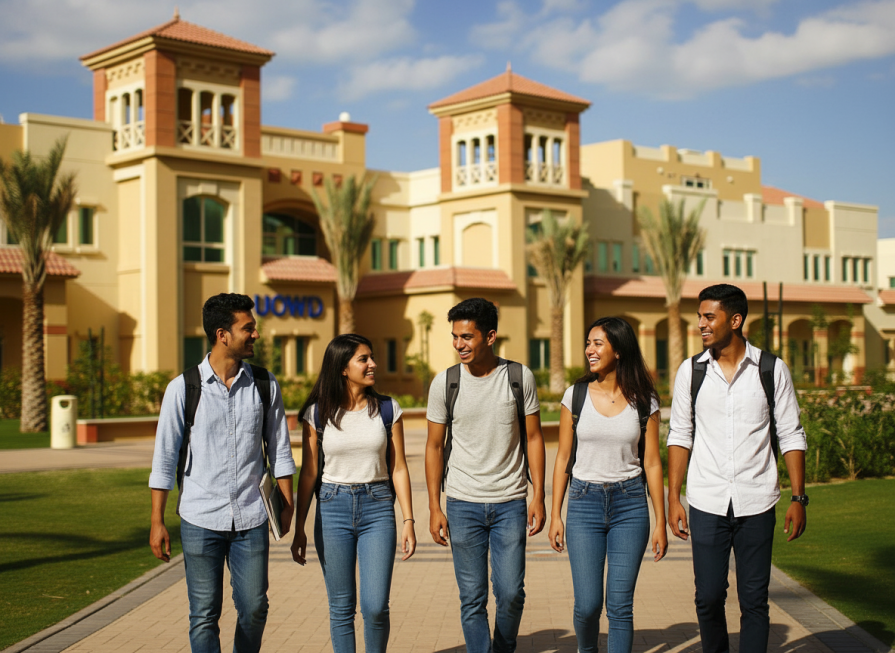
Over the past two decades, Dubai has evolved from a shopping and tourism hub to one of the Middle East's leading educational hubs. The creation of special zones for science, technology and studying became part of the emirate's strategy to create a "knowledge economy": in the early 2000s, three interrelated projects appeared in the structure of the TECOM Group holding - Internet City, Media City and Knowledge Village, each of which served its part of the innovation sector. It was Dubai Knowledge Village (DKV) that became the first space to combine education and business into a single ecosystem. Universities, language and studying centers, HR consultants and HR companies were located here, and then a larger project grew on the basis of DKV — Dubai International Academic City (DIAC), focused on university education. The Knowledge Village itself has retained its specialization in professional and corporate education.
For the emirate, the Knowledge Village has become a strategic element of the new development model: it made it possible to unite foreign providers, ensure quality standards through the KHDA accreditation system, and create conditions for the growth of educational exports. Today, DKV is seen as an example of how the interests of the state, business, and the academic community can be combined within one location.

Embankment of Knowledge
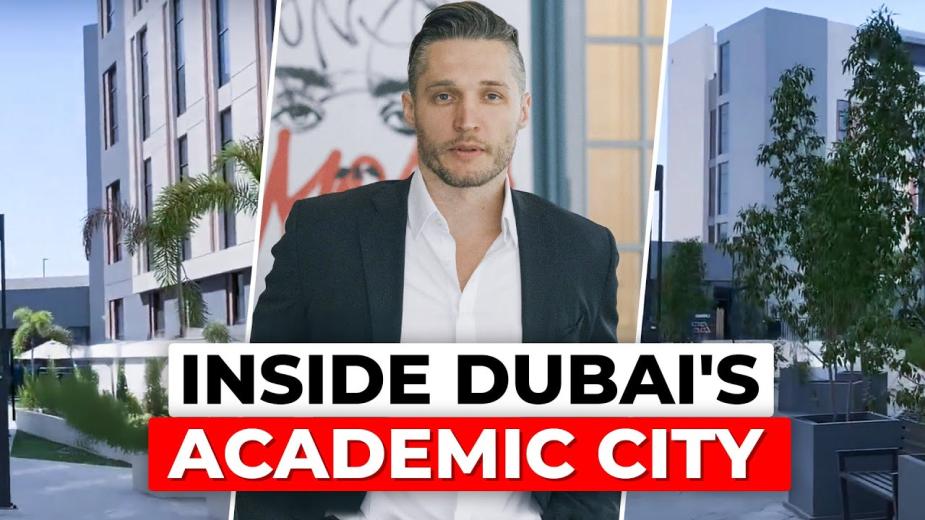
Dubai Knowledge Village is located in Al Sufouh, on the waterfront between Internet City and Media City. This placement is no coincidence: the three zones form a single innovation corridor where IT, media and educational companies are concentrated. The DKV space was designed as a compact campus with elements of a university campus: pedestrian alleys, courtyards, recreation areas and cafes create the atmosphere of an academic community.
The infrastructure of the village includes more than 40 buildings for various purposes: classrooms, offices of educational providers, conference rooms, coworking spaces and laboratories. There are hotels, fitness centers, libraries and services on the territory, providing complete autonomy for students and teachers. For international forums and seminars, the halls of the Conference Centre complex are used, designed for several hundred participants.
Proximity to key areas — Dubai Marina, Palm Jumeirah, Mall of the Emirates — makes Knowledge Village convenient for living and logistics. Thanks to the modern transport system — the Internet City metro station, high-speed highways — the cluster is integrated into the urban environment, while remaining a separate academic space where education and work merge into a single ecosystem.
History and concept of Dubai Knowledge Village
The project was founded in 2003 as an initiative for the development of the human capital sector and lifelong learning. It was operated by TECOM Investments (later TECOM Group, part of Dubai Holding). The goal was to create an international platform where educational institutions, research centers and recruitment agencies could operate in the same infrastructure, taking advantage of the advantages of a free economic zone.
Initially, DKV united about thirty residents: university branches, language schools, IELTS and TOEFL testing centers, corporate academies, but their number quickly exceeded a hundred. A few years later, the project became the backbone of a larger campus — Dubai International Academic City, opened in 2007 for university programs and undergraduate programs.
After the transfer of academic institutions to DIAC Knowledge Village, it focused on the segment of professional development and adult education: MBA centers, corporate training structures, HR companies and educational consultants remained here. In 2014, the zone was officially renamed Dubai Knowledge Park, but its architecture, principles of operation and the idea of "education without borders" remained unchanged.

Unified Knowledge Ecosystem
Dubai Knowledge Village and Dubai International Academic City (DIAC) form a single educational ecosystem built on the principle of functional division. DKV concentrates on corporate, language and vocational preparation, but DIAC, opened in 2007, has become a platform for university campuses and degree programs. This distribution avoids duplication and covers all levels of the educational process, from short-term courses to postgraduate studies. There is close coordination between the zones: DKV studying centers conduct preparatory programs and language courses for DIAC students, and universities from the academic city use the infrastructure of the knowledge village to hold corporate trainings and conferences.
Both sites are part of the TECOM Group "portfolio" along with Dubai Internet City, Dubai Media City and Dubai Design District, which provides access to a single technological and administrative base.
Project prospects
The creation of Dubai Knowledge Village was an important step in the implementation of the emirate's economic diversification strategy. In the early 2000s, Dubai consciously invested in certain industries, such as IT, media, finance, and education. DKV provided the basis for the formation of a market for educational services and the preparation of qualified personnel needed by these sectors.
In recent years, Dubai Knowledge Village has been undergoing a phase of renewal and functional transformation. After rebranding as Dubai Knowledge Park, the vector of development has shifted from locating university branches to supporting innovations in the field of studying and talent management - today the zone is positioned as a center for HR and EdTech industries, bringing together educational companies, recruiting agencies, startups and research units. Particular attention is paid to digital learning: online programs, hybrid courses, and distance testing platforms are actively developing. In cooperation with the Dubai Future Foundation, pilot projects are being implemented to introduce artificial intelligence into the vocational education system.
In the future, DKV is considered as the core of the regional cluster for the development of human capital within the framework of the UAE Vision 2031 strategy, it is planned to further expand partnerships with technology companies and international universities, create accelerators of educational solutions and platforms for the retraining of specialists. Thus, Dubai Knowledge Park is gradually turning into a model of a modern "hybrid" campus, where education, business and technology form a single ecosystem capable of quickly responding to the challenges of the future labor market.