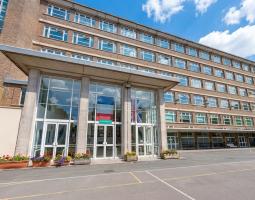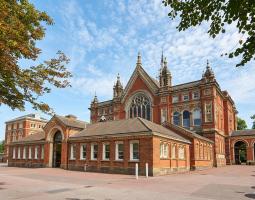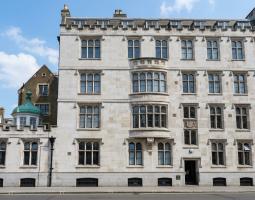
Harrow School


Programs and prices, tuition fees in Harrow School


Quick overview: Shell Year (9th grade) is an educational program of boarding school for boys. The program is designed for international students.
About the educational program: students learn a fairly wide range of subjects. Some of them (mathematics, science and English) are taught at the GCSE level right away, deep and thorough. In the main subjects students pass introductory and orientation courses for 2 terms, after which they can choose one or another discipline for a more detailed study at the GCSE.
List of subjects to study:
- Art;
- Foreign languages (two to choose from):
- Spanish;
- Ancient Greek;
- Chinese;
- German;
- Russian;
- Japanese;
- French;
- Italian.
- Geography;
- Biology;
- Foundations of religion;
- Design and technology;
- Music;
- Computer science;
- English;
- Latin language;
- History;
- Chemistry;
- Mathematics.
Quick overview: Remove and Fifth Form (10-11 grades) is an educational program of GCSE for boys 14-15 years old. The program is designed for international students.
About the educational program: 10 selected disciplines continue to be studied at the GCSE level - they will then help students to enter the A-level program, showing excellent results and fundamental knowledge.
The compulsory subjects included in the curriculum of each student:
- Physics;
- Mathematics;
- Chemistry;
- English;
- Biology.
Subjects to choose from (you must select 4, one foreign language is required):
- Foundations of religion;
- Design and technology;
- Italian language;
- Art;
- Physical Culture;
- Ancient history;
- Chinese;
- Theater art;
- Astronomy;
- Music;
- German;
- Ancient Greek;
- History;
- Japanese;
- Geography;
- Spanish;
- French;
- Russian language.
At about 15 years old, students begin active vocational guidance, are defined with a future profession and specialty, learn about universities and faculties that provide the necessary training programs. Constantly conducted useful lectures, thematic meetings, master classes and conventions, discussions with representatives and professionals from various fields of activity (from engineers to parliamentarians, from art workers to doctors); Also students are tested for professional orientation. Educational staff also conduct individual and group consultations to help:
- Pupils can always count on advice;
- Help in choosing subjects for study at the A-level (recall, they will be only 4, and the choice should be approached with all responsibility).
Students 15 years and older can pass a useful professional internship during the summer holidays.
Brief information: Sixth Form (12-13 class) is a A-level program for international students at 16-17 years old. At this age, the program of compulsory secondary education is over, and those students who want to continue their studies at the university are enrolled in a comprehensive A-level preparatory program.
About the educational program: it is designed for 2 years and implies a huge amount of independent work, projects and research. In the 12th grade, 4 selected subjects are thoroughly studied. There are only 3 in 13th grade (many students nevertheless prefer to continue all four selected), which in June reach the examination level. Final examinations and their results significantly influence the chances of successful admission to the chosen university - many universities count the A-level certificate as entrance exams.
International students can choose the priority disciplines from the following extensive list:
- Theater art;
- Ancient history;
- History;
- Latin language;
- Geography;
- History of art;
- Music technology;
- Biology;
- Mathematics (+ advanced level);
- French;
- Business management;
- Foundations of religion;
- English;
- Music;
- Ancient Greek;
- Italian language;
- Physics;
- Art;
- Statistics;
- German;
- Russian;
- Chemistry;
- Photo art;
- Political science;
- Economics;
- Spanish.
Description of Harrow School
- Location: Harrow on the Hill, northwestern London,
- Student ages: 13–18,
- Enrollment: 830 boys, all of whom are boarders,
- School type: boys’ boarding school,
- Accommodation: 12 boarding Houses.
Harrow School is one of the oldest, most respected and prestigious closed schools for boys in the whole of Great Britain. Here for centuries, representatives of royal families and hereditary aristocrats studied. The foundation of the school is attributed to 1572 (on the personal order of Queen Elizabeth), but there is evidence and references to the work from the middle of the 13th century. Of the famous graduates of Harrow will be enough to note the following legendary personalities:
- Representatives of the Rothschild family
- Writer John Galsworthy
- Winston Churchill
- Founder of the Conservative Party of Great Britain Robert Pee
- Poet Byron
- Poet Richard Curtis
- Seven prime ministers of Great Britain from different years
- The former Prime Minister of India Jawaharlal Nehru
- Many representatives of the British Parliament
- The poet Sheridan.
Today, Harrow School provides a classical education of the British standard and the highest quality, elite and classical, in accordance with centuries of tradition. It is an opportunity to join (albeit temporarily) the higher strata of British society, to feel the spirit of elitism and chosenness. Even for British students to enter this orphanage is a synonym for success.
The school is located in the north-western part of the city (20 kilometers to the center, about half an hour to Heathrow Airport). The picturesque, well-groomed territory gives children the opportunity to concentrate on their studies - and at the same time, all the necessary urban infrastructure, attractions and cultural life are in close proximity.
The school occupies a leafy 300-acre estate.
Harrow School supports centuries-old traditions - especially this is reflected in the appearance of boys, repeating the costume of a gentleman of the XIX century. The costume for each day consists of:
- A snow-white shirt
- A dark blue jacket made of wool
- Black silk tie
- Black shoes
- Gray trousers
- The blue cardigan
- And, of course, the world-famous straw barrel.
At the end of the week and on weekends, students wear an off-season dress:
- Snow-white shirt
- Black cylinder
- Black dress
- Black waistcoat
- Striped trousers
- Black tie
- Braces.
Headmen wear a personal cane and a black cylinder every day.
Another respected tradition are school songs that were written in different years and even in different Era. The special collection includes more than 50 songs that the choir performs during various holidays, events and celebrations.
Students enter a special elite society, a certain club in which their laws and orders reign. There is a special, incomprehensible to others lingo, a special kind of football, as well as some unique differences in everyday life. Every "newcomer" gets 2 weeks for a full adaptation - at this time he is treated with softer and more correct, less strict disciplinary measures. Each is assigned a mentor from among high school students (the so-called Shepherd), and after two weeks the newcomer will be tested for knowledge of school rules and traditions.
The successes of Harrow School in the education of boys are confirmed by centuries of experience and adherence to traditions. Groups for studying include up to 12 people, young men are engaged in spacious, bright classrooms, fully equipped with all necessary equipment. Each teacher is an expert of the highest qualification, with a great work experience, able to motivate students to achieve personal and academic goals.
Electives
The school has a great opportunity to deepen the curriculum, for a more detailed study of priority disciplines. You can add to the curriculum another foreign language, a course of higher mathematics (if you are already studying mathematics at the level of A-level). In 12th grade (1st and 2nd trimester), you can choose one additional specialty: electives are not part of the standard school curriculum, offered at the university level. This is an opportunity to study the object of interest more deeply and thoroughly, actively developing the skill of critical and analytical thinking. Electives can be chosen from among the subjects associated with the chosen future profession, and engage in the study of a completely new field of knowledge:
- Conflict resolution
- History of the development of stringed musical instruments
- Advanced physics
- Physiology
- Culturology
- International health care
- Zoology
- Creative writing
- Introduction to psychoanalysis
- Great economic theories
- Reformation
- Design competition
- Outstanding European philosophers
- Programming
- Architecture
- Finance business
- Ancient history
- Music technology
- The history of Western art.
In the 12th grade pupils with the help of tutors determine which universities they plan to enroll in for the chosen specialty. The choice is not limited exclusively to British universities: you can choose US universities (you can prepare for the SAT exams), and the world, Europe (you can also take the International Baccalaureate (IB) and Pre-U programs).
Educational process
The Pastoral Support Committee meets three times a week to address complex or recurring concerns and receive feedback from House teams. Students are supported by a resident School Psychologist, a school counselor, two Anglican Chaplains, one Roman Catholic Chaplain, an independent Listening Ear, and safeguarding staff.
Tutors deliver the PSHE program with support from visiting specialists. It covers Health & Wellbeing, Families & Relationships, and Living in the Wider World. The school takes a zero-tolerance approach to bullying. Preventive measures include induction programs, codes of conduct, seminars, and student groups.
Students’ Surface Book computers are monitored through eSafe, which provides daily alerts about access to inappropriate material and communications that raise concerns. Formal reports are written at the end of each term and each half-term, and every year group has an annual parents’ meeting. The Harrow Tracking System monitors academic performance and student well-being and flags cases that require staff attention.
Things to know about
- The school’s values are Courage, Honour, Humility, and Fellowship,
- women make up about one-fifth of the teaching staff.
Accommodation, meals, prices
Each boarding House is home to 60–70 boys. A resident House Master, Assistant House Master, and Matron lead each House team, supported by Tutors and a House Visitor.
The institution lacks a full-time form of education - all students are accommodated on a full board basis (7 days a week). Each residence is surrounded by a green and well-kept garden and has everything necessary for a comfortable stay. Young men occupy rooms for 1-2 people during the first 3-6 trimesters, after which they move to their private bedrooms - there are no common rooms here. On each floor there are enough shower rooms and toilets, common cozy living rooms for rest with TV and fresh press. Between the hostels Harrow School is constantly held sports and intellectual competitions, creative and scientific competitions: boys learn to defend the honor of his team, his name and good reputation.
Meals are also organized on the full board basis: the diet is balanced and fully meets all the needs of children and adolescents. All wishes and requests, religious and medical, national prescriptions are also taken into account - a special Nutrition Committee is working, which holds regular meetings to receive feedback.
Boys eat breakfast, lunch, and dinner in their House areas in Shepherd Churchill Hall. The school’s in-house Catering Team prepares the food on site. Lunch includes two meat dishes, vegetarian and vegan options, soup, a salad bar, and dessert. Boys can also buy snacks at Hill Café and use the kitchen facilities in their Houses.
Each student has his tutor (class teacher): he helps in solving any questions of academic, vocational guidance, examination. The dormitories are constantly on duty and the commandants live, as well as their assistants and supervisors - 12-14 people are assigned to each: he is responsible for their safety and comfort, monitors the observance of order, cleanliness and discipline, and creates a friendly and benevolent atmosphere. Weekly meetings of tutors and commandants are provided: they discuss personal, academic and extra-curricular achievements of students, plans are made for their further development. The ratio of pupils and staff is 12: 1. Parents can contact the institution's staff at any time and clarify any questions concerning the education and residence of their child.
Subjects and sports
Activities Harrow School
Of the popular sports, it is worth noting the classes:
- Basketball
- Riding
- Athletics
- Gymnastics
- Jogging on the rough terrain
- Karate
- Rugby
- Badminton
- Squash
- Swimming
- Football
- Shooting from the bow
- Judo
- Water polo
- Big tennis
- Climbing
- Polo
- Cricket
- Diving
- Ggolf.
In their free time students are waiting for 56 clubs and sections on interests - each will find a lesson for himself, will be able to show his abilities and find like-minded people. Opportunities for development are unusually broad - we will give some examples of communities:
- Political club
- The Latin American Club
- The Medical Community
- The Shipbuilding Club
- The Lobby of Bridge Game Lovers
- The Biological Community
- The Historical Club
- Culinary club
- The scientific community
- Literary club
- The Astronomical Club
- The School Farm Club
- The Ceramics
- The Cheese Community
- The Foreign Languages Club
- The Community of Chemists
- Riding club
- Mathematical community
- Amateur club
- The philosophical community
- Chess club
- Community of debates.
The club of fans of military history "Alexander" is regularly visited with lectures and master classes by representatives of high military ranks, military strategists, former Participants in hostilities. Club "Palmerston" provides an opportunity to meet with famous national politicians and master the basics of government. Amnesty International offers young people to help improve the international community and take part in the struggle for human rights.
Harrow has his own newspaper The Harrovian: it is published by the students themselves every week, and all articles are published anonymously. Here you can not only highlight the bright events of school life, encourage successful students, but also cause public outcry about current topics and contentious issues.
The cadet corps is actively functioning: here you can improve the skill of first aid, reading maps and orienteering on the ground. The resulting knowledge will be particularly useful in the fight for the Duke of Edinburgh Prize (Duke of Edinburgh Award Scheme): awards are issued at the bronze, silver and gold levels. All participants (note that this type of employment is paid additionally) manifests itself in four directions:
- Sports and physical culture
- Night expeditions (planning, preparation and participation)
- Public works and charity
- Manifestation of personal talents and abilities.
On weekends and in the evenings, students can go on excursions or walks, visit a movie or theater, and also take part in recreational activities that are constantly arranged on the campus. In addition, a sufficient amount of leisure is provided along with the pupils of other boarding schools: the male school does not mean complete isolation from the women's society.
Outside the classroom, boys can take part in sport, music, drama, art, CCF, DofE, and community service. Over five years, these activities also contribute to the Harrow Prize.
Saturday morning lessons are followed by sport or other activities. Saturday evenings may include trips to the movies or theater, concerts, and events with girls’ schools. On Sunday mornings, boys attend Chapel or Thought for the Day. Sunday afternoons often include sport, drama rehearsals, or music rehearsals, followed by mandatory independent study in the evening.
Harrow also organizes symposiums, debates, Scottish dancing, an annual Choral Society Concert, and Saturday dinners with girls’ schools for boys from Year 9 onward.
Boys with sports scholarships may be allowed to train at agreed times with professional club academies. The school works with London Irish, Queen’s Park Rangers, and the Middlesex and Surrey county cricket organizations.
Advantages
In results published by the school:
- more than one-third of Upper Sixth A-level grades were A*, and 73% were A* or A,
- 94% of all A-level grades were A*–B, while 19% of boys achieved three or more A* grades,
- at GCSE, nearly one-quarter of boys earned ten or more Grade 9–8/A* grades,
- half of the year group earned ten or more Grade 9–7/A*–A grades.
Facilities and equipment at Harrow School
Harrow seeks to give its students everything they need for full, comprehensive development, to expand their horizons and realize their own talents and abilities.
The large library has over 25,000 diverse sources - widely known outside the school, which are useful for studying and classes for pupils and teachers of other institutions. Additionally, many dormitories and departments have their own libraries, many of them have their own specialization, which is very convenient for students studying in different directions.
The institution is proudly ranked as one of the most computerized: all PCs are connected to a large database of Westminster University, they have access to the branches of the natural sciences of many medical universities, providing the opportunity to search for unique valuable information for scientific research.
Pupils have the greatest opportunities to develop their creative abilities. One of the key areas is musical art. Every new student goes through musical listening; a huge number of guys are engaged in playing the guitar, bagpipes, organ, piano, sing in the choir. The orchestras and music groups work here, there is own recording studio with the newest equipment, concerts and performances are constantly arranged. Several times a year, theatrical productions, plays and musicals are held, the school of arts, drawing and sculpture works.
Harrow pays no less attention to the physical, sporting development of his pupils. On the campus there is a spacious indoor pool (length - 25 meters), squash and tennis courts, a golf course, fields and grounds for team games. Constantly arranged competitions, tournaments and relay races, including between national teams of other schools, are organized trips of the team to the championships abroad. Students always become winners of prize places, and the most successful can apply for a scholarship.
Campus facilities available on weekends include House 5-a-side soccer courts, tennis courts, a golf course, Art Schools, and Design and Technology schools.
The Medical Center provides 24-hour care from qualified nurses. The School Doctor holds consultations every weekday, and a Visiting Psychiatrist is available when needed.
Admission dates and extra charges
Additional charges and deposits may include:
- a non-refundable registration fee,
- an Entry Deposit and a Final Confirmation Deposit,
- an Additional Deposit when at least one parent normally resides overseas,
- an annual visa administration charge for boys who require school sponsorship,
- a non-refundable Acceptance Fee,
- an extra charge for subjects requiring additional instruction.
Extras:
- Registration fee (for a programme/course) 350 GBP
- Deposit for a course/programme 3000 GBP
- Deposit for a course/programme 14500 GBP
- Application fee 500 GBP
Entry requirements, how to apply, what is required to enrol
Year 9 entry
- registration is due by 30 September of Year 6, while late applicants follow the same assessment process but compete for fewer places,
- supporting material includes a copy of the applicant’s passport ID page and a confidential reference requested by Harrow from his current school,
- the ISEB Common Pre-Test is an adaptive online assessment lasting approximately two and a half hours and covering verbal reasoning, non-verbal reasoning, English, and Mathematics,
- applicants who pass the ISEB Common Pre-Test take the Harrow Test in the Spring term of Year 6, consisting of a 20-minute House Master interview, a one-hour computerized English and Mathematics assessment, and a 20-minute classroom group activity,
- every offer is conditional on the applicant taking either Common Entrance or Harrow’s Academic Scholarship examinations in Year 8.
Year 12 entry
Harrow admits up to 20 boys each year, normally at age 16.
- applications are due by early September of Year 11, while late applicants compete for fewer places,
- applicants are expected to have predicted results of at least seven or eight GCSE passes, or their equivalent, at grades 7, 8, or 9 (A/A*),
- supporting material includes a curriculum vitae covering academic achievements and co-curricular interests, a one-page handwritten letter to the Head Master explaining why the applicant wants to attend Harrow, the latest school report, and a copy of the passport ID page,
- strong applicants invited for assessment select four subjects that they intend to study in the Sixth Form,
- the school looks for boys who will thrive in boarding, contribute to school life, show ability in academics, sport, the arts, or another activity, and have a good disciplinary record and leadership potential.
Scholarships Harrow School
Harrow scholarships recognize excellence in academic study, the arts, or sport and carry a value of 5% of the School fees. Academic, Sport, Drama, Music, Art, and Design and Technology awards are available for entry into Year 9 and Year 12.
Awards are based on an overall assessment of the applicant’s character and suitability for boarding, academic ability and potential, the needs of the school, and the applicant group.
Means-tested bursaries provide financial support and do not depend on receiving a scholarship. As a UK-based charity, Harrow School is unable to consider bursary applications from overseas.
Institution on the map
Residence permits, citizenship and other services
- Guardianship services during the studies
- Student supervision
Review about Harrow School
Recommendations on when to apply
| Language courses, schools and children's language camps | Primary and secondary education - private schools | Preparation programmes for entering universities - higher education | Higher education (after completing accredited programs A-level, IB, High School) - Bachelor, Master, MBA |
| - we recommend to apply 6-9 months before the start of the course (some camps and schools offer discounts for early booking or for lengthy study programs) - there are some very popular and high demand children's camps, where the applications need to be submitted 1 year in advance (in particular Switzerland , Great Britain , USA , Canada , Austria) | - we recommend to apply one year before the start of the training program, - some schools have a specific time frame (September-November - please specify an individual school) - some schools require tests in several stages (UKISET, internal tests of the school: English, mathematics, logics, subjects, interview, some require a personal visit) | - we recommend to apply one year before the start of the program, - for Foundation and Pathway programs, IELTS and TOEFL certificates are usually required, respectively | - recommended submission one year before the start of the program, - the deadline normally closes in January, for TOP HEIs and, as a rule, in March in other universities - for a bachelor, a Foundation or Pathway preparatory program a completed A-level, IB, High School + IELTS / TOEFL are required - for Masters you need a graduated higher education, in some cases you need a pre-Masters program - MBA requires completed higher education, work experience preferably at least 2-3 years, etc. |