d'Overbroeck's College




In the process of preparing the material, we referenced the following sources: Wikipedia, The PIE News
Programs and prices, tuition fees in d'Overbroeck's College
GCSE Program
- Age of students — from 14 to 16 years,
- The studying period is two years.
The GCSE program is a personalized curriculum that includes nine subjects: three compulsory and six additional. The list of required subjects includes English, English literature, and mathematics, while the range of additional subjects is extensive, offering a choice of the following research areas:
- Two or three natural science subjects: chemistry, biology, physics,
- History,
- Geography,
- Religious Studies,
- Physical culture,
- Fine arts and others.
The individual program can be supplemented with short-term A-Level courses, the knowledge of which will be useful to students in high school: they are available in such specializations as political science, psychology, business and others.
Another mandatory component of the GCSE program is the HPQ qualification project, which will allow students to explore their chosen topic under the guidance of a supervisor.
A-level Program
- Age of students — from 16 to 18 years,
- The studying period is two years.
The A-Level program allows high school students to focus on studying subjects they are interested in: in 11th grade they attend classes in four subjects, and in 12th grade they attend lessons in three of them.
Students independently form a curriculum, choosing disciplines from 37 offered ones, for example:
- Architecture, design,
- Biology,
- Art,
- Classical civilization,
- Chemistry,
- Computer science,
- French language,
- Advanced mathematics,
- Geography,
- Art History,
- Chinese (Mandarin),
- Japanese language,
- Photo,
- Politics, government,
- Philosophy.
In addition to the selected subjects, students can take an optional EPQ course, equivalent to half of the A-Level: it is an individual research project on any scientific topic that is interesting to the student. Effective academic preparation allows high school students to gain knowledge and skills, thanks to which they enter leading universities in the country and abroad.


Summer program with a scientific bias (Young Professionals)
- Age of students — from 13 to 17 years,
- Dates — July,
- Language level — from B1,
- The studying period is two weeks.
In July, short-term two-week Young Professionals courses are organized on the campus of d'Overbroeck's College, offering teenagers to learn a lot about their scientific field. There are several specializations available to choose from:
- Psychology,
- English,
- Engineering,
- Architecture,
- Artificial intelligence, computer science,
- Business, marketing.
Each course stipulates daily thematic classes with the study of theory and its application in practice. The studying is conducted in specialized studios, workshops and laboratories under the guidance of experienced teachers who provide comprehensive support and use interactive methods in the teaching process to engage students and help them master complex topics.
In addition to studying their chosen scientific field, students will effectively improve their English language skills by studying in small groups and regularly practicing conversational skills. The programs include a variety of services for a comfortable stay in the UK: from comfortable accommodation, balanced meals and round-the-clock support to a varied leisure program, including sightseeing tours.
Senior School
- Age of students — from 11 to 16 years old,
- The studying period is five years.
The academically challenging, rich program of grades 7-11 is based on effective preparation and passing the IGCS/GCSE stages.
Students study a wide range of subjects in grades 7-9.:
- English language, literature,
- Mathematics,
- Geography,
- History,
- Natural sciences: chemistry, biology, physics,
- Computer science,
- Visual art,
- Performing arts,
- Music,
- Physical culture,
- Social sciences: religion, ethics, philosophy.
The curriculum is common to all, but adapts to the abilities of each student, allowing them to develop at their own pace and achieve the best results with the individual support of teachers.
In the 9th grade, students begin to specialize in certain fields, choosing two of the three languages: French, Spanish, Latin or the study of classical civilization.
In the future, students will be able to effectively prepare for the IGCSE exams in the 10th grade and GCSE at the end of the 11th grade, and then move on to the final grades.
International School: IGCSE
- Age of students — from 15 to 16 years,
- The studying period is one year.
The international department of the school teaches a one-year IGCSE program that helps international students adapt to their new academic environment and successfully progress to the A-Level stage.
During one academic year, students study from 5 to 8 disciplines, among which compulsory subjects are English, mathematics and at least one natural science discipline. Due to the flexible curriculum, students attend additional EAL language classes if they need to improve their English language skills.
At the end of the course, students will take exams in compulsory and selected subjects, and defend the HPQ project as an addition to their personal achievements.
Description of d'Overbroeck's College
- Location: Oxford, England,
- Year of foundation: 1977,
- Number of students: about 200,
- Language of instruction: English,
- Type of studying: mixed.
d'Overbroeck's College is a private school with outstanding academic achievements, offering middle and high school programs in the UK. Students aged 11-18 study here.
d'Overbroeck's traces its history back to 1977, continuously developing and expanding academic and leisure opportunities for its students. A distinctive feature is the special environment and relationship between students and teachers: the atmosphere is informal enough for children to trust their teachers and be surrounded by individual attention not only to academic, but also personal problems. At the same time, the academic process is quite strict and orderly, thanks to which students achieve excellent results both during their studies and upon its completion — upon admission to British universities and colleges. Students develop harmoniously and comprehensively, realize their talents and abilities, reveal themselves from the best sides, improve useful social skills.
The programs taught at d'Overbroeck's College at both academic levels, Senior and Sixth Form, are considered to be among the best in the country. High school students are supported by experienced teachers, personal and career mentors, each of whom helps at the stages of choosing subjects, studying and preparing for exams, choosing the right university and admission. Graduates demonstrate an excellent level of knowledge and academic preparation, which is confirmed by the annual statistics of successful admission to leading universities around the world.
The college is a member of the Nord Anglia Education group and offers a fully personalized education that reveals the talents and ambitions of each student.
Educational process
Comprehensive academic and personal support from qualified teachers, mentors, and career counselors is available to every student. International students can contact the International Department to supplement the core curriculum with Elective English Language Classes (EAL) to improve their overall level and individual skills.
Classes are held in small classes — each student is known to teachers as a person and receives targeted support. Special attention is paid to well—being - there is a PSHE (personal and social development, health and fundamentals of economics) program that helps children overcome difficulties and take care of physical and mental health.
Faculties and colleges
Several stages of school education programs are available at d'Overbroeck's:
- Senior School — secondary classes for students aged 11-16,
- Sixth Form — graduation classes for students aged 16-18,
- International School — an international department for students aged 14-16,
- 11i (Year 11 International Program) — 11th grade international program,
- Extended A-Level Program (EALP).
University destinations
Graduates enter leading universities in the UK, including Russell Group universities. The most popular destinations by the number of applicants:
- University of Oxford,
- University of Cambridge,
- University College London,
- Imperial College London,
- London School of Economics and Political Science,
- King’s College London,
- University of Edinburgh,
- University of Warwick,
- University of Bath,
- University of Bristol,
- Durham University,
- University of Exeter,
- University of Manchester,
- Royal Academy of Music,
- Guildhall School of Music & Drama,
- Royal Northern College of Music,
- Liverpool Institute for Performing Arts,
- British and Irish Modern Music Institute.
Accommodation, meals, prices
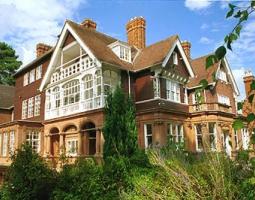
d'Overbroeck's has six residential buildings offering comfortable living conditions for students.:
- St. Aldates is a residence in the center of Oxford, prepared to accommodate 50 students. Boys and girls live on different floors and are accommodated in single rooms with a private bathroom. Breakfast and dinner are served at the residence, and lunches are available upon pre-order.
- Hayfield — separate rooms for boys and girls, united by a common area. Students live in single and double rooms with access to shared bathrooms, kitchens and other rooms of the residence. Accommodation here does not include meals in the residential area — students attend the school's dining hall during breakfast, lunch and dinner.
- Islip is a new residential building with a capacity of 60 students who live in double rooms with bathrooms, have access to common areas: kitchen and dining area, laundry and others. Boys and girls are accommodated on different floors. The residence provides meals: breakfast and dinner are served here, and students visit the cafeteria at the school during lunch.
- Nash is a residence for 18 boys and girls, living on different floors in double rooms with private bathrooms. All meals are organized on campus, and the residence's common areas include small kitchens and a dining room.
- St. Phillips is a residential building located in a rural area, accommodating up to 53 students. Most of the rooms here are single and double, and include a bathroom. Meals are not provided for residents — students attend the school's dining hall during breakfast, lunch and dinner.
- Westway is a three—storey residence in a high-rise building located 15 minutes drive from the city center. Up to 49 students live here, housed in studio apartments with a private bathroom and a small kitchen. From Monday to Friday, residents have breakfast, lunch and dinner at school, and on weekends meals are served in the common dining room of the residence.
- Wyvill Court is a residence for high school students of the international department, located 15 minutes from the city center, next to the academic buildings.
Each building has a variety of common areas for recreation and self-study, high-speed Wi-Fi and other amenities, and staff who provide round-the-clock support and supervision for students.
Students who want to be in a more family-friendly atmosphere and immerse themselves in learning the language, culture and customs of the locals can choose to stay with a host family. The school has been cooperating with families for many years and regularly certifies them to ensure high-quality comfort for their students. Family homes are located within a ten-minute walk from the study area, offering single rooms with private bathrooms, access to common areas: kitchen, living room, courtyard. Meals are provided in a half—board format - breakfast and dinner are served to the student every day, and lunch is served in the school's dining room.
Subjects and sports
Activities d'Overbroeck's College
Throughout the year, a lot of various events are organized on the campus, there are more than 50 thematic circles and sections, trips around the region and to other countries are organized. Through collaboration with The Juilliard School, The Massachusetts Institute of Technology, and the IMG Academy, students have the opportunity to develop their talents in art, sports, and science at an almost professional level. Partner organizations often conduct thematic seminars and master classes, during which students will be able to get acquainted with leading industry experts, gain new knowledge and show their abilities to a wider audience.
The campus clubs and sections are divided into several areas:
- Art — art classes in painting, 3D design, photography, working with textiles and other materials,
- Music, drama — lessons in playing musical instruments, acting, singing in a choir or solo, participation in an orchestra, dance or theater group,
- Sports — there are many sections of team, doubles and individual sports: from basketball, football and netball to table tennis, yoga and swimming,
- The Duke of Edinburgh Award — participation in trips and excursions, active social activities to receive a bronze / silver / gold award, which will complement the student's portfolio and make him a more competitive, attractive applicant.
There are tennis and dance Academies at the school, which are taught by specialists of the highest category: students will be able to develop their talent at a professional level by attending regular training sessions and practicing both individually and in small groups. Travel perfectly complements a wide range of extracurricular activities, providing students with expanded knowledge and horizons, and new positive experiences. Recently, the students of d'Overbroeck's College were in Tanzania on a charity mission, skiing in the Swiss Alps. In addition to large-scale trips, students can also take local excursions to the sights and cultural sites of the region, day trips to London and Bath.
Advantages
- It is among the top 5% of UK schools in terms of academic performance,
- High school students show exceptional results in passing final exams: 66% of students receive grades from A* to A.,
- More than 40 nationalities among the students,
- A wide selection of 36 subjects to study in high school,
- Three study areas in Oxford,
- The ratio of teachers to students is 1:7, which ensures a high level of individual support.,
- The Independent Schools Inspectorate rated the quality of education at the school as "excellent".
Facilities and equipment at d'Overbroeck's College
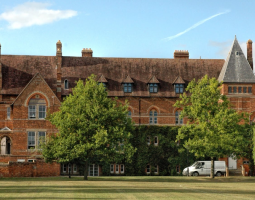
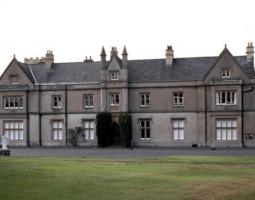
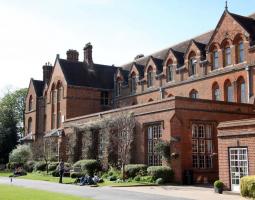
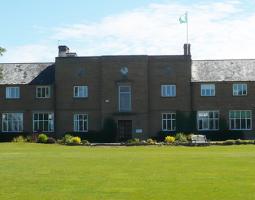
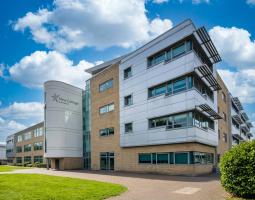
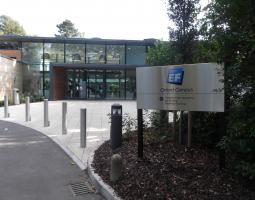
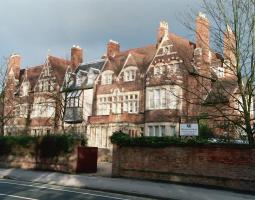
d'Overbroeck's College is located on three academic sites within north Oxford, each with its own purpose: a secondary school, an international campus, and an academic playground for high school students. Each of the territories includes dozens of modern lecture halls, specialized laboratories, computer labs and several libraries. The infrastructure is diverse and modern, from academic buildings and sports facilities to performance venues and a recording studio.
Some of the outstanding facilities of d'Overbroeck's College are:
- An art center with specialized studios for fine art, photography, textiles, three-dimensional graphics, and music recording,
- A multifunctional hall for performances and seminars, accommodating up to 200 people and equipped with sound and lighting technologies,
- Dozens of recreation areas with board and video games, bookshelves, and TV.
Through a partnership with the University of Oxford, students gain access to its world-class sports facilities.: swimming pool, all-weather field, gyms, tennis academy and others.
Admission dates and extra charges
The academic calendar includes three trimesters:
- Autumn: September-December,
- Spring: January-March,
- Summer: April-July.
Classes are held from Monday to Friday, and rest is organized on weekends and holidays, during seasonal vacations.
The list of additional expenses will include:
- Registration and administrative fees,
- Accommodation and meals in the selected format,
- Individual academic classes, extracurricular activities, language support,
- CAS Collection,
- Some extracurricular activities,
- Personal educational materials, including textbooks,
- School uniform,
- State exams,
- Personal expenses.
The fee for a trimester in secondary school, according to the 11i program and the EALP program includes lunches, and the board fee involves breakfasts and dinners.
Extras:
- Deposit for a course/programme 4000 GBP
- Registration fee (for a programme/course) 125 GBP
Enrolment process
The admission process consists of several stages:
- Sending the completed application form, the required documents and paying the registration fee,
- Complete an interview and entrance tests in core subjects, including English,
- Receiving an official letter of enrollment.
Prior to make a decision on enrollment, applicants can take a guided tour of the campus, get acquainted with teachers and existing students.
Perspectives
High school students achieve excellent results in exams and during the admission process to universities and colleges they have chosen: over the past few years, 70% of students have received A*-A grades in core subjects, and 45% of high school students — in at least three disciplines.
They then enter leading universities in Great Britain, the USA, Canada and other countries, including such universities as University of Oxford, University of Cambridge, University College London, King’s College London and others.
Entry requirements, how to apply, what is required to enrol
The international department of d'Overbroeck's College accepts applicants from 14 to 16 years old. To study in the UK, they need to have:
- International passport,
- Medical insurance,
- Visa or residence permit,
- Academic report cards from the previous place of study,
- Motivation letter.
If desired, you can take a language test in advance to confirm your English language proficiency. Most applicants undergo an entrance test, and individual candidates are invited for an interview. The format depends on the age of the student and the educational system from which they come to school.
Scholarships d'Overbroeck's College
d'Overbroeck's offers a variety of scholarships for applicants in grades 7, 9, 12 and already enrolled students.
Scholarships are awarded in several ways:
- Academic achievements,
- Art,
- Drama,
- Music,
- THE MEDIA,
- Sport,
- Scholarship of the Dance Academy,
- Tennis Academy scholarship.
The rewards do not exceed 25% of the tuition.
Students can also receive awards from the international School Olympiad, external support from partner organizations, and financial assistance based on need. The amount of each scholarship is determined by the school at its discretion. Fellows are expected to lead the way in studies, art, sports, and make a significant contribution to the life of the school.
Literature and references

Institution on the map
Residence permits, citizenship and other services
- Guardianship services during the studies
- Student supervision
Review about d'Overbroeck's College
Recommendations on when to apply
| Language courses, schools and children's language camps | Primary and secondary education - private schools | Preparation programmes for entering universities - higher education | Higher education (after completing accredited programs A-level, IB, High School) - Bachelor, Master, MBA |
| - we recommend to apply 6-9 months before the start of the course (some camps and schools offer discounts for early booking or for lengthy study programs) - there are some very popular and high demand children's camps, where the applications need to be submitted 1 year in advance (in particular Switzerland , Great Britain , USA , Canada , Austria) | - we recommend to apply one year before the start of the training program, - some schools have a specific time frame (September-November - please specify an individual school) - some schools require tests in several stages (UKISET, internal tests of the school: English, mathematics, logics, subjects, interview, some require a personal visit) | - we recommend to apply one year before the start of the program, - for Foundation and Pathway programs, IELTS and TOEFL certificates are usually required, respectively | - recommended submission one year before the start of the program, - the deadline normally closes in January, for TOP HEIs and, as a rule, in March in other universities - for a bachelor, a Foundation or Pathway preparatory program a completed A-level, IB, High School + IELTS / TOEFL are required - for Masters you need a graduated higher education, in some cases you need a pre-Masters program - MBA requires completed higher education, work experience preferably at least 2-3 years, etc. |