For partners
 Cleveland State University (CSU)






Programs and prices, tuition fees in Cleveland State University (CSU)


Bachelor's Degree Program
Age of students — from 18 years old,
The studying period is three to four years.
Some specialties are:
- Accounting
- African studies
- American Sign Language
- Anthropology
- Applied social research
- Arabic language
- Art
- History
- Biology
- Biomedical Engineering
- Economics, business
- Chemical Engineering
- Civil engineering
- Communication science, disorder research
- Computer Engineering
- Criminology.
Master's Degree Program
- Age of students — from 21 years old,
- The studying period is one to two years.
Specialties are:
- Information systems
- Business Administration
- Accounting, analytics
- Pre-school education
- Management, risks, compliance with accounting requirements
- Secondary education
- Pre-speech pathology
- Teaching English to native speakers of other languages,
- Labor relations, human resources.
University Pathway Program
-
The minimum level of English is Advanced.
The OHLA University Degree Program allows international students to automatically enroll in several university programs throughout the United States. A team of experts prepares students for university studies, guides students to successful admission.
Pathway gives students the opportunity to prepare for college: they receive information, perform exercises that will make academic requirements clear, and eliminate common obstacles that can delay student progress. Topics: resources, teaching methods, writing skills, critical thinking skills, motivation, self-efficacy. Special attention is paid to group work and mutual learning.
The studying program stipulates:
- Getting to know other students, staff, and faculty, and a well-developed support network before starting CSM studies,
- Acquaintance with the campus and its valuable resources,
- Obtaining 1 college loan.
STEP Summer Program
- The studying period is 6 weeks.
STEP is a six—week summer professional development program for any student enrolled in math or English language courses and students of the Cleveland Metropolitan School District enrolled in college preparation courses. The curriculum includes the study of "difficult" subjects for the student, the development of personal and social skills.
Doctoral Degree Program
- Age of students — from 23 years old,
- The studying period is three years.
The university offers more than a dozen specializations, for each of which you can get a doctorate degree. By studying for 3+ academic years, students receive high-quality professional knowledge and skills, thanks to which they will be able to occupy a high position and effectively develop their career.
Some doctoral courses available at CSU are:
- Adult development and aging,
- Chemical Engineering,
- Applied Data Science,
- Applied Biomedical Engineering,
- Civil engineering,
- Clinical and bioanalytical chemistry,
- Computer Science,
- Electrical engineering, computer engineering,
- Engineering mechanics,
- Occupational therapy.
Intensive English Course
- Age of students — from 18 years old,
- Dates — throughout the year,
- English language proficiency level — from beginner to advanced,
- Study period — 12 weeks, semester or year.
Cleveland State University has a language center that offers various English language courses each season. Here, international students can improve their reading, speaking, listening and writing skills alongside their main program or focus entirely on developing their language level before entering CSU.
During the summer months, language courses last 12 weeks and have specializations for focused preparation for admission or continuation of studies:
- Business,
- Education,
- Engineering,
- American culture.
Throughout the fall/spring semesters, the Language Center implements support programs — English language study for academic purposes. Students can expect 10-20 hours of classes per week in small groups, regular communication with native speakers, and participation in extracurricular life at CSU.
All courses are taught by qualified teachers who have the necessary experience and knowledge to teach English to foreign students. Under their guidance, students effectively improve basic skills, adapt to the English-speaking educational environment, and confidently progress through the core curriculum.
Description of Cleveland State University (CSU)
- Location: Cleveland, Ohio, USA,
- Year of foundation: 1964,
- Number of students: about 14,000,
- Language of instruction: English,
- Type of study: mixed.
Cleveland State University (CSU) is a public research university that is part of the Ohio State system of higher education institutions, offering more than 175 higher education programs.
The University was opened in 1964 by the decision of the Ohio General Assembly, occupied the Fenn College campus in the central part of Cleveland and began active educational and research activities for local and international students. Today, CSU is one of the leading universities in the United States, which is confirmed by regular high marks from national and international agencies. The list of advantages includes almost all aspects of its activities: from the highest quality of teaching, modern learning conditions and a wide range of additional development opportunities to a personalized approach to each student, a variety of extracurricular activities, a comfortable and safe campus.
About 14,000 students study at Cleveland State University, about 1,400 of whom are foreigners. By implementing exchange programs in cooperation with foreign universities, CSU provides foreign students with the opportunity to gain international educational experience, improve their English language proficiency, and obtain qualifications in demand on the labor market. The University is also open to foreign students for direct admission — before starting a higher education program, foreign students can take preparatory courses and a language program to improve their academic performance.
Educational process
Employees of specialized departments offer students various support formats, whether it's finding an internship, adapting the curriculum to their needs, or additional English language study.
Faculties and colleges
Specialized colleges within CSU:
- Arts, sciences,
- Business
- Pedagogy, public relations,
- Engineering
- Postgraduate education,
- Health, medicine,
- Jurisprudence.
Scientific achievements
The research activity of the university is the study of several areas in cooperation with many institutions, for example:
- Cleveland Clinic, Lerner Research Institute,
- Cleveland Museum of Natural History,
- Ohio Supercomputer Center,
- International Space University.
For about 50 years, CSU and the Lerner Research Institute have been collaborating to raise the level of medical and scientific education. This partnership provides graduate students with a unique learning experience in practice under the mentorship of the best scientists.
The Center for Gene Regulation in Health and Disease at Cleveland State University is a center for advanced biomedical research that aims to understand the underlying causes of many human diseases and develop treatments based on the discovered molecular mechanisms. This research has significant potential to improve our understanding of the mechanisms and specific molecules that control reproductive health, the aging process, and the treatment of the most common diseases found worldwide, including heart disease, neurological diseases, infectious diseases, and cancer.
Things to know about
- The CSU 2.0 project is an institution development program aimed at increasing the campus. The goal of the university is to recruit an additional 4500 students, 200 new teachers by 2025.
- Among the students - 55% women, 27% minorities.
- The average age of students is 27 years.
- According to statistics, only 9.3% of the US adult population has a master's degree, while it is required for 20% of jobs.
Accommodation, meals, prices
The apartments located on campus are fully furnished single, double and quadruple rooms with bathrooms, some with kitchens. You can live in them not only during the year, but CSU accommodates students in three residences:
- Euclid Commons is a residential building with shared and single rooms with bathrooms, shared kitchens and relaxation areas. The building has a laundry room, high-speed Wi-Fi. All utilities are included in the price.
- The Edge — spacious, fully furnished one-, two- and four-bedroom apartments, studios. Depending on the room type, residents will have access to either a private or shared bathroom, kitchen and living areas. The building has a fitness center, covered parking, laundry and other common areas.
- Langston — spacious studios, one-, two- and four-bed apartments with fully furnished, kitchens, bathrooms and living rooms. This residence practically does not differ from The Edge in terms of quality and quantity of additional services, including offering a 24-hour fitness center, media rooms, parking.
All residences are within walking distance of academic buildings, city attractions and public places. Students need to create a meal plan that includes a certain number of meals per week + additional bonuses for purchases in university stores. The meal plan can be customized to your needs, include vegetarian, gluten-free, halal meals, and can be used in any of the dining halls and cafeterias on campus.
Activities Cleveland State University (CSU)
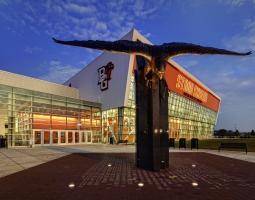
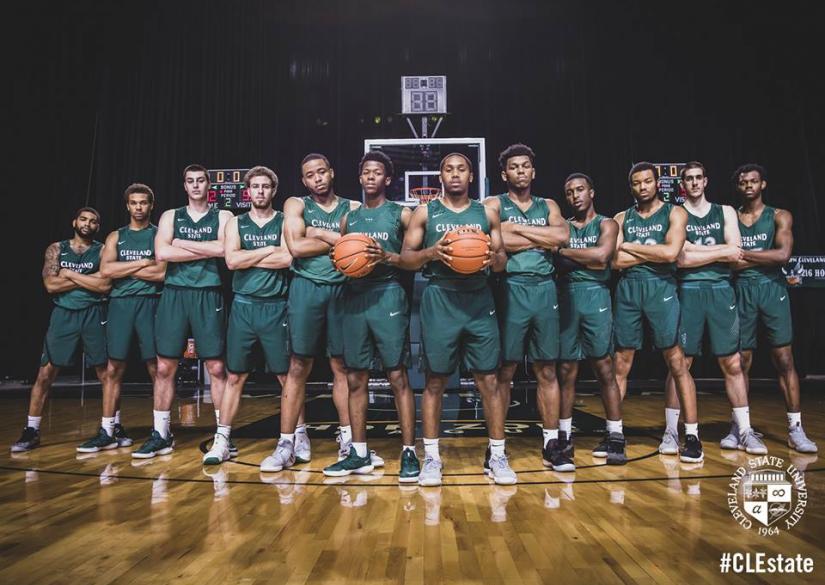
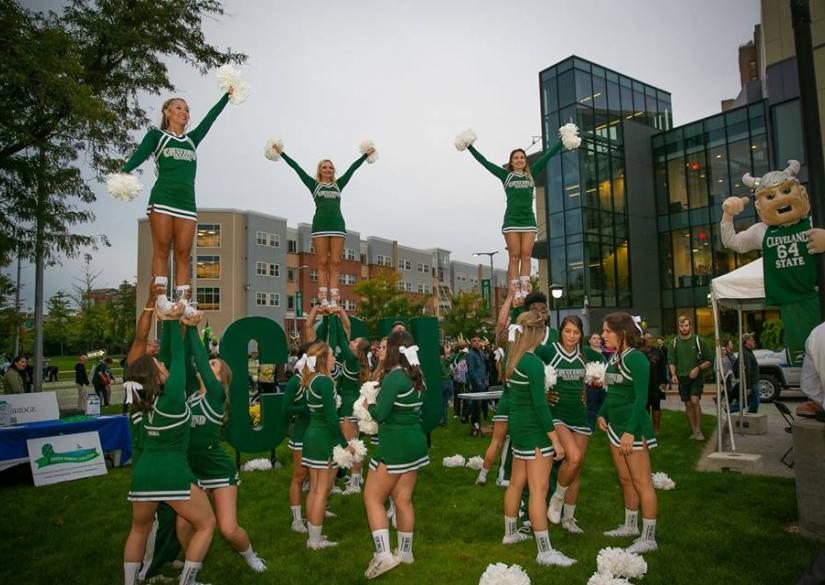
The institution presents more than 18 sports: basketball, swimming, football, wrestling, tennis and golf, volleyball and much more. A women's and men's team called the Vikings participate in the NCAA Division I.
CSU is home to nine nationally recognized fraternities and six women's clubs. These organizations offer learning and life experience through community service, workshops, extracurricular general activities. Also on campus there are more than 200 student organizations of various subjects: sports, creativity and music, religion, ecology, volunteering and much more.
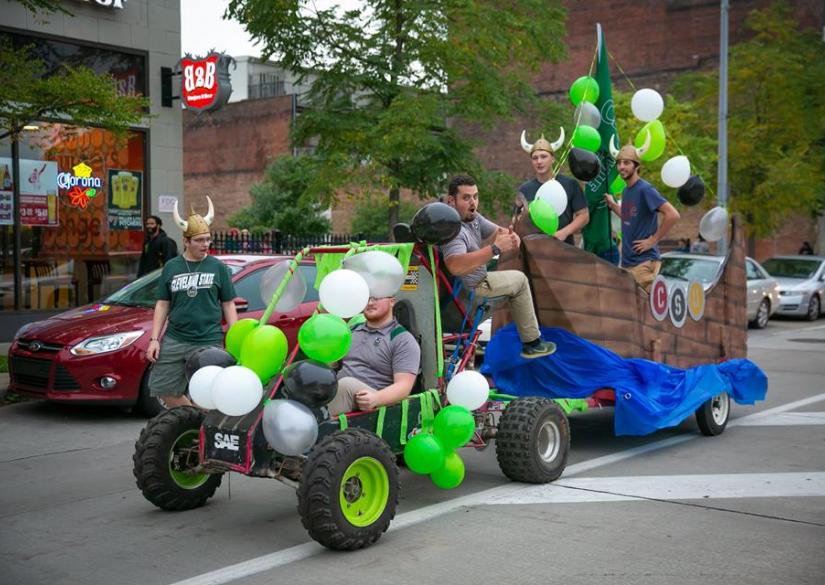
Each student can become a member of the Viking Crew and join the Engineers Without Borders group, which cooperates with the UN in Cleveland.
The School of Film and Media Arts is located on 36,000 square feet and offers two sound stages for theatrical productions and events, most often organized by students.
The CSU Galleries, housed in the historic building, provide students with venues for art exhibitions, handicrafts and literary performances.
The institution actively opposes environmental pollution, so all students participate in the program of exchanging clothes, recycling batteries, separating garbage.
Advantages
- The ratio of students to teachers is 17:1.
- Annual internships.
- Free summer program, as well as classes for the elderly.
- More than 1400 foreign students.
- Partnerships with more than 250 organizations, including the Cleveland Clinic Foundation, metropolitan School District, NASA and others.
Facilities and equipment at Cleveland State University (CSU)
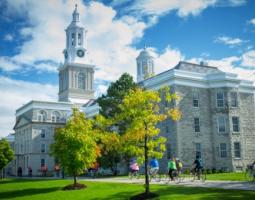
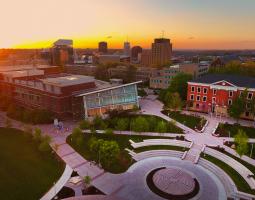
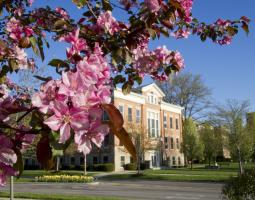
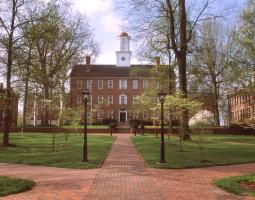
CSU's main campus is located in downtown Cleveland, surrounded by the city's important highways. Thanks to the good transportation system, students can easily travel around the state, visiting attractions, restaurants and cafes. The institution's campus is the largest square in the city. Its territory is more than 85 acres, on which about 40 buildings are located.
The campus is a large area with lots of green spaces, recreation and sports areas, modern classrooms and practical laboratories, as well as a large dining room and dormitory buildings.
One of the important and special places on the studying ground is the Campus Rec Center, an ultra–modern 110,000 square foot building. There is a Busby pool, game and fitness rooms, gym areas, individual training departments and much more. It also provides rental of any sports equipment.
Admission dates and extra charges
There are two semesters in the CSU academic calendar.:
- Autumn: September-December,
- Spring: January-May.
At the end of each semester, students take exams. From May to August, the campus hosts summer sessions and additional classes for those who would like to improve their academic performance. Classes are organized on weekdays, rest — on weekends and holidays, during the vacations.
An approximate list of additional expenses includes:
- Registration and administrative fees,
- Accommodation, meal plan, and related housing expenses,
- Some extracurricular activities,
- Medical insurance,
- Books, stationery, and other personal educational materials,
- Additional academic opportunities not included in the curriculum,
- Personal expenses.
Enrolment process
The admission process consists of several stages:
- Filling out the registration form, paying the entrance fee and providing the documents,
- Passing an interview, possible entrance tests,
- Receiving an official invitation to enroll,
- Making deposits,
- Arrive on campus at the beginning of the semester.
The admissions staff provides all the necessary information about admission, arrival and start of studies, helping all applicants to adapt to the English-speaking educational environment.
Enrolment statistics
According to statistics, in recent years, about 60% of applications for admission are approved by the admission committee.
Perspectives
CSU and Cleveland Clinic offer joint doctorates in regulatory biology, bioanalytic chemistry, applied biomedical engineering, molecular medicine. Graduates of these programs can be found in key scientific and administrative positions in the world's most prestigious medical centers.
Throughout its history, teachers of the Center for Gene Regulation have trained more than 150 graduate students. Many students have continued their careers at some of the nation's leading universities and institutes, including Harvard, Stanford, and Columbia universities, as well as the National Institutes of Health, scripps Research Institute, Cleveland Clinic, Lerner Research Institute, and many others.
Entry requirements, how to apply, what is required to enrol
Foreign applicants wishing to enroll in one of the higher education programs must provide:
- Personal documents: passport, medical insurance, financial certificates, visa or residence permit,
- Academic certificates from previous places of study: certificate of full secondary education, Bachelor's degree, Master's degree or equivalent degrees,
- Academic report cards, national exam results,
- TOEFL language test results (from 50) or equivalent.
Some degrees and specialties will require applicants to have letters of recommendation, a high average diploma score, and professional experience.
Scholarships Cleveland State University (CSU)
Grants provided at CSU:
- Federal Pell Grant,
- Federal grant for additional education,
- Grant of Opportunities from Ohio College,
- Grant for teacher training for colleges and universities,
- Last Mile Grant (PNG).
Also, all students have the opportunity to take federal subsidized / unsubsidized loans and credits.
The institution's scholarship programs encourage academic, athletic abilities, and social activities, and cover the cost of the program, accommodation for those who cannot afford to pay for their studies themselves.
Scholarships are provided to first-year students, transferable students, foreign students, as well as continuing education. Payments are made from the university itself, from the colleges in its composition or partner organizations.
The Federal Work-Study program allows students to work while studying, thereby covering their expenses.
Literature and references
-
Cleveland State University — Wiki

-
Cleveland State University - Profile, Rankings and Data — U.S. News & World Report
-
Cleveland State University — Forbes
-
Cleveland State University — Niche
-
Cleveland State University : Rankings, Fees — Top Universities
-
Cleveland State University — World University Rankings THE
-
Cleveland State University | Urban, Research, Education — Britannica
Institution on the map
Residence permits, citizenship and other services
- Guardianship services during the studies
- Student supervision
Review about Cleveland State University (CSU)
Recommendations on when to apply
| Language courses, schools and children's language camps | Primary and secondary education - private schools | Preparation programmes for entering universities - higher education | Higher education (after completing accredited programs A-level, IB, High School) - Bachelor, Master, MBA |
| - we recommend to apply 6-9 months before the start of the course (some camps and schools offer discounts for early booking or for lengthy study programs) - there are some very popular and high demand children's camps, where the applications need to be submitted 1 year in advance (in particular Switzerland , Great Britain , USA , Canada , Austria) | - we recommend to apply one year before the start of the training program, - some schools have a specific time frame (September-November - please specify an individual school) - some schools require tests in several stages (UKISET, internal tests of the school: English, mathematics, logics, subjects, interview, some require a personal visit) | - we recommend to apply one year before the start of the program, - for Foundation and Pathway programs, IELTS and TOEFL certificates are usually required, respectively | - recommended submission one year before the start of the program, - the deadline normally closes in January, for TOP HEIs and, as a rule, in March in other universities - for a bachelor, a Foundation or Pathway preparatory program a completed A-level, IB, High School + IELTS / TOEFL are required - for Masters you need a graduated higher education, in some cases you need a pre-Masters program - MBA requires completed higher education, work experience preferably at least 2-3 years, etc. |