
Study biology in Switzerland - 24 institutions
-
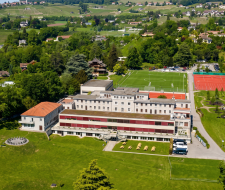 In 2023: 37 IB average, 43 highest point, 100% pass rate
SwitzerlandMontreuxCurrently watching: 7from 31900.00 CHF / year
In 2023: 37 IB average, 43 highest point, 100% pass rate
SwitzerlandMontreuxCurrently watching: 7from 31900.00 CHF / year -
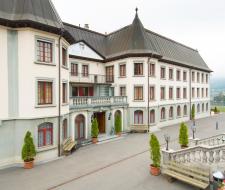 In 2023 a quarter of the IB students gained 34 points or higher
SwitzerlandMontreuxCurrently watching: 10from 66195 CHF / semester
In 2023 a quarter of the IB students gained 34 points or higher
SwitzerlandMontreuxCurrently watching: 10from 66195 CHF / semester -
 School is in top 3 best bilingual boarding schools in French speaking part of Switzerland
SwitzerlandLausanneCurrently watching: 9from 5400 CHF / 2 weeks
School is in top 3 best bilingual boarding schools in French speaking part of Switzerland
SwitzerlandLausanneCurrently watching: 9from 5400 CHF / 2 weeks -
 One of the best preparatory boarding schools in Europe
SwitzerlandMontreuxCurrently watching: 7from 31000 CHF / semester
One of the best preparatory boarding schools in Europe
SwitzerlandMontreuxCurrently watching: 7from 31000 CHF / semester -
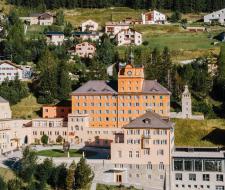 School is in top 3 best bilingual boarding schools in German speaking part of Switzerland
SwitzerlandSt. MoritzCurrently watching: 7from 79500.00 CHF / year
School is in top 3 best bilingual boarding schools in German speaking part of Switzerland
SwitzerlandSt. MoritzCurrently watching: 7from 79500.00 CHF / year -
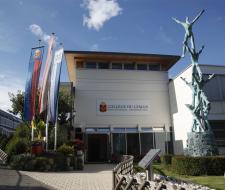 In 2024 100% graduates achieved IB Diploma
SwitzerlandGenevaCurrently watching: 8from 24900.00 CHF / year
In 2024 100% graduates achieved IB Diploma
SwitzerlandGenevaCurrently watching: 8from 24900.00 CHF / year -
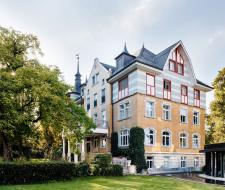 In 2021 an average IB score was 38
SwitzerlandSt. GallenCurrently watching: 7from 31000.00 CHF / term
In 2021 an average IB score was 38
SwitzerlandSt. GallenCurrently watching: 7from 31000.00 CHF / term -
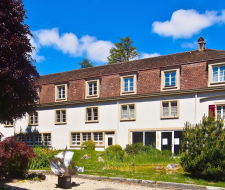 In 2023an average IB&FB score was just over 36 points.
SwitzerlandLausanneCurrently watching: 10from 69300.00 CHF / year
In 2023an average IB&FB score was just over 36 points.
SwitzerlandLausanneCurrently watching: 10from 69300.00 CHF / year -
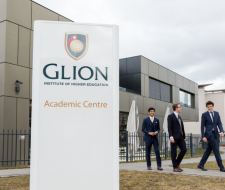 #3 for Hospitality and Leisure Management in the world
SwitzerlandMontreuxCurrently watching: 10from 20350.00 CHF / semester
#3 for Hospitality and Leisure Management in the world
SwitzerlandMontreuxCurrently watching: 10from 20350.00 CHF / semester -
 In 2023 an average IB score was 35.2
SwitzerlandMontreuxCurrently watching: 7from 31800 CHF / term
In 2023 an average IB score was 35.2
SwitzerlandMontreuxCurrently watching: 7from 31800 CHF / term
For many years, Switzerland has been listed first in the ranking of the best countries according to U.S. News. The quality of life in the country is at a high level in all areas: from basic security to education. Switzerland also excels in some rankings of the quality of educational programs, including biology.
The study of biology in Switzerland is top-notch, not only because of the faculty, but also because of the rich natural landscape and its location in the heart of the Alps. Biology students here have the opportunity to learn about biological diversity both in theory and in practice. At the same time, Switzerland is a strong supporter of sustainable development and rational use of resources, which is why most of its universities are committed to supporting sustainability laws.
Alternative destinations
Career prospects after studying biology in Switzerland for international students
Graduates of biology departments of schools with biology studies in Switzerland can work in various fields of biology and related industries:
- research fields,
- pharmaceuticals,
- ecology,
- food industry,
- biobank management,
- education (teaching),
- healthcare,
- biomedicine,
- biotechnology,
- nature conservation,
- environmental resource management and planning,
- aquaculture and fisheries,
- park, zoo and nursery management,
- forensic science.
University Swiss biology schools for international students
Switzerland boasts some of Europe’s most distinguished institutions for the life sciences, each with its own character and research focus.
At the forefront is ETH Zurich, a federal institute renowned across the continent for its prowess in natural sciences, engineering, and technology. Ranking second in Europe overall—just behind Oxford—and first in earth and marine sciences, ETH offers a biology department that combines conceptual rigor with hands-on preparation. Its internal institutes span microbiology, biochemistry, and molecular systems biology, with a shared research culture centered on cellular health, tissue dynamics, disease origins, and ecological interdependence.
Also, the University of Zurich complements this strength through its Faculty of Molecular Sciences, which hosts specialized groups in developmental neuroscience, cell biology, and systems biology. Regular joint seminars and collaborative research projects with ETH create a lively intellectual corridor between the two universities. Beyond its bachelor’s offerings, Zurich provides doctoral studying across an unusually broad range—from systems biology and neurology to biostatistics, epidemiology, and even biomedical law and ethics.
On the French-speaking side, EPFL Lausanne takes a distinctly interdisciplinary approach. Its School of Life Sciences fuses biology with computer science and engineering, preparing students to tackle biological questions through digital and computational methods. The “Life Sciences” engineering track gives undergraduates and graduates a dual foundation in both fields, while doctoral candidates can choose among seven specializations—including computational biology, biomedical engineering, neuroscience, and neuroengineering.
Further south, the University of Geneva stands out for its research excellence in life sciences, physics, and astrophysics, and serves as a hub for national centers in genetics and chemical biology. This environment offers aspiring biologists direct access to cutting-edge labs, equipment, and mentorship. Its Faculty of Biology and Natural Sciences provides a full curriculum across botany, cell biology, genetics, evolution, and molecular biology, with bachelor’s instruction in French and master’s-level teaching in English—making it one of the country’s top choices for biology studies.
Finally, the University of Basel is featured by being Switzerland’s oldest university, as well as one of the world’s oldest surviving academic institutions. Beyond its historic library and treasured archives, Basel offers a highly regarded biology school. Its “Life Sciences” program includes multiple master’s directions in ecology and animal biology, while the affiliated Swiss Tropical and Public Health Institute awards specialized diplomas in epidemiology. With courses available in both English and German, and opportunities to branch into molecular biology and biomedical engineering, Basel provides both tradition and modern flexibility for students at all levels.