

Study biology in Spain - 11 institutions
-
 from 3445 € / week
 -
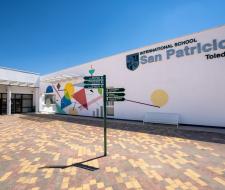 The school is in the top 5 best bilingual schools in Spain
SpainMadridCurrently watching: 6from 2350.00 € / year
The school is in the top 5 best bilingual schools in Spain
SpainMadridCurrently watching: 6from 2350.00 € / year -
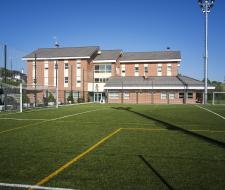 In 2023 - 71.40% of A Level students achieved A* - B
SpainMadridCurrently watching: 6from 2825.00 € / year
In 2023 - 71.40% of A Level students achieved A* - B
SpainMadridCurrently watching: 6from 2825.00 € / year -
 Obtaining American degree in Europe
SpainMadridCurrently watching: 6from 13700 € / semester
Obtaining American degree in Europe
SpainMadridCurrently watching: 6from 13700 € / semester -
 98% of our graduates enter university, with the remaining 2% choose sports careerr
SpainBarcelonaCurrently watching: 1from 9950.00 € / year
98% of our graduates enter university, with the remaining 2% choose sports careerr
SpainBarcelonaCurrently watching: 1from 9950.00 € / year -
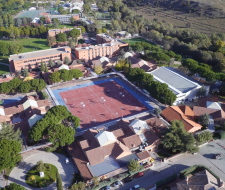 In 2022 an average IB score made up 33.4
SpainMadridCurrently watching: 2from 27000.00 € / year
In 2022 an average IB score made up 33.4
SpainMadridCurrently watching: 2from 27000.00 € / year -
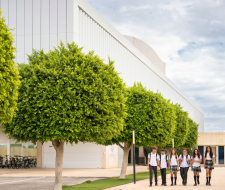 In 2023 - 60% of A Level students achieved A* - B
SpainMurciaCurrently watching: 1from 3860.00 € / term
In 2023 - 60% of A Level students achieved A* - B
SpainMurciaCurrently watching: 1from 3860.00 € / term -
 In 2023 - 67% of A Level students achieved A* - B
SpainAlicanteCurrently watching: 1from 2555.00 € / term
In 2023 - 67% of A Level students achieved A* - B
SpainAlicanteCurrently watching: 1from 2555.00 € / term -
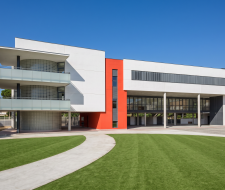 In 2023 an average IB score made up 34.4 with the highest grade - 43
SpainBarcelonaCurrently watching: 1from 10650.00 € / year
In 2023 an average IB score made up 34.4 with the highest grade - 43
SpainBarcelonaCurrently watching: 1from 10650.00 € / year -
 School currently closedAgora Lledo International Summer School
SpainValenciaCurrently watching: 1from 1095.00 € / week
School currently closedAgora Lledo International Summer School
SpainValenciaCurrently watching: 1from 1095.00 € / week
Spain is one of the most beautiful countries and good places in the world for international students, where there is not only a high level of educational system, but also a comfortable climate for living and loyal prices for a European state. Many Spanish universities with high rankings in biology, which offer hundreds of specialized study programs to choose from, provide the opportunity to study biology in Spain.
Another reason to choose biology schools in Spain is that, according to the ASEBIO report, Spain is a powerful region in the field of biotechnology, research and development. There are about 3,000 biotech companies in Spain, predominantly specializing in the pharmaceutical and food sectors.
Alternative destinations
Spanish biology schools for international students at universities
- University of Vic — Central University of Catalonia. The degree obtained at the university in biology provides students with broad preparation in biological sciences: from the molecular level to ecosystems. Students can specialize in the field of biodiversity, habitats, and ecosystems, and learn to work in the area of natural resource monitoring and management. Within the academic disciplines, students study interactions in the natural environment, immerse themselves in leading research in ecology and environmental management, and obtain in-depth knowledge of ecosystems: from the species level to the relationships between elements in biological networks.
- Oviedo University. The university accounts for 80% of the research and innovation activities conducted in this region of Spain! It offers some of the strongest doctoral and master's programs in reproductive biology and technologies. Admission requires solid preparation in biology, physics, geology, mathematics, and chemistry, as well as an interest in nature and Earth sciences.
- University of Santiago de Compostela. Graduates of the university's Faculty of Biology are professionals who are aware of and understand the complexity and diversity of living organisms and their relationship with the environment in which they live, studying them at all levels of organization within a comprehensive perspective. The curriculum is divided into four courses, comprising 144 compulsory subjects and 36 elective ones. The Faculty of Biology has ten general-purpose classrooms, and for practical classes there are four laboratories with modern equipment.
- University of La Laguna. The university's Faculty of Biology has nine academic departments: from the Department of Animal Biology to the Department of Microbiology and Cell Biology. Students can obtain a bachelor's degree in biology and a master's degree in the field of «Terrestrial Biodiversity and its Conservation» at the university. The university has a council consisting of representatives of professors, students, and administrative and support staff, which helps to improve educational processes, facilitate faster adaptation for new students, and create effective studying programs.
Career prospects after studying biology in Spain for international students
- Biologists,
- Research scientists,
- Pharmacologists,
- Ecologists,
- Biotechnologists,
- Botanists,
- Forensic experts (with an additional medical degree),
- Microbiologists,
- Soil scientists,
- Laboratory assistants,
- Government specialists.
The salary range for biologists in Spain averages from 3,000 to 8,500€ per month, depending on professional experience. For example, a research scientist in Spain earns an average salary of 37,500€ per year, while pharmacologists can earn up to 5,620€ per month if they demonstrate significant professional experience.