

Secondary education in Japan for international students
- Primary education in Japan – specifics of studying
- Secondary education in Japan – organization of studying process
- Secondary education in Japan – studying in high school
- Secondary schools in Japan fees for foreign students
- How to apply to schools in Japan for foreign students?
- University entrance exam after high school in Japan
-
 from 2777898.00 jpy / year
-
 from 6000000.00 jpy / year
-
 from 2300000.00 jpy / year

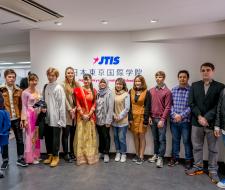
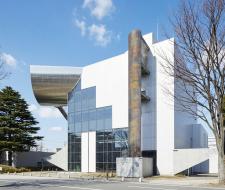

Children in Japan enter school at the age of 6-7. The academic year begins on April 1. Before that, kids learn the hiragana (Japanese syllabic alphabet, one of the components of Japanese writing) and katakana (another graphic form of the Japanese kana) and receive their first mathematical ideas in kindergarten.
Studying at a Japanese school is divided into three stages: primary (Se: Gakko:), secondary (Tyu: Gakko:) and senior (Ko: to: Gakko:). Pupils spend six years in primary school and three years each in middle and high school. There are 12 grades in total, but only nine of them are compulsory. However, 94% of children enter the tenth grade.
Alternative destinations
Primary education in Japan – specifics of studying
6-year primary education is compulsory. Lessons start at 8:30, last 45 minutes with breaks of 5 and 10 minutes in primary schools in Japan. Due to the convenience of public transport, as well as due to the fact that schools are often located in small areas, there are no school buses in Japan. The students are mostly at school until noon, and children in high school go home around 16:00.
The compulsory school curriculum includes such subjects as: Japanese language, humanities, arithmetic, natural sciences, fundamentals of life safety, music, drawing, works, physical education and housekeeping. Extracurricular activities include: morality lessons and mind-expanding classes, which raise topics such as volunteering or understanding the world. Reading and writing are perhaps the most important subjects of the program; it is assumed that by the end of the sixth grade, in addition to hiragana and katakana, students should know 1006 hieroglyphs.
All subjects are taught by one teacher, with the exception of music and drawing lessons. At the same time, teachers work in one school for a while, and then move to another. This is done so that students receive the same knowledge in equal volume and there are no differences in the quality of studying.
Primary education is based on the moral, emotional and physical development of children, as well as motivation to explore the world; there is an emphasis on group thinking and the creation of an equal society.
Secondary education in Japan – organization of studying process
The next 3 years are mandatory for secondary school in Japan, where the children study from 12 to 15 years old. The main difference from the primary one is that the curriculum is now divided into four parts: compulsory subjects, elective classes, morality lessons and extracurricular activities.
Compulsory subjects are: Japanese language, humanities and natural sciences, mathematics, music, fine arts, physical education and labor. Elective classes include foreign language lessons (English), which are chosen by most students, or some other subject, for example, music or fine arts. One lesson a week is devoted to moral education. Students also have the opportunity to play sports, join clubs, organize meetings, participate in ceremonies, plays, concerts and other activities, which refers to extracurricular activities that can take place both inside and outside the school.
Unlike primary school in Japan, lessons now last for 50 minutes, and different teachers come to the classroom and work with a program designed for a specific school class.
Secondary education in Japan – studying in high school
The studying on this level is optional and lasts for 3 years, giving the student a choice between general and special education in three formats: full-time, part-time and distance learning. Unlike full-time, which last three years, the other two formats require longer studying to master the entire program.
The competition for admission to high school is very strong, the selection is based on the results of the test, for which many students prepare by attending evening schools-externates. Most high school students choose an academic course that prepares them for university.
The curriculum includes the following subjects: Japanese language, geography, history, civil law, mathematics, natural sciences, physical education, fine arts and labor. A huge number of students choose English as a foreign language (the schools also offer French or German as a choice). Below an approximate list of the material being studied is provided:
- Japanese: the main load goes to classical Japanese. It is assumed that students come to high school with knowledge of 1945 hieroglyphs.
- Humanities: Geography and history are taught in one course together with civil law. At this level, students have already become familiar with local and regional issues, and are now ready to study Japan and East Asian countries in an international context.
- Mathematics: The high school course covers general mathematics, algebra, geometry, fundamentals of analysis, differentials, integrals, probabilities and statistics.
- Natural Sciences: A high school student must choose two subjects from the following list: complex and basic sciences, physics, chemistry, biology or geology.
- Physical education: there is also a choice: gymnastics, athletics, swimming, various ball games (volleyball, baseball, etc.), kendo, judo and dancing.
- Fine arts: the student chooses two courses among music, art (painting, drawing or graphic design), calligraphy or any crafts.
- Works: classes are held for both girls and boys, without separation. Students are taught cooking, sewing, computer use and economic literacy.
Secondary schools in Japan fees for foreign students
On average, the cost of secondary education in Japanese schools is about $40,000, not counting uniforms and school bags.
How to apply to schools in Japan for foreign students?
Foreign students legally residing in Japan have the right to receive secondary education in municipal schools. To enroll in school, parents need to contact the municipality corresponding to their place of residence and find out which school the child can go to. The distribution of municipal schools takes place at the place of official registration. Education in public Japanese schools is practically free everywhere. Parents will have to pay only for notebooks, stationery and other school supplies.
As a rule, the foreign students must submit the following documents to the secondary school in Japan:
- Application
- Motivation letter
- School certificate with grades
- Medical certificate
- Letter of recommendation from teachers
- Photos
- Financial documents.
University entrance exam after high school in Japan
Graduates of Japanese high schools who plan to continue their studies may take the Common Test for University Admissions, the national entrance examination for Japanese universities. It was introduced in 2021, replacing the former National Center Test, and is administered by the National Center for University Entrance Examinations (DNC).
The examination is intended for third-year high school students and runs over two days, held on the first Saturday and Sunday on or after January 13 each year. Results from the test are used by universities when they assess candidates for admission.
Learning programs-summary information
| Name | Meaning | Equivalent | Min. age | Duration, years |
Next stage | Cost |
|---|---|---|---|---|---|---|
| GCSE | General certificate of secondary education | secondary education (non-accomplished) | 14 | 1–2 | A-Levels | 15,000 USD+ |
| A-Levels | Advanced level | secondary education (accomplished) | 16 | 2 | University | 15,000 USD+ |
| BTEC | Business and Technology Education Board | secondary special education | 14 | 2–3 | University/ work | 15,000 USD+ |
| Oxbridge Preparation | Preparing for Oxford and Cambridge | secondary education (accomplished) | 17 | 1 | University | 15,000 USD+ |
| International Baccalaureate | International baccalaureate | secondary education (accomplished) | 16 | 2 | University | 18,000 USD+ |
| Foundation/ Pathway Year | Preparatory year | admission to the 1st year of university | 17 | 1 | University | 14,000 USD+ |
| NCUK | The Northern consortium | 2 year university | 17,5 | 1 | 2 year University of NCUK | 13,000 USD+ |
| Special Preparation (Medics/Math/Business) | Specialized training | - | 14 | optional | optional | 4,000 USD+ |
| Academic English | Academic English | Language school | 8 + | 6–12 months | School or University | 8,000 USD+ |
Advantages and disadvantages of English schools
| Advantages | Disadvantages |
|---|---|
| The opportunity to enter the best universities in England, USA, Canada, Switzerland, Europe, the world | Expensive |
| High quality of education and academic standards | Strong workload |
| Perfect English after graduation | The need to change the social environment; it takes time to adapt |
| Useful contacts | The difficulty of choosing the most suitable school for the child, requires a qualified specialist |
Top 21 boarding colleges in England 2027
| 1 | Cardiff Sixth Form College |
| 2 | National Mathematics and Science College |
| 3 | Abbey College Cambridge |
| 4 | d'Overbroeck's College |
| 5 | MPW London |
| 6 | CATS Cambridge |
| 7 | Kensington Park |
| 8 | DLD London |
| 9 | King's College St Michael’s |
| 10 | Bellerbys Cambridge |
| 11 | Chelsea Independent College |
| 12 | MPW Cambridge |
| 13 | Bellerbys Brighton |
| 14 | CATS London |
| 15 | St Clare's Oxford |
| 16 | Bishopstrow College |
| 17 | CATS Canterbury |
| 18 | Bellerbys London |
| 19 | Ealing Independent College |
| 20 | Cambridge Tutors College |
| 21 | Abbey Manchester |