Babington House Private School


Programs and prices, tuition fees in Babington House Private School


Kindergarten
- Age – 3-5 years,
- The duration of study is from 2 years.
Learning is organized in an exciting way with elements of additional classes in mathematics and literacy. Special attention is paid to the personal, social, emotional and physical development of children, the school creates conditions for the development of communication and language skills. The curriculum includes play and exploration, active learning, creation, and critical thinking.
Grade school. Key Stage 1
- Age – 5-7 years old,
- The duration of study is from 2 years.
Each child receives the individualized attention that Babington House is known for. Teaching becomes more formal, subjects, although taught within different curricula, begin to take on their own personality (e.g., mathematics, English). Students are assessed through formal tests, marks, observations, and discussions.
Grade school. Key Stage 2
- Age – 7-11 years old,
- The duration of study is from 4 years.
This is the final stage of Babington House's primary education, laying the foundations for successful learning in high school. The school sets a fast academic pace and adheres to a challenging curriculum. Pupils are taught mathematics and English by their class teachers, subject teachers, specialists in languages, physical education, music and art are gradually emerging.
High School
- Age – 11-16 years old,
- The duration of study is from 5 years.
Excellent academic results are achieved because the school encourages a culture of high expectations. Babington House sets a fast academic pace, with boys and girls encouraged to fulfil their potential in an environment conducive to learning.
A broad and balanced curriculum allows young people to pursue their own interests as they arise. The timetable is drawn up each year, taking into account the choice of the students, so that the individual needs of each are met:
- Art, Textiles & Product Design,
- Drama
- English
- Geography
- History
- Languages
- Science
- Mathematics
- Physical Education,
- Religious Education,
- Informatics
- Business
- Music
- PSHCCRE.
Sixth Form (16-18)
- Age – 16-18 years old,
- The duration of study is 2 years.
Lessons are taught by academic professionals who are passionate about their subjects, teaching goes far beyond the narrow confines of exam programs. Students are offered the best preparation for admission to the best universities in the country and the world.
Items:
- Physical Education,
- Art & Creativity,
- English
- Mathematics/Advanced Mathematics,
- Biology
- Chemistry
- Physics
- History
- Geography
- Economics
- Government & Politics,
- Modern Foreign Languages,
- Psychology.
Description of Babington House Private School
- Location: Chislehurst suburb, London, United Kingdom
- Age of students: from 3 to 18 years old,
- Type of study: blended,
- Language of instruction: English.
Babington House School was founded in 1887 by Madame Rossel, a prominent Belgian lady who was particularly interested in the development of the arts for "young ladies and little boys". Among her friends was Lord Thomas Babington Macaulay, the great Victorian writer and politician, whose surname was adopted as the school's name. Thanks to the support of parents, the school moved to Chislehurst in 1959 and since then the management has been in the hands of a board of governors, operating as a charitable educational organization, among other things.
The boys and girls who come to Babington House receive a top-notch education and enjoy going to school. With a list of just over 430 students, every student from 3 to 18 years old can make the most of their individual approach, gain self-confidence and maturity, and make friends with their classmates. The school develops courage and wisdom in children so that they can discover their individuality. Academic, social, and athletic achievement is grounded in core Christian values, which include respect for others and a sense of common purpose.
Educational process
Babington House School adheres to high standards of education, dress code, and manners. There are no more than 20 students per class. Its curriculum is broad and balanced. Support comes from class teachers, qualified teaching assistants, and the pastoral care team. In Nursery, children learn through play, with teachers helping them ask questions, solve problems, and work together.
Teaching is organized by subject as follows:
- Self-assessment, peer review, and teacher assessment are used regularly. Students can borrow books for independent reading. GCSE English Language and English Literature exams take place at the end of Year 11, with no separate controlled assessments. Spoken language is assessed separately and does not count toward the final GCSE grade,
- Math classes are grouped by ability, with two groups in Years 7–9 and three in Years 10–11,
- Years 7–8 have two science lessons a week. From Year 9, biology, chemistry, and physics are studied separately with subject specialists. Students have free access to digital textbooks and resources on Kerboodle. At GCSE, digital textbooks are provided through Hodder Education's Boost platform,
- For Combined Science, students take six exams at the end of Year 11, two for each science. Those studying biology, chemistry, and physics separately also take two exams per subject. Neither option requires coursework, and required practical activities are assessed in the final exam,
- Art lessons in Years 7–9 provide instruction in:
- Still life,
- Perspective,
- Printmaking,
- Painting,
- Weaving,
- Felting,
- Knitting,
- Hand and machine sewing,
- Cutting,
- Construction.
- Geography fieldwork takes place on the coast, at rivers, and in urban and rural communities,
- History lessons use debates, peer assessment, dramatization, and information technology. GCSE preparation begins in Year 9 with the study of life in Nazi Germany,
- Students studying foreign languages are encouraged to write regularly to their pen pals,
- All students learn to read music and study basic theory. Sibelius and SoundTrap are used for composition,
- GCSE Physical Education assesses three sports, with practical performance accounting for 30% and theory for 70%. A written paper on the human body and movement contributes 30% of the final grade, while another on sociocultural influences and well-being contributes a further 30%. Analysis and evaluation of performance in one sport accounts for 10%. Practical performances contribute 10% for each of the three sports. The school can assess students in climbing, netball, track and field, and badminton.
Students in Years 7–11 have weekly lessons on personal and social development, health, economics, relationships, and sex education. Teaching is age-appropriate and uses discussions, videos, projects, role-play, and sessions with visiting specialists. Dedicated well-being days for older students are held regularly in partnership with relevant organizations.
House points reward kindness, courtesy, determination, honesty, respect, academic achievement, and participation in school life.
Faculties and colleges
At Babington House School, the educational process is based on the following departments:
- Department of English. English lessons in Years 7–9 develop reading, writing, speaking, and listening skills. All students take GCSE English Language and English Literature under the AQA specifications. Literature provides instruction in Shakespeare, a 19th-century novel, modern texts, and poetry. The language course provides practice with texts, creative writing, and analysis of writers' viewpoints,
- Faculty of Mathematics. The course begins in Year 7 and leads to the Edexcel GCSE. Students in Years 10–11 can also take GCSE Further Maths,
- Scientific Department. AQA Activate is used in the earlier secondary years, with the AQA specifications followed at GCSE. At the end of Year 9, students choose either GCSE Combined Science: Trilogy AQA (8464), equivalent to two GCSEs, or more in-depth courses in biology, chemistry, and physics as separate disciplines leading to three separate GCSE qualifications,
- Faculty of Geography. The discipline is compulsory in Years 7–9, covering weather, climate change, coastal processes, and flooding. The AQA GCSE provides instruction in natural hazards, the living world, UK landscapes, urban issues, the global economy, resource management, and fieldwork,
- Faculty of History and Politics. All students in Years 7–9 study medieval England, the Tudors, the Civil War, the Industrial Revolution, and the 20th-century world. The Edexcel GCSE provides instruction in the history of medicine from around 1200, Weimar Germany in 1918–1939, Elizabethan England in 1558–1588, and the Cold War,
- Department of Art and Design. Fine Art, Textile Design, and Product Design are studied in Years 7–9 and offered at GCSE,
- Department of Modern Foreign Languages. Students choose French or Spanish. French uses the Studio textbook and follows the Edexcel GCSE syllabus. Spanish uses Viva,
- Faculty of Computer Science, Business, and Economics. Computer Science is an option at GCSE and A-Level, the school-leaving examination program. Computer Science provides instruction in the principles of information and computation, how digital systems work, and programming. GCSE Economics examines business decisions, economic growth, and government responses to economic problems. Business is available at GCSE level and provides instruction in real business scenarios, internal and external factors affecting companies, planning, marketing, human resource management, operations, and finance,
- Music Department,
- Theatre Faculty. In Years 7–9, students explore physical theater, improvisation, role-play, writing and interpreting scripts, genres, and the techniques of theater practitioners. GCSE Drama follows the Eduqas specification and requires devising a production, performing from a text, and interpreting a theatrical work,
- Faculty of Religious Studies. All students in Years 7–9 take the discipline, which is then available as a GCSE option,
- Faculty of Psychology,
- Department of Physical Education.
The dance program combines choreography, performance, and analysis. It develops technique, performance skills, and the ability to create dances. Students explore street styles, dance from different decades and countries, musical theater, and contemporary dance.
Scientific achievements
GCSE results:
- 2026 (39 students): 40% of grades were 9–7, 86% were 9–5, and 95% were 9–4,
- 2025: 34% of grades were 9–7, 79% were 9–5, and 93% were 9–4,
- 2024: 56% of grades were 9–7, 92% were 9–5, and 98% were 9–4.
In 2026, more than half of the students earned grades 9–7 across a wide range of disciplines. Notable results were achieved in Biology, French, Further Maths, Fine Art, Textiles, and 3D Design. More than a third of students earned grades 9–7 in the following disciplines:
- English Language,
- English Literature,
- Mathematics,
- Chemistry,
- Physics,
- Computer Science,
- Spanish,
- Drama,
- Physical Education.
The proportion of students achieving grades 9–7 was nearly twice the national average.
A-Level examination results:
- 2026 (22 students): 30% of grades were A*–A, 55% were A*–B, 83% were A*–C, and 94% were A*–E,
- 2025: 24% of grades were A*–A, 57% were A*–B, 71% were A*–C, and 93% were A*–E,
- 2024: 50% of grades were A*–A, 66% were A*–B, 83% were A*–C, and 93% were A*–E.
Things to know about
The school's houses are named after Florence Nightingale, Marie Curie, Edith Cavell, and Elizabeth Fry.
University destinations
Further education choices of the 2026 graduates:
- Veterinary Science, Neuroscience, Psychology, and Sport Science,
- Computer Games Design and Computer Animation,
- Management and Marketing, Economics, Finance, and International Relations,
- Anthropology and Politics,
- Hair, Make-Up and Prosthetics for Performance at University of the Arts London.
Accommodation, meals, prices
Babington House School offers full-time education only.
During each trimester, the school has 2 clubs for additional supervision outside of school:
- Breakfast club: 7:30 a.m. to 8:30 a.m. daily (Monday to Friday),
- Afternoon Club: from 15:15 to 18:00 daily (Monday to Friday).
Clubs are especially popular with younger children, but some high school students also like to attend them. During the Afternoon Club, students can do their homework in peace.
Every day, Babington House School students are prepared healthy lunches using fresh, seasonal produce, many of which are locally sourced. Lunch usually includes a choice of hot main courses, a vegetarian option, pasta or jacket dishes, seasonal vegetables, salad, and other side dishes. In addition, students are offered a choice of homemade hot and cold desserts, homemade yogurt with freshly made jelly and baskets of fresh fruit.
Meals are prepared on-site by the school team. The menu changes weekly. Baguettes, wraps, and sandwiches are also available. The catering manager aims to accommodate students' special dietary needs.
Activities Babington House Private School
Babington House School offers its students a huge selection of extracurricular activities, every day students grow and develop not only academically, but also creatively. Sixth Form students enjoy travel, going to the theater, chemistry and biology classes, political conferences, and work experiences at home and abroad.
Babington House School has a large number of clubs and societies that meet at lunchtime and after school. They are managed by the school's Cooperative Curriculum Coordinator. Clubs reflect the interests of the staff and the wardens who run them, and are a great way for groups of different courses to socialize. The choice of clubs changes in each trimester:
- Chefs Whiskers Cooking Club,
- Scrabble,
- Taekwondo,
- Rock climbing,
- Open Textile Studio,
- Fine Arts,
- GCSE classes in many subjects,
- Chamber Choir (by invitation),
- Gospel Choir,
- Homework Club,
- Rugby for boys,
- Netball for girls,
- Ping pong,
- Archaeology,
- Ballet,
- Redpoll,
- Chess club for beginners,
- Ball games,
- French Club,
- Soccer,
- Handicraft Club,
- Hockey Club,
- Lego Club,
- Street dancing,
- Art Club,
- Musical Theatre Club,
- Junior Choir,
- Homework Club,
- Engineering design,
- Instrumental ensembles,
- A debating club led by Year 11 students for children across different year groups.
An additional enrichment program for Years 3–8 runs once a week during the school day. It offers:
- Musical theater,
- Mathematical thinking,
- Music technology,
- Sport,
- Dance,
- Debating,
- Digital development and artificial intelligence,
- Outdoor activities.
Students volunteer in local initiatives, helping care for Elmstead Woods station and visiting residents of a retirement home.
The school stages a major production each year, with opportunities for acting, set design, lighting, backstage work, costumes, and makeup. A musical show takes place every two years. Solo performances are available, along with vocal and instrumental training from professional music teachers and the opportunity to take graded exams. Visits include performances and workshops at the Royal Opera House in Covent Garden and at Glyndebourne. Students studying French are offered trips abroad, with past visits including Paris and Northern France. Those learning Spanish visit a Spanish restaurant each year, and a trip to Barcelona is organized for Years 7–11.
Students take part in inter-house competitions and fixtures against other schools. They can enter ISA regional competitions with the opportunity to qualify for national events. After school, children can enjoy creative activities, games, sports, and quieter pursuits, with a nutritious afternoon snack. Sessions are led by experienced staff registered with OFSTED.
Advantages
- Specialist teachers from the Senior School teach physical education, art, foreign languages, science, and music in the Preparatory school,
- The curriculum for Years 3–6 includes 11+ preparation for children considering selective schools,
- French and Spanish lessons are conducted by four specialist teachers who are native speakers,
- Free introductory sessions help Nursery children settle in,
- After-school care is provided in partnership with Munchkin Sports.
Facilities and equipment at Babington House Private School
Babington House School is located in the quiet London suburb of Chislehurst, just a 3-minute walk from Elmstead Woods Underground Station, within reach of central London.
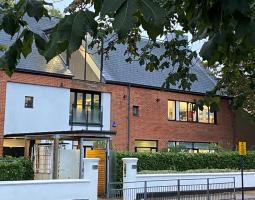
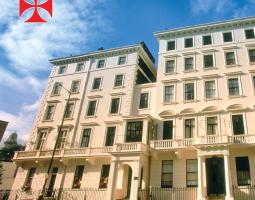
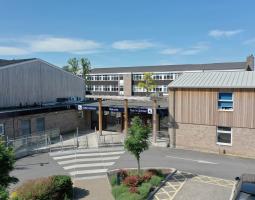
There are many trees and outdoor areas on the grounds of the primary school for younger pupils to engage in outdoor activities, while Sixth Form pupils can sit and chat on the benches lined with small alleys. The school is located around a circular courtyard, which consists of an old original building, a canteen, a gymnasium and a games room. The school makes full use of its spacious grounds, with two new all-weather fields and a full-size outdoor climbing wall, and artificial playgrounds are used for a variety of sports, including netball and hockey.
Three specially equipped laboratories support science teaching in the Senior School. The renovated Nursery has areas for reading, imaginative play, creative activities, interactive learning, and quiet rest. Its outdoor learning space includes a garden, creative area, and obstacle course.
The governing body approved a program of summer work to improve the learning environment.
Admission dates and extra charges
The academic year at Babington House School lasts from September to June, divided into 3 trimesters, between which holidays are organized:
- Autumn trimester (September – December),
- Christmas Vacation (2 weeks),
- Spring trimester (January – March),
- Easter holidays (2 weeks),
- Summer term (April – June),
- Summer holidays (2 months, July and August).
Tuition includes exams and trips. A nonrefundable registration fee is payable. The deposit for students from Reception through Year 11 is refunded when they leave the school. The Nursery deposit is refundable.
Additional costs:
- Registration fee,
- Deposit,
- Babington House School Friends Association (PTA),
- The annual Old Babingtonians charge in the fall term,
- Insurance,
- Breakfast club,
- Afternoon Club,
- School Mini Bus Service.
Nursery children attend between 3 and 10 sessions a week. The additional charge covers:
- Optional snacks,
- Care supplies,
- Use of school facilities,
- Specialist teaching,
- Consumables,
- Workshops led by visiting specialists,
- Events,
- Celebrations.
These are outside the required early years curriculum.
Enrolment process
Before visiting the school, candidates and their parents fill out an electronic registration form. After reviewing the questionnaire, the child is invited to a trial day, where teachers consider the child's academic skills and creativity, ability to work both individually and in a team.
Admission involves a selection process based on age-appropriate grades and a report from the principal of the student's current school, through an examination and an interview.
Offers depend on available places and the school's requirements in effect at the time.
Perspectives
Many Babington House School students go on to Russell Group universities, most go straight to universities for their originally chosen courses.
The school provides direct access to some of the country's leading companies, such as Thales in London.
Popular universities among graduates:
- University of Sussex,
- University of Leicester,
- University of Lincoln,
- University of Bath,
- Lancaster University,
- University of Surrey,
- Goldsmiths- University of London,
- University of Warwick,
- University of Exeter,
- Kings College London,
- University of Warwick,
- University of Aberdeen.
After the 2026 GCSE results, students would continue their education at selective, independent, and local schools.
Entry requirements, how to apply, what is required to enrol
Requirements and conditions:
- One of the criteria for admitting a child to school is an interview: school representatives talk to the child, discuss the application with the parents, and study the school report for the last two years,
- During the trial day, candidates are required to pass entrance exams, mainly testing in the main academic subjects: mathematics and English. Grade 7 entrance exams include oral reasoning, non-verbal reasoning, math and English tests,
- Children can join Nursery from their third birthday. Priority goes to those attending full days Monday through Friday and siblings of current students. An individual trial session and a meeting with the Head of Early Years are included,
- Children attending the school's Nursery are automatically offered a place in one of its Reception classes. External applicants may be placed on a waiting list because of high demand. A reference is requested from the child's nursery, if they attend one,
- Admission to Years 1–6 is available throughout the year. Applicants need a trial day, an age-appropriate assessment, two years of school reports, and a school reference,
- For admission to the Sixth Form, you need to pass an interview with the principal, receive references from your current school, and perform well in the GCSE exams.
Babington House School has Tier 4 status for international students.
Scholarships Babington House Private School
Academic scholarships in Mathematics and English are available at Babington House School and are available for admission to the Sixth Form. The number of scholarships is limited, usually only given as short-term aid to current students. Applicants may also be considered for awards in art, drama, music, sport, and academic achievement. The Senior School music scholarship is intended for candidates with exceptional musical potential.
Recipients are expected to set an example through their behavior, contribute to extracurricular life, help at school events and assist teachers, and be diligent and organized in their studies.
A limited number of bursaries are available, usually as short-term, means-tested assistance for children already enrolled. New families are not eligible.
Institution on the map
Residence permits, citizenship and other services
- Guardianship services during the studies
- Student supervision
Review about Babington House Private School
Recommendations on when to apply
| Language courses, schools and children's language camps | Primary and secondary education - private schools | Preparation programmes for entering universities - higher education | Higher education (after completing accredited programs A-level, IB, High School) - Bachelor, Master, MBA |
| - we recommend to apply 6-9 months before the start of the course (some camps and schools offer discounts for early booking or for lengthy study programs) - there are some very popular and high demand children's camps, where the applications need to be submitted 1 year in advance (in particular Switzerland , Great Britain , USA , Canada , Austria) | - we recommend to apply one year before the start of the training program, - some schools have a specific time frame (September-November - please specify an individual school) - some schools require tests in several stages (UKISET, internal tests of the school: English, mathematics, logics, subjects, interview, some require a personal visit) | - we recommend to apply one year before the start of the program, - for Foundation and Pathway programs, IELTS and TOEFL certificates are usually required, respectively | - recommended submission one year before the start of the program, - the deadline normally closes in January, for TOP HEIs and, as a rule, in March in other universities - for a bachelor, a Foundation or Pathway preparatory program a completed A-level, IB, High School + IELTS / TOEFL are required - for Masters you need a graduated higher education, in some cases you need a pre-Masters program - MBA requires completed higher education, work experience preferably at least 2-3 years, etc. |