Westminster Abbey Choir School


Programs and prices, tuition fees in Westminster Abbey Choir School


Academic Programme: 4-8 Grades
- Age of students — from 8 to 13 years old,
- Duration of study — five years.
The curriculum for grades 4–8 corresponds to the national education system and provides students with a wide range of subjects for expanding and deepening knowledge and achieving high-quality academic preparation. In grades 4–5, the core subjects (natural sciences, mathematics and English) are taught by the class teacher, and from grade 6 — by subject specialists. In addition to the core disciplines, the programme includes:
- French,
- Music,
- Physical Education,
- Fine Arts,
- Drama,
- Latin,
- History,
- Geography,
- Religious Studies,
- Greek,
- Philosophy, Ethics.
In addition to subject specializations, students attend lessons in solo and choral singing, piano + one other orchestral instrument of their choice. Music lessons take 30 minutes per direction each week.
Every day, students perform at church services, and on weekends — at services at Westminster Abbey.
Description of Westminster Abbey Choir School
- Location: Westminster, London, England,
- Year of foundation: 1560,
- Number of students: about 30,
- Language of instruction: English,
- Type of education: boys only.
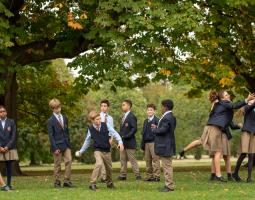
Westminster Abbey Choir School (WACS) is the only school in the United Kingdom focused on education of boy choristers from 8 to 13 years old.
The exact founding year is difficult to determine, but the earliest records of WACS date back to 1560 — historically, musical education for choristers has been conducted here since the reign of Elizabeth I. Over 460 years later, WASC remains the only school where one can receive musical and academic education of this level. It belongs to the Anglican Church; students take part in the abbey's regular Christian services, while pupils of any faith are admitted and taught choral singing from scratch. No more than 30 students educate within WACS at any one time — each receiving the maximum individual attention to their academic and musical abilities. The majority of pupils come from London and other regions of England, with a small number coming from abroad.
In addition to musical development and participation in external church events, students receive the necessary academic knowledge in accordance with the Years 4–8 curriculum. They achieve excellent results both throughout their studies and at the end of Year 8, which allows them to move on to the country's best schools for further education.
Educational process
Classes are organized by year. As a small school, all teaching takes place in mixed-ability groups, and boys receive personalized feedback.
Instrumental practice on an orchestral instrument and the piano is scheduled and supervised within the regular school day. The Westminster Abbey choir consists of 24 boy choristers and 12 adult professional singers (lay vicars), and is directed by Andrew Nethsingha, Organist and Master of the Choristers.
A learning support specialist visits the school weekly and can arrange individual sessions for students. English is taught as a separate discipline from Form I (Year 4). In Forms I and II, boys are taught by their class teacher, while from Form III onward they are taught by an English specialist. French lessons begin in Form I and are delivered by specialists in a dedicated classroom. Particular emphasis is placed on phonetics and accurate pronunciation, using games, songs, and stories adapted for choristers with musical ears.
Despite the academic and creative workload, students still have time for their own interests and hobbies, and they can see their parents at sports competitions, performances at Westminster Abbey, and weekend services. During the school day, boys can use free landline phones located throughout the campus to call home. Choristers are surrounded by history every day, and Westminster Abbey itself provides rich opportunities for learning.
Faculties and colleges
The curriculum is structured across five year groups (Form I through V, corresponding to Years 4 through 8), with the following disciplines:
- English: creative writing, poetry, fiction and non-fiction literature, grammar, and drama. Preparation for Common Entrance and individual entrance examinations,
- Mathematics: development of analytical thinking and mastery of established methods and algorithms,
- French: preparation for Common Entrance,
- Classical languages: Latin from Form III (preparation for Common Entrance Level 2/3 and scholarship examinations), and Ancient Greek from Form V for able students,
- Humanities: history (chronological units of British history, non-European history in Years 4 and 5), geography (map skills and fieldwork), and religious studies (six world religions, philosophy and ethics in upper years),
- Visual arts: weekly lessons with a visiting specialist in the art studio,
- Music: an integrated program of choral training and academic music education in theory, music history, harmony, counterpoint, analysis, and music technology. Preparation for ABRSM Grade 5 theory.
Scientific achievements
In recent years, several students have won prizes and received commendations in the Choir Schools' Association Composition Competition.
Things to know about
In addition to singing at daily services at Westminster Abbey, students play a central role in many royal, state, and national events in the region, including:
- The funeral of Queen Elizabeth II,
- The coronation of King Charles III and Queen Camilla,
- The wedding of the current Prince and Princess of Wales,
- Memorial services in honour of leading national and international figures, including Stephen Hawking and Nelson Mandela.
The school choir also takes part in other events: recording music albums with prominent performers, giving concerts, and going on tour.
Interesting facts about the school and the Abbey:
- An active Old Choristers' Association operates alongside the school,
- Westminster Abbey is independent and receives no funding from the Church, the government, or the Crown,
- College Garden is 900 years old and is considered the oldest garden in England,
- Music has accompanied services at Westminster Abbey for over a thousand years.
University destinations
Over the past five years, students have entered the following institutions:
- King's School Canterbury (12 students),
- Eton College,
- St Paul's School,
- Wellington College,
- Winchester College,
- Radley College,
- Chetham's School of Music,
- Gordonstoun.
Accommodation, meals, prices
The residence is located in the campus park area and accommodates all students. Most Year 4 pupils usually go home on weekends until they begin singing at Sunday services in Year 5 — from that year they choose whether to stay on campus for the whole week.
The residential building has rooms, each furnished for 3–4 boys; room assignments are made by age and reviewed each semester. Staff members live in the residence alongside the students, overseeing the daily schedule and providing round-the-clock support to pupils.
Catering at WACS is organized in partnership with Harrison Catering Services Ltd: all meals are prepared in the school kitchen using fresh ingredients. Breakfast and dinner take place in a more informal setting, while lunch is shared with all the teachers.
Activities Westminster Abbey Choir School
Music occupies a central place in extracurricular development: all students attend vocal lessons and learn to play two musical instruments, and can join the orchestra or become part of one of the many ensembles. Solo concerts and ensemble performances are held regularly on campus — organized by senior students: in recent years they have held several charity concerts, raising funds for the organizations Mind, Mary's Meals, and Gaza Crisis Appeal. Students also participate in a drama club that performs in city theatres.
To help students realize their talents in other areas, the school offers sports and creative clubs, and hobby communities:
- Seasonal sports: hockey, football, athletics, cricket, kayaking, rock climbing,
- Visual arts: ceramics, mixed media, painting,
- Interests: stop-motion animation, Airfix modelling, Lego construction, board games, doll-making, basket weaving, Gravitrax, origami, filmmaking, debate, Scratch programming.
On days when students are not performing at evening services, an excursion programme is organized for them to explore the sights of the region. As the school is located near many of London's historic landmarks, these are always included in the excursion programme: the Houses of Parliament, Buckingham Palace, the West End, museums and art galleries.
Advantages
- The only school for boy choristers in the United Kingdom,
- Excellent reviews from Good Schools Guide, Muddy Stilettos,
- Small educational groups — 5–7 students,
- Mandatory residence during the school week,
- Musical education in the field of church ministry with regular practice,
- Choristers perform at events of global significance: from the Queen's honours to the King's coronation,
- In 2025, one graduate received a music scholarship to Eton College, one — to St Paul's School, three — to The King's School Canterbury, one — to Gordonstoun.
Facilities and equipment at Westminster Abbey Choir School
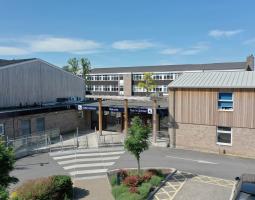
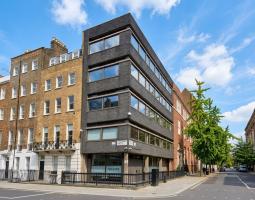
The school campus is located in the center of London, neighboring many historical sites and public transport stops that will take students to more distant attractions.
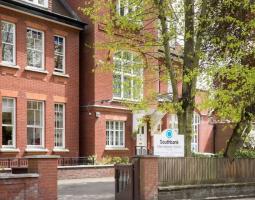
WACS occupies a historic building that has preserved its external architecture since 1915, while regularly updating its interior facilities. Classrooms and rehearsal halls are located on the upper floors, while common recreation areas and a large dining hall are on the lower floors. The infrastructure includes:
- Science laboratories,
- Art studio,
- Computer room with laptops and iPads.
In addition to modern academic equipment and interactive technologies, WACS features a wide variety of musical instruments — pianos can be found in nearly every classroom, even in the residence.
WACS partners with the indoor fitness center St Andrew's Club and has access to sports fields in Archbishop's Park and Battersea Park. A small inner courtyard allows students to spend time outdoors between classes, and after school they can head to the playground at Dean's Yard, where football matches are frequently held.
Admission dates and extra charges
The academic calendar consists of trimesters:
- Autumn: September–December,
- Spring: January–March,
- Summer: April–July.
Each trimester includes two quarters — mid-term tests to check knowledge or important performances are held in the middle of the term. Breaks are organized between trimesters, during which, as well as on weekends and public holidays, students rest.
No additional payments are charged for tuition, music lessons, standard educational materials, trips to concerts, excursions, and other services. Expenses will be required for registration fees, accommodation and meals, school uniform, and personal expenses.
Enrolment process
Before submitting an application, the families of prospective students can visit the campus, talk with teachers, and attend a choir performance at Westminster Cathedral. They then need to fill out a registration form, provide documents, and wait for an invitation to the entrance assessments.
The admissions committee organizes enrollment through two auditions: for the informal meeting, applicants prepare a song they like and demonstrate their talent one-on-one with teachers; if the prospective student already plays a musical instrument, they may bring it along. The audition lasts 10–15 minutes, after which the applicant is given a date for the general, second meeting: it lasts a full school day and includes a demonstration of both musical and academic abilities. Based on the results of these stages, an enrollment list is compiled.
Perspectives
Upon completing 8th grade, many boys enroll in the best state/private schools in the region, often winning a scholarship or grant. Many graduates receive valuable music scholarships upon transition.
Students consistently achieve strong results in Common Entrance examinations, and occasionally in academic scholarship examinations.
Entry requirements, how to apply, what is required to enrol
To study in the United Kingdom, foreign applicants need a passport, medical insurance, a visa or residence permit. The ideal time to apply is during current studies in Year 3 with a view to enrolling in Year 4 (however, admission is also possible for subsequent academic stages).
The admissions committee expects academic reports from the previous place of study, and personal documents. Enrollment takes place, among other things, based on the results of an audition.
Scholarships Westminster Abbey Choir School
WACS provides scholarships for families in difficult financial situations who cannot fully pay for their child's education. Means-tested bursaries are available.
The school maintains a bursary trust fund to cover unexpected financial difficulties faced by families. Grants are awarded based on means testing.
Institution on the map
Residence permits, citizenship and other services
- Guardianship services during the studies
- Student supervision
Review about Westminster Abbey Choir School
Recommendations on when to apply
| Language courses, schools and children's language camps | Primary and secondary education - private schools | Preparation programmes for entering universities - higher education | Higher education (after completing accredited programs A-level, IB, High School) - Bachelor, Master, MBA |
| - we recommend to apply 6-9 months before the start of the course (some camps and schools offer discounts for early booking or for lengthy study programs) - there are some very popular and high demand children's camps, where the applications need to be submitted 1 year in advance (in particular Switzerland , Great Britain , USA , Canada , Austria) | - we recommend to apply one year before the start of the training program, - some schools have a specific time frame (September-November - please specify an individual school) - some schools require tests in several stages (UKISET, internal tests of the school: English, mathematics, logics, subjects, interview, some require a personal visit) | - we recommend to apply one year before the start of the program, - for Foundation and Pathway programs, IELTS and TOEFL certificates are usually required, respectively | - recommended submission one year before the start of the program, - the deadline normally closes in January, for TOP HEIs and, as a rule, in March in other universities - for a bachelor, a Foundation or Pathway preparatory program a completed A-level, IB, High School + IELTS / TOEFL are required - for Masters you need a graduated higher education, in some cases you need a pre-Masters program - MBA requires completed higher education, work experience preferably at least 2-3 years, etc. |