 Spain
Spain
 For partners
 University of Reading Summer, Summer Camp at the University of Reading


Programs and prices, tuition fees in University of Reading Summer, Summer Camp at the University of Reading


Essential
- Age of students: 10-17 years
- Duration of study: 2 or 3 weeks.
Essential is a basic format without unnecessary options. The idea is simple: the child learns English in a lively environment and clear, calm organization. The program creators focus on practice, not on academic "load for the sake of it".
The study load is about 15 lessons per week for 45 minutes. In the first days, a test is conducted, based on the results of which groups are formed according to the level. There are usually up to 15—18 people in the class.
There is a lot of oral work in the classes: children discuss topics, play out everyday situations, work in pairs and small groups, do small projects and short presentations. Emphasis is placed on spoken language, listening comprehension and active vocabulary. Grammar is studied through practice, not through long theoretical explanations. There is no homework in the usual sense, so there is a lot of time left for sports and the general program.
Essential is designed for those who focus on classes and everyday language practice. The program includes a standard set of excursions, and additional trips and entrance tickets can be purchased separately if desired.
Classic
- Age of students: 10-17 years.
- Duration of study: 2 or 3 weeks.
Classic is a format with a ready-made program: English lessons, excursions and an active life on campus are already included and scheduled by days and hours, nothing additional needs to be collected — the schedule is planned in advance so that the child receives regular language practice and at the same time sees the key cities of Great Britain.
About 15 lessons per week lasting 45 minutes. In the first few days, participants take an entrance test and are divided into levels (groups are small). The classes focus on spoken English, listening comprehension and vocabulary expansion, work in pairs and mini-groups, discuss topics, complete short projects and prepare mini-presentations. Grammar is developed through practice and real examples.
Excursions to London and Oxford are already included in the program, they are supervised by center staff and integrated into the general schedule of the shift.
Classic is designed for those who want everything to be planned in advance: classes, trips to London and Oxford, evening program: according to a ready-made schedule, without additional decisions and extra payments on site.
Premium
- Age of students: 10-17 years old.
- Duration of study: 2 or 3 weeks.
Premium is the most intensive format at Reading. It is built around the same language base as Classic, but with an extended excursion part: entrance tickets to key attractions are already included in the cost during trips. The child does not just walk around the city center, they visit museums, explore key sights, and communicate with locals.
The study load remains the same: all 15 lessons per week for 45 minutes. At the beginning of the shift, testing is carried out, after which groups are formed according to the level. Classes focus on spoken language, understanding live English speech and active vocabulary, a lot of pair work, discussions, short presentations and practical assignments. Grammar is developed through its use in practice in oral and written speech.
The philosophy of Premium is to give the child a deeper cultural experience for the same period. The program combines language and real impressions: excursions become part of the educational process.
Special Course: Excursion Lessons
- Age of students: 10-17 years.
- Duration of study: 2 or 3 weeks.
Trips become a continuation of lessons, and classes — preparation for trips! The topics of the classes are related to the cities and objects that children visit during the excursions. Before the excursion, they study vocabulary necessary to understand the route: architecture, history, museum space, urban environment, and after returning they discuss what they saw, describe places, formulate impressions, prepare short oral presentations and mini-projects. Part of the assignments is built around specific routes in London and Oxford.
The academic workload is 15 lessons per week for 45 minutes. In the first days, testing is carried out, after which groups are formed according to the level. There is a lot of oral work, dialogues and discussions in the classes, grammar is consolidated through its use in speech.
The logic of the course is quite simple: language is better fixed when it is connected with specific experience. The child uses words and expressions immediately after perceiving them «live», feeling and understanding at a subconscious level.
Description of University of Reading Summer, Summer Camp at the University of Reading
- Year of foundation: 1984
- Location: Reading, United Kingdom
- Number of students: ~500
- Type of study: mixed
- Type of institution: summer language camp
- Language of instruction: English.
Junior Summer Course is a summer program for teenagers aged 10-17 at the University of Reading. Participants live on campus, study in international groups, and are fully immersed in an English-speaking environment.
The stay here lasts 2 or 3 weeks and takes place in July. This is a format of a short but intensive trip: the child finds themselves in a real British university setting where everything is organized in advance and thought out down to the smallest detail.
Educational process
Classes are conducted on weekdays, usually in the first half of the day. There are about 15 lessons per week, each lasting 45 minutes. In the first few days, children take a short test, after which they are divided into groups based on their level.
There is a lot of speaking practice in class: children work in pairs and small groups, discuss topics, role-play situations, complete short assignments and mini-projects. The main goal is to help the child speak more freely and not be afraid to use the language in live communication.
There is no difficult homework; after classes, there is time for sports, trips and a general program. At the end of the shift, they receive a certificate of participation.
Things to know about
The Whiteknights campus was once part of a large private estate. In the 19th century, it was home to the Marquess of Blandford, son of the Duke of Marlborough — the history of the owner is still mentioned in university chronicles. The university bought the land after World War II. There is its own lake on the territory, Whiteknights Lake, right in the center of the university area.
Of course, there are legends about ghosts among students — the first mentions date back to 1922, when one such apparition became the hero of a publication in a school yearbook!
The campus regularly ranks among the greenest university campuses in Britain and has been awarded the Green Flag environmental award.
University scientists participated in the work of the Intergovernmental Panel on Climate Change (IPCC), which received the Nobel Peace Prize.
Accommodation, meals, prices
Participants of the summer camp live on the territory of the University of Reading campus in student residences. As a rule, these are single rooms, which is convenient for teenagers — there is personal space and the opportunity to relax quietly. In most cases, the rooms have their own bathrooms.
Meals are provided on a full board basis: breakfast, lunch, and dinner are served in the university canteen, and packed lunches are issued on excursion days. The menu is standard British, with a choice of hot dishes and the opportunity of taking dietary restrictions into account with prior notice.
The residences are within walking distance of classrooms and sports areas, so children do not move around the city independently — everything takes place inside the campus or organized with escorts.
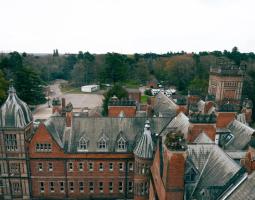
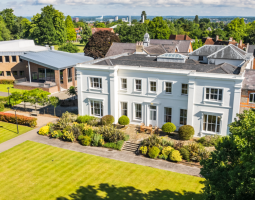
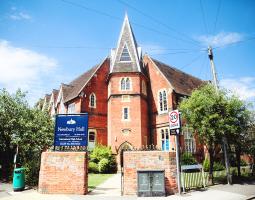
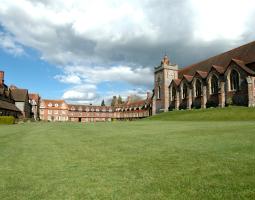
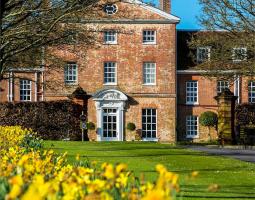
It is worth mentioning the architecture separately. The most impressive part of the campus — the historic mansion Foxhill House, a 19th-century building with a tower and characteristic silhouette, which looks like an English estate. Next to the mansion — modern educational buildings with large glass facades: an old building with a tower and red brickwork is adjacent to laconic and strict glass and concrete facades.
Activities University of Reading Summer, Summer Camp at the University of Reading
Students are engaged in an extensive excursion program including trips to London and Oxford.
- In London, the usual route is through the center: Westminster, Big Ben, the Houses of Parliament building, Buckingham Palace, Trafalgar Square, the Thames embankment.
- In Oxford, they walk around the historical center and the grounds of university colleges: inner courtyards, old colleges and libraries, narrow streets, pubs from the time of Oliver Cromwell and even Robin Hood.
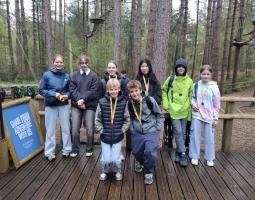
There is also no time to get bored on campus, something happens every day: during the day — sports matches, tournaments and team games on university grounds, in the evening — joint events, quizzes, contests and discos.
Advantages
- Classes and accommodation are conducted on a real university campus: the child lives in a genuine British university, on the grounds of the large green Whiteknights campus with a lake and park. This is a safe area without city traffic outside the windows.
- The camp is only 30 minutes by train from London — full-fledged trips to the capital are guaranteed without long journeys.
- Trips to London and Oxford are already included in the program.
- Small classes and a clear daily routine: study, sports, evening activities.
- Flexible participation format: you can choose the appropriate level of program intensity without overpaying for unnecessary options.
Facilities and equipment at University of Reading Summer, Summer Camp at the University of Reading
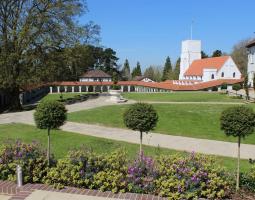
The program takes place on the Whiteknights campus of the University of Reading — a full-fledged university town with an area of about 120 hectares. The territory is a large park with a lake, well-maintained lawns, alleys and the Harris Garden botanical garden. The space is open and green, without dense urban development, children live and study in a calm environment. The campus remains compact: academic buildings, residences, dining halls and sports facilities are located close to each other, everything is within walking distance.
Classes are held in functioning university classrooms, participants have access to the library, learning spaces, dining halls and common areas for relaxation and communication. The sports infrastructure includes an indoor sports center, gyms, game rooms for basketball and other team sports, football fields, tennis courts and outdoor areas.
Reading is approximately a half-hour train ride from London, relatively close to Heathrow Airport.
Admission dates and extra charges
The shift takes place in summer. Arrivals — at the beginning of July, in mid-July and at the end of the month. Duration is 2 or 3 weeks. There are no exams, the format is practical.
In addition to the tuition fees, you should include the following expenses in your travel plan:
- Round-trip air tickets,
- Visa fee with service charge,
- Medical insurance for the duration of the trip,
- Airport transfer,
- Additional excursions or entrance tickets if you choose an extended program format,
- Pocket money.
Enrolment process
- First, you need to select the arrival dates and program duration — 2 or 3 weeks, book a place and receive confirmation.
- After receiving confirmation, you need to make a payment.
- Then you need to apply for a visa to the UK and purchase airline tickets for the agreed dates, agree on organizational matters: airport transfer, dietary requirements, additional excursions (if necessary and desired).
- Upon arrival, the student registers on campus, writes an English entrance test in the first few days, after which he is assigned to a group according to his level.
Entry requirements, how to apply, what is required to enrol
The program is designed for teenagers aged 10—17 years old. No special academic preparation is required: in the first few days, testing is conducted, after which students are assigned to groups based on their level.
To register for participation, you need the consent of parents or legal guardians, a certificate of health and any dietary restrictions or features.
Institution on the map
Residence permits, citizenship and other services
- Guardianship services during the studies
- Student supervision
Review about University of Reading Summer, Summer Camp at the University of Reading
Recommendations on when to apply
| Language courses, schools and children's language camps | Primary and secondary education - private schools | Preparation programmes for entering universities - higher education | Higher education (after completing accredited programs A-level, IB, High School) - Bachelor, Master, MBA |
| - we recommend to apply 6-9 months before the start of the course (some camps and schools offer discounts for early booking or for lengthy study programs) - there are some very popular and high demand children's camps, where the applications need to be submitted 1 year in advance (in particular Switzerland , Great Britain , USA , Canada , Austria) | - we recommend to apply one year before the start of the training program, - some schools have a specific time frame (September-November - please specify an individual school) - some schools require tests in several stages (UKISET, internal tests of the school: English, mathematics, logics, subjects, interview, some require a personal visit) | - we recommend to apply one year before the start of the program, - for Foundation and Pathway programs, IELTS and TOEFL certificates are usually required, respectively | - recommended submission one year before the start of the program, - the deadline normally closes in January, for TOP HEIs and, as a rule, in March in other universities - for a bachelor, a Foundation or Pathway preparatory program a completed A-level, IB, High School + IELTS / TOEFL are required - for Masters you need a graduated higher education, in some cases you need a pre-Masters program - MBA requires completed higher education, work experience preferably at least 2-3 years, etc. |