University of Melbourne


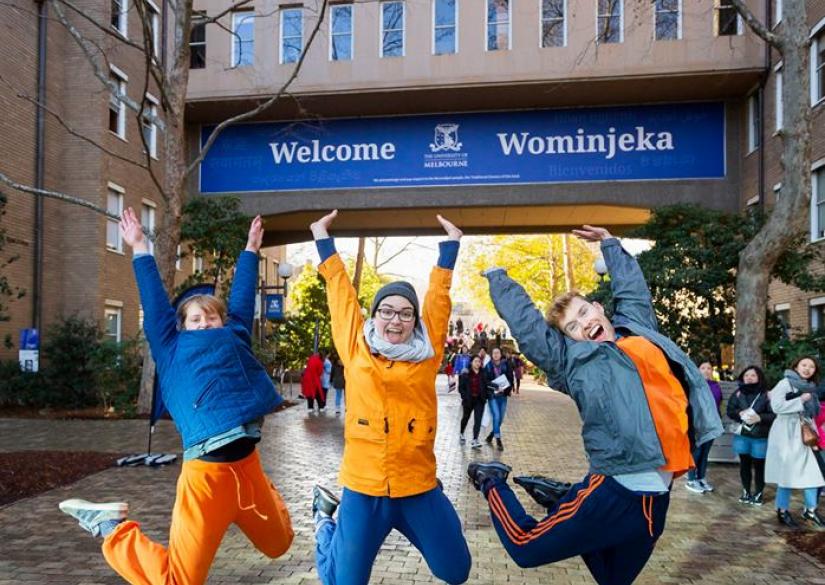



Programs and prices, tuition fees in University of Melbourne


Specify information on the training program on the official site of an educational institution.
Specify information on the training program on the official site of an educational institution.
Description of University of Melbourne
- History: University of Melbourne was founded in 1853 and has operated for more than 170 years,
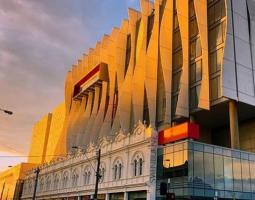
- Location: its main Parkville campus is a short walk from central Melbourne.
- Ranking: #1 in Australia and #22 worldwide.
University of Melbourne offers undergraduate study and specialist graduate programs.
According to the National Academic Rating, the University of Melbourne is a leader among Australian institutions of higher education. All faculties of the university are sought after by applicants. But there are the most popular areas of education, which occupy priority places in various rating lists.
- Faculty of Medicine.
- The direction of the study of biotechnology.
- Training quality engineers.
- Art Criticism.
The structure of the university also includes a specialized Australian institute that prepares mathematicians.
Educational process
Werribee Campus trains veterinarians and veterinary researchers in modern facilities.
The Department of Rural Health provides medical training in rural settings and advances clinical and research capabilities in rural and remote health.
The Faculty of Science offers a broad range of research-based programs. Future scientists train in modern facilities and work with industry partners.
Students learn the standards of academic integrity. University-wide services help them develop academic skills, including English-language capabilities.
Faculties and colleges
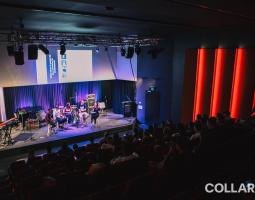
- Southbank Campus is home to the Faculty of Fine Arts and Music, which brings together the Melbourne Conservatorium of Music and the Victorian College of the Arts,
- Burnley Campus specializes in urban, environmental, and ornamental horticulture, as well as green infrastructure research,
- Shepparton is home to the Academy of Sport Health and Education and the Department of Rural Health.
Scientific achievements
The university produces more than 15,900 research publications each year. Its research database contains more than 400,000 scholarly works, and it has over 3,500 active projects. Research expenditure totals 1.86 billion dollars, while annual project funding is 500 million dollars.
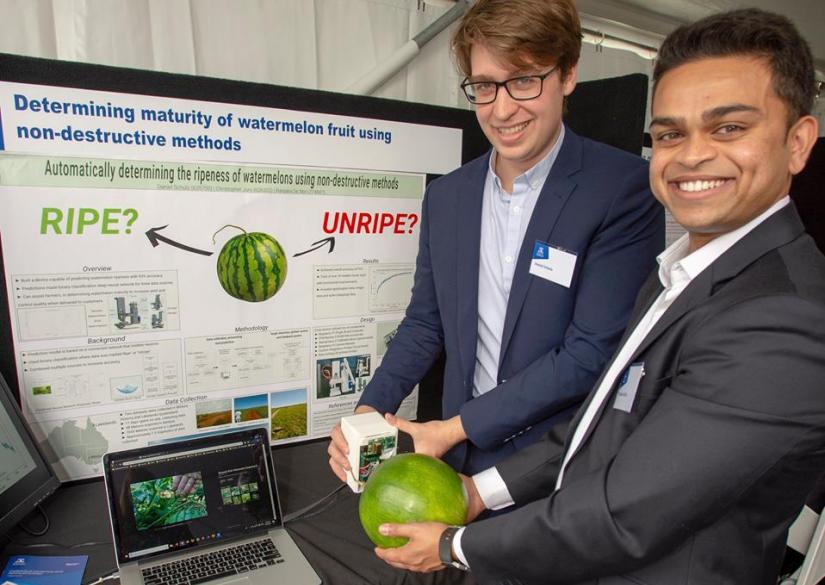
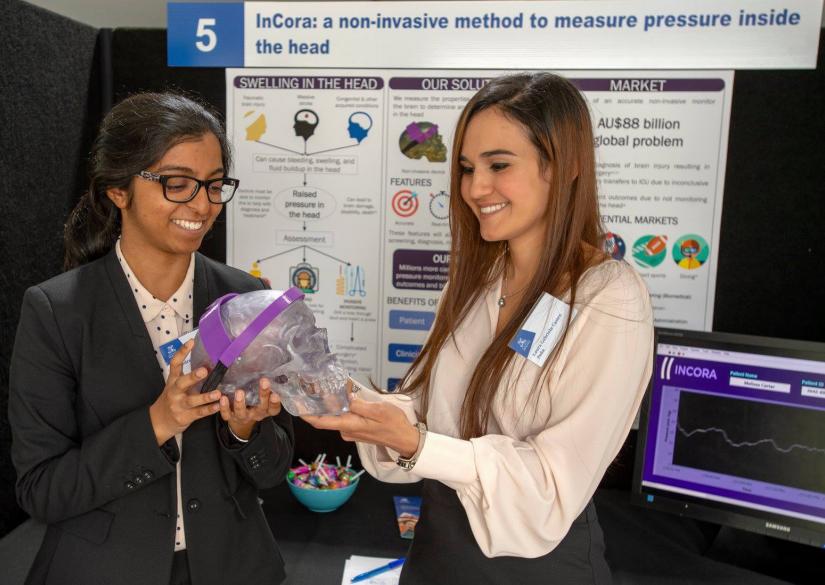
University of Melbourne researchers work with industry partners and specialist research institutes.
A joint study by University of Melbourne and Australian National University, published in Scientific Reports, estimated that rising sea levels and storm surges could cause at least 855 billion dollars in economic losses across Australia by 2100. Under a moderate-emissions scenario, coastal flooding could affect almost 270,000 properties and two million hectares of land.
Things to know about
- Burnley Campus was founded by the Victorian Department of Agriculture in 1891, becoming the first horticultural college in the southern hemisphere and one of the first in the world,
- Dookie Campus was established as Dookie Agricultural College in 1886 and played a formative role in the development of agriculture and agricultural education in Australia,
- Creswick is Australia’s only campus dedicated entirely to forest science and research.
Accommodation, meals, prices
Accommodation options include Lisa Bellear House, Little Hall, and The Lofts. The Commencing Student Cover guarantee allows new students to reserve their preferred accommodation early and cancel the booking if their circumstances change.
An offer for university accommodation or a residential college must be accepted within 48 hours of receipt. Applicants for a place at a residential college may be invited to an interview.
Advantages
There are many reasons on the basis of which it is worth making a decision on getting education in this prestigious university. Consider the most basic of them.
- On the basis of the University of Melbourne, many laboratories are active. Students have the right to participate in scientific experiments and thereby gain invaluable experience.
- For example, in the laboratory of robotics conducts complex scientific research on biomedicine and biomechanics. Innovative approaches to the creation of new prostheses apply here.
- One of the laboratories is rightly proud of the creation of the most powerful Australian X-ray machine. It is used in the walls of the university.
- This educational institution has several museums in its structure. For example, the legendary art museum. Or exposure, conveying the history of changes occurring with academic disciplines that were taught in the UM.
- Separately, there are:
- The central building of the university is a historical monument, attracting thousands of tourists annually. Here were filming various Hollywood blockbusters and rating telecasts.
- music museum;
- medical museum;
- anatomical and pathoanatomical museums.
Curious facts
- A great actress was trained at the University of Melbourne, who later became the owner of two Oscars C. Blanchett. She received education in economics and art programs.
- Another Hollywood star E. Debiki, who at one time was able to obtain a scholarship to them, also studied at UM. Pratt for excellent study results.
- Within the walls of the University of Melbourne, he was educated by V. Bakker, who is known in the world as a singer and musician under the pseudonym Gauthier.
- Scientists from this school were able to figure out why koalas are hugging trees. Using the trunk as a cooler place, these marsupials protect their bodies from the Australian heat.
- In the laboratories of the University of Melbourne on a computer simulated a likely situation of continent collisions in the distant future.
- Recently, scientists at the University of Melbourne have identified a complex of antibodies in ordinary milk that can actively resist HIV infection. Also, in the course of scientific research, a conclusion was made about the effect of rotavirus infection on the onset of type 1 diabetes. Such a conclusion can be crucial in the prevention of such a terrible disease.
Facilities and equipment at University of Melbourne
Beyond Parkville, the university has six specialist campuses across Greater Melbourne and regional Victoria, along with three innovation precincts in the city’s central business district.
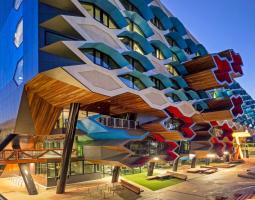
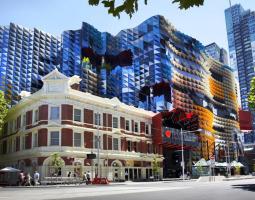
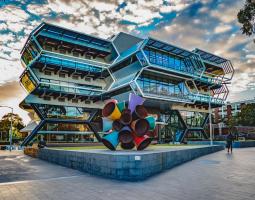
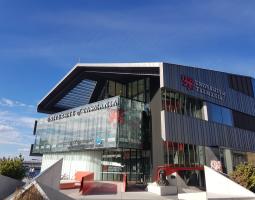
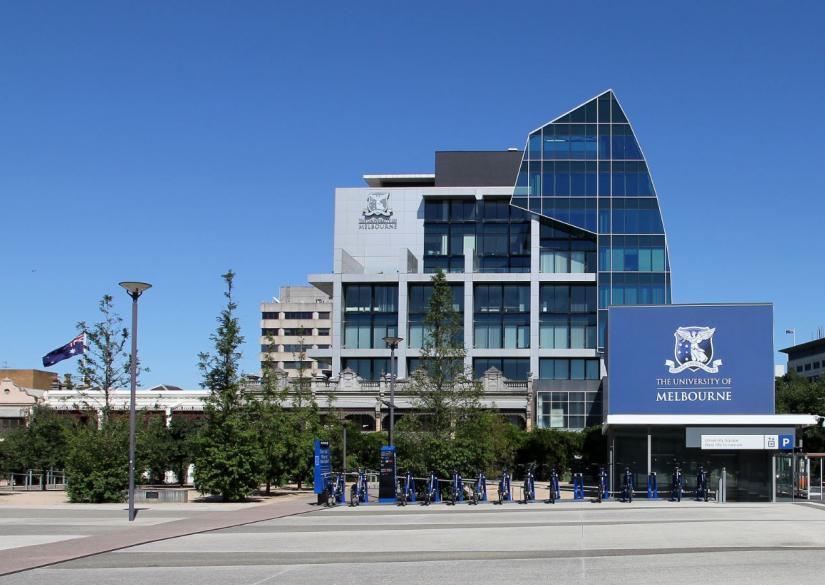
- At the heart of Parkville is the historic Old Quadrangle, surrounded by award-winning modern architecture,
- Southbank offers learning, performance, studio, and gallery spaces,
- Burnley occupies nine hectares of heritage-listed gardens seven kilometers from central Melbourne,
- Dookie spans 2,440 hectares and includes a working farm, a robotic dairy, an orchard, a winery, and a natural bush reserve,
- Established in 1910, Creswick covers 15 acres beside native and plantation forests. The campus has modern laboratories, a specialist forest science library, and historical collections,
- Werribee is home to the Werribee Equine Centre and Greencross Veterinary Hospital,
- More than 70 research centers and institutes operate across nine faculties. Research facilities and resources include rare collections, archives, digital expertise, and technology.
Perspectives
University of Melbourne ranks #1 in Australia for graduate employability.
Institution on the map
Residence permits, citizenship and other services
- Guardianship services during the studies
- Student supervision
Review about University of Melbourne
Recommendations on when to apply
| Language courses, schools and children's language camps | Primary and secondary education - private schools | Preparation programmes for entering universities - higher education | Higher education (after completing accredited programs A-level, IB, High School) - Bachelor, Master, MBA |
| - we recommend to apply 6-9 months before the start of the course (some camps and schools offer discounts for early booking or for lengthy study programs) - there are some very popular and high demand children's camps, where the applications need to be submitted 1 year in advance (in particular Switzerland , Great Britain , USA , Canada , Austria) | - we recommend to apply one year before the start of the training program, - some schools have a specific time frame (September-November - please specify an individual school) - some schools require tests in several stages (UKISET, internal tests of the school: English, mathematics, logics, subjects, interview, some require a personal visit) | - we recommend to apply one year before the start of the program, - for Foundation and Pathway programs, IELTS and TOEFL certificates are usually required, respectively | - recommended submission one year before the start of the program, - the deadline normally closes in January, for TOP HEIs and, as a rule, in March in other universities - for a bachelor, a Foundation or Pathway preparatory program a completed A-level, IB, High School + IELTS / TOEFL are required - for Masters you need a graduated higher education, in some cases you need a pre-Masters program - MBA requires completed higher education, work experience preferably at least 2-3 years, etc. |