For partners
 University of Massachusetts in Boston (UMass Boston)






Programs and prices, tuition fees in University of Massachusetts in Boston (UMass Boston)


University Pathway Programs
- Age of students — from 18 years old,
- The term of study is two to three semesters.
University Pathway courses are a great opportunity for international students to prepare well for admission and successful study in their chosen bachelor's degree program.
The student will have to choose one key direction:
- Humanities, social sciences,
- Engineering,
- Administration,
- Management, business,
- Science, mathematics,
- Natural sciences,
- Health, environment.
Additionally, an academic English course is provided, as well as the study of additional subjects corresponding to the chosen specialty. After the student successfully completes the preparatory course, he actually guarantees himself a place in the second year of the university.
Bachelor's Programs
- Age of students — from 18 years old,
- The studying period is three to four years.
Bachelor's degree is the first stage of higher education, which will provide a basic understanding of the scientific field being studied, practical skills and theoretical knowledge in 3-4 academic years.
Under the guidance of teachers, students will attend lectures and seminars, participate in project and research activities, and work independently on projects.
Some of the available undergraduate majors at UMass Boston are the following:
- African studies,
- Aging,
- Anthropology,
- Art,
- Biology,
- Biochemistry,
- Classical languages,
- Communication,
- Community Development,
- Computer Science,
- Criminology, criminal justice,
- Early education, inclusive care,
- Economy,
- Engineering Physics,
- English language.
Upon completing their studies, students can continue their academic path towards a master's degree or start a career.
Master Program
- Age of students — from 21 years old,
- The studying period is one to two years.
The Master's degree specializations offered at UMass Boston will provide students with qualified knowledge and professional skills, thereby expanding career opportunities. During one or two academic years, students will attend classes in specialized disciplines, participate in research activities in research centers and laboratories.
Some of the sought-after Master's degree specialties are the following:
- Accounting, data analytics,
- Applied Economics,
- Sociology,
- Biology,
- Applied Physics,
- Biotechnologies, biomedical sciences,
- Business analytics,
- Computer Science,
- Conflict resolution,
- Creative writing,
- Critical Ethnic,
- Social Studies,
- English,
- Environment,
- Physical exercises, medical sciences,
- Global governance, human security.
Students are encouraged to form an individual curriculum by adding academic subjects and the required number of credits. To successfully complete the program, you will need 21 ECTS credits and a research paper for which a qualification is awarded.
Summer Enrichment Program
- Age of students – from 17 years old,
- Dates — June-July,
- The studying period is six weeks.
The Directions for Student Potential (DSP) program is a free, six-week summer pathway program that focuses on improving reading, writing, and math skills.
Training takes place in June-July, classes are organized from Monday to Thursday in the afternoon and remotely in the evenings. Students will gain a strong foundation for future academic success, follow a balanced curriculum:
- Reading, writing,
- Math Skills Development Courses,
- Electives that allow you to master the general education program and immerse yourself in the disciplines of interest,
- USkills Community Courses.
Successful completion of the program guarantees the student admission to most specialties at UMass Boston.
English Language Program
- Age of students – from 17 years old,
- Dates – January-May or September-December,
- The duration of studying is 15 weeks.
The Intensive English and University Preparation Program is designed for students who wish to study English for academic, professional, or personal purposes. This course is recommended for students wishing to enroll in full-time undergraduate studies .
Students can choose the intensity of their studies – the full-time course will be 19 hours per week, however, the schedule offers flexibility and less time in class. In the classroom, teachers will help students master the skills of reading, writing, speaking and listening to it in order to prepare them for a full-fledged study at the university.
A significant advantage of the course is that students will not need to take the TOEFL or IELTS exam to continue their undergraduate studies.
Doctoral Programs
- Age of students – from 23 years old,
- The duration of studying is from three years.
To obtain a doctoral degree, students need to complete a specialized program and conduct individual research under the guidance of subject teachers and researchers. On average, three academic years are allotted for studying.
Some of the PhD tracks at UMass Boston are:
- Linguistics
- Physics
- Biology
- Biomedical Engineering, Biotechnology,
- Business Administration,
- Chemistry
- Clinical Psychology,
- Nursing,
- The development of brain sciences,
- Education, early childhood care,
- Gerontology
- Exercise, health,
- Global Inclusion, Social Development,
- Global governance, human security,
- Nursing.
Description of University of Massachusetts in Boston (UMass Boston)
- Location: Boston, Massachusetts, USA,
- Year of foundation: 1852,
- Number of students: about 15,500,
- Language of instruction: English,
- Type of studying: mixed.
The University of Massachusetts Boston (UMass Boston) is the only public research university in Boston. It is part of a public university system consisting of five campuses in Massachusetts, a law school and 25 affiliated educational territories in California and Washington.
The history of UMass began in 1850-1965 with the creation of the Massachusetts Agricultural College. At that time, the state ranked last in terms of education, so the State Court decided to establish a network of higher education institutions. Today, the Boston-based campus is the third most diverse student community in the country, the third largest among the academic territories of the UMass educational network, and the only one in the state prepared for research.
More than 200 bachelor's, master's, and doctoral programs are taught at UMass Boston, and specialist preparation and certification courses are available. Education is conducted at six specialized faculties offering extensive specialization options: from management and liberal arts to healthcare and medical sciences. Every year, more than 15,500 students participate in the programs, about 2,400 of whom come from 136 different countries. The multinational student community has become one of the university's features, and UMass Boston receives hundreds of new applications from international applicants year after year.
The University of Massachusetts Boston offers extensive opportunities not only for obtaining a competitive education in the USA, but also for developing individual strengths, talents and abilities. Teachers and administrative staff provide comprehensive support to ensure that each pupil achieves their goals both in studies and in extracurricular areas of development: sports, creativity, and social activities.

What factors are considered when evaluating U.S. universities, and how reliable are current rankings?
That's an interesting topic. The criteria used to evaluate universities vary by ranking. For nationwide rankings, factors like class size, teacher salaries, and the number of faculty members with advanced degrees in their field are common considerations. If a ranking focuses on student satisfaction, the criteria will differ. However, rankings don't always align with individual student needs and should be considered alongside other factors.
Faculties and colleges
UMass Boston has specialized colleges and schools representing the following research areas:
- Management,
- Nursing, medical sciences,
- Environmental protection,
- Education, human development,
- Liberal Arts,
- Natural sciences, mathematics,
- Public service,
- Global inclusion, social development,
- College with honors.
The university also has a department for the studying of foreign students.
Scientific achievements
The university's research mainly consists in the study of biomedical sciences. Through partnerships with Dana-Farber Cancer Center, IBM, Boston Public Schools, and other organizations, UMass Boston has launched 35 new ventures in advanced health and medical technologies, humanities, policy, and global research. Since 2012, the institution's teachers have published more than 70 scientific articles and books.
Accommodation, meals, prices
UMass Boston provides rooms of various comfort in residences located on campus.:
- Separate single units with shared or private bathroom, large single rooms with individual amenities,
- Standard and Enlarged Double rooms with shared or private bathrooms,
- Triple rooms with shared or private facilities,
- Four-bed rooms with private bathrooms.
Shared bathrooms are located on each floor. The residences have quiet classrooms for self-study, living rooms for relaxation and socializing. All residents of the campus must have a meal plan, i.e. a fixed number of meals in one of the university restaurants. There is no difference in cost between meal plans: their content offers either unlimited access to cafeterias or 14 meals per week. The plan also includes bonuses for spending in shops and eateries on campus, guest dinners for parents and friends of the student.
Subjects and sports
Activities University of Massachusetts in Boston (UMass Boston)
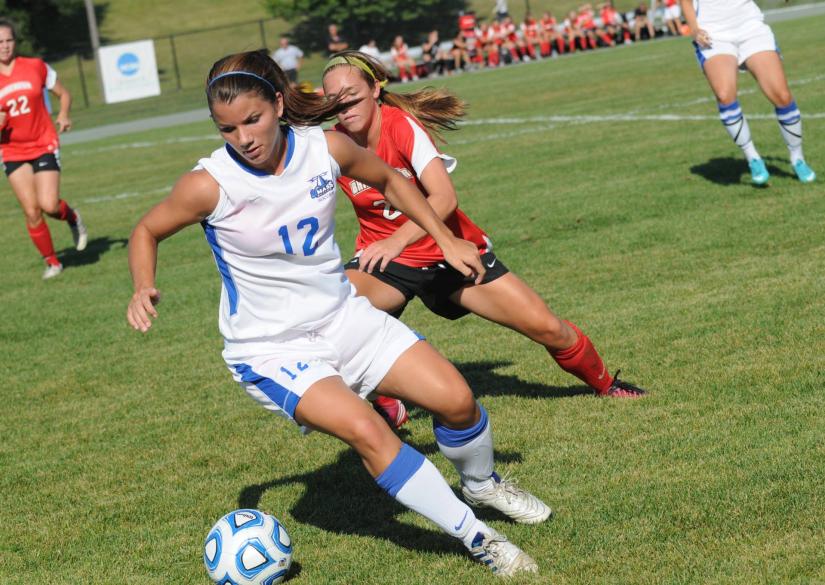
UMass Boston offers a wide range of sports programs, state-of-the-art facilities, and competitions to help achieve professional goals in your favorite sport and maintain an active lifestyle. The university's athletic teams compete in various sports at the NCAA Division III level, providing student-athletes with opportunities to excel both on and off the field.
Some of the offered competitive directions are:
- Baseball,
- Basketball,
- Hockey,
- Lacrosse,
- Tennis,
- Football,
- Athletics,
- Softball,
- Volleyball,
- Tennis.
If a student wants to stay in shape, they can apply for a subscription to the recreation and sports center, which organizes fitness classes, classes with a coach in sports and gyms. Intramural sports are available to students, which include amateur matches, regular training sessions, and field events. The list includes such sports as street basketball, wiffleball, pinkball, and others.
There are more than 100 themed clubs and organizations on campus, whose members are united by a common interest or hobby: they regularly hold meetings, organize events and actively participate in the life of the university. Some of the clubs are the following:
- Union of African Students,
- Artificial intelligence and machine learning,
- Anime, manga,
- Psychological health,
- Creative writing,
- Christian Fellowship,
- Debate,
- Cybersecurity,
- Fashion,
- Poker,
- Table games,
- Learning Japanese,
- The UN Model,
- Music production,
- Visual art.
Every year, large-scale and chamber events are conducted on the UMass Boston academic grounds: from music concerts, theater productions to sports competitions, culinary evenings, and board game days. Students have the opportunity to show their talent to invited specialists at exhibitions and demonstrations, attend scientific seminars and conferences, thereby expanding academic horizons and gaining new experience.
Advantages
- No. 1 among national universities in the US News & World Report ranking,
- No. 3 among the best public universities in the Niche list,
- One of the best higher education institutions in the Northeast according to the Princeton Review,
- The College of Nursing, which is part of UMass Boston, is the 9th largest educational institution in the country.,
- Some of the Best Online degree programs at Postgraduate Levels,
- There are more than 2,000 students from 136 different countries, making the institution 19th in terms of ethnic diversity among national universities.,
- The status of "R2: Doctoral universities — High research activity",
- A large teaching staff, many of whose representatives have higher scientific degrees, participate in research activities, and have individual awards and prizes,
- An active extracurricular life that provides opportunities for development in a variety of sports, creativity and other areas,
- The ratio of students to teachers is 16:1, 52% of students speak two or more languages.
Facilities and equipment at University of Massachusetts in Boston (UMass Boston)
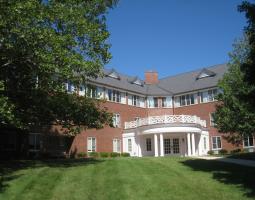
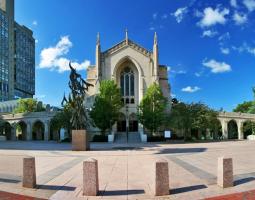
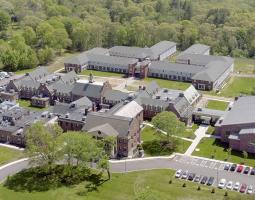
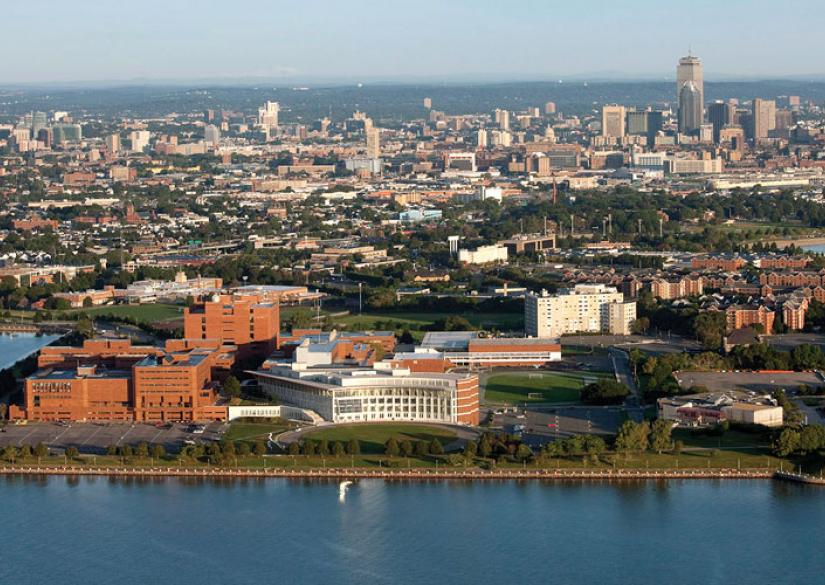
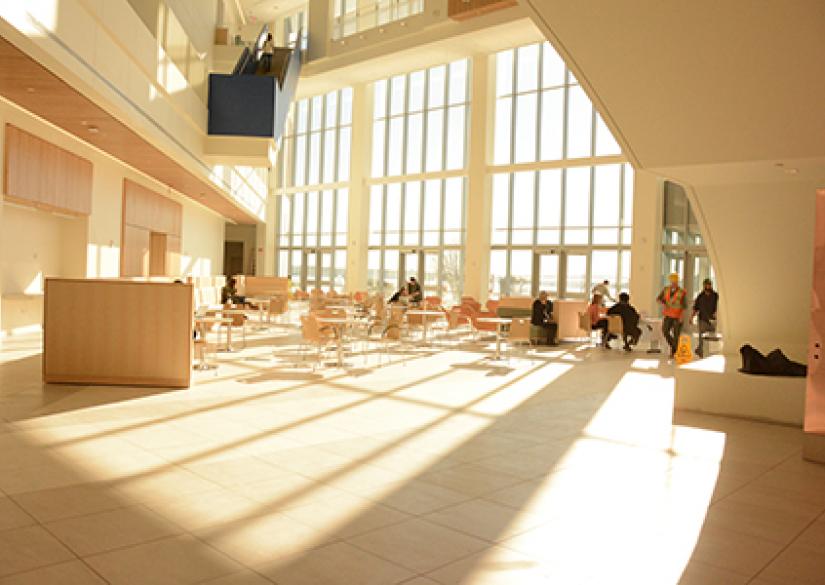
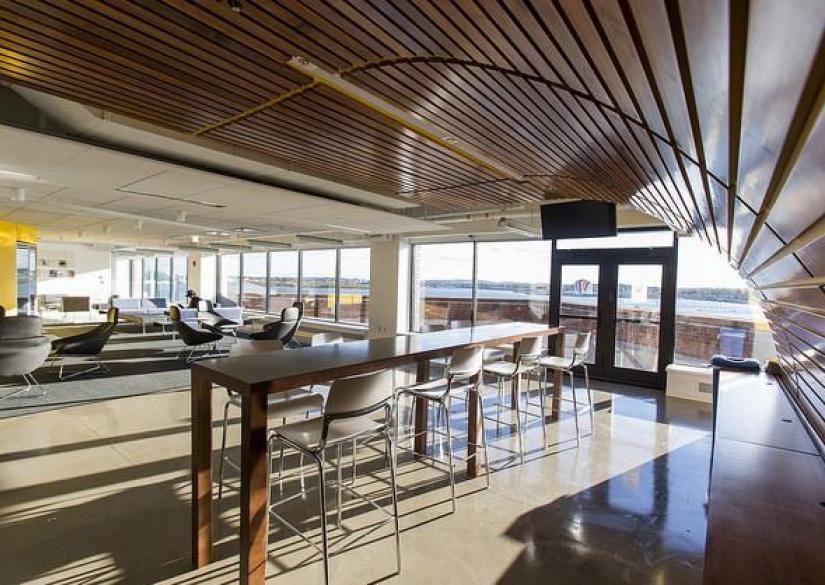
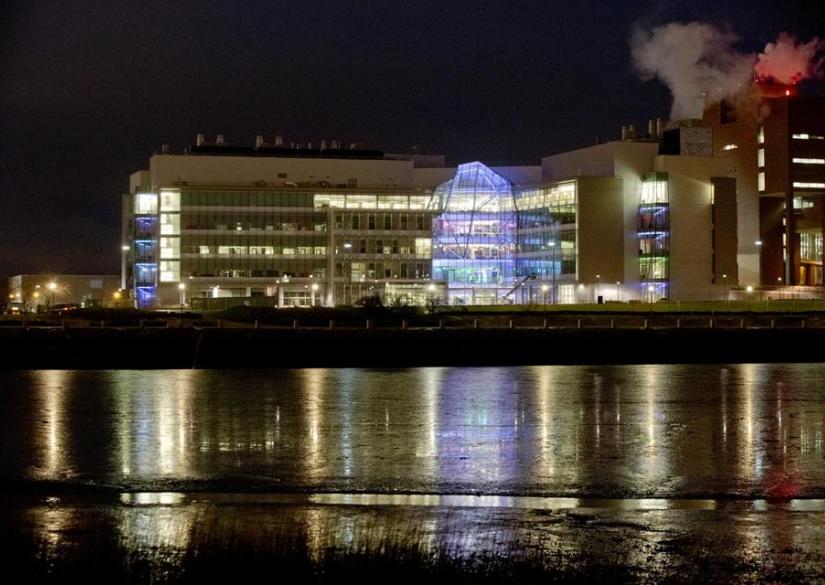
The academic playground in Boston is a large-scale territory with dozens of academic and residential buildings, research centers and sports infrastructure. One of the special buildings on the campus is the 220,000—square-foot Integrated Science Complex, which opened in 2015. This building provides students with state-of-the-art research and educational laboratories, as well as:
- Spaces for research in biology, chemistry, environmental sciences, physics, and psychology, Interdisciplinary laboratories,
- The Center for personalized cancer therapy.
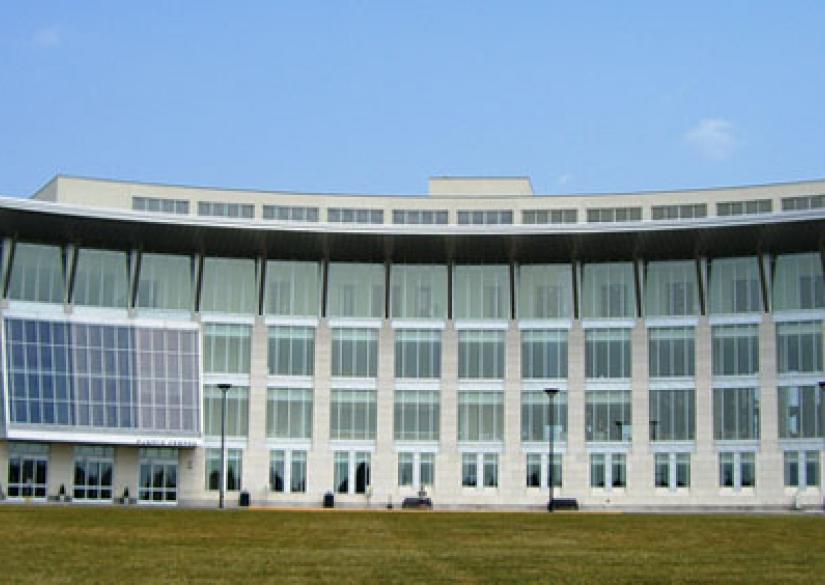
University Hall is a four—story 190,000 square foot building with modern classrooms, cafes, and recreation areas equipped with:
- The auditorium,
- Two project rooms,
- Four lecture halls with 150-200 seats, a multimedia studio,
- Five classrooms for seminars,
- Art Department: photography, drawing, sculpture studios, exhibition areas,
- Chemical laboratories,
- Theater, concert hall, dance, acting and music studios.
The UMass Boston campus has excellent conditions for sports, including a large sports center with gyms for group and individual classes, indoor and outdoor team games, and an ice arena. The University owns a full-scale stadium, which hosts sports competitions between institutions and domestic teams.
Admission dates and extra charges
There are several semesters in the academic year:
- Autumn: September-December,
- Winter: January,
- Spring: January-May,
- Summer sessions: May-August.
Additional expenses include:
- Registration fee, deposits,
- Accommodation,
- Meal plan,
- Campus Technology,
- Student activities,
- Identification card,
- Some extracurricular activities,
- Medical services,
- Books, educational materials as needed,
- Personal expenses.
Enrolment process
Applications are accepted four times a year: November 1, January 1, February 15 and December 15.
Applicants wishing to qualify at UMass Boston will need to complete several registration stages.:
- Filling out the online form, providing the required documents,
- Paying the registration fee,
- Passing the interview,
- Receiving an official letter inviting you to enroll,
- Making a deposit for booking a place on the course,
- Arrival at the campus for the start of classes.
Perspectives
UMass Boston has a high graduation rate of 68% and an annual retention rate of 76%: this means that virtually all students continue their studies and a large proportion of them complete it. Achieving excellent results in their studies and careers, graduates make up a large-scale network of specialists in various fields. Among them are statesmen, scientists, musicians, athletes and other world personalities. Some of the outstanding alumni are:
- Dana White is the current president of the UFC,
- Samuel Urkato – Minister of Science and Higher Education in Ethiopia,
- Harry Trask - winner of the Pulitz Prize for Photography,
- Biz Stone – co-founder of Twitter,
- Janet Mills – Attorney General of Maine
- Juana Matias - State Representative.
Entry requirements, how to apply, what is required to enrol
Before direct admission to bachelor's and postgraduate degrees, foreign candidates should complete a preparatory course, especially if they have not previously studied in an English-language educational system. Personal documents and an academic certificate from the previous place of study will be required for admission to preparatory courses.
Foreign applicants must have the following documents in order to meet the criteria for admission to higher education programs:
- Personal documents: passport, medical insurance, visa or residence permit,
- Academic certificates: a certificate of full secondary education and a diploma of preparatory course / bachelor's or master's degree, depending on the level of education the applicant enters.
- Additionally, assessment reports and official transcripts must be provided.,
- Results of the TOEFL language exam (from 79), IELTS (from 6.0), Duolingo (from 105) or university-recognized equivalent,
- Letter of recommendation from an academic advisor, a teacher from a previous place of study,
- A 500-word essay describing existing experience, individual achievements, and goals for academic progress.
Scholarships University of Massachusetts in Boston (UMass Boston)
International first-year students are automatically considered for the UMass Boston Merit Scholarship based on their application for admission. International students with an average score of 3.3 or higher can receive a Merit award of up to $5,000 per year.
Some scholarship programs that reward students based on academic success:
- Boren Awards for National Security Education,
- Barry Goldwater Award,
- The Udall Scholarship,
- Randall's Undergraduate Scholarship,
- Truman Scholarships,
- A reward for learning a language.
Scholarships that encourage creativity are the following:
- National Geographic Fulbright Award for Digital Storytelling;
- Fulbright MTV.
The institution also financially supports those who have special social criteria. Additionally, all students can benefit from federal assistance: grants, loans.
Literature and references
-
University of Massachusetts Boston — Wiki

-
University of Massachusetts — Boston – Colleges — U.S. News & World Report
-
University of Massachusetts Boston — Top Universities
-
344 University of Massachusetts, Boston — Forbes
-
University of Massachusetts Boston Ranking 2022-2023 — CWUR
-
University of Massachusetts Boston Ranking & Overview — uniRank University Ranking
Institution on the map
Residence permits, citizenship and other services
- Guardianship services during the studies
- Student supervision
Review about University of Massachusetts in Boston (UMass Boston)
Recommendations on when to apply
| Language courses, schools and children's language camps | Primary and secondary education - private schools | Preparation programmes for entering universities - higher education | Higher education (after completing accredited programs A-level, IB, High School) - Bachelor, Master, MBA |
| - we recommend to apply 6-9 months before the start of the course (some camps and schools offer discounts for early booking or for lengthy study programs) - there are some very popular and high demand children's camps, where the applications need to be submitted 1 year in advance (in particular Switzerland , Great Britain , USA , Canada , Austria) | - we recommend to apply one year before the start of the training program, - some schools have a specific time frame (September-November - please specify an individual school) - some schools require tests in several stages (UKISET, internal tests of the school: English, mathematics, logics, subjects, interview, some require a personal visit) | - we recommend to apply one year before the start of the program, - for Foundation and Pathway programs, IELTS and TOEFL certificates are usually required, respectively | - recommended submission one year before the start of the program, - the deadline normally closes in January, for TOP HEIs and, as a rule, in March in other universities - for a bachelor, a Foundation or Pathway preparatory program a completed A-level, IB, High School + IELTS / TOEFL are required - for Masters you need a graduated higher education, in some cases you need a pre-Masters program - MBA requires completed higher education, work experience preferably at least 2-3 years, etc. |