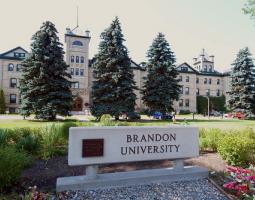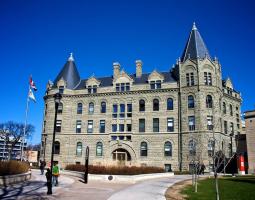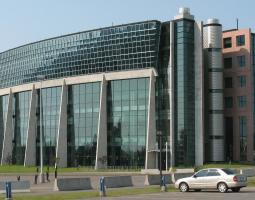
University of Manitoba



In the process of preparing the material, we referenced the following sources: Wikipedia, Top Universities, THE, U.S. News, Forbes, UM Today, To Do Canada
Programs and prices, tuition fees in University of Manitoba


The first stage of higher education - a diploma and a bachelor's degree - allows you to start working in the chosen direction, or to continue studying the specialty, to obtain a master's or doctoral degree. The University of Manitoba offers the following directions:
- Kinesiology
- Architecture
- Applied arts
- Ecology
- Pedagogy
- Engineering
- Sociology
- Right
- Natural resources
- Business.
Students wishing to obtain a master's degree from the University of Manitoba are offered a wide range of studying areas and disciplines:
- Immunology
- Architecture
- Right
- State and Municipal Administration
- Anatomy
- Psychology
- Linguistics
- Pharmaceuticals
- Anthropology
- Building
- Engineering in the field of computer technology and electricity
- Economy
- Biochemistry and Genetics
- Microbiology
- Interior Design
- Mechanical engineering
- Business Administration
- Policy
- Economy of agriculture
- Engineering in biosystems
- Genetics
- Surgery.
PhD (Doctoral Studies)
- Duration of study — from three to five years.
Research programs at University of Manitoba involve working on a dissertation and deep immersion in the chosen topic. This academic stage also includes Postdoctoral studies: a period of work on a research project after obtaining a PhD degree, during which researchers continue to develop their findings and participate in scientific research. The format of study and work is usually full-time but may include partial online research projects and internships.
The university offers special doctoral program formats, such as Collaborative PhD — studying at two universities simultaneously, including international ones.
Examples of main courses:
- PhD in Applied Health Sciences,
- PhD in Education,
- PhD in Agriculture / Environmental Sciences.
Pathway and Preparatory Programs
- Student age — from 17 years old,
- Duration of study — up to 12 months.
English Language Centre offers the Intensive Academic English Program: it helps develop academic English so that international students can enroll in a university program without reapplying, and prepares them for admission to undergraduate or graduate programs.
International College of Manitoba offers preparatory courses — Foundation and International Year One: they help international applicants adapt to studying at a Canadian university and, upon successful completion of the program, transfer to the second year of undergraduate studies.
Studies at ICM are conducted in an in-person format only.
Description of University of Manitoba
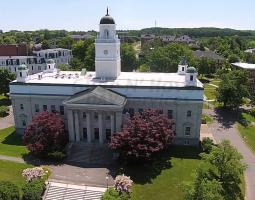
The University of Manitoba, which plays an important role in Canada's educational system, was founded as early as 1877 in Winnipeg, almost in the center of the country. The total number of students of the University of Manitoba today reaches 27,000 people, of which about 9% (2,400 people) - foreign students, representatives of more than 100 world states. In total, 82 educational programs are taught here, 51 - at the level of higher education. In most of the faculties there are postgraduate programs, graduates of which receive a master's or doctor's degree in the chosen specialty.
The University of Manitoba is an important research center and relevant profile institutions. During the last century a lot of useful and important discoveries were made, and their directions are very different - from the fight against AIDS to wireless technologies. With the help and support of the Government of Canada, the Smartpark implementation center was built, where the representatives of the university cooperate with various corporations in the fields of economy and the latest technologies.
This is one of the first Canadian universities to lift prohibitions on any restrictions on admission of students: students with any skin colour, nationality, religion, men and women of any language and religious denomination can study here. Initially, the university was only a few colleges of a different orientation, but at the beginning of the 20th century the process of mass integration was launched: a single academic council was appointed, colleges were transformed into faculties, and there were common goals and lines of activity.
The University of Manitoba today earned an excellent reputation and is respected by colleagues around the world - this is made possible by excellent, balanced and effective educational programs, highly qualified teachers, attention to modern research and innovation. With all its merits, the university establishes an affordable fee for Canadian, American and international students, and the prices for living here are quite moderate. Studying at the University of Manitoba is significantly less than in most other prestigious Canadian universities, and the cost of housing in the city is available to any student.
For foreign students, it is also very attractive to attend a special English Language Center (ELC). Here, foreign students are offered various effective courses that will be very useful in preparing for the university.
There is also the Student Center for Foreign Students Assistance (ICS). It helps foreign students to find a place in the host family and choose the appropriate way of living, organizes special orientation and adaptation programs, conducts all sorts of useful consultations on various topics, and organizes free English support courses.
Many foreign students are attracted by the loyalty of Canadian laws, which makes it possible to work part-time during studying in Canada (and on a summer vacation - a full-time job). It is important that the place of work is outside the campus, otherwise the students are given freedom of choice. In addition, there are useful internships that will help you to earn valuable practical experience, working contacts and acquaintances, to reduce your financial expenses for studying a little. After graduation, students have the right to work for some time in the provinces, as well as apply for immigration - for this purpose, a special provincial program has been adopted in Manitoba.

What are the most popular majors among students currently?
Business remains popular, but engineering and IT are quickly gaining ground. STEM fields are seen as advantageous not only for education in Canada but also for gaining professional experience, especially with the post-study work opportunities they offer. The pandemic has also sparked increased interest in biological and chemical sciences.
Educational process
For students interested in entrepreneurship, the IDEA START ecosystem operates: workshops, bootcamps, accelerators, mentorship programs, and specialized training — from validating a business idea and creating a pitch to prototyping and intellectual property legal issues.
Faculties and colleges
At the master's and doctoral levels (Master's and Doctoral), University of Manitoba offers more than 150 programs, enrolling over 3,500 students.
Scientific achievements
University of Manitoba ranks 6th in Canada according to the TIME's World University Rankings. The university employs 52 holders of Canada Research Chairs grants — a federal program supporting leading researchers in Canada.
Things to know about
- The student sports brand of the University of Manitoba is called UM Bisons: the "bison" athletes have already won prizes at 50 national championships in various sports.
- Alumni reside in 134+ countries around the world. Their list includes successful leaders, researchers, and professionals. In addition, the university is associated with the names of three Nobel Prize laureates for achievements in physics and peacemaking.
Accommodation, meals, prices
The student campus of the University of Manitoba is located in a quiet and safe area of Winnipeg. Six residences are built here, in which there are places for 1300 pupils (1266 numbers). Rooms are designed for 1-2 people, there are common suites.
Subjects and sports
Activities University of Manitoba
In total, 16 sports teams and national teams are working under the auspices of the University of Manitoba.
Winnipeg is the capital of the province of Manitoba, located almost in the heart of North America, at the confluence of two rivers (Red River and Assiniboine River). Its name was taken from a nearby (just 40 miles) large lake Winnipeg. Up to the state border with the US about 60 miles. The history of the city is conducted in 1812: today it occupies an area of 465 square meters kilometers and has 702400 people. It is a well-developed, infrastructure-rich city (the sixth most important in Canada), with a lot of entertainment facilities, cafes, bars and a restaurant, beautiful spacious parks, gardens and squares. Especially it is worth noting Assiniboine Park and Kildonan Park with their unique flora and fauna.
Advantages
- University of Manitoba offers a wide selection of thematic programs: from humanities and social sciences to technical, natural, medical, and professional fields.
- It is the only university in Manitoba that trains lawyers, engineers, architects, actuaries, and most healthcare professionals.
- Students can participate in co-op programs and complete internships at industrial companies, gaining paid professional experience.
- Every year, the university allocates approximately $CAD 40 000 000 in scholarships and financial support for students.
Facilities and equipment at University of Manitoba
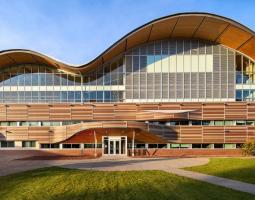
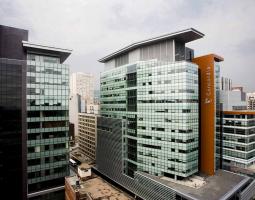
In the center of Winnipeg, the University of Manitoba is located on two campuses - "Fort Harry" and "Bannatyn", small university facilities are located in other parts of the city, in the nearest suburbs. In 2008, the Ministry of Education approved a large project worth $ 100 million - the Domino project - which includes the construction of new residences, large-scale technical equipment and the equipping of the university with the latest equipment.
The university has opened for students a wide range of opportunities for sports and outdoor activities, working a lot of fitness programs and sports facilities:
- Max Bell Center
- Joe Doupe Recreation Center
- Frank Kennedy Physical Education Center
- Center.a
Admission dates and extra charges
The cost is largely dependent on the type of accommodation you choose and the preferred level of comfort.
This amount is already included:
- Studying on the program
- Accommodation (selected type)
- Teaching aids, books and materials
- Medical insurance
- Use of the entire campus infrastructure, sports activities.
The amount is not included and is paid separately:
- Registration fee
- Flights round trip
- Transfer in both directions
- Visa fees and services
- Consular fees, translation of documents
- Personal pocket expenses.
Enrolment process
International applicants for admission to the University of Manitoba go through the following stages:
- Document preparation: certificates or diplomas with transcripts (translated into English if required), language test results, a copy of the passport, and additional materials if specified in the requirements.
- Submitting an online application and paying the registration fee. It is important to consider deadlines: for the fall intake, this is most often the beginning of March.
- Uploading additional files. After submitting the application, a personal account is opened where the student adds all supporting documents — transcripts, certificates, and other materials — within the specified timeframes.
- Waiting for a response from the university. The decision is sent to the email or personal account. If everything is successful, the university sends an admission letter with enrollment conditions and possible additional requirements.
- After receiving the letter, the student confirms enrollment and pays the required fees, then applies for a student visa, after which they register for courses and prepare to move to Canada by the start of the semester.
Perspectives
University of Manitoba helps international students with career development during their studies and after graduation. For example, through Career Services, students can:
- plan their career path and explore different professions and industries,
- practice creating resumes and writing cover letters,
- prepare for interviews, search for job openings through career fairs and employer databases,
- participate in mentorship programs and build connections with employers.
Career Services support continues after graduation: graduates receive help with job searches, access to career events and resources for up to six months. In addition, many university graduates can apply for a Post-Graduation Work Permit — a permit that allows them to work in Canada after completing their program.
Entry requirements, how to apply, what is required to enrol
For Bachelor program applicants it is necessary to prepare a certificate of secondary education (the higher the scores, the better), as well as the certificate of knowledge of the English language: IELTS from 6.5 or TOEFL from 237.
For those who wish to complete the bachelor's program requirements a little higher. It is necessary to provide a bachelor's degree, to confirm work experience (letters and recommendations from employers are welcomed), to prove a high level of English (IELTS 6.5 or TOEFL 250).
Scholarships University of Manitoba
University of Manitoba offers several types of financial support for students — both for first-year students and for upper-year students.
Undergraduate Entrance Scholarships are intended for new international undergraduate students and are awarded for good high school grades. Key conditions:
- submitting an application for admission before the established deadline,
- having a valid study permit for Canada,
- full-year enrollment and a minimum of 24 credits per academic year.
The scholarship amount depends on the grade average:
- from 95% — approximately $CAD 3000,
- from 90% — $CAD 2000,
- from 85% — $CAD 1000.
Undergraduate Scholarships are available for international students who are already beyond their first year at the university. Conditions:
- minimum 24 credits (ECTS),
- high grade point average (e.g., GPA of 3.5 or above),
- continued full-year enrollment.
The payment decision is made based on academic results.
In addition to full scholarships, the university offers Bursaries — financial assistance for students who have a confirmed need for additional funding.
Literature and references
-
University of Manitoba — Wiki

-
University of Manitoba : Rankings, Fees & Courses Details
-
University of Manitoba — THE - Times Higher Education
-
University of Manitoba — U.S. News & World Report L.P.
-
University of Manitoba — Forbes
-
UM subjects rank among Canada's and world's top universities
-
QS World University Rankings 2024: How Canadian Universities Fare in the Latest Rankings
Institution on the map
Residence permits, citizenship and other services
- Guardianship services during the studies
- Student supervision
Review about University of Manitoba
Recommendations on when to apply
| Language courses, schools and children's language camps | Primary and secondary education - private schools | Preparation programmes for entering universities - higher education | Higher education (after completing accredited programs A-level, IB, High School) - Bachelor, Master, MBA |
| - we recommend to apply 6-9 months before the start of the course (some camps and schools offer discounts for early booking or for lengthy study programs) - there are some very popular and high demand children's camps, where the applications need to be submitted 1 year in advance (in particular Switzerland , Great Britain , USA , Canada , Austria) | - we recommend to apply one year before the start of the training program, - some schools have a specific time frame (September-November - please specify an individual school) - some schools require tests in several stages (UKISET, internal tests of the school: English, mathematics, logics, subjects, interview, some require a personal visit) | - we recommend to apply one year before the start of the program, - for Foundation and Pathway programs, IELTS and TOEFL certificates are usually required, respectively | - recommended submission one year before the start of the program, - the deadline normally closes in January, for TOP HEIs and, as a rule, in March in other universities - for a bachelor, a Foundation or Pathway preparatory program a completed A-level, IB, High School + IELTS / TOEFL are required - for Masters you need a graduated higher education, in some cases you need a pre-Masters program - MBA requires completed higher education, work experience preferably at least 2-3 years, etc. |