Toronto University Summer Camp


Programs and prices, tuition fees in Toronto University Summer Camp


General English
The program is aimed at a comprehensive, general improvement of all basic language skills:
- Reading
- Auditing (listening comprehension)
- Written speech
- Oral speech (spoken English)
- Phonetics (correction of pronunciation and correction of accent)
- Vocabulary
- Basics of syntax.
Due to the small number of students in the class, teachers can implement an individual approach, giving each student a proper amount of attention, carefully monitoring its progress, achievements and possible difficulties.
The intensity of classes (basic) is 15 lessons per week. At the request of the student, it can be increased to 30 lessons weekly.
Seasonal language courses are conducted at the camp from July 1 to August 26 (the exact dates of the races depend on the chosen program).
Preparation for TOEFL
Preparation for TOEFL testing is not only an improvement of all the basic language skills, but also a detailed examination of the structure and features of this exam. Experienced teachers often use tests over the past year to visually show students examples of tasks, basic difficulties and typical "traps" of examiners, to draw students' attention to the most common mistakes and "pitfalls."
Advanced Academic Course
An intensive academic course is not only active learning of the English language and improving the language level, but also studying the profile subjects and subjects typical of the Canadian national curriculum. This course of academic and linguistic development will be an ideal option for students planning to study at foreign schools, colleges or universities: in a short time you will be able to quickly improve the language level (for gaining sufficient knowledge already), to fill knowledge gaps, international standards. Since the intensity of studying here is higher than on standard programs, then not only morning but also evening classes are provided: they leave less time for leisure, but they allow to achieve better results in the shortest possible time.
Preparing for IELTS
The IELTS test preparation program includes lessons on the classic General English program aimed at general improvement of the language level, and specific lessons, preparing for this type of exam. Students on the example of tests of past years will consider types of tasks, common pitfalls and difficult moments, will learn to avoid common mistakes. Thanks to writing sample tests, students will be able to get acquainted with the structure and features of IELTS, to overcome the emotional barrier before the test.
Intensive English
The Intensive English program is based on the standard General English course, but has a higher intensity of lessons (up to 30 per week) due to additional lessons in the evening. This option is suitable already for experienced students with a sufficiently high level of language, who want to even better hone their skills and expertise in a particular topic, as well as those students who want to achieve maximum results in the shortest possible time.
Description of Toronto University Summer Camp
- Location: Toronto, Ontario, Canada
- Age of students: 12-18 years
- Duration of programs: from 3 weeks.
Summer programs at universities in Toronto are aimed at the effective and academic development of students from all over the world in a comfortable international environment. In University of Toronto each class there are no more than 15 people (each session is 45 minutes), which gives the teachers the opportunity to give students personal attention, to practice an individual approach. The intensity of the classes is 15 hours per week, at the student's request the number of lessons can be increased to 30.
The State University of Toronto, founded in 1827, today is an important scientific and educational center not only in Canada, but also in the world. It regularly enters the TOP-20 world universities and is the largest university in the country.
Toronto, located in Ontario, is Canada's largest city, an important trading and port city. Its international atmosphere includes representatives of a wide variety of peoples, nationalities and languages - more than half of the permanent population are immigrants. Toronto - a real center of culture and art: for example, here there is the largest Metro Toronto Zoo (an area of more than 283 hectares, more than 3000 animals from around the world). Two hours drive from the city there is the legendary Niagara Falls: in the evening there is a stunning musical and light show, emphasizing the magnificence of this natural miracle.
Educational process
Students take a written placement test and have a one-on-one interview with a teacher. There is no fixed passing score: classes are formed based on the knowledge and experience students demonstrate. At the end of the course, each participant receives an individual evaluation of their performance.
In the General English Course, students work on speaking, listening, writing, reading, grammar, vocabulary, and pronunciation. Daily classes are taught by fully accredited English teachers. Students collaborate on projects, take part in discussions, and give presentations. To earn a certificate, they must participate actively, improve their fluency and accuracy, and complete a final project to the teacher's satisfaction. The IELTS Preparation Course covers test-taking strategies and includes regular practice tests. A certificate requires active participation in class and practice tests, along with completion of the final mock exam.
The Academic Preparation Course draws primarily on social science and humanities materials. Assignments involve critical reading, seminar participation, research, and writing in a range of genres. In the Read, Write & Remix Course, students adapt information for different audiences, purposes, or formats. They work with stories, social media posts, infographics, and memes, create their own content, and complete group projects. The course develops critical thinking, creativity, and collaboration skills.
The Culture & Community Course explores the cultures of Toronto, Canada, and the participants' home countries. Students work together to develop a project that could benefit the campus community. The Global Commerce Course covers business communication, leadership and management, marketing, social media, and entrepreneurship. Students take an active role in analyzing real-world examples and apply what they learn to a range of international business situations that reflect their interests.
Things to know about
- The Read, Write & Remix Course replaced the previously offered Intensive English Course.
Accommodation, meals, prices
Accommodation
All participants stay in the New College residence. Single and double rooms are assigned based on availability. Roommate requests are accepted but cannot be guaranteed. Rooms have air conditioning, high-speed internet, a window, a single bed with linens, a desk and chair, and a wardrobe with a full-length mirror. Students need to bring their own laptop to use the internet in their rooms.
The residence has common rooms with televisions, kitchens with a refrigerator, microwave, stove, and oven, and shared bathrooms with individual shower stalls. The laundry is coin-operated, and detergent is provided free of charge. Each student's key card provides access to their room, the building, the elevators, and their floor. All floors require key access, and the building is locked overnight. The front desk is staffed around the clock, and a security guard is on duty at night.
Camp counselors are Canadian university students who live with participants and accompany them on all trips and activities. They are on call every evening, enforce curfew, and are available for overnight emergencies. If a child needs emergency medical care, a counselor accompanies them to a hospital in Toronto.
Meals
Meals are served at Audrey Taylor Dining Hall on an all-you-can-eat basis. The dining stations are Pizzarette, Grille, Chef Table, and Vegetarian. Students have unlimited access to fresh fruits and vegetables, a salad bar, drinks, soups, desserts, and ice cream. Most allergies and dietary restrictions can be accommodated, but some complex cases cannot. Nut-free meals cannot be guaranteed.
Subjects, specialties
Activities Toronto University Summer Camp
Students enrolled only in morning courses have an afternoon program that includes visits to historical and cultural sites, sports, shopping, and clubs. Club meetings take place regularly throughout the session so participants can work on a project that reflects their interests. Club activities may include:
- Arts & Crafts: painting, drawing, braiding, writing, crafts, and sewing,
- Music & Performance: singing, playing instruments, dance and choreography, and preparing a live music and dance performance for Talent Night,
- Media: creating camp content through video and photography with support from counselors. Activities may include collages, a camp newsletter, social media projects, and learning about digital responsibility,
- Sports club: soccer, basketball, teamwork, organizing competitions, leadership, and refereeing.
The evening program includes watching a professional baseball game at Rogers Centre, visits to the Art Gallery of Ontario, the Royal Ontario Museum, and the CN Tower, and a boat cruise on Lake Ontario. Wildcard Night and Talent Night take place on campus.
Weekend trips include:
- A visit to the Toronto Zoo,
- A trip to Canada’s Wonderland amusement park,
- A trip to Niagara Falls with a boat ride to the base.
Facilities and equipment at Toronto University Summer Camp
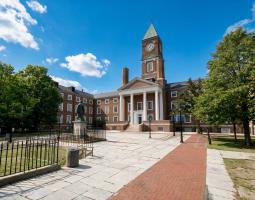
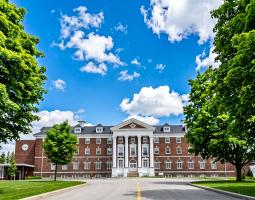
The New College residence is on the University of Toronto's St. George Campus in downtown Toronto. Well-known neighborhoods, shopping centers, and activity venues are within walking distance.
The residence has three buildings: Wilson Hall, Wetmore Hall, and 45 Willcocks. Together, they house more than 900 University of Toronto undergraduates.
New College has a library and space for student clubs. Camp participants can use a computer lab with 30 high-speed workstations.
Admission dates and extra charges
Seasonal language courses in Toronto are conducted at the camp from July to August (the exact dates of the races depend on the chosen program).
The course price already includes:
- A program (15-30 hours of the student's choice)
- Accommodation and meals (full board)
- Medical insurance
- Round-the-clock supervision for students and full guarantee of their safety
- Transfer
- Daily excursions, leisure and entertainment program.
The price does not include:
- Air tickets in both directions
- Visa fees and services, translation and certification of documents
- Consular fee (to be paid at the embassy)
- Personal pocket expenses
- Teaching aids, books and materials
- Additional excursions and recreational activities (optional).
Extras:
- Extra night 180 CAD
- Transfer (one way) 100 CAD
- Express mail 50 CAD
Perspectives
Students who successfully complete the course receive a certificate of completion from New College at the University of Toronto.
Entry requirements, how to apply, what is required to enrol
- The General English Course accommodates a range of English proficiency levels but is not recommended for complete beginners,
- The Read, Write & Remix Course is open to students at all English proficiency levels,
- The IELTS Preparation Course, Academic Preparation Course, Culture & Community Course, and Global Commerce Course are designed for students ages 15–18 with at least intermediate English.
Institution on the map
Residence permits, citizenship and other services
- Guardianship services during the studies
- Student supervision
Review about Toronto University Summer Camp
Recommendations on when to apply
| Language courses, schools and children's language camps | Primary and secondary education - private schools | Preparation programmes for entering universities - higher education | Higher education (after completing accredited programs A-level, IB, High School) - Bachelor, Master, MBA |
| - we recommend to apply 6-9 months before the start of the course (some camps and schools offer discounts for early booking or for lengthy study programs) - there are some very popular and high demand children's camps, where the applications need to be submitted 1 year in advance (in particular Switzerland , Great Britain , USA , Canada , Austria) | - we recommend to apply one year before the start of the training program, - some schools have a specific time frame (September-November - please specify an individual school) - some schools require tests in several stages (UKISET, internal tests of the school: English, mathematics, logics, subjects, interview, some require a personal visit) | - we recommend to apply one year before the start of the program, - for Foundation and Pathway programs, IELTS and TOEFL certificates are usually required, respectively | - recommended submission one year before the start of the program, - the deadline normally closes in January, for TOP HEIs and, as a rule, in March in other universities - for a bachelor, a Foundation or Pathway preparatory program a completed A-level, IB, High School + IELTS / TOEFL are required - for Masters you need a graduated higher education, in some cases you need a pre-Masters program - MBA requires completed higher education, work experience preferably at least 2-3 years, etc. |