Reed's School





Programs and prices, tuition fees in Reed's School


GCSE
A two-year course is designed for students aged 14-16, completing a part-time secondary education program. The GCSE certificate, especially common in the UK and Northern Ireland, is highly valued: it gives the right to study in the Sixth Form programs and then go to the selected universities.
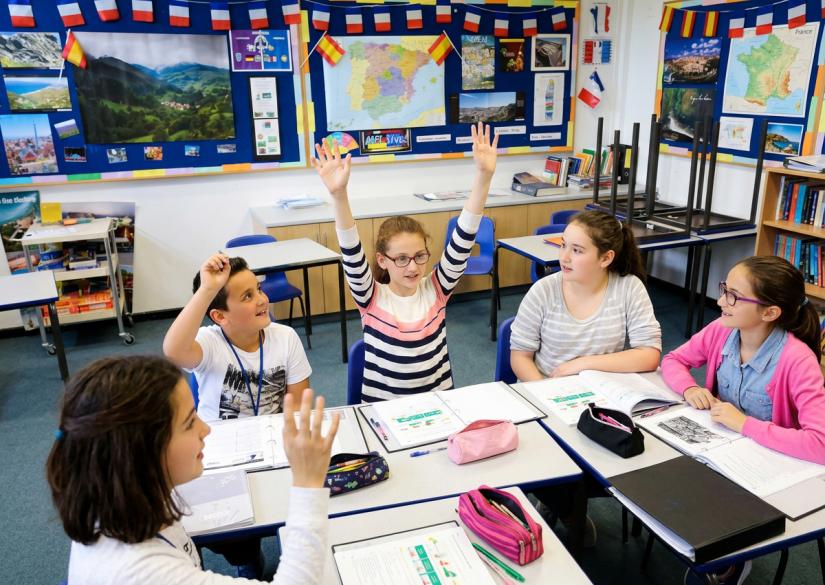
The GCSE program includes both compulsory subjects (for example, mathematics and English), as well as electives that the student can choose independently. In total, 21 subjects are offered for selection. There is an opportunity to study and pass on the examinations classical Latin, French, German and Spanish. As a separate subject ICT (information technology) is taught. More than 30 people (according to statistics) choose to study art and design (including graphic), photography.
A-level
The program lasts for 2 academic years and is designed for students of 16-18 years: it simultaneously completes the course of secondary education (stage Sixth Form), and prepares students for admission to the chosen institution.
The students choose on their own subjects for study: usually it's 4 disciplines for the first year (AS-level) and 3 for the second year, which are passed at the final exams. In total, there are more than 26 options to choose from: it helps to devote maximum time to the most priority sciences and specializations, to prepare for entering the desired profession more effectively.
Approximately 37% of students choose art and humanities, 30% focus on the natural sciences, 33% combine disciplines. There is an opportunity to study classical (Latin) and modern foreign languages (German, French, Spanish). As a separate subject ICT (information and computer technology) is available. Every year, approximately 10 students choose art as an A-level, design (usually graphic), photo work.
Among high school students, student exchanges are constantly held: students of Reed's School can go to Germany, France, Holland or Spain. Also practical internships and working practices for graduates are provided.
Description of Reed's School
- Founded: in 1813,
- Location: Cobham, Surrey, United Kingdom,
- Student age: 11 to 18 years,
- Total number of students: 570 people,
- Type of accommodation: residence, guest-house; day form,
- Type of studying: boys only, mixed from age 16,
- Educational programs: GCSE, IGCSE, A-level.
The prestigious and famous UK private school of Reed's School was founded in 1813. Its founder, Andrew Reed initially accepted the boys who lost their fathers: Andrew believed that such children as never need the support of older comrades, a quality education that allows you to achieve success in life.
Today, Reed's School has already practiced a mixed type of education: since 1958 girls have started receiving admission, and the strict conditions for selecting young men have been relaxed, and anyone who wishes, including international students, can enroll now. Boys are provided with educational programs from 11 to 18 years, girls can study in the program of the senior classes (Sixth Form, 16-18 years). It offers both a full-time form of education and a boarding house (available to students from 11 years old, a weekly and full options are offered). In total, 570 students are enrolled on campus today: 470 on day time (40 girls, the rest are boys) and 100 boarders (girls around 10, boys - 90).
Reed's School is a member of the Conference of School Directors (HMC) and the Society of Directors and Directs of Independent Schools (SHMIS), actively participates in the activities of national educational organizations.
The academic results of the graduates demonstrate the high efficiency of the programs and the professionalism of the teachers:
- GCSE: all students received points from C to more than 5 subjects;
- A- Level: the average score among graduates was 305. Over 22% are 4 subjects and more, more than 68% of students - 3 subjects or more.
- 98% of graduates enter selected universities in the UK (20% prefer to take a break and rest year).
The institution has facilities for teaching children with dyslexia.
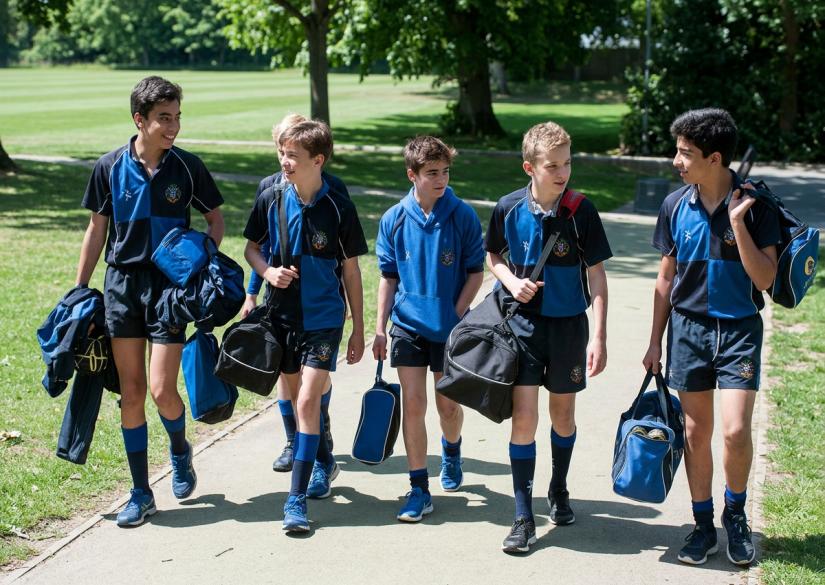
All students are required to wear a uniform - an exception is made only for high school students, for whom we allow an official, business style of clothing.
Reed's School supports the Anglican church - all students attend the chapel and basic services throughout the year.
The Reed's School campus has a strict ban on alcohol and drug use (punishment is usually an exception). Also, teachers carefully monitor the fact that among the schoolchildren there was no "hazing" - punishment for humiliation of juniors and "newcomers" is very strict, up to the exception.
Educational process
Specialist teachers conduct lessons at every level. They work in academic departments whose Heads of Department report to the Deputy Head (Curriculum). For younger year groups, a teaching period may be split into two separate lessons, depending on the curriculum. Boarders have access to subject staff during evening prep.
Practical work in FutureTech varies with the modules assigned to each teaching group. Students program Sphero robots in Sphero Edu, progressing from visual coding to JavaScript. In the artificial intelligence module, they create an informative scientific poster: they research the topic with Perplexity.AI, create images in Bing Image Creator and put the poster together in Canva. Other modules explore the use of underwater cameras, camera traps and drones to monitor and protect species, the design of carbon-neutral stadiums with projects presented in class, 3D printing and additive manufacturing. In class, students make their own key ring or another product and design, build and test a model wind turbine to investigate the efficiency of their design.
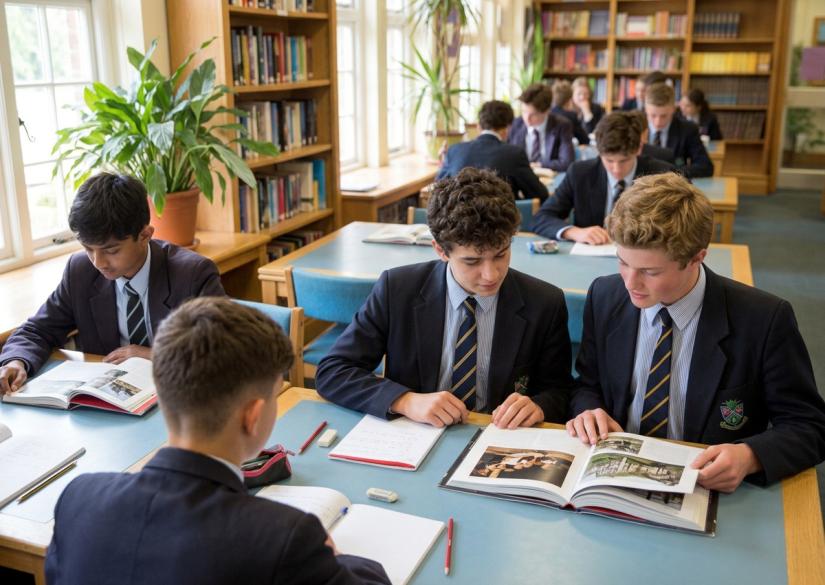
The EDT Bronze Industrial Cadet Award involves working as a team to develop a product to a given specification. Industry mentors work with students. The library provides a calm environment for independent work, with soft background music and quiet conversation allowed at appropriate times.
Induction programs for new students begin before they start at the school. Heads of Section, Heads of House and Year Heads work with tutors, students and parents. A dedicated Sixth Form Team helps students prepare for A-Level and life after school. Counselors, a Social Skills Tutor and a Physiotherapist provide additional support.
Faculties and colleges
The school’s age groups are organized into The Close for younger pupils, Middle School and Sixth Form for senior pupils. Mathematics and English Language are compulsory for all students, as are at least two science disciplines.
- Year 9: FutureTech, a cross-curricular program combining science, technology, engineering and mathematics,
- Years 10–11: IGCSE programs in Biology, Chemistry, Physics, Electronics and Computer Science,
- Sixth Form, Years 12–13: A-Level courses in Biology, Chemistry, Physics, Computer Science and Mathematics.
Things to know about
Reed's School deliberately chooses not to publish examination data in national league tables.
University destinations
Graduates from the class of 2026 secured places at UK universities in the following disciplines:
- Oxford: Philosophy, Politics and Economics, Music,
- Cambridge: Philosophy, Biology,
- Imperial College, London: Mathematics and Computer Science,
- Durham: Engineering,
- Bath: Economics,
- Exeter: Law.
US universities where Reed's School students continue their education include New York University, Penn State and Kansas State. Some graduates choose apprenticeships at London Built Environment and Bank of America.
Accommodation, meals, prices
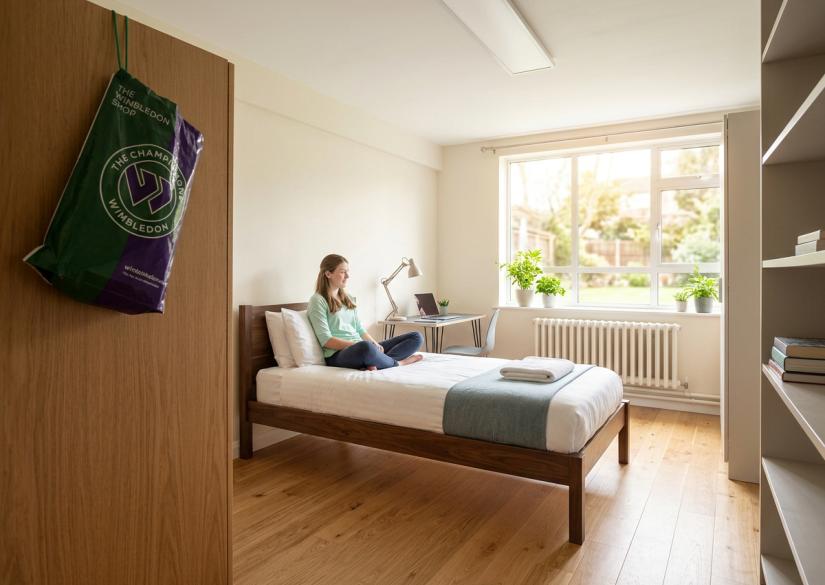
Students are offered comfortable, cozy, fully furnished and equipped with necessary equipment rooms in common residences on campus (all houses are distributed according to the age of students). Basically, students share rooms for 2-6 people, high school students are accommodated in personal single bedrooms. The school offers flexible boarding for one or more nights. Emergency boarding is often available when needed.
Various competitions are constantly held between houses, sports and creative competitions. The tutors and prefects appointed by the administration in person are in charge of the hostels. On the territory of the school campus around the clock there are skilled doctors and nurses. Each boarding house has a resident Head of House who lives there with their family, as well as live-in Boarding Assistants. All are teachers at the school and support boarders’ well-being and personal development. Each house also has a Matron who helps with children’s practical needs.
Students can come to Reed's School using their own car, bicycle and motorbike.
Meals are organized in the general school cafeteria (self-service, a large selection of useful and tasty dishes of different cuisines of the world). Students can also use common kitchens and prepare themselves something to eat (grocery stores are in walking distance), drink a cup of tea or coffee with friends. Day pupils can join boarders for breakfast from 7:45am. Lunch runs from 12:35 to 1:35pm, with each pupil assigned a time to enter the dining room. After the school day, pupils can stay for supper and prep with boarders if needed.
Subjects, specialties
Activities Reed's School
Sports development is among the top priorities of Reed's School. During the first two years of studying, all students are engaged in cricket, hockey, rugby, and then they can choose other directions:
- Ski,
- Tennis,
- Badminton,
- Basketball,
- Squash,
- Athletics,
- Swimming,
- Netball.
The main team sports for girls are netball, hockey and cricket.
High school students can compete for the prestigious Prize of the Duke of Edinburgh. The award combines community service, hikes and expeditions, and sports. You can take part in the activities of the Joint Cadet Corps (CCF): this is a general military sports development (you can specialize in the army or air division).
During extra-curricular time more than 30 clubs, sections and studios for students are working - each student will be able to find an occupation to his taste:
- Archery,
- Photography,
- Golf,
- The press and the newspaper,
- The dance studio,
- The Karate,
- Judo and etc.
The extracurricular program changes each term. Additional activities include Scale Model Club, climbing, Enterprise for Good, pétanque and darts. Pupils in Years 7–10 are expected to take part in at least three activities each week, while those in Years 11–13 are expected to choose at least two.
The musical direction is also advanced: you can even pass a specialized exam or study the discipline "Music Technologies" at the level of A-level. Approximately half of the students play a minimum of 1 musical instrument. On the campus there are about 8 musical collectives: a choir, a string ensemble, a wind band, a brass band and pop groups.
Dramatic and theatrical art also enjoys popularity among pupils: GCSE and A-level courses have corresponding examination specialties. School plays and productions are often held, and the best and most gifted students take part in the prestigious, large Festival of Arts in Edinburgh.
Reed's School regularly hosts a variety of leisure activities, exciting adventures and excursions - including joint celebrations with girls from neighboring schools. Regularly for students organized trips abroad, educational tours and student exchanges, fascinating excursions and hikes. Trips and activities are also organized for boarders who stay over the weekend.
The School Council includes representatives of all educational stages and age groups: it is responsible for the activities of extra-curricular clubs, the organization of activities and the leisure of students.
The Andrew Reed Award recognizes participation in extracurricular life and personal progress. Effort and growth count as much as achievement. Students are offered leadership roles, including mentoring younger pupils, organizing events and contributing to school life. Music ensembles, choir rehearsals, language clubs and subject clinics run during the lunch break.
The regular FutureTech Inspire Lectures bring speakers from industry and research to pupils and parents. Past talks explored the science and ethics of cloning, life as a pilot, football stadium architecture and space travel. The FutureTech extracurricular program offers Robotics Club for junior and senior pupils, E-Sports, 3D modeling with Blender and Python Programming. The Science and Mathematics departments support students’ participation in competitions and challenges.
Advantages
- In the 2025 inspection, personalized feedback received the rare designation of a “significant strength.” It contributed to sustained improvement in exam results for all pupils.
Facilities and equipment at Reed's School
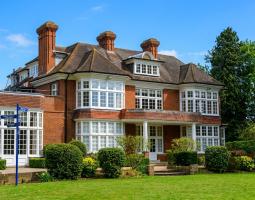
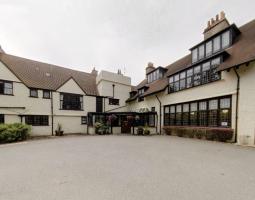
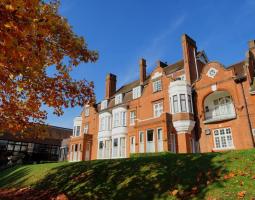
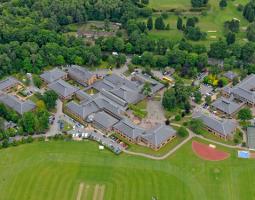
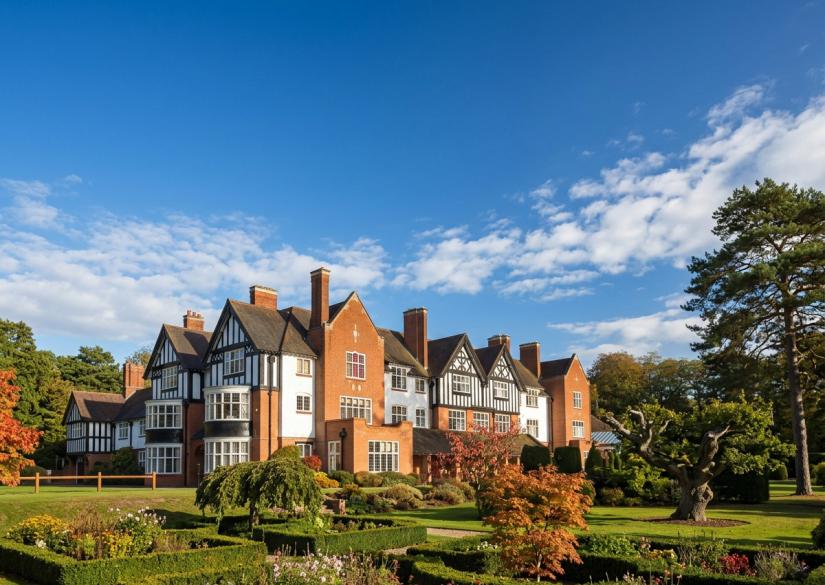
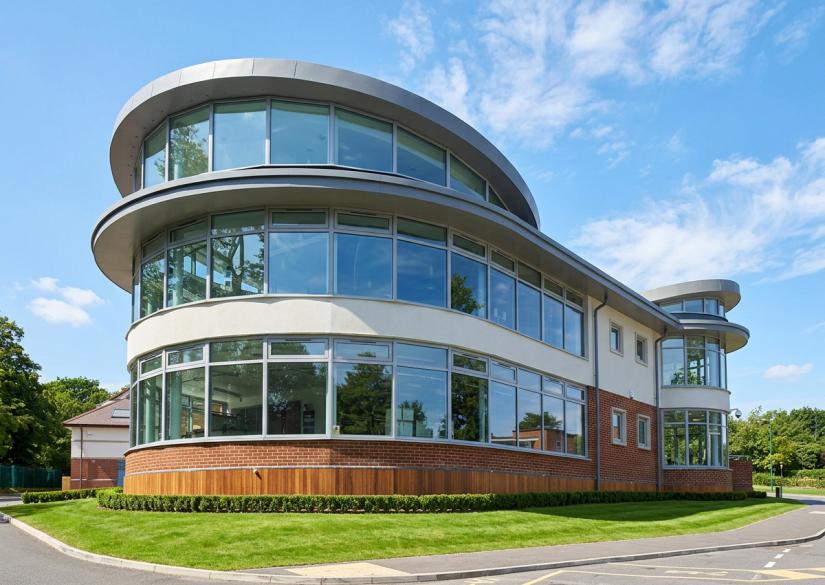
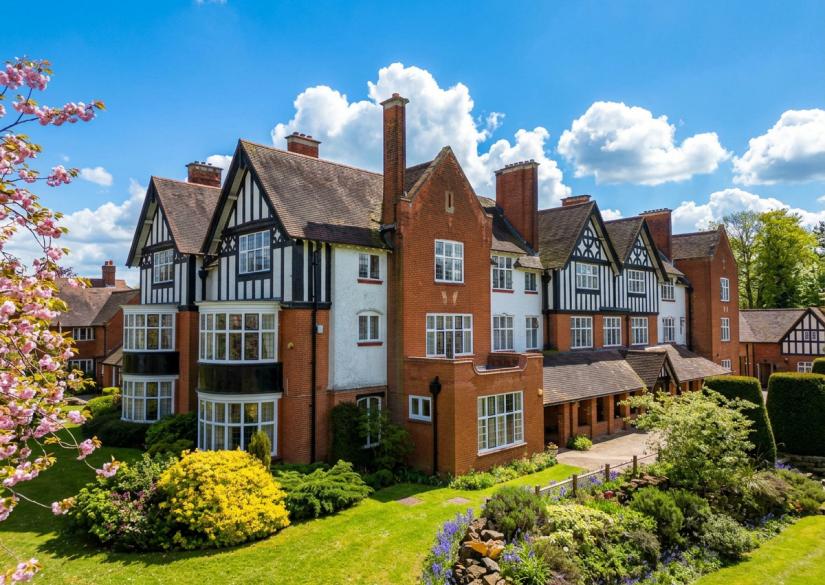
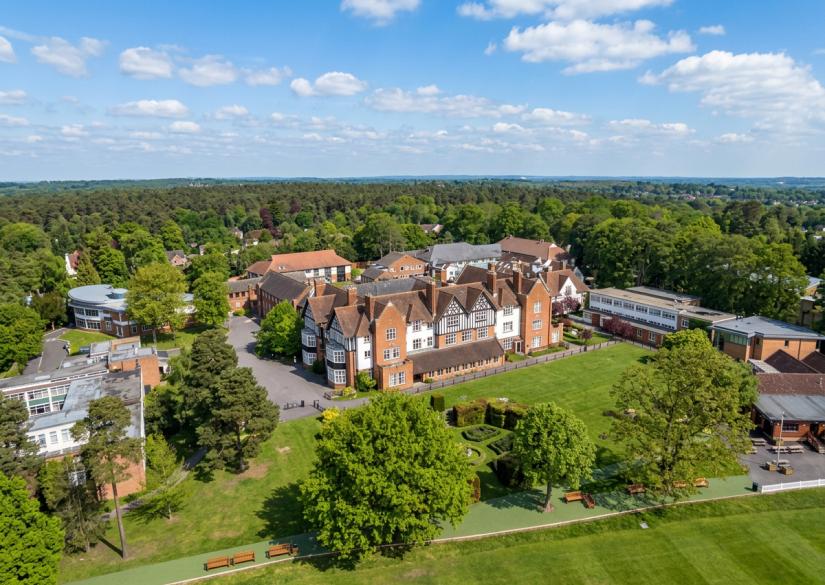
The school campus is located near Esher (Surrey County, United Kingdom): it is a quiet, calm and very green countryside, known for its measured rhythm of life - nothing will distract students from school. The total area of the territory reaches 40 acres: there are also educational buildings, and residences, sports infrastructure, cozy meadows, lawns and forest for walks and picnics. The architectural ensemble of the school combines historical buildings and modern design buildings - it is a cozy and comfortable place for study and recreation.
Reed's School is continuously expanding, updated and modernized: only in recent years, an indoor tennis center, new scientific laboratories with the latest equipment and all-weather sports fields with professional artificial coatings have been built.
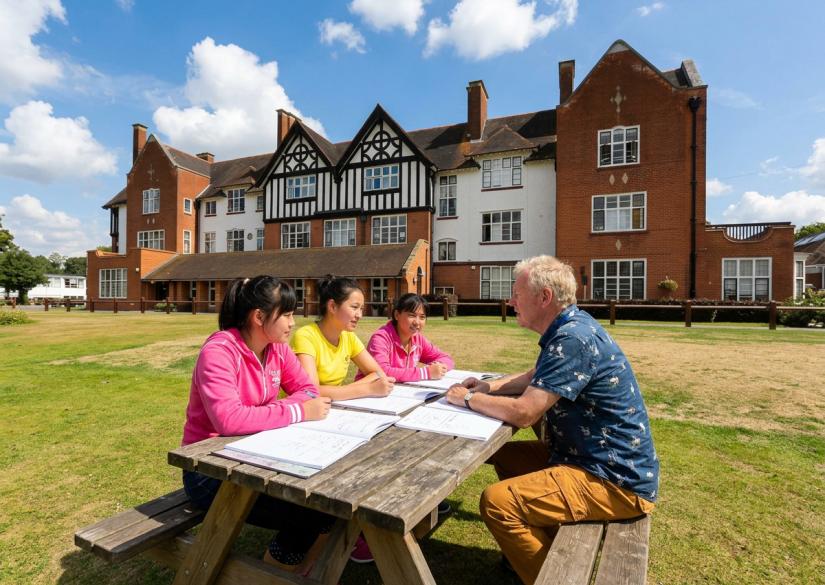
The Nissen Library has been converted into a center for independent and collaborative work with print and digital resources. It has spaces for individual work, group activities and meetings, three sofas and inlaid chessboards. An outdoor work area is also provided on the lawn during the summer exam season.
The nearest railway station is Oxshott, on the Waterloo–Guildford line via Cobham. The school is about five minutes away by taxi or a ten-minute walk through woodland. The shortest walking route passes through Oxshott Heath and can be muddy in wet weather. The longer road route follows Sandy Lane, which is unpaved. Heathrow and Gatwick Airports are 30–40 minutes from Cobham by car or taxi.
Visitor parking is available in the school parking lot.
Admission dates and extra charges
The course price already includes:
- Studying on the selected course,
- Accommodation in a residence,
- 24-hour supervision of pupils and full guarantee of their safety,
- Medical services if necessary,
- Year-round pupil injury insurance,
- Educational trips, student exchanges,
- Regular reports on progress and successes for parents.
The following components are paid additionally:
- Registration fee,
- Tuition deposit,
- Guardianship (registration with the agency + guardian services),
- School uniform,
- Air tickets in both directions,
- Transfer in both directions,
- Initial testing of the level of knowledge,
- Personal pocket expenses,
- Visa fees and services, translation and certification of documents,
- Consular fee (payable at the Embassy),
- Compulsory lunch charge,
- GCSE and A-Level examination charges.
A separate medical insurance scheme is available. Optional insurance also provides a refund for absence due to illness or injury and cover for the loss of personal items. These two schemes are administered by a separate supplier.
Day pupils can receive flexible care throughout the day at no extra charge. The formal school day begins at 8:15am with a Tutor group meeting, registration and an opportunity to discuss any issues with the Tutor. Full assemblies for Year 9 and above take place on Mondays, while The Close, Years 7–8, has an assembly on Tuesday mornings. On other days, pupils attend Chapel services or House meetings.
Lessons begin at 8:50am. Each day has five equal teaching periods, each lasting more than an hour: three before lunch and two after. A twenty-minute break takes place at 10am, and snacks can be purchased separately. Extracurricular activities run from 4pm to 5:15pm, including compulsory Service Afternoons, sports practices and optional activities. Pupils without a scheduled activity can be collected at 3:50pm. The school day officially ends at 5:30pm, when the school buses leave.
Extras:
- Deposit for a course/programme 10970 GBP
Enrolment process
For entry at ages 11 and 13, admission decisions are based on an entrance exam, an interview and a reference from the candidate’s current school. Girls entering Year 7 and Year 9 follow the same selection process as boys.
Sixth Form selection takes account of entrance assessments, an interview, predicted GCSE grades and a reference from the candidate’s current school.
Perspectives
The class of 2026 achieved the strongest A-Level results in the school’s history: 60% of grades were A*/A, almost a quarter were A*, and 88% were in the A*–B range.
In the 2026 GCSE exams, 90% of grades were 9–6, 81% were 9–7, and 57% were 9–8. The highest grade, 9, was also the most common, accounting for almost a third of exam results.
In English Language, well over half of all grades were 9, and 94% were 9–7. In Mathematics, 85% of grades were 9–7.
Entry requirements, how to apply, what is required to enrol
Most students come to Reed's School at 11, 13 and 16 years of age. The main entry points for day and boarding places are Years 7, 9 and 12. Candidates entering at ages 11 and 13 take the ISEB Common Pre-Tests, and applicants for the Sixth Form program also have additional tests in academic subjects.
The ISEB Common Pre-Tests assess English, mathematics, verbal reasoning and nonverbal reasoning. These are online multiple-choice tests standardized by age. For candidates entering at age 13, the duration is about two hours and fifteen minutes. Candidates in both age groups take part in a group activity involving teamwork and have an informal interview with a staff member.
For Sixth Form entry, the guideline is a broad range of good GCSE/IGCSE grades, mainly 6–9. The school assesses academic curiosity, other talents and interests, and readiness to take responsibility and work independently. Candidates take two 45-minute academic exams and have an interview. They choose two disciplines they are currently taking at GCSE/IGCSE, preferably matching their intended A-Level choices. The exams are based on the GCSE syllabus.
The following disciplines are available for Sixth Form entrance assessments:
- Art,
- Biology,
- Chemistry,
- Classical Civilization,
- Computer Science,
- Design and Technology,
- Drama,
- English,
- French,
- Geography,
- History,
- Latin,
- Mathematics,
- Music,
- Physical Education,
- Physics,
- Religious Studies,
- Spanish.
Candidates living abroad take the entry tests for their age group.
Scholarships Reed's School
Academic scholarships and awards in Art, Drama, Music and Sport are available for entry at ages 11 and 13 and into Sixth Form. Internal scholarships may also be awarded to current pupils who demonstrate outstanding ability after joining the school.
Academic scholarship selection for entry at age 11 takes account of entrance tests, a school report and an interview. For entry at age 13, an academic scholarship may be awarded on the basis of pre-tests in Year 6, a school report and an interview. Another option is academic scholarship exams in Year 8: the Common Academic Scholarship Exams for pupils following the ISEB syllabus, or papers set by Reed's School in English, Mathematics and Science for other candidates. Candidates can also take up to two additional papers chosen from Latin, Geography, History and a Modern Foreign Language. All candidates in this selection process have an interview with the Head of Scholars. Sixth Form candidates with outstanding entrance results are invited to an academic scholarship interview.
- Art, entry at age 11: a still-life drawing that explores texture, color and proportion, and an interview with the Head of Art to discuss the portfolio and interest in the discipline. The portfolio should contain school and home projects, finished pieces and sketchbooks. Drawings, tonal work and line work are expected, and three-dimensional pieces may be presented as photographs. Scholarship recipients are expected to take Art at GCSE and A-Level,
- Art, entry at age 13: a still-life drawing, an interview and a portfolio containing schoolwork, independent projects and sketchbooks. Recipients are expected to continue with Art at GCSE and A-Level,
- Art, Sixth Form: candidates are expected to have GCSE grades 8–9 and choose Art at A-Level. Selection involves a portfolio, drawing and an interview with the Head of Art. The portfolio may contain GCSE work and independent projects,
- Drama, entry at ages 11 and 13: a recording of a short monologue from a play of the candidate’s choice, a practical workshop and an interview with the Director of Drama. Excerpts from novels and poetry are not accepted. Candidates are expected to have experience in drama or other arts outside regular school lessons, take Drama at GCSE and A-Level, and participate in the extracurricular drama program,
- Drama, Sixth Form: candidates are expected to have GCSE grades 8–9, take Drama at A-Level and participate actively in the extracurricular drama program. Selection involves a recorded monologue from a play, a written paper on devising a production, and an interview with the Head of Drama,
- Music, entry at age 11: proficiency on the main instrument or in voice at approximately Grade 3 or higher. For entry at age 13, approximately Grade 5 or higher is expected on the main instrument or in voice. The assessment involves one piece on the main instrument, an additional piece if a second instrument or voice is offered, and a brief aural test. Candidates offering orchestral string, wind or brass instruments also sight-read. An accompanist is provided,
- Music, Sixth Form: proficiency on the main instrument or in voice at approximately Grade 6 or higher. The assessment involves two pieces on the main instrument, one on each additional instrument, a brief aural test and sight-reading for orchestral string, wind and brass instruments. An accompanist is provided,
- Sport, entry at age 11: candidates are expected to represent both their school and club at A team level in at least one main team sport. Ability, potential and enthusiasm for sport are considered. For entry at age 13, candidates must show the potential to compete at county or national level,
- Sport, Sixth Form: candidates are expected to be at least county standard. A sports scholarship requires a significant contribution to the main team sports and the wider sports program.
For sports scholarships at ages 11 and 13, the following abilities are assessed:
- Game and spatial awareness,
- Speed,
- Agility,
- Endurance,
- Hand-eye coordination,
- Leadership,
- Teamwork,
- Skills in the chosen sport.
Separate Academy Scholarships are available in golf, ski racing, swimming and tennis. In Sixth Form, they are intended for specialization in one sporting discipline. A candidate may be considered for both a Sports Scholarship and an Academy Scholarship but can receive only one.
The Headmaster’s Award may be given to a candidate who performs strongly in at least two scholarship categories but falls just short of scholarship standard.
Institution on the map
Residence permits, citizenship and other services
- Guardianship services during the studies
- Student supervision
Review about Reed's School
Recommendations on when to apply
| Language courses, schools and children's language camps | Primary and secondary education - private schools | Preparation programmes for entering universities - higher education | Higher education (after completing accredited programs A-level, IB, High School) - Bachelor, Master, MBA |
| - we recommend to apply 6-9 months before the start of the course (some camps and schools offer discounts for early booking or for lengthy study programs) - there are some very popular and high demand children's camps, where the applications need to be submitted 1 year in advance (in particular Switzerland , Great Britain , USA , Canada , Austria) | - we recommend to apply one year before the start of the training program, - some schools have a specific time frame (September-November - please specify an individual school) - some schools require tests in several stages (UKISET, internal tests of the school: English, mathematics, logics, subjects, interview, some require a personal visit) | - we recommend to apply one year before the start of the program, - for Foundation and Pathway programs, IELTS and TOEFL certificates are usually required, respectively | - recommended submission one year before the start of the program, - the deadline normally closes in January, for TOP HEIs and, as a rule, in March in other universities - for a bachelor, a Foundation or Pathway preparatory program a completed A-level, IB, High School + IELTS / TOEFL are required - for Masters you need a graduated higher education, in some cases you need a pre-Masters program - MBA requires completed higher education, work experience preferably at least 2-3 years, etc. |