For partners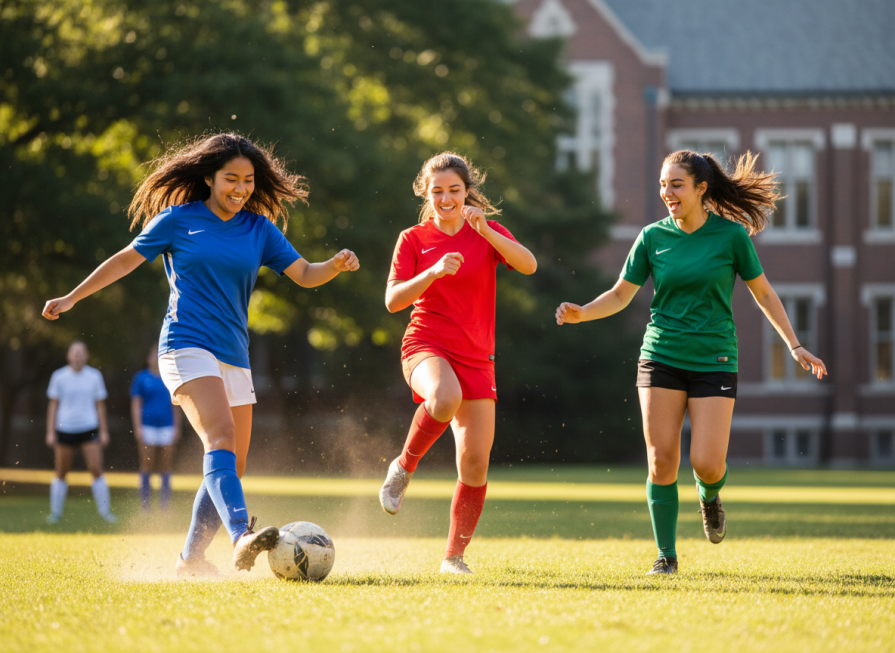
Traditionally, many boys’ and girls’ schools have had different sets of sports activities. In many boys’ schools — or historically male-dominated school programmes — team sports like rugby, cricket, football, and rowing have been central. Girls’ schools or girls’ programmes more often offered sports such as hockey, netball, tennis, and athletics, as well as individual-oriented activities.
In recent years in the UK, there has been growing pressure to equalize opportunities. Since 2023, according to governmental guidelines, schools are expected to offer the same sports access to girls and boys — aiming to ensure parity in physical education and extracurricular sport.
Many schools are adapting — for example, previously “boys-only” sports like football or rugby are increasingly available to girls, and girls are encouraged to try non-traditional or more physically demanding sports.


What Sports Are Usually Offered
In typical British secondary schools (or private boarding schools) — whether boys-only, girls-only, or co-educational — common sports include football, rugby, field hockey, netball, cricket, athletics, tennis, rowing, swimming, and sometimes newer activities like fitness classes or dance.
For example, at a school like The Leys School, boys often play rugby (in autumn), hockey (spring), then cricket, tennis, rowing in summer. For girls, typical sports include hockey, netball, tennis, cricket, rowing — with optional sports such as swimming, squash, indoor athletics, and more.
In many schools, sport is more than a hobby: there are dedicated high-performance programmes across dozens of sports, with professional coaching, gyms, swimming pools, tennis courts, rowing boats, etc.
How This Differs from "Regular" School Sport
Compared to state or standard schools, many private or boarding schools — boys’, girls’ or co-ed — put a much greater emphasis on sport: by offering extensive facilities, high-level coaching, frequent competitions, and in some cases, scholarships for promising athletes.
-
The sport programmes are broad, often with 20–30+ sports options (from mainstream team sports to less common disciplines like equestrian, shooting, rowing, etc.)
-
There is often a structured “games programme”: each term has “main sports” for boys and girls, with “summer, winter, spring” sports rotating — offering seasonal variety and steady training.
-
Competitions are not just internal (houses or classes) but include inter-school matches, regional and sometimes national tournaments — giving students experience closer to club or early-career sports.

Sports Scholarships in Schools
In many private UK schools, talented athletes can receive sports scholarships or bursaries — financial support that reduces fees or provides additional resources (coaching, facilities use, training programmes).
Such scholarships often cover either a percentage discount on tuition/boarding costs or a fixed reduction depending on sporting ability and potential. Alongside that, they can offer access to high-performance coaching, gyms/pools, strength & conditioning programmes, and support balancing academics with training.
Competition for these scholarships is usually high — especially in sports like rugby, football, swimming or athletics — and selection may require trials, coach recommendations, and demonstration of commitment and talent.
Who Is This School Sport System Good For?
Such a system suits children and adolescents who are serious about sport — those who train regularly, maybe already at competitive or club level. It provides them with structured training, good facilities, and balanced academic support, which can make it easier to combine school + sport + preparation for higher levels.
At the same time, because recent reforms push for equal access, girls increasingly get opportunities in traditionally male-dominated sports, making it more inclusive.
However — if you aim for professional sports, school sport might only be part of the journey. Success often depends on outside-school coaching, club involvement, and sacrifice beyond the school schedule. Schools with strong sport traditions and scholarships can be helpful stepping stones.
Examples of Notable Schools & Alumni
-
Millfield School (co-educational boarding school) — widely regarded as one of the best private schools for sports in the UK. It offers dozens of sports, professional coaching, and has produced many top-level athletes.
-
Gresham's School — offers a wide range: from rugby, cricket and hockey to squash, swimming, sailing, shooting, canoeing, and more. Among its alumni are Olympic medallists and international-level athletes.
-
Culford School — sports and activities at Culford include tennis and golf academies, rugby, hockey, cricket, athletics, swimming, equestrianism — and some former students became Olympic or national-level sportspersons.

These schools illustrate how “sport + education” models can nurture talent, providing opportunity not just for inter-school sport, but for long-term athletic development.
Challenges, Inequalities & Ongoing Change
Historically, sport in boys’ schools has been more intensive and higher-profile than in girls’ schools. Data show that girls in some schools spend less time on sport weekly than boys.
Moreover, stereotypes and social expectations have discouraged many girls from certain sports — especially those involving physical contact or perceived as “male” sports (e.g. rugby, football).
Recognizing this, many schools now aim to offer equal opportunities, and national policies encourage parity. Nonetheless, gaps remain: in participation, access to resources, societal attitudes, and post-school development.
Final Thoughts
Sports in boys’ and girls’ schools — especially in private or boarding schools — have a long tradition and often provide superior facilities, coaching and opportunities compared to many standard schools. For talented or motivated students, such environments can be excellent launchpads: they offer serious training, competition, and sometimes scholarships.
However, whether school sport alone is enough for a professional athletic career depends on many factors: outside-club training, commitment, external competition, and long-term support. The recent push for equality between boys and girls in school sports is a positive change — offering more diverse opportunities for all students.