Le Lycée Français Charles de Gaulle London





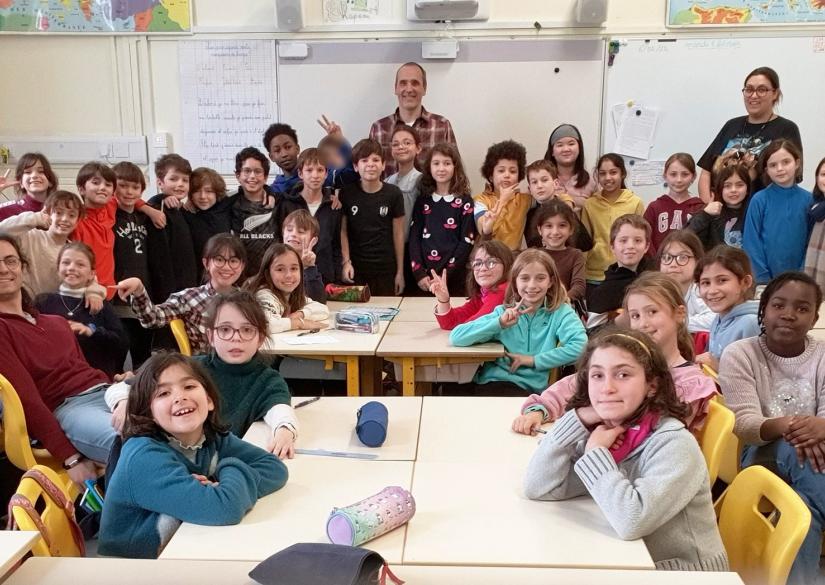
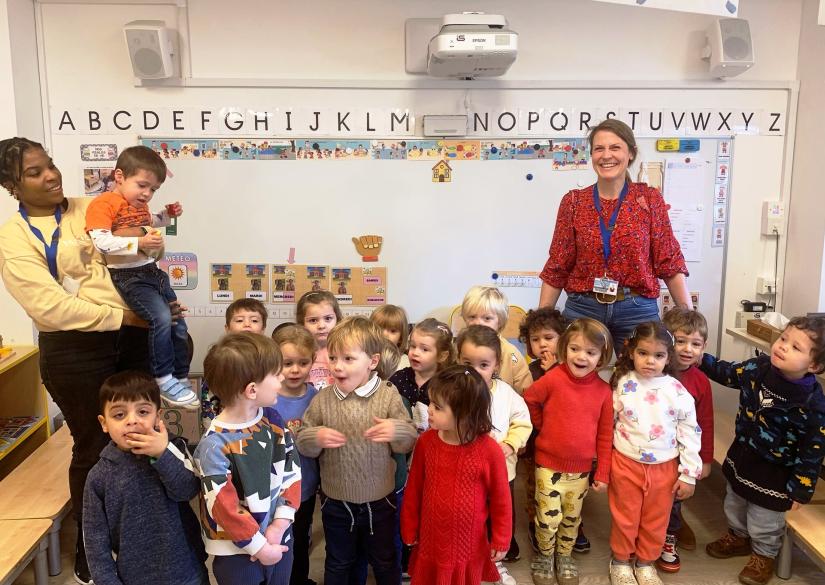
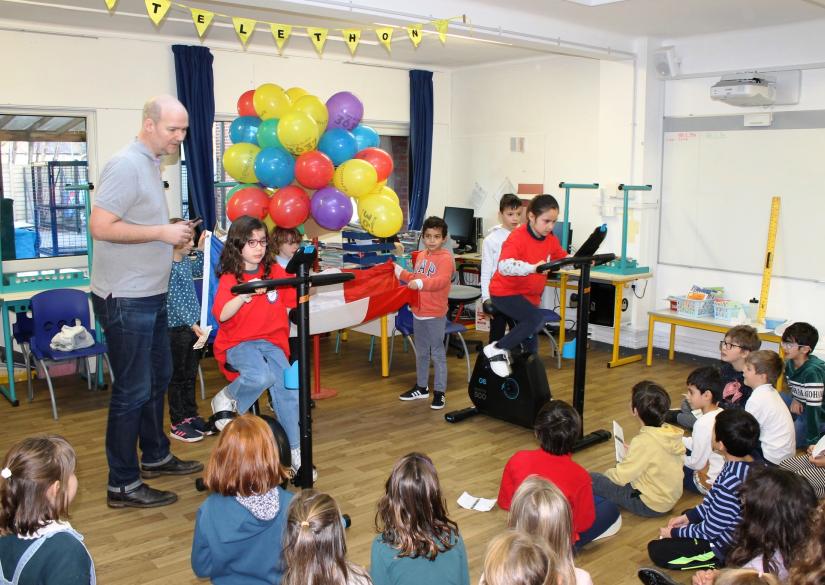


Programs and prices, tuition fees in Le Lycée Français Charles de Gaulle London


Crèche and Primary School
- Age – from 3 years old,
- The duration of study varies, the maximum period is up to the 6th grade.
Bilingualism, multiculturalism and quality teaching are at the heart of the curriculum. The international environment in which students are placed from kindergarten to sixth grade allows them to acquire linguistic and cognitive skills that are valuable for their personal development.
With classes that focus on listening, speaking, reading, and writing, children excel in mastering languages in a short time. Regardless of the native language of students and their families, educators support and offer an adapted program for each student to facilitate bilingual immersion.
Course 7/10 – Collège
- Age — from 13 years old,
- The duration of study varies, the maximum period is up to grade 10.
From the sixth grade (seventh year), students begin to study a second language (German, Spanish, Italian or Russian), in addition, students choose either to study a third language (German, Spanish or Arabic) or to deepen the second level with additional hours per week.
Approved by the French Ministry of Education, the international department is distinguished by an increased focus on teaching English and its culture, history and geography in English. This direction is suitable for students with a strong level of English proficiency who want to expand their knowledge of literature and civilization.
This educational stage leads to the DNB-I, which can be followed by the BFI (International Baccalaureate of France). At the end of the year, the tenth grade takes two IGCSE (English Language and Literature) exams.
Year 11/13 — Lycée
- Age — from 16 years old,
- The duration of study varies, with a maximum period of up to grade 13.
The multilingual section is a curriculum that allows students to cover a wide range of modern languages: German, Spanish, Italian, Russian and Arabic. After the eleventh grade, a student with a good level of English proficiency can take a foreign language exam at IGCSE.
Continuing their studies in the international department after Year 10, all students take two IGCSE exams: English Language and English Literature. If they continue their studies in the international department in grades 12-13, they receive a BFI (Baccalauréat Français International) degree.
British Section
- Age — from 15 years old,
- The duration of study varies, with a maximum period of up to grade 13.
In Year 10, students begin a two-year course that prepares them for GCSE or IGCSE exams. At the end of this class, they take the French as a Foreign Language exam for IGCSE, and the rest of the exams are taken at the end of Year 11 (including the French as a First Language exam for IGCSE). French and physical education classes are compulsory from grades 10 to 13.
In the 10th grade, ten subjects must be studied, in the 11th grade, their number can be reduced to nine. In Grade 10, the study of computer science is compulsory and then becomes elective in Grades 11, 12, and 13.
During the 12th and 13th grades, students prepare for A-Levels: they choose exams in four subjects, one of which must be French. Pupils take French at AS level at the end of Year Twelve and A-Levels at the end of Year 13.
Description of Le Lycée Français Charles de Gaulle London
- Location: London, England,
- Founded: 1915,
- Age of students: 3-18 years,
- Number of students: 3465,
- Language of instruction: English, French,
- Type of study: mixed,
- Programs: French curriculum, GCSE, A-Level.
Le Lycée Français Charles de Gaulle London is a French independent coeducational day school that accepts students from 3 to 18 years old.
The lycée consists of four primary schools (l'école de South Kensington sur le site principal, l'école André Malraux à Ealing, l'école Marie d'Orliac à Fulham, l'école de Wix à Clapham), a secondary school and a lycée. In the middle grades, there is also a British section for English-speaking students preparing for final exams and A-levels.
The Lycée is run by the Agency for the Teaching of French Abroad (AEFE), its curriculum is accredited by the French National Ministry of Education and supervised by the French Ministry of Foreign Affairs.
The system is home to an active alumni association, Les Anciens du Lycée Français Charles de Gaulle de Londres, which organizes annual events and supports a charitable foundation for current students. In the early summer of 2021, the EFE3D Level 3-Expert label (a higher education institution abroad in the field of sustainable development) made it possible to recognize the work of the committee and students in this direction and motivate them to achieve new perspectives in terms of sustainable development.
Educational process
At the Lycée Français Charles de Gaulle de Londres, the educational process is organized so that children are immediately immersed in the language environment and learn French and English throughout their school years. From the age of three, the curriculum includes intensive language lessons and informal conversational learning on the playground, in the cafeteria and during extracurricular activities.
Attention is paid to the development of multilingualism, where an additional foreign language becomes compulsory at the secondary level of education. This is achieved through special language classes and the study of other subjects in one of two languages: French or English.
In the secondary and upper secondary classes, a professeur principal coordinates communication among teachers, students, and parents. In the British Section, a Tutor fulfills this role. Parent-teacher meetings take place at the end of the first trimester. Families use Pronote to track results, absences, and school events.
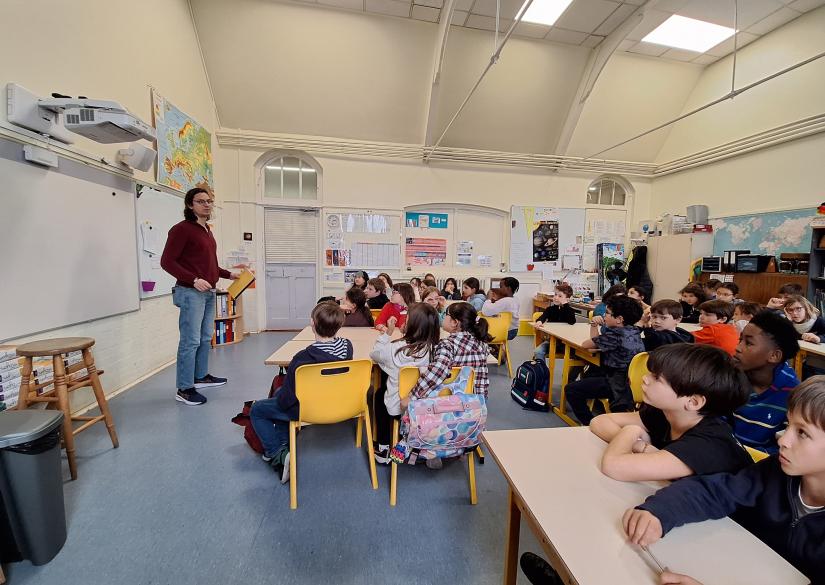
At André Malraux, French and English lessons are conducted in small groups, with instruction adapted to each child’s language proficiency. The school has eight French teachers and three English teachers. Parents of elementary students receive reports at the end of each trimester, while families of preschool children receive them at the end of each half-year.
South Kensington provides 26 hours of instruction per week. Children have three hours of English a week from the first preschool class through the first year of French elementary school. In subsequent elementary classes, three hours of English are supplemented by one hour in English devoted to topics from the French curriculum and personal and social development. Students explore history, geography, science, and physical education topics in English.
At Marie d’Orliac, Anglais Renforcé provides three hours of English a week from the first preschool class through the first year of French elementary school. In subsequent elementary classes, an additional hour is devoted to topics from the French curriculum in English. Wix follows the same weekly allocation from the final preschool class through the first year of elementary school, and at subsequent levels, respectively.
In the new International Classes at Marie d’Orliac and Wix, the French curriculum will be delivered in French and English, with equal time for each language. A French-speaking teacher will provide instruction in French, and an English-speaking teacher will provide instruction in English. Both will be employed by the Lycée. Classes will consist entirely of Lycée students. The approach provides for joint projects and close coordination between teachers. Reading instruction in both languages follows an age-appropriate progression: from preschool, children learn to distinguish sounds, recognize letters, and understand how syllables work.
In the International Classes at Marie d’Orliac, Mandarin instruction will gradually increase from one hour a week to two hours by the final year of French elementary school. At Wix, it will increase from one hour in the middle preschool class to two hours in the final elementary year.
Each class in the existing program The Fulham Bilingual has 28 children: 14 from Holy Cross Catholic Primary School and 14 from the Lycée. Two teachers, one French and one English, work closely together with the class.
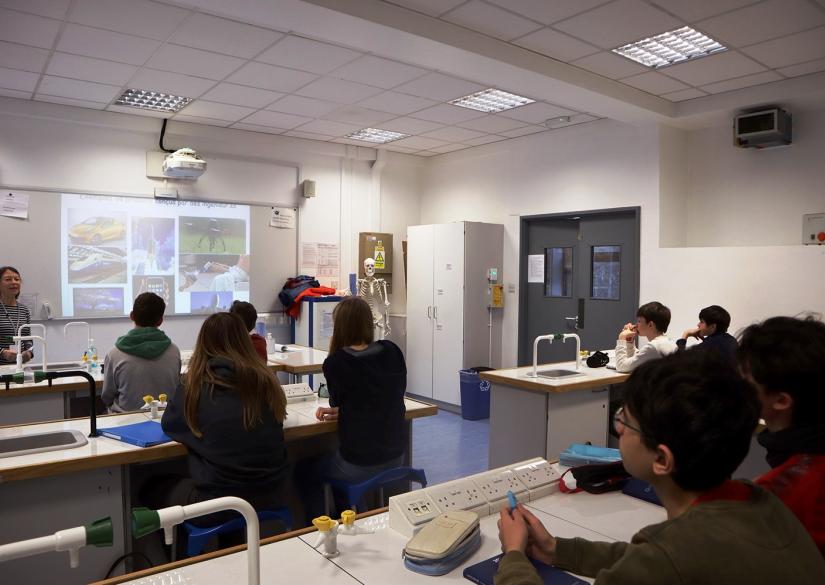
Secondary students have access to supervised independent study until 17:00. Atelier Sciences offers upper secondary students help with homework and working methods in biology and Earth sciences. Secondary students can attend additional support sessions over several weeks.
An individual medical action plan can be developed for a child with a chronic illness. When a student has learning difficulties, the school doctor and speech therapist can plan support with parents, teachers, and Heads of Year. The nurses and school doctor help students with physical or emotional concerns.
The school doctor examines children in the final preschool class and students in the final year of French lower secondary school. Vaccination records are checked during medical examinations at ages five and fourteen. The medical department works with the NHS to organize vaccination against human papillomavirus, diphtheria, tetanus, and polio for secondary students.
E-sidoc provides remote searches of the library database and access to subscription resources, digital libraries, dictionaries, encyclopedias, and learning guides. The Lycée also has a careers department (CIO).
Students help shape school life through elected representatives and councils for the secondary and upper secondary levels. Student and parent representatives take part in class councils. Primary school councils, which bring together administrators, teachers, and parents, meet at least once a trimester.
Faculties and colleges
The London campus consists of several divisions:
- Lycée Français Charles de Gaulle is a primary school located in South Kensington,
- André Malraux is a primary school for children from 3 to 10 years old,
- Lycée International de Londres Winston Churchill is an international school for children from 3 to 18 years old,
- Collège Français Bilingue de Londres is a French-English bilingual school for children from 3 to 15 years old.
- Ecole française de Londres Jacques Prévert is a French school for children from 3 to 18 years old.
At André Malraux Primary School, children learn French and English, mathematics, science, art and other subjects. At Lycée Français Charles de Gaulle, bilingual education continues and new disciplines are emerging: history, geography, music, sports and technology. At Lycée International de Londres Winston Churchill and Collège Français Bilingue de Londres, children can also study French, English and other subjects in one of these languages of their choice.
Things to know about
- Marie d'Orliac, who founded London’s French lycées, used the married name Bohn and led the girls’ school. Henri-Jacques Proumen led the boys’ school,
- The lycées closed in 1919 and reopened in 1920 in the buildings of the Institut Français. Thérèse Oakeshott led the girls’ school, while Emile Audra led the boys’ school. The institute and the lycées were formally inaugurated in 1921,
- In 1926, the boys’ and girls’ lycées merged into one mixed school. Thérèse Oakeshott became its sole director,
- In 1939, French President Albert Lebrun formally inaugurated the Institut Français in the United Kingdom and the Lycée in the presence of Princess Mary,
- The threat of bombing prompted the Lycée’s evacuation to Cambridge in 1939 and its move to the Lake District in Cumberland in 1940. Its London building became the headquarters of the Free French Air Forces,
- In 1942, 230 students were accommodated in Hallsteads, Rampsbeck, and Waterfoot, three houses on Ullswater. The Lycée reopened in South Kensington in 1945,
- Augustin Gaudin led the Lycée from 1948 to 1965,
- The British Section was established in 1952. Its 60th anniversary was celebrated in 2012 in the presence of Michael Gove, the UK’s education minister,
- Charles de Gaulle visited the Lycée in 1960, and the school was named after him in 1980,
- French presidents who visited the Lycée included Vincent Auriol in 1950, François Mitterrand in 1984, and Jacques Chirac in 1996,
- Wix opened in Clapham in 1993. The Ealing branch, later André Malraux, opened in 1995. Marie d'Orliac opened in Fulham in 2008,
- The Lycée celebrated its centenary in 2015 in the presence of Anne, Princess Royal,
- Students and teachers founded Justice au Cœur, which officially obtained charity status in 2018,
- Since 2018, student eco-delegates at the Lycée have organized activities to raise environmental awareness,
- In 2022, students in the penultimate year of upper secondary school relaunched the newspaper Le Rond-Point,
- The school board has 33 members: representatives of teachers, parents, and students, senior management, a representative of the French embassy, and the consul general. It meets five to six times a year and has an advisory role. Executive decisions are made by the leadership team and AEFE.
University destinations
Graduates continue their education at institutions including:
- United Kingdom: Oxford, Cambridge, Imperial College, King’s College, London School of Economics,
- France: HEC, Sciences Po, Polytechnique, Henri IV,
- Canada: McGill,
- United States: Columbia, Yale, and Harvard.
Accommodation, meals, prices
Accommodation at Lycée Français Charles de Gaulle de Londres is possible with host families or student residences.
Students can sign up for an annual pass that allows them to visit the school restaurant five days a week. The menu is designed and regularly updated by the chef, all food is prepared directly on the spot from fresh products, the dishes are balanced and varied: salads, soups, vegetables, meat, fish, vegetarian dishes, dairy products, fruits, pastries and desserts.
The school cafeteria operates on a self-service basis. Students use a personal magnetic card that remains valid throughout their time at the Lycée. Lunch is optional for secondary and upper secondary students.
School meals are compulsory Monday through Friday at André Malraux and South Kensington. They are also compulsory at Marie d’Orliac, although children may be collected before lunch on Wednesdays. At Wix, parents can choose school meals or a packed lunch from home.
André Malraux serves lunch in three sittings. Preschool children are served at the table under staff supervision, while other students choose their own dishes. At South Kensington, preschool children and students in the first elementary year eat in a separate dining room with table service and supervision. Older elementary students use the large self-service cafeteria.
Meals for children with food allergies or intolerances are arranged through an individual medical action plan (PAI) and a medical certificate. At André Malraux and South Kensington, this plan may allow a packed lunch from home.
Activities Le Lycée Français Charles de Gaulle London
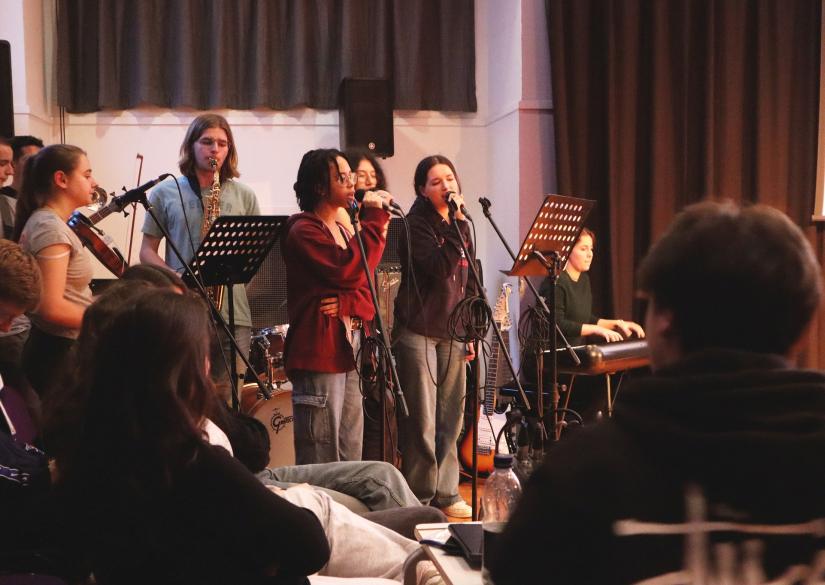
In extracurricular life, children have access to many activities that will allow them to develop their talents and exchange experiences with each other. Among the events are artistic, sports, charitable, environmental events, each of the events is accompanied and encouraged by a team of teachers. Students can develop their interests in areas such as sports, theater, cinema, visual arts, music, journalism, programming.
The school offers 27 clubs and activities. The Lycée organizes educational outings, excursions, and international school trips.
The sports association offers recreational and competitive activities:
- Track and field,
- Badminton,
- Gymnastics,
- Table tennis,
- Basketball,
- Soccer,
- Handball,
- Kinball,
- Volleyball.
Clubs and creative activities include:
- Les Passeurs d’Histoires: reading, discovering authors, and creative writing. Up to 10 participants,
- Justice au Cœur: conferences, meetings, a Christmas bazaar, charity sales, and food collections. About 30 upper secondary students a year,
- Environmental club: team projects to reduce the Lycée’s carbon footprint. Up to 30 participants,
- Duke of Edinburgh’s Award: offered annually from the final year of French lower secondary school, with a commitment for the full academic year,
- Atelier Instrumental: group music projects for instrumentalists and singers with a minimum level of 3 or 4, and performances at school events,
- School choir: about 100 secondary and upper secondary students. Concerts at the Lycée and Cadogan Hall with a classical orchestra and students taking the music option in their final year,
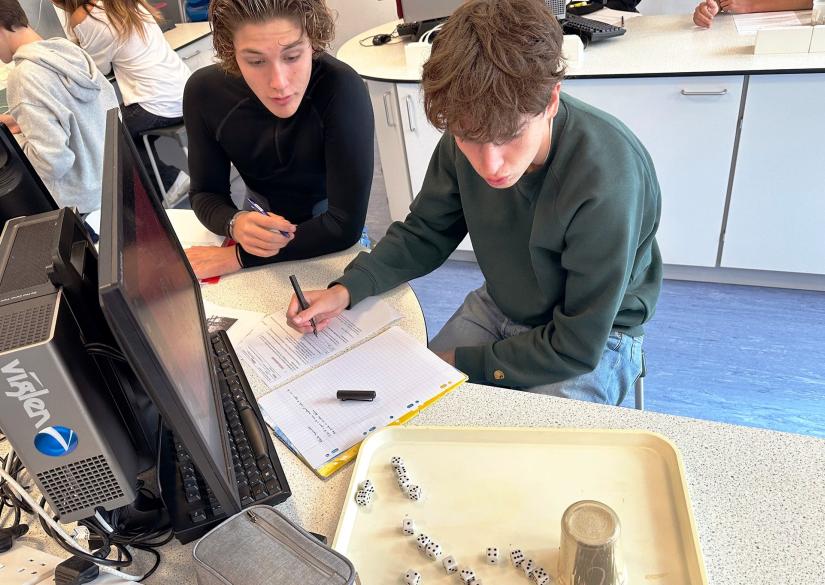
- Maths Club: puzzles, logic, and problems outside the curriculum. Up to 40 participants. The club supports SAMI, an association promoting mathematics education in African countries,
- Club Techno: making objects, programming, robotics, soldering, electronic circuits, and an introduction to 3D printing. Up to 10 participants,
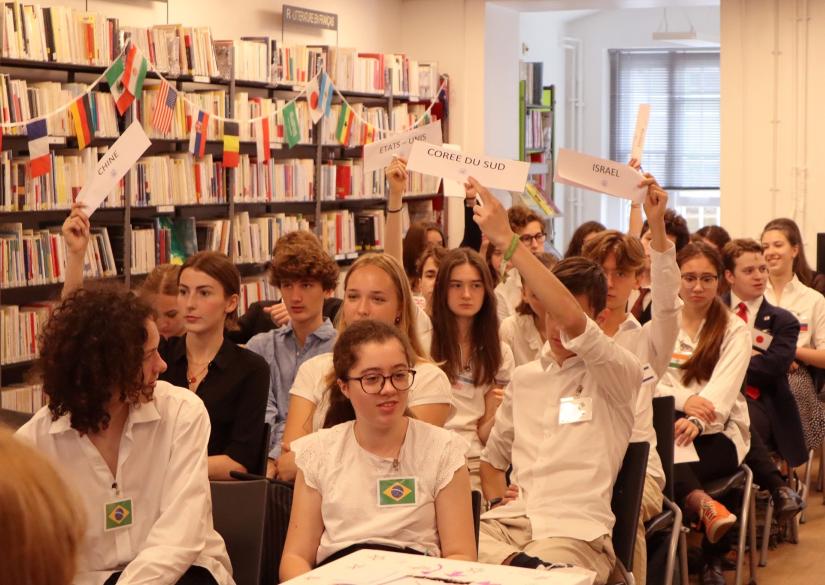
- History and geography club: book awards, discussions of international news, and preparation for Model United Nations. Up to 15 students in the final two years of upper secondary school,
- Atelier Origami: origami, kirigami, paper cutting, and collage. Up to 7 participants,
- Street Dance: beginner and advanced street dance, including hip-hop, breaking, and locking. Up to 20 participants,
- Club MUN: preparation for a Model United Nations simulation in Geneva and a report on participation. Up to 12 students,
- Le Rond-Point editorial team: opportunities to work as journalists, illustrators, and layout designers. Up to 20 participants,
- Chess club: sessions for beginners and experienced players, rules, openings, strategies, and internal and external tournaments. Up to 30 participants,
- Web Radio: radio techniques and the creation of podcasts, segments, and shows, open from the penultimate year of French lower secondary school. Up to 15 participants,
- Atelier Sciences: preparation for CGénial, biology and geology Olympiads, selection for the international biology Olympiad, and Concours Général de SVT. Up to 12 participants,
- Ingénierie éco-responsable: research and experiments to combat global warming,
- Creative writing club: developing writing skills and discussing students’ own work. Up to 15 participants,
- Debate Club: spoken English, debating, public speaking, logic, and analysis. Up to 15 students from the English and French sections,
- Theater workshop: script analysis, character development, voice work, use of stage space, and working with a troupe. Up to 15 participants,
- Jeunes reporters international: journalism, interviews, photography, filming, editing, and work in the web radio studio. Up to 30 participants,
- Philosophy club: teacher-guided discussions of topics proposed by students. Up to 20 participants,
- Club Science en fête: physics and chemistry experiments for students in the final two years of French lower secondary school. Up to 10 participants,
- Stamp collecting club: exploring stamps in their historical, geographical, cultural, and artistic contexts. Up to 15 participants,
- Atelier Art de plier et du papier: paper folding and cutting. Up to 10 participants,
- Celtic Folk Club: Celtic flute tunes and performances at school events. Up to 10 participants,
- Preparation for ancient Greek and Latin translation competitions, including Concours Général and Cicero. Up to 6 participants,
- Art & Crafts Club: crafts and making objects. Up to 50 participants,
- Songwriting Club: individual and group practical sessions on writing song lyrics. Up to 12 participants.
In Atelier Sciences, students observe the environment in collaboration with France’s Muséum national d’Histoire naturelle. The workshop offers a 4.6 km geological walk exploring 4.6 billion years of Earth’s history. Lycée teachers and students have volunteered at mathematics camps in Kenya, Ghana, Tanzania, and Ethiopia.
At the primary schools, extracurricular activities take place on school premises after lessons. At André Malraux, the parents’ association organizes judo, soccer, rugby, dance, art, and drama in French and English. Children swim at a local pool and sing in a choir that performs for parents at Christmas and at the end of the academic year.
At Marie d’Orliac, extracurricular activities are associated with Les ateliers de Fulham, at South Kensington, with Loisirs à l’école, and at Wix, with Wix Loisirs. Visiting specialists at Wix lead music, art, judo, and rugby sessions. The school choir performs for parents at Christmas and at the end of the academic year.
Advantages
- Bilingual education: French and English,
- Preparation for admission to prestigious universities in the world,
- Individual approach to each student,
- Close cooperation with other French schools and universities,
- Opportunity to participate in international Olympiads, competitions and exchanges,
- Ofsted rated the school “Good” overall in its 2024 inspection,
- The quality of education and early years provision were rated “Outstanding” in the 2024 Ofsted inspection.
Facilities and equipment at Le Lycée Français Charles de Gaulle London
There is a medical service on the territory of the lyceum: the medical team consists of a school doctor, a speech therapist and two nurses.
The CDI Center is designed for extracurricular activities, reading, and information culture education, and is open to students and staff on weekdays. At CDI, students can afford:
- Fiction books (novels, poetry collections, plays, comics), non-fiction works, dictionaries and encyclopedias,
- School textbooks that you can work with on the spot,
- Periodicals (general and specialized journals),
- Professions and Training Documents (ONISEP),
- Educational and administrative documentation,
- DVDs,
- 18 open access computers,
- 6 printers and a color copier,
- Two computer rooms, one of which is equipped with a video projector and TBI,
- Wi-Fi access,
- iPads.
The primary and secondary schools in South Kensington share a site. The primary school occupies the Victor Hugo building near the underground station, with bus services nearby. The medical center helps children with injuries and illnesses that occur during school hours.
The André Malraux campus in Ealing consists of two single-story buildings. It has three playgrounds, a parents’ courtyard, and green spaces. Students can borrow French and English books from the BCD library. Ealing is about 20 minutes from central London by underground.
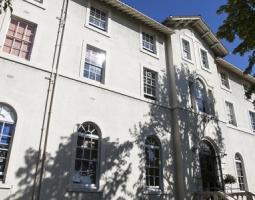
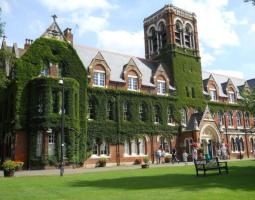
Marie d’Orliac occupies an early 20th-century Victorian building in Parsons Green, Fulham, opposite South Park. Wix is located in Clapham, south of the River Thames, and shares a large Victorian building with Belleville Wix Academy. The school is about a ten-minute walk from Clapham Common underground station. Wix also has a BCD school library.
The Lycée acquired sports fields at Raynes Park in 1967.
Admission dates and extra charges
The academic year at the lyceum lasts from September to July, the exact dates of the trimesters vary. Holidays for children are timed to coincide with holidays or seasons of the year and can also change specific dates. Approximate holiday seasons:
- All Saints' Day (autumn),
- Winter holidays,
- Spring break.
Additional costs at Lycée Français Charles de Gaulle de Londres:
- Registration fees and entrance exams,
- Textbooks and teaching materials,
- Meals and accommodation,
- Transport and medical insurance,
- Additional classes and electives,
- Excursions and cultural events,
- Personal expenses (clothes, shoes, hygiene products, etc.),
- Annual re-registration for current students,
- Replacement of a lost, stolen, or damaged meal card,
- Paid morning care at South Kensington and after-school care at André Malraux.
Meal prices are set for each academic year.
The Fulham Bilingual follows its own academic calendar, which differs from the French one.
André Malraux has a 26-hour school week. Morning arrival is staggered between 8:30 and 8:40, depending on the class, and the regular school day ends between 15:30 and 15:40. On Wednesdays, classes finish after lunch between 13:10 and 13:20. Aktiva after-school care is available until 18:00.
At Marie d’Orliac, preschool classes run from 8:25 to 15:10 on Mondays, Tuesdays, Thursdays, and Fridays. Elementary classes finish at 15:20. Gates open at 8:15. On Wednesdays, preschool finishes at 13:00 and elementary school at 13:15. Children not having lunch may leave at 11:30. Morning care provided by Les Ateliers de Fulham begins at 7:45.
South Kensington offers morning care from 8:00 to 8:45. Lunch breaks last one hour and are staggered between 11:25 and 13:05, depending on the class. Morning care at Wix and André Malraux begins at 7:30. Wix gates open at 8:30.
Atelier Instrumental meets on Tuesdays from 11:50 to 12:45 or 12:50 to 13:45. The choir meets on Wednesdays from 12:00 to 12:45 and 13:00 to 13:45. Club Science en fête meets on Wednesdays from 12:00 to 12:45.
Enrolment process
Pre-registration takes place only online after the start of the admission campaign. After completing the application, applicants must wait for confirmation from the admissions office whether they are eligible for a place at one of the schools. If the child meets all the requirements, then the parents need to send online all the documents specified in the invitation letter, in addition, to complete the registration, it is necessary to pay a non-refundable registration fee.
The main condition is that you can accept the offer of the admission committee only within the period specified in the invitation, otherwise it will be considered a refusal, and the place will be offered to another student.
An enrollment committee reviews all applications to the French curriculum. Priority goes first to students from schools in the AEFE network, then to those from schools in France, followed by applicants from other education systems. Nationality alone provides no advantage. In the general admissions process, academic achievements and the reputation of the previous school confer no preference, and the order in which applications arrive is not considered.
Borderline cases involving an internal transition from GCSE are assessed individually.
Open days take place regularly at the primary schools and the secondary and upper secondary site. Applications during the school year, including those prompted by a family relocation, are considered separately.
Enrolment statistics
The Lycée admits more than 550 new students each year but cannot accept every application. Admission to the French curriculum depends on available places and priority criteria.
South Kensington is the most requested primary school. Marie d’Orliac in Fulham and Wix in Clapham are also in high demand. André Malraux usually has more places available, particularly in the first year of French elementary school.
Perspectives
After graduating from the Lycée Français Charles de Gaulle de Londres, students will be able to enter the most prestigious universities in the world, including universities in Europe, the United States and Canada.
Other post-graduation prospects include:
- Successful employment in international companies or work in overseas representative offices in the UK,
- Developing intercultural communication skills, which is useful in professional and personal life,
- Broaden your horizons and get to know different cultures and languages.
During their studies, students can also take advantage of an individual support program that offers workshops to prepare for interviews, presentations and argumentation. Students will receive specific advice on writing a personal statement (UCAS), in addition, upon request, teachers organize education on interviews with specialists. Students wishing to apply to selected institutions (including Oxford and Cambridge) have the opportunity to receive extended support if needed.
Graduates achieved the following results in 2026:
| Exam | Pass rate | High grades |
|---|---|---|
| Brevet — the French lower secondary examination | 100% | 71.6% with honors “Très Bien” |
| Baccalauréat — the French upper secondary graduation examination | 100% | 62.20% with honors “Très Bien” |
| GCSE/IGCSE | 93.1% | 66.5% of grades at A, A*, or 7–9 |
| A-Level | 100% | 73.9% of grades at A*, A, or B |
In 2025, 100% of graduates passed the Baccalauréat in the first round of examinations. The proportion of results with honors reached 98%. Of these, 69% were awarded “Très Bien.” Of those awards, 26% also received Félicitations du Jury. The 2025 Brevet first-round pass rate also reached 100%, with 82% of successful candidates receiving “Très Bien.”
Entry requirements, how to apply, what is required to enrol
For admission to the International Branch (SI) from French sixth grade (British Year 7), an entrance test must be passed: CM2 (British Year 6) students who wish to enter SI take an English language test in the spring. During the fourth cycle (French fifth, fourth and third grades, corresponding to British Years 8, 9 and 10), it is not possible to enrol in the International Department unless the student enters from the British or American International Department of the ASIBA Sister School, institutions from the partnership of the French Ministry of Education, or after passing the Cambridge International Examinations.
Applicants must have the knowledge required for the appropriate class in the French curriculum. French-speaking candidates from other education systems take French and mathematics tests to determine their class placement. To enter the first preschool class, a child must turn three during the calendar year in which attendance begins.
The British Section accepts current Lycée students and external applicants from French or English schools. Selection assesses motivation, interest in the British education system, and language proficiency. Candidates need a very good command of spoken and written French and English. External applicants do not have to be bilingual: they must demonstrate good French and a desire to continue learning it. Their proficiency is assessed at interview.
Entry to British Year 10 involves a written commentary on a fiction or nonfiction text in English and a language interview exploring the candidate’s motivation and plans.
The following academic requirements apply to entry to A-Level:
- External candidates: at least grade 9 in French GCSE, grade 6 in five GCSE disciplines, and grade 7 in those chosen for A-Level,
- Candidates from the Lycée’s French section: at least grade B in IGCSE English Language,
- British Section students making the transition from GCSE: at least grade 6 in five GCSE disciplines and grade 7 in those chosen for A-Level,
- Economics for students making the internal transition from GCSE: at least grade 7 in Mathematics and English,
- History of Art for students making the internal transition from GCSE: at least grade 7 in English or History,
- Government & Politics for students making the internal transition from GCSE: at least grade 7 in English, History, or Geography.
External A-Level candidates complete individual written assessments in two chosen disciplines. Candidates from the French section attend an interview and may also complete a written assessment in mathematics or English, depending on their choices and English proficiency.
A-Level offers are confirmed after GCSE results are available, provided the entry requirements have been met. From the first year of French elementary school, a transition from Anglais Renforcé to International Classes requires favorable recommendations from both the French and English teachers and approval from the school principal.
Scholarships Le Lycée Français Charles de Gaulle London
Each year, the French national education ministry funds mobility scholarships for a year at French schools abroad, including this Lycée. Candidates include students in the first two years of French upper secondary school. A scholarship entitles its recipient to attend the Lycée for one academic year.
Institution on the map
Residence permits, citizenship and other services
- Guardianship services during the studies
- Student supervision
Review about Le Lycée Français Charles de Gaulle London
Recommendations on when to apply
| Language courses, schools and children's language camps | Primary and secondary education - private schools | Preparation programmes for entering universities - higher education | Higher education (after completing accredited programs A-level, IB, High School) - Bachelor, Master, MBA |
| - we recommend to apply 6-9 months before the start of the course (some camps and schools offer discounts for early booking or for lengthy study programs) - there are some very popular and high demand children's camps, where the applications need to be submitted 1 year in advance (in particular Switzerland , Great Britain , USA , Canada , Austria) | - we recommend to apply one year before the start of the training program, - some schools have a specific time frame (September-November - please specify an individual school) - some schools require tests in several stages (UKISET, internal tests of the school: English, mathematics, logics, subjects, interview, some require a personal visit) | - we recommend to apply one year before the start of the program, - for Foundation and Pathway programs, IELTS and TOEFL certificates are usually required, respectively | - recommended submission one year before the start of the program, - the deadline normally closes in January, for TOP HEIs and, as a rule, in March in other universities - for a bachelor, a Foundation or Pathway preparatory program a completed A-level, IB, High School + IELTS / TOEFL are required - for Masters you need a graduated higher education, in some cases you need a pre-Masters program - MBA requires completed higher education, work experience preferably at least 2-3 years, etc. |