Lycée Blanche de Castille Public School







Programs and prices, tuition fees in Lycée Blanche de Castille Public School


High school
- Age of students — from 15 to 18 years,
- The studying period is three years.
The high school stage, covering grades 10-12, offers students an extensive list of subjects for basic and optional education. In the 10th grade, students study a common curriculum for all, including natural sciences, humanities and exact sciences, and in the 11th grade they choose an individual specialization:
- Mathematics,
- Physics or Chemistry,
- Biology,
- Economic and social sciences,
- Humanities to choose from: History, Geography,
- Geopolitics and Political Sciences,
- Humanities, literature and philosophy,
- Digital,
- Computer Science,
- Foreign languages, literature, English.
In addition to the chosen scientific field, students can add electives, including:
- English, German, Italian,
- Latin,
- Classical Greek,
- French as a foreign language,
- British International Section,
- Laboratory Sciences,
- Advanced mathematics,
- Law, the main problems of the modern world,
- Languages and cultures of antiquity: Latin, Greek,
- Third foreign language: Italian or Mandarin.
International students do not attend private lessons with a tutor — they are assigned only to French students applying for a national graduation diploma.
Description of Lycée Blanche de Castille Public School
- Location: Nantes, France,
- Founded: 1627,
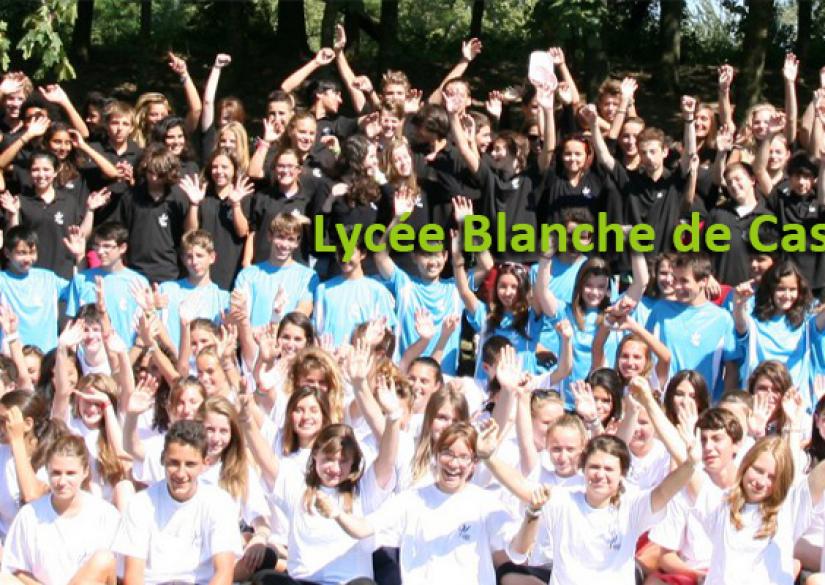
- Number of students: about 2000 across the school complex,
- Language of instruction: French,
- Type of studying: mixed,
- Programs: preschool, elementary and secondary education, preparatory classes for Grandes Ecoles.
Lycée Blanche de Castille is the senior secondary education school in France, which is taught according to the French national curriculum.
The high school is part of the private Catholic Blanche de Castille school complex in Nantes, founded in 1627. Around 2000 pupils and students attend the complex, which brings together preschool, elementary and middle schools, a high school, and preparatory classes for Grandes Ecoles. The middle school has around 850 students in 25 classes, while the general high school has 600 students in 18 classes.
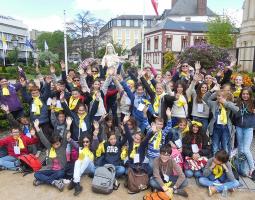
Lycée Blanche de Castille features an extensive campus, qualified staff, and diverse academic facilities. High school students intensively prepare for admission to bachelor's degree programs in France, receiving the support of teachers and mentors in groups and individually. In addition to a rich curriculum, students can expect engaging in extracurricular activities, thanks to which they will be able to develop their strengths, be it sports endeavors or creative potential.
High school students can prepare for the French general baccalaureate or its European section option.
Admission is available to both local and international students. Despite the rather serious competition, an average of four new foreign students arrive at the Lycée Blanche de Castille campus every year. Thanks to the care of the teaching and administrative staff, foreign students receive comprehensive support, adapt faster to the new education system and customs of the country, and complete the curriculum more effectively.
Educational process
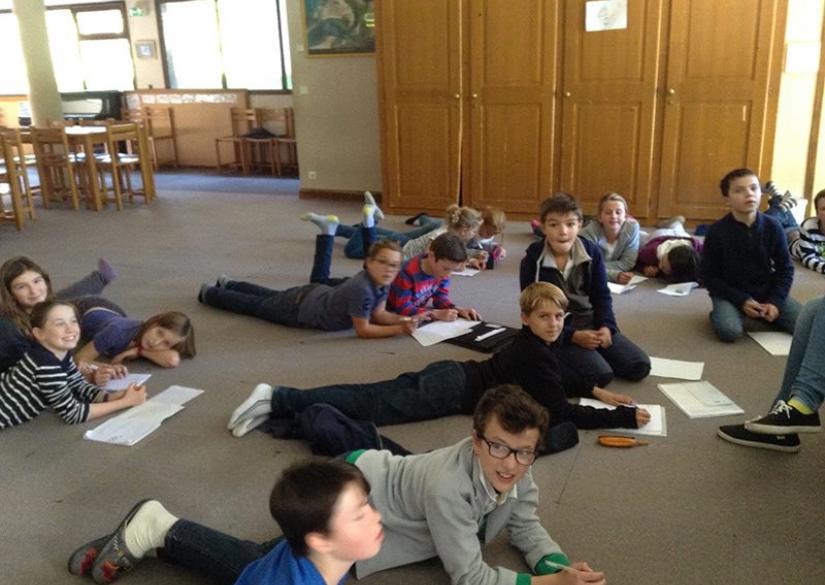
The school day of students has a clear schedule, includes a certain time for getting up and going to bed, attending academic classes and extracurricular circles, free hours. The schedule includes breakfasts, lunches and dinners in the dining room, hours of self-study under the supervision of a teacher.
The educational approach centers on service, expressed in SERVIAM, and cooperation, expressed in INSIEME. Two priest chaplains provide spiritual support in the elementary and secondary schools. Students through grade 10 are offered one hour of spiritual education each week, with respect for their personal beliefs. From elementary school through the second year of middle school, students can choose catechism or an introduction to Christian culture. From then through grade 10, sessions explore faith, humanity, and understanding the world. In grades 11–12, guest specialists lead discussions on ethics, spirituality, and social issues every two weeks.
The preschool uses Montessori methods: children progress at their own pace through hands-on activities and experiments. English begins in the youngest preschool group through songs, games, and activities with an English assistant. The play-based Knock-Knock method supports further development. Elementary classes exchange letters and take part in joint English activities with middle and high school students. Reading instruction uses the Alphas method, while mathematics follows the Singapore approach with hands-on models. Preschoolers play with older children and join sports activities organized by middle school teachers.
First-year middle school students take part in an orientation day involving sports, culture, and music. Their homeroom teacher introduces them to the school during the first week. Career guidance continues throughout middle school: students explore career groups at the end of their third year and receive help choosing a high school direction in their final year. Optional extra laboratory sessions run for 1.5–2 hours a week in groups of 25 students from each year. Cyclo-show and mission XY are offered to all second-year students.
The resource center helps middle and high school students with specific learning disorders, ADHD, and autism spectrum disorders. Small-group sessions with dedicated teaching assistants are available. In elementary school, a specialist teacher works with the class or separately with small groups.
The elementary and middle school ULIS support programs can each accommodate around 15 children with disabilities. The current middle school group has 12 students with cognitive impairments. They attend some lessons with a mainstream reference class and receive separate support in core disciplines and general skills. A specialist teacher develops an individual education plan with the family, outside professionals, and school staff. An assistant helps students understand instructions, take notes, and organize their work, both in class and elsewhere at school. Elementary ULIS uses small groups and individualized teaching for children supported by MDPH.
A medical diagnosis may lead to an individual PAP support plan. Some students supported by MDPH receive individual or shared assistance from an AESH appointed by the education authority. The school arranges approved exam accommodations.
After school, Parkours pairs a student tutor with a group of 3–5 middle or high school students for 1.5 hours. Sessions involve homework, preparation for assessments, and the development of effective working methods and organizational skills. After each session, parents receive a text message listing the exercises completed and work still to do. A coordinator supervises the sessions each evening. Foreign students with little or no French can receive help in small working groups, individual support, and intensive language immersion.
High school students have access to individual meetings, supervised preparation sessions, mathematics support, and regular common assessments. Since 2021, the region has provided each grade 10 student with a computer at the start of the school year. The number of electives is limited. Students choose three specialization disciplines in grade 11 and retain two in grade 12. Fellow high school students can also serve as tutors.
The BDI documentation and information office helps students choose further education, careers, and qualifications. Career guidance involves exploring specializations and professional sectors, mandatory internships, individual meetings, and discussions with professionals. In grade 12, the homeroom teacher provides individual guidance. Education fairs and optional workshops on interview preparation and resume writing are available. Grade 11–12 students are offered Saturday morning preparation for higher education, including literary and economic preparatory classes, Sciences Po, and universities. Individual guidance is available for plans to study abroad and improve language skills.
French and foreign students learn together in the British international section. In the middle school's English-language option, part of history and geography, as well as selected physical education, mathematics, physics, and biology classes, are conducted in English. The Spanish-language option develops language skills through history, geography, and Hispanic culture. Seven teachers provide physical education at the school.
The CPGE preparatory classes for Grandes Ecoles offer 1.5 hours of mathematics support, primarily for students without a mathematics specialization. Students can work independently or in groups at school every evening until 21:00. Oral assessments take place weekly, with two mock competitive exams each year. Second-year students provide mentoring, and students help one another in pairs and groups of three. The program lasts two years. Except in certain cases, transition to the second year does not require an exam. Students receive 60 ECTS credits after the first year and 120 after the second. At the end of each year, they can obtain confirmation of completed work in their chosen disciplines.
CPGE students can register concurrently at Université de Nantes without attending additional classes. This provides access to university dining facilities, libraries, SUAPS sports activities, and academic credit for completed education. Girls boarding while in high school must complete two hours of independent preparation each day. Female preparatory-class students organize their own day. Students using the day boarding option also complete two hours of independent preparation daily, can use the shared facilities until 21:00, and take part in events.
Individual Erasmus+ mobility is intended for grade 10 and is open to current students and those preregistered for high school. A school committee assesses applications on a 40-point scale. During exchanges, students attend a partner school and stay with a host family. One Spanish partner accommodates them in its residence, including weekends. A Blanche de Castille employee or teacher accompanies them on both the outward and return journeys.
Exchange partners include St Joseph of Cluny in Killiney, Ursuline Secondary School in Thurles, St Angelas College Cork in Cork, and Rice College in Westport. In Spain, partners are Los Sauces in Pontevedra and Colegio Cristo Rey in Jaén. In Germany, the partner is St.-Ursula-Gymnasium Schloss Hohenburg in Lenggries, Bavaria. Each year, some high school students take Cambridge English Qualifications exams to assess their level against the CEFR scale.
Practical projects have involved third-year middle school students designing and building cars for a final race, and elementary pupils making paper from natural fibers, incorporating plants and natural pigments. In a grade 10 Arduino activity, students calibrated a thermistor, assembled a circuit, and wrote a program to measure water temperature. An optional intensive preparation course for second-year B/L students brought together 17 participants for revision, work on effective preparation methods and mental management, and spoken English practice.
Faculties and colleges
The academic system of schools in France consists of several departments: primary, secondary and high. The senior department, called The Lycée, covers classes 10-12 and completes the school stage.
The elementary division of Blanche de Castille brings together preschool groups and elementary classes through the final year. Spanish is offered from the penultimate elementary year, with an introduction to German in the final year.
Middle school electives are French and the culture of antiquity, and Latin and ancient civilizations. Students can begin a second foreign language, German or Spanish, in addition to English in their first year. Advanced English options are anglais + in the first year and LCE anglais from the second year. LCE espagnol also begins in the second year and is open to students taking Spanish as either their first or second foreign language.
The middle school's British international section operates within the French education system under the guidance of Université de Cambridge. It is available from the first year and prepares students for the international option of the middle school diploma, DNBI. International preparation involves British literature, advanced language and cultural education, and connaissance du monde. History and geography are adapted to the section.
The high school offers the following specializations:
- Mathematics,
- Physics and chemistry,
- Life and earth sciences,
- Economics and social sciences,
- History, geography, geopolitics, and political science,
- Humanities, literature, and philosophy,
- Foreign languages, literature, and cultures: LLCE Anglais monde contemporain.
Electives are laboratory science, Latin, Greek, Chinese, and Italian. Mathematics, physics, biology, and history can be studied in English through DNL, the teaching of non-language disciplines. Droit et grands enjeux du monde contemporain is a three-hour elective. Grade 12 offers two three-hour mathematics courses: Mathématiques expertes for students retaining their mathematics specialization, and Mathématiques complémentaires for those who have dropped it.
The high school's British international section prepares students for the Baccalauréat Français International, BFI, at the end of grade 12. The French-Spanish Bachibac program begins in grade 10: Spanish language and literature, history, and geography account for seven hours a week in grade 10 and eight hours in grades 11–12. It leads to a binational diploma that provides access to higher education in Spain and France.
EURO + adds one hour of English to the timetable, with most history and geography conducted in English. There is one class per year group. EURO offers an extra hour of English and one hour of a non-language discipline in English.
Preparation for the first year of medical higher education is available from grade 11 or 12 in partnership with MEDISUP. Sessions introduce first-year material, multiple-choice questions, and effective working methods.
After high school, students can enter the Hypokhâgne – Khâgne BL preparatory program. It combines literature, mathematics, philosophy, history, foreign languages, and social sciences, including economics, sociology, and anthropology. Literature ranges from the Renaissance to the present, with references to classical heritage. Mathematics is divided equally among analysis, linear algebra, and probability. History explores France and the world from 1870 to the present. Philosophy involves epistemology, ethics, politics, the philosophy of art and technology, and metaphysics.
English is the main foreign language in B/L, with an option to prepare for ENS competitive entrance exams. The English-language course explores British and American political and legal history from 1800 to the present, with translation-based preparation for ENS and business school exams. Spanish or German can be taken as a second language. Chinese and Italian are available by agreement. Culture et Christianisme is a one-hour elective.
Things to know about
- The school complex has 70 classes,
- Since 2017, goats have helped maintain some of the campus green spaces through grazing,
- A local company turns organic waste from school meals into compost,
- The EURO + section is offered exclusively at Blanche de Castille,
- The Serviam school sports association was founded in 1947.
University destinations
In 2025, B/L preparatory students received admission offers and continued their education at the following institutions and programs:
- ENSAI: two students admitted, one to the engineering program and one to preparation for an INSEE administrator role,
- ENSC: three students admitted, all three continued their education there,
- EDHEC: two students admitted, both continued their education there,
- EM Lyon: one student admitted,
- SKEMA: one student admitted, who continued their education there,
- NEOMA: four students admitted, all four continued their education there,
- AUDENCIA: six students admitted, one continued their education there,
- GEM: one student admitted,
- KEDGE: two students admitted, both continued their education there,
- ISIT, Institut Supérieur d’Interprétation: one student continued their education there,
- ISMaPP, Institut Supérieur de Management Public et Politique: one student continued their education there,
- IPAG, Institut de Préparation à l’Administration Générale: one student continued their education there,
- Sciences Po Lyon: one student admitted,
- Toulouse School of Economics: one student admitted.
Accommodation, meals, prices
The Lycée Blanche de Castille residence, which is open on weekdays, accommodates only girls: 90 beds are prepared for them, located in single or double rooms. Bathrooms can be either private or shared, depending on the room type you choose. When staying at the residence, all girls receive three meals a day: breakfast, lunch and dinner according to a balanced menu, visiting the dining room, they can choose dishes from an extensive list, buy additional snacks and drinks. On all days when the campus is closed, the girls are placed with host families.
Boys stay with host families throughout the school week, on weekends and holidays, and during the vacations. The families' homes are relatively close to the school grounds, and students can easily get to and from classes. Members of the host family provide support in the process of adapting to a new country for students, and help them improve their French language proficiency.
Subjects and sports
Activities Lycée Blanche de Castille Public School
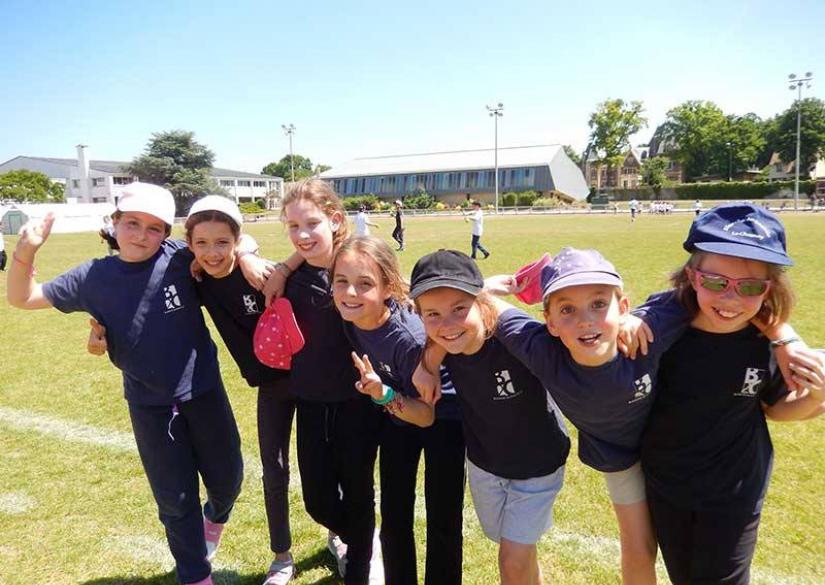
The extracurricular life of the pupils of the Lycée Blanche de Castille is presented in several directions: thematic clubs, sports, creativity.
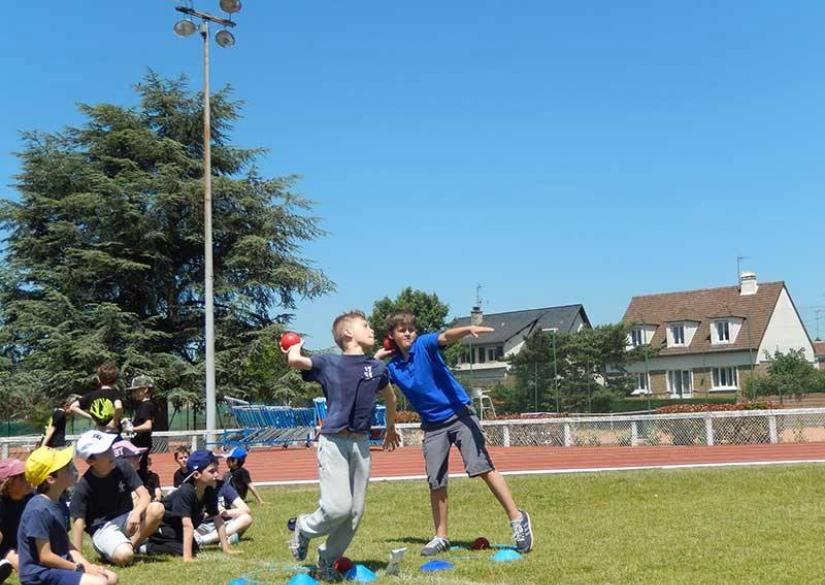
Sports infrastructure allows students to gain skills in activities such as:
- Dancing,
- Table tennis,
- Badminton,
- Basketball,
- Futsal,
- Handball,
- Fitness.
Trained under the guidance of qualified coaches, students will be able not only to maintain a healthy lifestyle, but also to achieve excellent results at a higher sports level. Areas of physical activity are not limited to the list that the campus offers - thanks to the cooperation of Lycée Blanche de Castille with local organizations, students can take part in external sports events and sections.
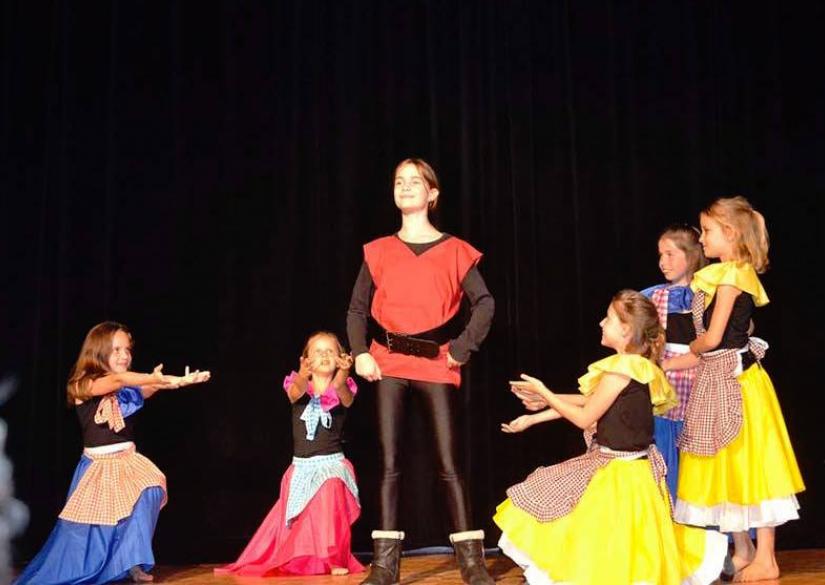
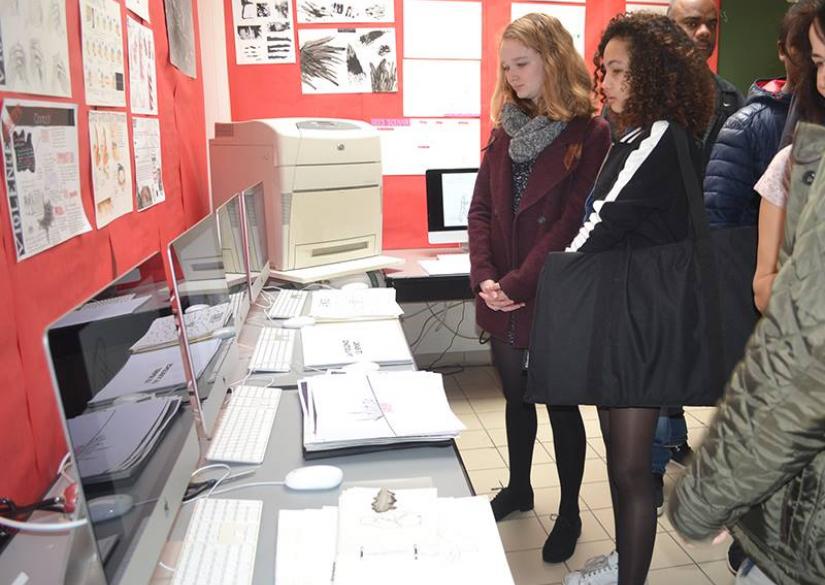
Creative circles invite students to unleash their potential and show their abilities to the wider community through participation in exhibitions, musical, and theatrical performances. For example, there is a theater club, a science workshop, a comic book workshop, and a board games club.
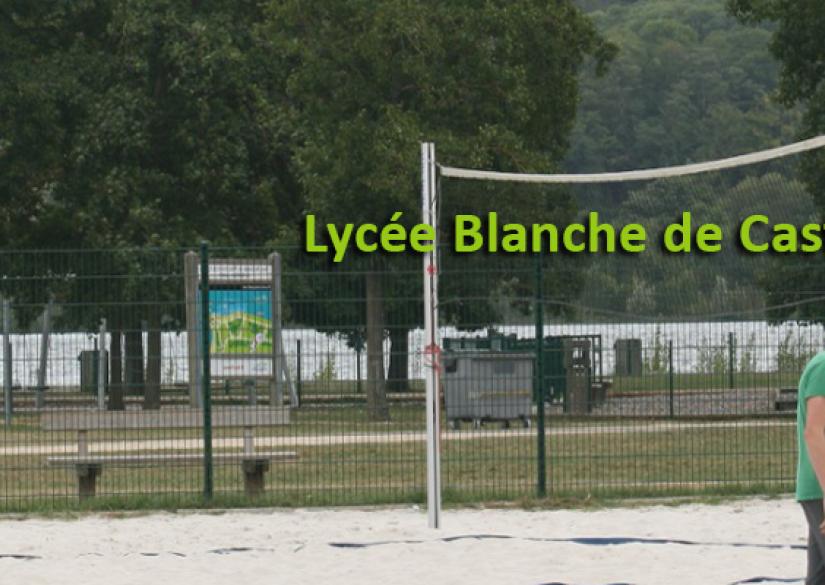
Other sports include rowing, diving, traditional games, strength conditioning, rugby, and yoga. The AS Serviam sports association is open to all middle school students, offering recreational participation and UGSEL competition up to regional and national levels. Students tried volleyball during introductory sessions. Strength conditioning is available from the final year of middle school. Wednesday afternoon outdoor activities include orienteering, canoeing and kayaking, and charity runs.
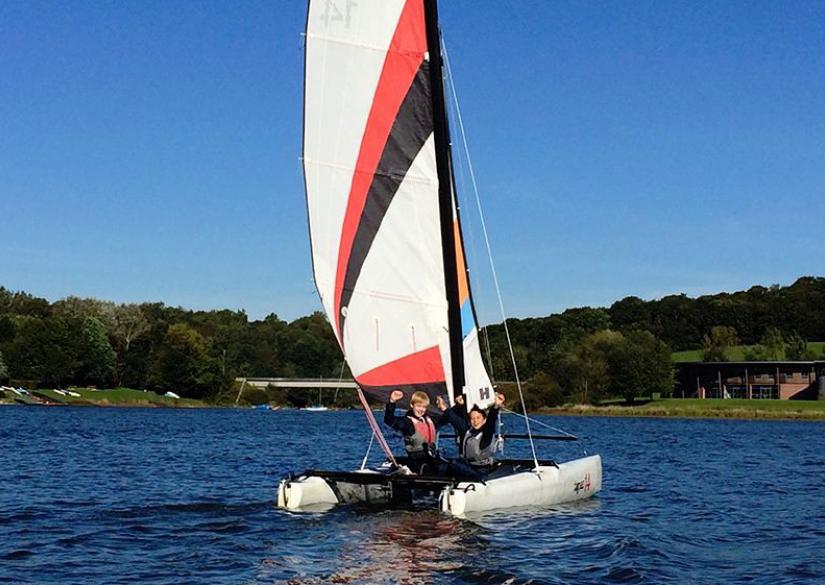
In partnership with Cercle de l’Aviron de Nantes, students row for 1.5–2 hours a week under the guidance of school teachers. A water sports trip to Telgruc-sur-Mer is offered annually to second- and third-year middle school students. High school students can join a basketball section with an adapted timetable.
The school also offers chess, bridge, English, visual arts, choir, and sewing. Middle school drama sessions are led by a qualified activity leader for one or two hours, depending on the level. A choir and orchestra meet weekly, and students can join the Nantes cathedral choir school. The optional magie des sciences workshop introduces students to playful scientific experiments. High school students can take part in programming and digital creativity.
Elementary extracurricular activities involve English, Spanish, trumpet, a children's choir, sports, circus, and drama workshops. Seven preschool classes come together to sing every two weeks. The three first-year elementary classes and the ULIS group sing together weekly. Families can choose additional English activities, including on Wednesday mornings.
Through Happyculture, students prepare and maintain hives, observe bees, and take part in honey production. Mass and the rosary are offered weekly to those who wish to participate. Spiritual activities involve older pupils helping younger children, charitable initiatives, volunteer service in Lourdes, and participation in the liturgy. Elementary children can prepare for baptism and first communion on request.
High school and preparatory students regularly have outings, conferences, an annual colloquium, and meetings with guest speakers. A five- or six-day trip in Europe is offered at the end of the first B/L year. CPGE students can choose to prepare for the general theology competition, which has a four-hour written exam at Collège des Bernardins in Paris.
At the start of the year, girls in the boarding residence are divided into five houses. The houses join dinners and competitions, including music quizzes and a Christmas evening, culminating in a house cup. Residents also have ice-skating and laser tag outings, and an end-of-year celebration for grade 12.
Middle school exchange and partnership destinations include Pontevedra in Spain, Lenggries in Germany, Krakow in Poland, and Edinburgh in Scotland. High school destinations listed are Sacramento in the United States, Pereira in Colombia, Jaén in Spain, and Limerick in Ireland.
All elementary pupils took part in a charity run supporting Antipode Inde. It was linked to the construction of three drinking-water reservoirs in the Mangalapuram region under a 2024–2025 project. Another traditional run supported l’Abri des Familles and was accompanied by a book forum and a secondhand sale.
On December 9, 2025, third-year middle school students and the ULIS group took part in an inclusive relay at the Buisson de la Grolle stadium in La Chapelle-sur-Erdre. Each pair brought together a mainstream pupil and a ULIS pupil. Elementary pupils also visited the parc des Oblates to collect plant materials for papermaking and had an activity day with orienteering and a treetop ropes course.
Advantages
- Enrollment of foreign students in grades 10, 11,
- An extensive list of specializations for advanced study, including several modern languages, computer science,
- Qualified teaching staff providing additional academic support,
- Employees are always in touch to help with any issues,
- Various areas of extracurricular activities,
- International preparation recognized by Université de Cambridge and the ministère de l’éducation nationale français,
- The school complex operates under an association contract with the state,
- The school is under the trusteeship of the Ursulines de l’Union romaine and belongs to their educational network,
- The school holds the Euroscol and Ouverture International DDEC labels. It has run Erasmus+ projects since 2019 and received accreditation under the program in 2021.
Facilities and equipment at Lycée Blanche de Castille Public School
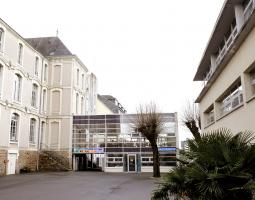
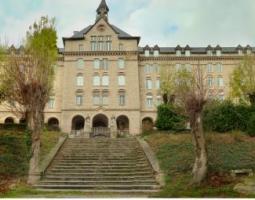
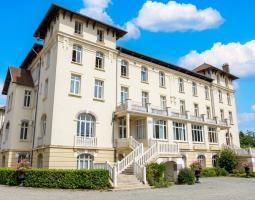
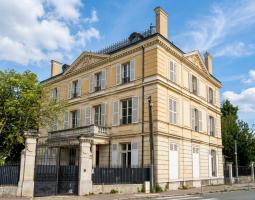
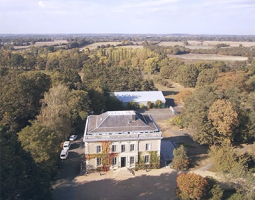
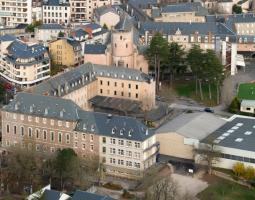
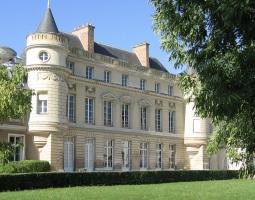
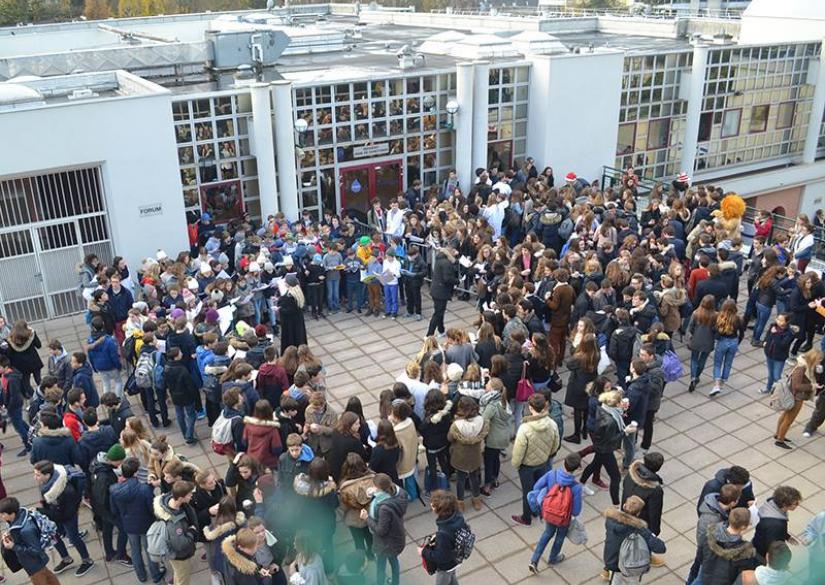
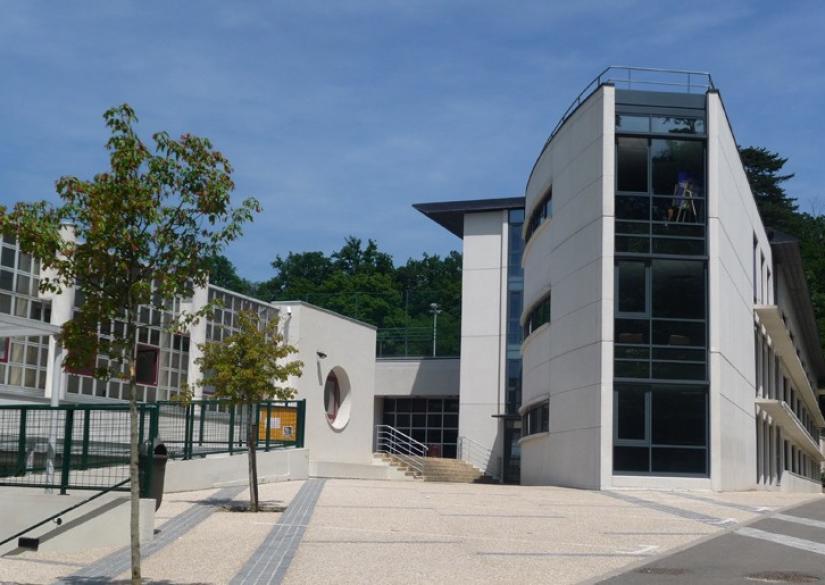
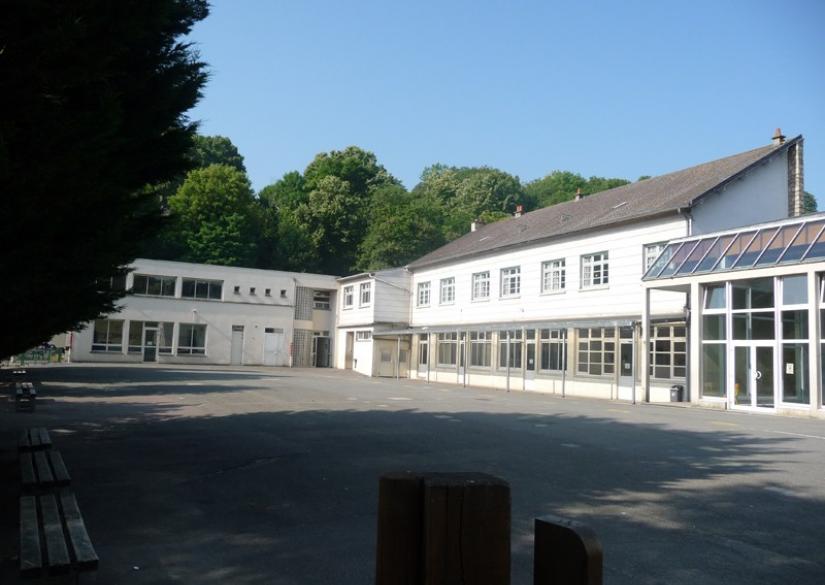
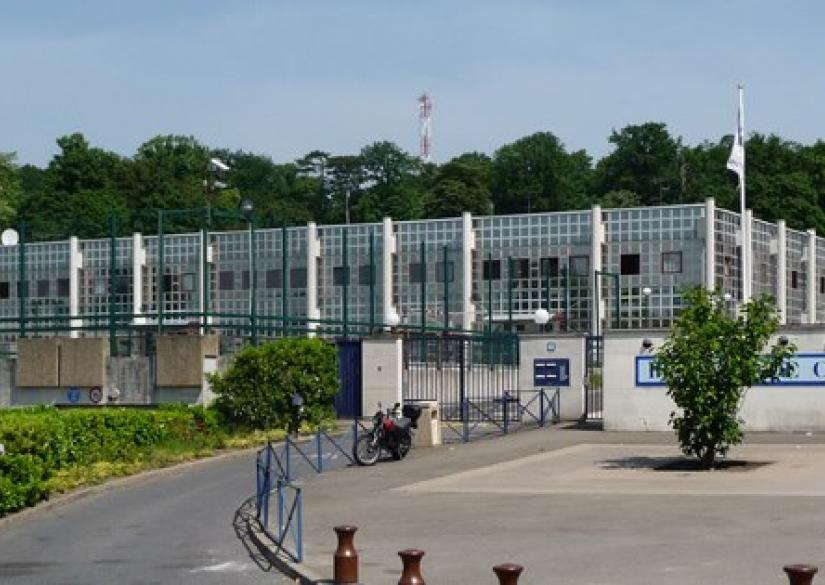
The Lycée Blanche de Castille studying area is located in the city of Nantes, in western France. The campus is an extensive landscaped area, which houses the Chateau du Plessis-Tison castle, built in the early 18th century, adjacent to it are academic buildings built in 1930-2018, thereby combining historical traditions with modernity.
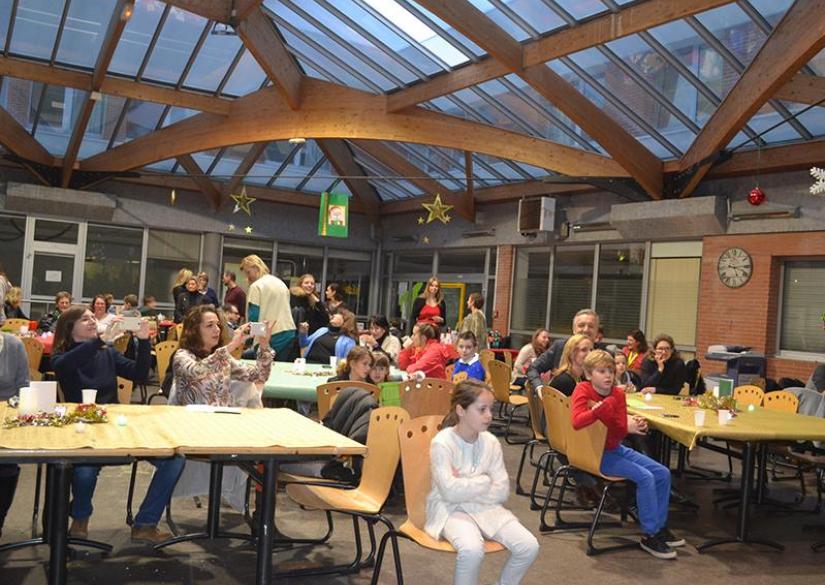
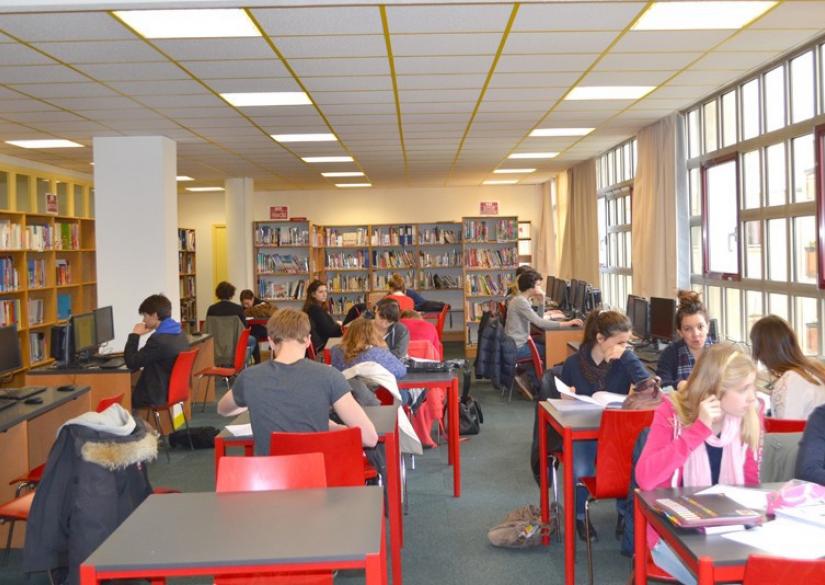
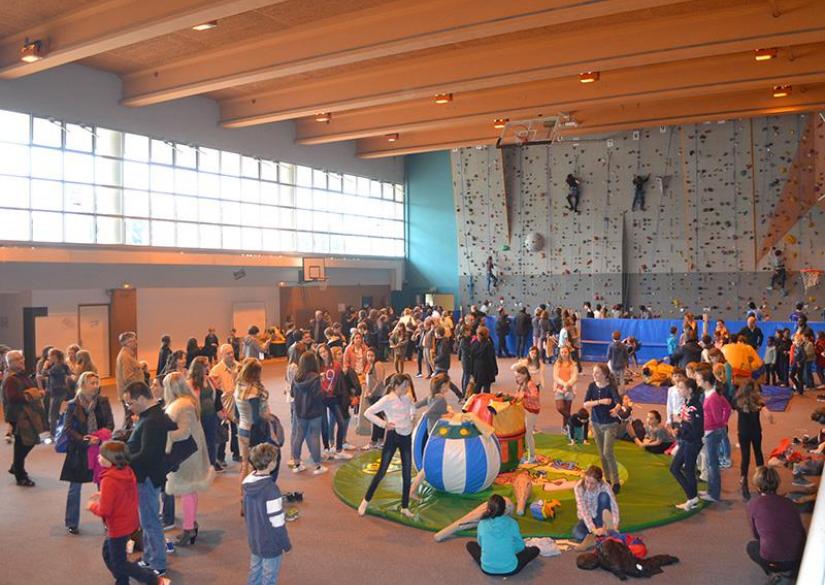
The campus infrastructure includes many academic facilities, including lecture halls, subject labs, and computer rooms. Lycée Blanche de Castille has a large library with a reading area prepared for both self-study and group project work. One of the buildings has a multifunctional sports hall, which hosts classes in most of the sports represented at the school. The school boasts beautiful outdoor areas, equipped for walking and outdoor recreation.
The school occupies a single site in a six-hectare park with woodland, a pond, lawns, and playgrounds. There is also a chicken coop and an apiary. Middle school students attend classes in the Saint Clair building.
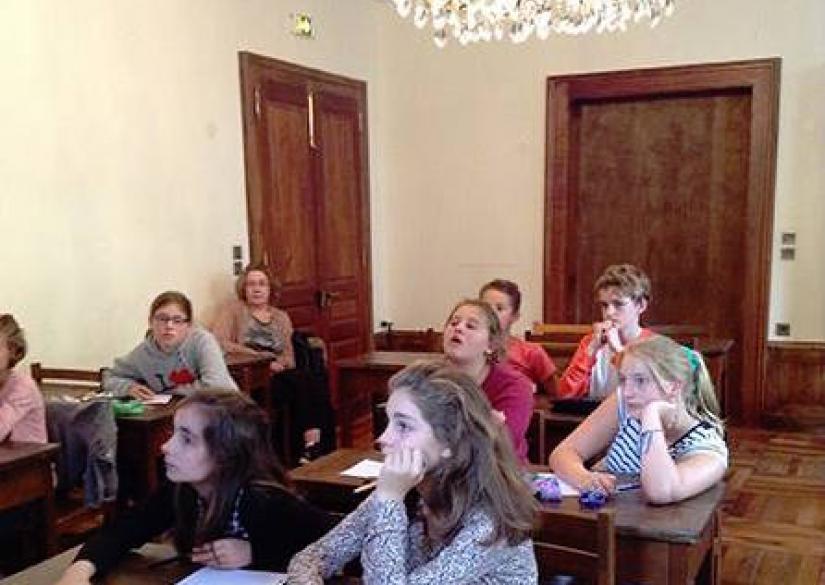
The school has nine laboratories, a room for computer-assisted experiments, and six computer rooms. Each elementary and middle school class has its own classroom. The middle school has rooms for technology, visual arts, and music, a CDI documentation center, and a student lounge. High school students use renovated classrooms and modern laboratories.
Sports facilities also include a large outdoor sports area, a gymnasium, and a weight room. Shared boarding facilities comprise a recreation room, a television room, and a large lounge.
Nearby bus services are Chronobus C1 at Plessis Tison, bus 10 at Rond-point de Paris, and C6 at Guindré. Lila buses 46, 48, and 60 also stop at Plessis Tison. The SNCF station and Haluchère-Batignolles station are nearby. The latter is served by TER tram-trains between Nantes and Châteaubriant and tram line 1.
Admission dates and extra charges
International students can choose the duration of their studies at Lycée Blanche de Castille themselves: a trimester, a semester or an entire academic year. The academic year lasts from the end of August to the middle of June.
Trimester dates are the following:
- Autumn: August-December,
- Spring: March-June.
Semester dates are:
- Autumn: August-January,
- Spring: January-June.
Classes are held on weekdays, and rest is provided on weekends, holidays, and during seasonal vacations:
- Autumn — two weeks from the end of October to the beginning of November,
- Christmas — two weeks, including holidays,
- Winter — two weeks from mid-February to mid-March,
- Spring — two weeks from mid-April to mid-May,
- Summer — two months, starting around the beginning of July.
The boarding residence opens on Sunday evenings, with arrivals between 20:00 and 22:00, and closes on Friday evenings. Women in preparatory classes can sometimes stay on Friday nights if they have an assessment on Saturday morning. For high school girls, wake-up is at 6:45, breakfast at 7:30, and dinner at 19:00. Lights-out is at 22:30 for grade 10 and 23:00 for grades 11–12.
Parkours academic support sessions run during the school year on Mondays, Tuesdays, Thursdays, and Fridays. The B/L weekly timetable totals 34 hours and 30 minutes. CPGE classes run Monday through Friday, with assessments on Saturday mornings. Student mobility lasts six weeks on average and takes place in the second semester of grade 10, depending on partner schools' capacity and calendars.
The cost of the program covers the administrative fee, accommodation in the residence and the host family, meals, and staff support. Additionally paid for:
- Round-trip flights,
- Visa expenses, fees,
- Medical insurance,
- Some excursions, sports and creative activities,
- Individual language classes,
- E-learning language courses,
- Airport transfer,
- Study guides, books and materials for personal use,
- Pocket expenses.
A deposit is required to confirm the application.
Enrolment process
Foreign applicants must fill out a detailed application form in French, provide the required documents and wait for a response. The staff will contact candidates to conduct an interview and verify their level of French proficiency, after which they will provide the necessary documents to complete the admission process.
Selection involves a meeting with a member of the leadership team and a discussion of the applicant's agreement with the school's educational approach. The boarding residence can be visited during open days or by prior arrangement at other times of year.
For students moving into the English-language option from the second through final year of middle school, language proficiency and motivation are assessed. The same factors are considered for LCE espagnol. Admission to the European section is based on an application file, English proficiency, and motivation.
Each year, CPGE applicants include candidates who have completed one or two years of other higher education or education abroad. Admission to the second or an additional preparatory year involves an assessment of the application file and a meeting with the deputy head responsible for the preparatory classes.
Enrolment statistics
International students are only admitted to the Lycée Blanche de Castille in grades 10 and 11; No more than four foreign representatives study in each of the classes.
Perspectives
Studying in a French-speaking school will allow foreign students to improve their French language proficiency, immerse themselves in the culture and customs of the country in order to decide whether they are ready to continue their academic path in France or another Francophone country.
In the 2026 French baccalaureate exams, graduates earned 152 distinctions: more than eight in ten diploma recipients graduated with honors. These comprised 20 Très Bien distinctions, including one with félicitations du jury, 62 Bien, and 70 Assez Bien.
- British international BFI section: 92% of its 25 diploma recipients earned distinctions,
- Bachibac: all 17 students earned distinctions,
- European section: 91% of its 91 successful candidates earned distinctions.
In the DNB middle school diploma results published with the 2026 graduating exam results, more than 93% earned distinctions. The figures listed 43 Très Bien distinctions, three with félicitations du jury, 75 Bien, and 47 Assez Bien.
In 2025, eight B/L preparatory students continued their education at universities, including in dual bachelor's degree programs. One student obtained the intermediate competitive exam status of sous-admissible at ENS Lyon. In the 2024 Cambridge exams, several high school students earned C2 Proficiency.
Entry requirements, how to apply, what is required to enrol
Foreign applicants must provide a package of personal documents, including a valid passport, visa or residence permit, and medical insurance. Academic certificates from the previous place of study will be mandatory, confirming the candidate's current level of knowledge and skills. Applicants are advised to take a language test in advance to ensure that their French language proficiency is at least A2.
All documents will need to be translated into French.
The requested documents include a photograph, an identity document, a copy of the family record book, and report cards from the previous school year.
The British international section in middle and high school requires written listening and reading comprehension tests and an oral exam. The first-year middle school English-language option is intended for motivated pupils interested in the British or English-speaking world.
Bachibac requires motivation, an interest in Spanish language and culture, and Spanish proficiency of at least B1 on the CEFR scale. Previous attendance in a bilingual class or European section is not required. The program is also open to Spanish-speaking students. The B/L preparatory program requires balanced preparation across all disciplines and a strong capacity for sustained work.
Scholarships Lycée Blanche de Castille Public School
Financial assistance may be available for participation in Parkours academic support sessions.
Students in CPGE preparatory classes for Grandes Ecoles have higher education student status and may receive a higher education scholarship.
Institution on the map
Residence permits, citizenship and other services
- Guardianship services during the studies
- Student supervision
Review about Lycée Blanche de Castille Public School
Recommendations on when to apply
| Language courses, schools and children's language camps | Primary and secondary education - private schools | Preparation programmes for entering universities - higher education | Higher education (after completing accredited programs A-level, IB, High School) - Bachelor, Master, MBA |
| - we recommend to apply 6-9 months before the start of the course (some camps and schools offer discounts for early booking or for lengthy study programs) - there are some very popular and high demand children's camps, where the applications need to be submitted 1 year in advance (in particular Switzerland , Great Britain , USA , Canada , Austria) | - we recommend to apply one year before the start of the training program, - some schools have a specific time frame (September-November - please specify an individual school) - some schools require tests in several stages (UKISET, internal tests of the school: English, mathematics, logics, subjects, interview, some require a personal visit) | - we recommend to apply one year before the start of the program, - for Foundation and Pathway programs, IELTS and TOEFL certificates are usually required, respectively | - recommended submission one year before the start of the program, - the deadline normally closes in January, for TOP HEIs and, as a rule, in March in other universities - for a bachelor, a Foundation or Pathway preparatory program a completed A-level, IB, High School + IELTS / TOEFL are required - for Masters you need a graduated higher education, in some cases you need a pre-Masters program - MBA requires completed higher education, work experience preferably at least 2-3 years, etc. |