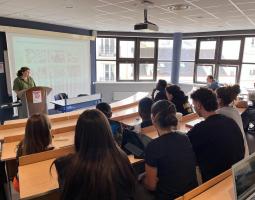
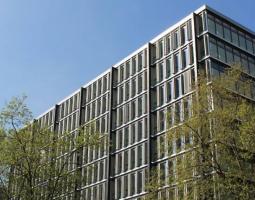
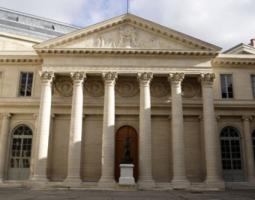
L'Université Paris-Sud 11


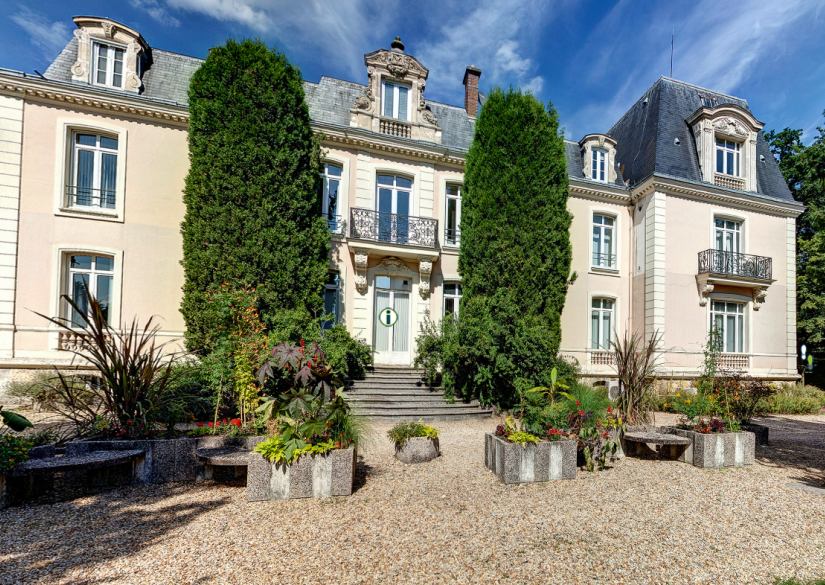


Programs and prices, tuition fees in L'Université Paris-Sud 11


Information on the program can be found on the official website of the school.
Information on the program can be found on the official website of the school.
Description of L'Université Paris-Sud 11
- Location: Orsay, near Paris, Île-de-France, France,
- Origins: scientific research institutes built in the postwar years,
- Paris-Sud XI foundation: unification of research institutes in 1970,
- Historic names: L'Université Paris-Sud XI, University of Paris-South 11,
- Paris-Sud XI institution type: public research university,
- Meaning of 11: symbolic affiliation with the Sorbonne,
- Sorbonne's historic role: center uniting all public institutions in Paris until its breakup in 1970,
- Paris-Sud's role: key member of the research university Paris-Saclay,
- Other Paris-Saclay members: Parisian universities,
- Paris-Sud specialization: natural sciences.
- Location: Four departments in Île-de-France, south of Paris,
- Number of students: 50,000.
Paris-Sud XI is the center of scientific and academic thought associated with natural and / or exact sciences. Let's analyze the best directions of the university.
- The pharmaceutical faculty, based on its outstanding achievements, occupies an honorary 51 line in the world academic rating. The scientific developments of this faculty are recognized by scientists all over the world and are gradually being introduced into the process of curing a person,
- The medical faculty is closely tied to the direction described above. Here, the clinical problems associated with oncology, immunology and endocrinology are fundamentally investigated,
- As for the physical faculty, it arose on the basis of pre-existing institutions and laboratories of this direction. The current level of students' education is based on a large number of international projects, researched by local physicists and mathematicians.
All scientific developments and research are carried out under the patronage of such major scientific French organizations as CNRS and CEA.
Université Paris-Saclay was established through a joint initiative by universities, grandes écoles, and research organizations. It is one of the universities in France offering education in science and engineering, life sciences and health, social sciences, and humanities.
Education options include:
- Licence programs,
- Dual degrees,
- BUT university technology diplomas,
- DEUST scientific and technical diplomas,
- Licence professionnelle vocational programs,
- Engineering education,
- Master's degrees,
- Doctoral degrees,
- Medical specialties,
- Paramedical specialties.
Lifelong education and apprenticeship programs are available.
Its associated universities are Université de Versailles Saint-Quentin-en-Yvelines and Université d’Évry. Its seven partner research organizations are CEA, CNRS, Inrae, Inria, Inserm, IHES, and ONERA.
Faculties and colleges
The university has five faculties:
- Law, economics, and management,
- Medicine,
- Pharmacy,
- Science,
- Sports sciences.
The academic structure comprises the university engineering school Polytech Paris-Saclay, three institutes of technology—IUT de Cachan, IUT de Sceaux, and IUT d’Orsay—and four grandes écoles: AgroParisTech, CentraleSupélec, École normale supérieure Paris-Saclay, and Institut d’optique Graduate School. Master's and doctoral education is organized across 18 Graduate Schools and 21 doctoral schools.
First-cycle programs include:
- The dual-degree Licence Chimie, Sciences de la Vie in biology and chemistry, worth 240 ECTS credits,
- The dual-degree programs Droit, Economie and Droit, Informatique,
- The dual-degree Licence Droit, Sciences et Innovation, with a duration of three years,
- The dual-degree Licence Économie, Mathématiques, with a duration of three years and national and university diplomas totaling 240 ECTS credits,
- The dual-degree programs Informatique, Sciences de la vie and Mathématiques, Physique et Sciences pour l'Ingénieur,
- The dual-degree Licence Sociologie, Science politique, worth 240 ECTS credits,
- The Licence Informatique, with a duration of three years,
- The Licence Langues Étrangères Appliquées, with English and Spanish,
- The Licence Sciences et Technologies at Institut Villebon – Georges Charpak,
- The Licence Professorat des écoles, introduced at the start of the 2026 academic year.
The BUT technology cycle offers chemistry, computer science, physical measurements, electrical engineering and industrial computing, mechanical engineering, business administration, and commerce. Génie mécanique et productique, Gestion des Entreprises et des Administrations, and Techniques de commercialisation confer Licence degree status and carry 180 ECTS credits. The mechanical engineering program has a duration of three years, or six semesters. BUT Informatique has a duration of six semesters and carries 180 ECTS credits, while BUT Génie électrique et informatique industrielle has a duration of three years.
Master's programs vary in the number of specializations they offer. Chimie has 18 options: six M1, nine M2, two international two-year options, and one two-year apprenticeship option. Mathématiques et applications brings together 12 M1 and 15 M2 options. Informatique offers 17 options across five thematic areas, including four M2 options in data science and big data. Energie offers two general M1 options, one conducted in English, and nine M2 specializations in mobility, materials, and efficiency.
Medical education is divided into three cycles. The first cycle, DFGSM, has a duration of three years and confers Licence degree status. The second, DFASM, also has a duration of three years and confers Master degree status. The third cycle has a duration of three to six years, depending on the specialization. Graduates receive the DES specialist diploma and the doctor of medicine diploma after completing this cycle and defending a professional thesis. The pharmacy options Officine and Industrie-Recherche have a duration of six years, while Innovation Pharmacie et Recherche has a duration of nine years. In pharmacy, the DFGSP, at Licence level, is awarded after the third year, and the DFASP, at Master level, after the fifth.
Programs in nursing, medical electroradiology, physical therapy, podiatry, and interprofessional education are affiliated with the faculty of medicine. The faculties of medicine and pharmacy offer DPC-labeled continuing education for healthcare professionals. The faculty of sports sciences offers STAPS—sciences and techniques of physical and sports activities—at Licence, Master, and Doctorat levels. Its structure comprises one doctoral school.
Doctoral projects are available with international joint supervision through ADI and through a joint program with the China Scholarship Council. An interdisciplinary doctoral program in climate and ecological transitions and sustainable development was established in 2023.
Scientific achievements
Research at Université Paris-Saclay spans fundamental and applied science, innovation, and collaboration with industry. The university accounts for 13% of France's national research activity. Its academic community is associated with 10 Nobel Prizes and 12 Fields Medals. In 2026, four people affiliated with the university received awards from the Académie des Sciences.
The university maintains more than 500 industrial partnerships. A key indicator is the creation of 50 startups each year. It has signed an agreement with HEC Paris to strengthen collaboration in support of deeptech startups. The university's innovation hub, PUI, received its designation under France 2030 in 2023 and brings together 13 key participants in the Paris-Saclay innovation ecosystem and 15 partners. A joint research strategy has supported programs involving multiple institutions and disciplines at Labex laboratories and institutes. Some programs offer doctoral projects with competitive selection.
The university's OSUPS observatory specializes in space-based and ground-based astrophysics and geosciences. Its expertise spans the design, fabrication, and integration of scientific instruments, calibration and testing in space environments, scientific management, and in-flight operations. The observatory processes and analyzes data, archives and secures it, and makes it available. Its research combines modeling, simulation, theoretical approaches, and laboratory experiments.
Things to know about
- Foreign students account for 21% of the university's enrollment,
- The university is reducing resource consumption and the environmental impact of its activities,
- The Droit, Sciences et Innovation program opened in 2020,
- Sylvie Retailleau was appointed ambassador for doctoral education at Université Paris-Saclay by the ministère de l'Enseignement supérieur, de la Recherche et de l'Espace.
Accommodation, meals, prices
Student residences and CROUS restaurants are available at Saclay Moulon, Sceaux Fontenay, Evry, Versailles, Cachan, Saclay Corbeville, and Saint-Quentin-en-Yvelines. A restaurant also operates on the Kremlin-Bicêtre medical campus. Crous de Créteil and Crous de Versailles residences are available near the campuses.
Accommodation options are grouped by campus:
- Cachan: Campus de Cachan and Les Bas Longchamps. Les Bas Longchamps offers studios and T1 bis apartments,
- Orsay valley: Les Rives de l'Yvette, L'Ile, Les Jardins de Fleming, and Le Bosquet,
- Orsay plateau: Émilie du Châtelet, Eileen Gray, George Sand, and Jean d'Ormesson,
- Sceaux: Jean Zay Antony Pole ADE, Charlotte Perriand, Louise Bourgeois, Rose Valland, Pierre Soulages, Olympe de Gouges Les Lombart, and Saints-Sauveurs,
- Kremlin-Bicêtre: George Sand and Marthe Gautier.
The university's CASA platform brings together verified accommodation offers from public and private partners across all campuses, with options for different budgets. CROUS allocates accommodation based on the student's and parents' incomes, family composition, and the distance from the family home. Adapted accommodation is available for students with disabilities.
Accommodation assistance is available to students admitted to or registered in the university's constituent units and to Paris-Saclay doctoral students. Places are limited and allocated according to eligibility criteria. If no suitable places are available or a student does not meet the allocation criteria, DVEEC helps them find other options.
A partner accommodation platform helps students choose residences based on their campus and rent. Listings are verified and provide coverage for unexpected circumstances, with optional cancellation insurance. Free accommodation search webinars organized jointly with the university are also accessible to English-speaking students. The Héberjeunes association helps students, doctoral candidates, and interns find accommodation suited to their income near university sites and public transportation. Science accueil helps foreign doctoral students find private landlords' offers in Ile-de-France.
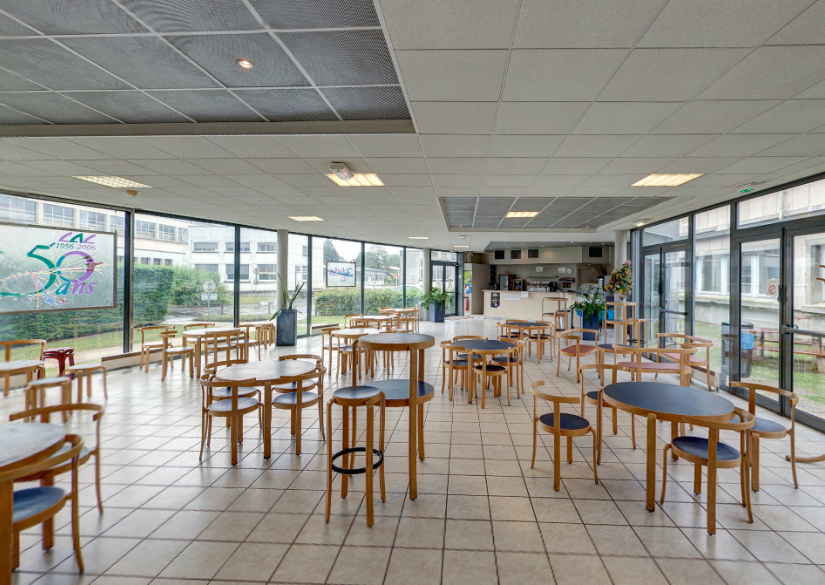
Dining options comprise restaurants, brasseries, cafeterias, and coffee corners. Vending machines are also available. CROUS manages Resto U university restaurants, while cafeterias are run by CROUS or private companies. Cafeterias are open throughout the day and offer sandwiches, toasted sandwiches, salads, occasional daily specials, pastries, yogurt, and fruit. A standard Resto U lunch consists of a main dish and three side options selected from appetizers, cheese, dairy products, and fruit. Students can pay through Izly or a student card linked to that account. Food aid distributions take place on various campuses.
Dining venues in the valley are Les Cèdres, Le Tropical, L’Amphi, and the L'Escale snack bar opposite the MaPS student center. On the plateau, options include:
- The Lieu de Vie restaurant and cafeteria,
- The IUT d'Orsay cafeteria,
- The Henri Moissan restaurant, cafeteria, and self-service cafeteria,
- The CentraleSupélec Eiffel restaurant and cafeteria,
- The CentraleSupélec Breguet cafeteria,
- The La Ruche brasserie,
- The ENS restaurant and cafeteria,
- The l'Expérimental restaurant and cafeteria,
- The Le Plato brasserie in Lumen,
- The A. Escoffier restaurant and Escoffier cafeteria.
The Versailles-Saint-Quentin-en-Yvelines university cluster offers:
- Descartes,
- École d’Architecture,
- Vauban,
- La Palette,
- Les Aviateurs,
- IUT Ville d’Avray,
- IUT Saint-Cloud,
- IUT Mantes-la-Jolie.
The Hauts-de-Bièvres cluster offers La Coulée verte, Jean Monnet, An’K, Lakanal, and Le Potard. In Évry, options are Le Sablier, Institut de Biologie, Les Sciences, Monseigneur Romero, La Poste, Le Pelvoux, and Le Boomerang.
Activities L'Université Paris-Sud 11
Students can choose from more than 80 sports. The university sports service SUAPS organizes Sport Campus sessions, preparation at the PPSU sports performance center, FFSU competitions, and sporting and artistic events throughout the year.
- Team sports: basketball, soccer, futsal, handball, rugby, and volleyball,
- Martial arts and combat sports: Chinese martial art, English and French boxing, judo, karate, and capoeira,
- Fitness: weightlifting, yoga, step aerobics, Pilates, and muscle conditioning,
- Dance: modern jazz, rock 'n' roll, salsa, Zumba, West Coast, and bachata,
- Racket sports: badminton, tennis, squash, and table tennis,
- Aquatic activities: swimming, water aerobics, and water safety and rescue preparation,
- Athletics and climbing.
A dedicated weightlifting card provides unlimited access to the two available weight rooms. Badminton is offered at PPSU. SUAPS events include a ski trip, Semaine du bien-être, futsal sessions, and a three-racket-sport tournament.
La Diagonale is responsible for cultural, artistic, and science outreach projects. It organizes events connecting art, science, and society. It supports initiatives from the university community, and coordinates a science and society engagement network.
Advantages
- Ranked among the world's top 20 universities in ARWU and first in France,
- More than 800 international university partnerships,
- Coordinator of the European university alliance EUGLOH,
- Member of the CESAER, EUA, EUF, LERU, U7+, and U21 networks,
- The university's OSUPS observatory participates in 30 national observation services designated by INSU.
Facilities and equipment at L'Université Paris-Sud 11
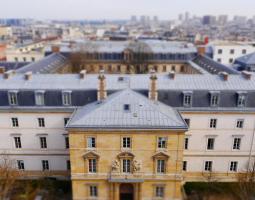
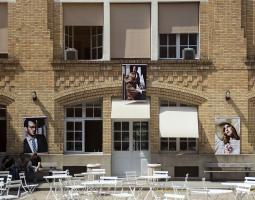
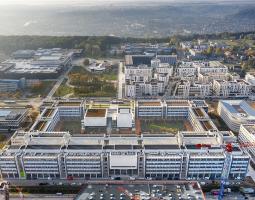
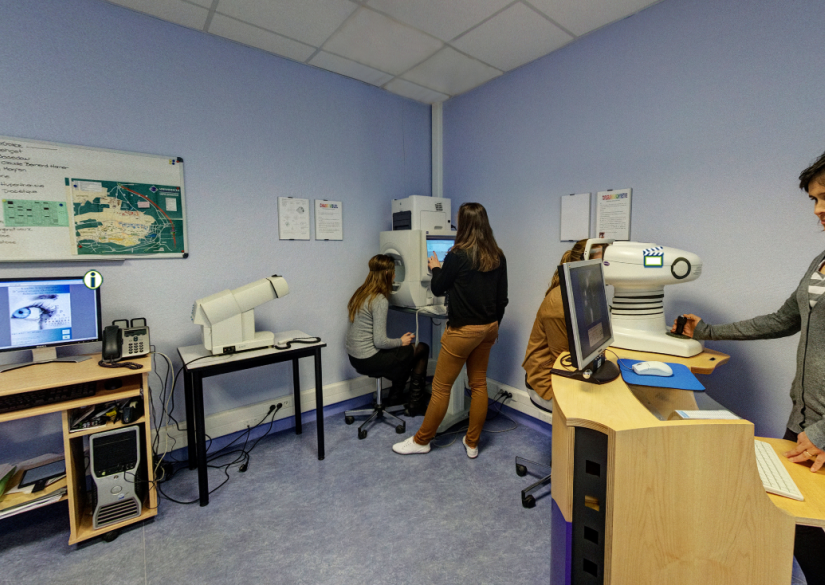
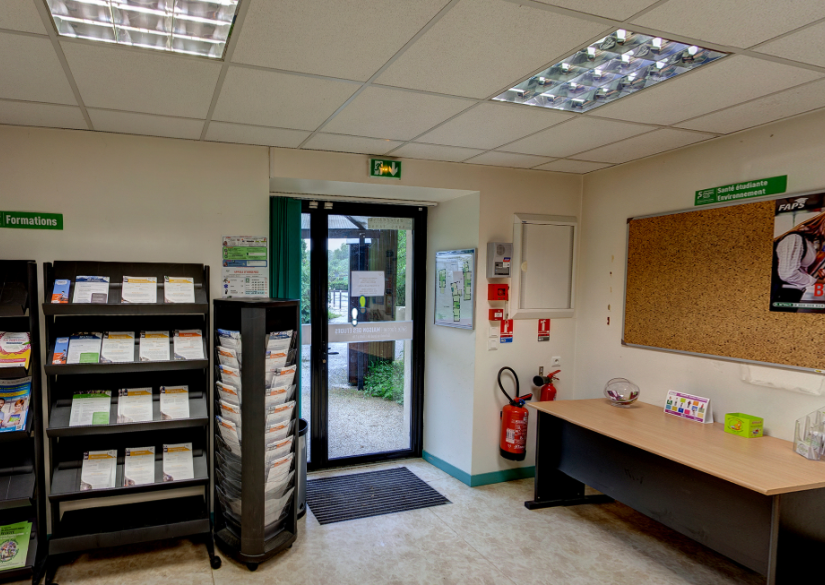
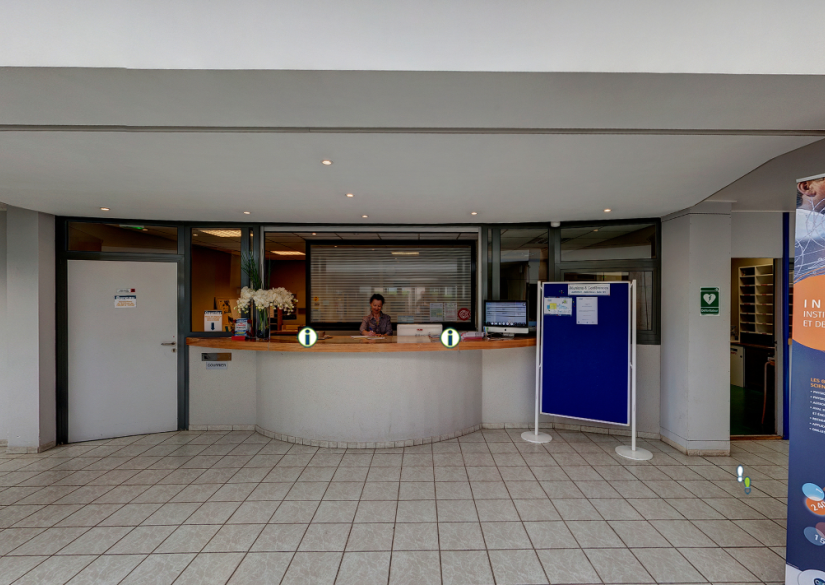
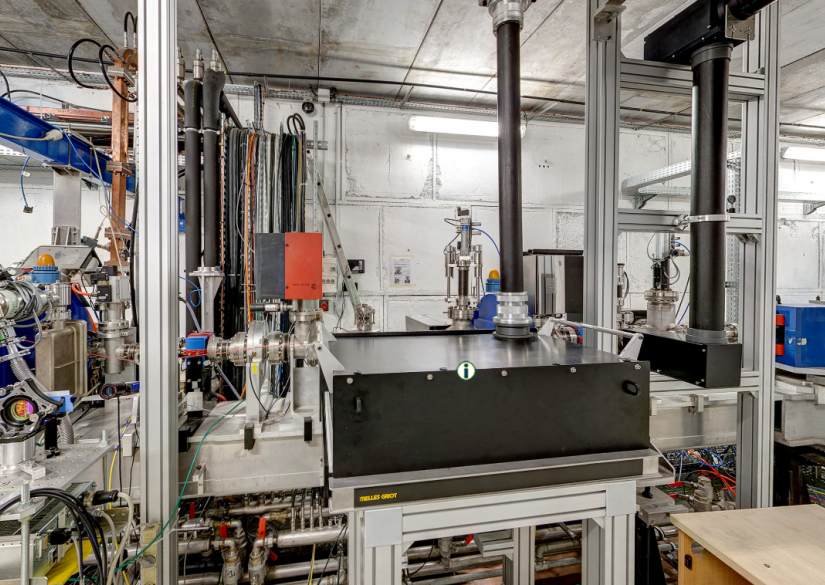
Immediately on campus. This is the largest academic building in France. University buildings are located across several sites. Most of the area is occupied by scientific centers and variations of various laboratories. A lot of student cafes. On the territory of the University grows a botanical garden with rare plant species. The garden's name is Le Jardin Botanique de Launay. Special organization CROUS is engaged in the resettlement of students in dormitories.
The university has 8100 researchers and research faculty members, as well as 8500 administrative and technical staff. Its research infrastructure comprises approximately 220 laboratories, more than 350 experimental platforms, and six incubators.
Students have access to more than 40 libraries and documentation centers, including the Lumen learning center. Libraries operate in Kremlin-Bicêtre, Orsay, Sceaux, and on the Saclay plateau. They form a shared service of Université Paris-Saclay, CentraleSupélec, and ENS Paris-Saclay. Services offer workspace reservations, current occupancy information, and help finding documents. Electronic resources are available around the clock.
Facilities are distributed across the campuses:
- Orsay Bures: a library and an associations center,
- Saclay Moulon: a library and sports facilities,
- Sceaux Fontenay: a library,
- Evry: a library and sports facilities,
- Versailles: a library,
- Cachan: sports facilities,
- Saclay Corbeville: sports facilities,
- Saint-Quentin-en-Yvelines: a library.
Sports facilities comprise three university sports complexes, two soccer fields and two rugby fields with synthetic surfaces, a 400-meter athletics track, and areas for jumping and throwing events.
The OSUPS observatory brings together approximately 500 people and participates in four national platforms: the IAS calibration station, the AIM development and integration platform, the IDOC data center, and the PANOPLY analytical geosciences platform. The IAS station and AIM platform are part of the PARADISE research infrastructure. The faculty of sports sciences has more than 1600 students, 80 teaching and research faculty members, and 34 administrative and technical staff. It has one research laboratory.
The pride of the institution
- Albert Firth is a physicist from France, who became a Nobel laureate in physics. Graduate of the educational institution Paris-South,
- L. Lafforg received the Fields Prize in mathematics. Diploma of education of the same university,
- Outstanding programmer B. Serlet known for developments in cloud storage of files.
Admission dates and extra charges
Administrative registration is mandatory and takes place each year. Registration requires payment of a registration charge and the student life and campus contribution, CVEC.
CVEC Sport allows participation in two time slots on the sports timetable throughout the year at no additional charge. Extra slots are charged separately. The SUAPS card is valid for one academic year.
The academic calendar varies by program:
- Licence professionnelle Maintenance et technologie: électronique, instrumentation: one year, from October to October of the following year,
- Licence professionnelle Métiers des réseaux informatiques et télécommunications: alternating academic education and work from early October through late September,
- Ethique: classes in both years of the master's program begin in October,
- MEEF pratiques et ingénierie de la formation: approximately 100 instructional hours per year, scheduled across two half-day time blocks,
- STAPS: Entraînement et optimisation de la performance sportive: classes from September through March in the first year of the master's program and from September through January in the second,
- M1 Sciences de la vision: classes from September through the end of April.
Enrolment process
Academic admission remains conditional until administrative formalities have been completed and regulatory requirements checked, including possession of the required educational qualification.
Selection for PASS takes into account the overall grade average, individual grades, and academic progress throughout the year. Applicants specializing in the sciences need strong results and a carefully prepared motivation letter. The faculty of medicine has a separate admission procedure for holders of healthcare qualifications and diplomas obtained outside the EU.
Enrolment statistics
The international master's programs QUARMEN and LASCALA accept applicants from around the world. Selection for both is highly competitive. Admission to PASS, the first year of medical education, is highly selective.
Direct admission to the second or third year of medical education is available to a limited number of applicants. Applications are not guaranteed approval.
The PhD call Stand up for Science UPSaclay has announced eight doctoral positions in climate change, environmental sciences, global health, humanities and social sciences, and the energy transition.
Entry requirements, how to apply, what is required to enrol
The process of enrollment in separate areas of the University of Paris-South, is based on a pattern of actions, to deviate from which is not recommended.
- The submission of applications from the applicants is the same for all in France. Therefore, first the form is filled in online mode on the special resource Etudes en France.
- Russian citizens, when applying for, provide a certificate of graduation.
- All documents are translated into French and notarized.
- It is necessary to go the entrance exams.
- Those wishing to obtain a master's degree are granted a diploma with translations and undergo the same procedure.
- The next step is the surrender of an international exam for the knowledge of the French language with the achievement of the C 1 level.
- Submission of documents is carried out between 18.10 and 22. 01.
How much are the French knowledge
Education in Paris-Sud XI is free. However, an administrative fee is required twice a year. Bachelors pay 183 euros for a semester, masters 254 euros. For a month, you'll have to pay up to 1,000 euros.
As for the scholarships, they are available mainly to the masters. The annual scholarship from the university reaches 10,000 euros for one academic year. At the same time, for special achievements it is possible to receive grants from various student funds.
Scholarships L'Université Paris-Sud 11
The university and its constituent units offer full and partial scholarships to French and foreign students. Support may be tied to a specific discipline or available regardless of specialty. Awards from different scholarship programs cannot be combined. Social and material assistance takes account of each student's profile and income and provides support for accommodation, transportation, meals, student employment, and material needs.
The following options are available to foreign students:
- Paris-Saclay international master's scholarships for strong applicants, particularly those planning a doctoral research project,
- France Excellence Eiffel for foreign master's and doctoral students who will become leaders in the public and private sectors,
- LPDP: Indonesian government funding for outstanding Indonesian master's and doctoral students in science, technology, and mathematics,
- The FMJH foundation's Mathématique au Féminin scholarship for young women planning to pursue mathematics in the third year of Licence or the first or second year of a master's program,
- Sophie Germain for students entering the first or second year of Mathématiques et applications,
- FMJHCare for outstanding foreign students with limited financial resources entering mathematics Licence or Master programs within the FMJH foundation's scope,
- Erasmus Mundus scholarships for SERP, LASCALA, and BIOCEB. Approximately 20 Erasmus Mundus scholarships and four from Paris-Saclay are available each year for QUARMEN,
- The Fondation AgroParisTech international attractiveness scholarship for foreign students of any nationality coming to France for the first time and meeting the requirements of the relevant engineering, master's, and specialized programs,
- Sciences des Plantes de Saclay living support scholarships for outstanding, motivated students, particularly those in Sciences du Végétal and BIOCEB,
- Académie Spatiale d'Ile-de-France scholarships for foreign students pursuing space-related master's programs at participating institutions,
- The Lafayette scholarship from Villa Albertine - Institut Français aux Etats-Unis for one year of master's education, available to holders or prospective graduates of a bachelor's degree from a US university,
- IDEX support for internships abroad.
Recipients of means-tested BCS scholarships, French government BGF scholarships, and annual special assistance ASA may be eligible for full or partial exemption from registration charges. The local CLE committee considers individual exemptions for financial hardship or health problems.
Doctoral projects receive funding across the thematic areas of the Graduate Schools and doctoral schools. Doctoral students funded through ANR or H2020 projects may sign a doctoral contract with the university member or associated institution where they are completing their thesis. Handicap Idex funded two doctoral contracts and one thesis extension. In 2022, ENS Paris-Saclay reserved 38 special doctoral contracts for its normalien students, available to Université Paris-Saclay laboratories.
Institution on the map
Residence permits, citizenship and other services
- Guardianship services during the studies
- Student supervision
Review about L'Université Paris-Sud 11
Recommendations on when to apply
| Language courses, schools and children's language camps | Primary and secondary education - private schools | Preparation programmes for entering universities - higher education | Higher education (after completing accredited programs A-level, IB, High School) - Bachelor, Master, MBA |
| - we recommend to apply 6-9 months before the start of the course (some camps and schools offer discounts for early booking or for lengthy study programs) - there are some very popular and high demand children's camps, where the applications need to be submitted 1 year in advance (in particular Switzerland , Great Britain , USA , Canada , Austria) | - we recommend to apply one year before the start of the training program, - some schools have a specific time frame (September-November - please specify an individual school) - some schools require tests in several stages (UKISET, internal tests of the school: English, mathematics, logics, subjects, interview, some require a personal visit) | - we recommend to apply one year before the start of the program, - for Foundation and Pathway programs, IELTS and TOEFL certificates are usually required, respectively | - recommended submission one year before the start of the program, - the deadline normally closes in January, for TOP HEIs and, as a rule, in March in other universities - for a bachelor, a Foundation or Pathway preparatory program a completed A-level, IB, High School + IELTS / TOEFL are required - for Masters you need a graduated higher education, in some cases you need a pre-Masters program - MBA requires completed higher education, work experience preferably at least 2-3 years, etc. |