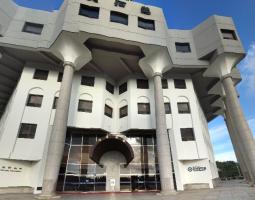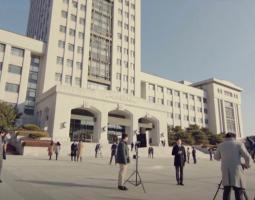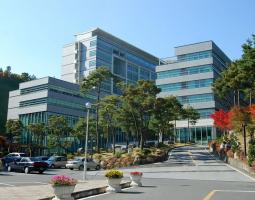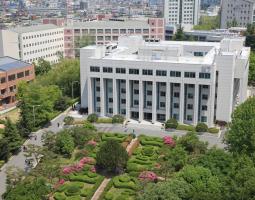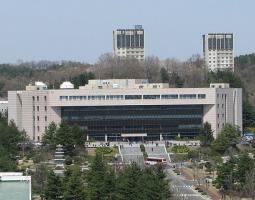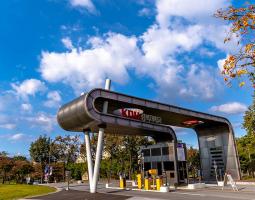
Korea Advanced Institute of Science and Technology (KAIST)


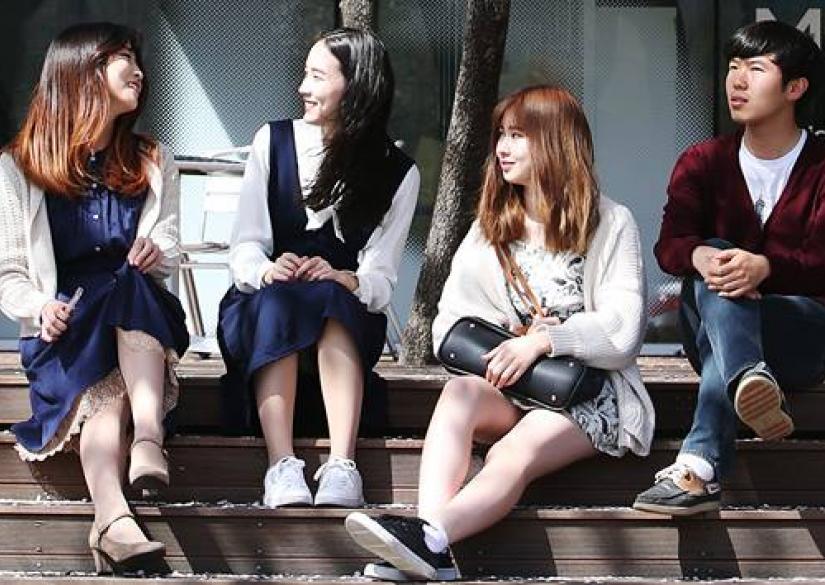



Programs and prices, tuition fees in Korea Advanced Institute of Science and Technology (KAIST)


Information on the program can be found on the official website of the school.
Information on the program can be found on the official website of the school.
Description of Korea Advanced Institute of Science and Technology (KAIST)
South Korea in recent decades has relied on the citizens to receive quality higher education. What country is the most proud of the university? Of course, the Korean leading scientific and technical institute. Located in Daejeon, Korea Advanced Institute of Science and Technology (KAIST) is a state institution of higher education, which started its teaching activity since 1971.
KAIST constantly takes the second stage of the national academic rating of South Korea. The first positions are stably assigned to the institute in the world ranking as well. The directions that the South Korean Institute is proud of:
- Faculty of Arts.
- Art History.
- Education in engineering.
- Getting a doctor's diploma.
- Chemical faculty.
- Control.
- Information Systems.
The constant presence among TOP universities is based on the excellent quality of teaching. Evaluation of their activities makes it possible to put the work of teachers in the first hundred of the best universities in the world. South Korean employers employ graduates of the Korean leading scientific and technical institute without a probationary period. The diploma of this institution is appreciated and abroad.
Over its first 50 years, KAIST educated around 70,000 scientists and engineers, including 20,000 bachelor's graduates, 35,000 master's graduates, and 15,000 PhD graduates.
KAIST admits students without assigning them to departments. At the end of their first year, students may choose their majors freely, with no departmental restrictions.
Educational process
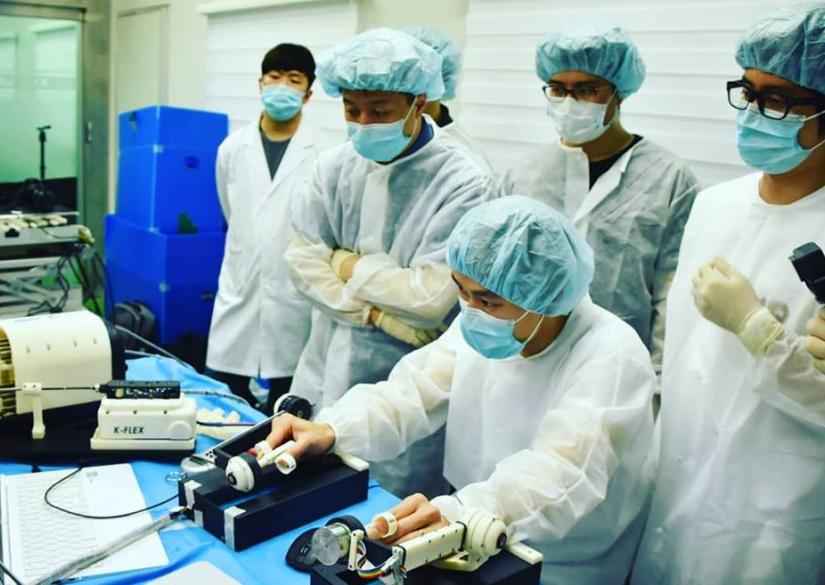
First-year students taking CS101 Introduction to Programming learn the fundamentals of programming in Python. The KAIST School of Computing hosts Open Lab events and lab tours for KAIST undergraduates interested in studying there or participating in research.
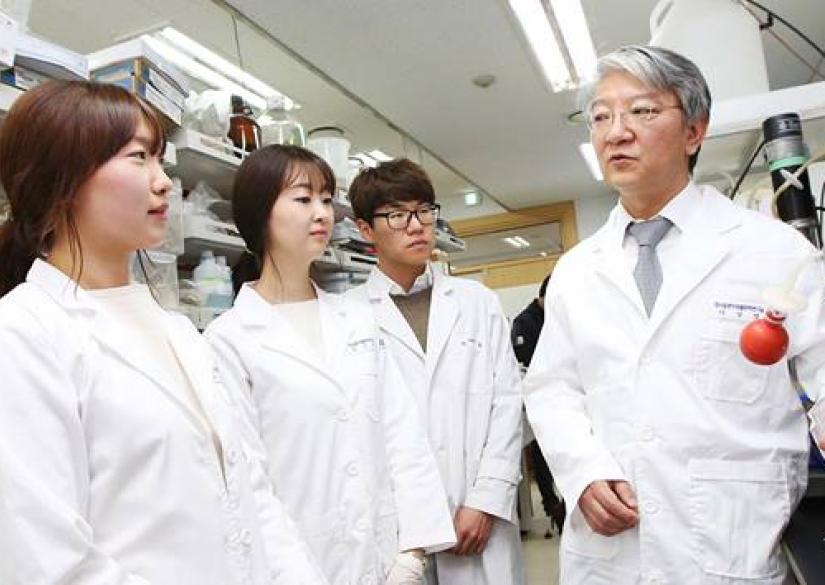
The Energy Fundamental Design Laboratory studies lithium-sulfur batteries, electrochemical catalysis, CO₂ conversion into carbon materials, and chemical looping processes. The Computational Photodynamics Research Lab uses quantum chemistry and statistical mechanics to investigate chemical phenomena arising from the interplay of electronic states, nuclear motion, and the surrounding environment.
Things to know about Korea Advanced Institute of Science and Technology (KAIST)
- KAMP, a technology consulting group, works in five areas: advanced materials, chemistry and biology, chemical engineering and equipment, electronics and computers, and mechanical and aerospace engineering,
- Energy Fundamental Design Laboratory was established in 2012 within KAIST's Department of Chemical and Biomolecular Engineering.
Accommodation, meals, prices
KAIST's estimate of undergraduate housing expenses is based on double occupancy at Hee Mang Hall.
The meal estimate assumes three meals a day at the campus cafeteria.
Activities at Korea Advanced Institute of Science and Technology (KAIST)
- STARTUP KAIST supports faculty members, students, and people outside the university who are current or prospective startup founders,
- the KAIST U.S. Foundation is building a global startup ecosystem by leveraging KAIST technology.
Advantages
- One KAIST U.S. Foundation project aims to prepare KAIST students to become future global leaders,
- KAIST and KT jointly run KT-AI, a program that prepares specialists who combine knowledge of the humanities and social sciences with artificial intelligence technology for KT research and development,
- Graduate School of AI for Math uses artificial intelligence to prove complex mathematical theorems and perform calculations,
- Graduate School of AI Semiconductor combines education and research with internships at industry partners, joint research, and international exchanges,
- Researchers in biological sciences identified the neural mechanism that selects the relevant memory from older and newer memories.
Facilities and equipment at Korea Advanced Institute of Science and Technology (KAIST)
The Lyu Keun-Chul Sports Complex is a multipurpose facility that supports the health of the KAIST community. Its facilities include:
- a fitness assessment room that provides personalized exercise recommendations based on fitness measurements,
- a golf center with spacious practice stations and modern golf simulators,
- a fitness center for structured workouts based on individual goals.
Admission dates and extra charges
Additional expenses may include:
- on-campus housing,
- books,
- meals,
- health insurance premiums,
- travel,
- Student Health Insurance Association contributions,
- telecommunications.
Entry requirements, how to apply, what is required to enrol
KAIST considers the following qualities when evaluating applicants:
- independence, knowledge of science and technology, and an interest in exploring new knowledge,
- a desire to forge new paths and a willingness to take on challenges,
- strong ethical principles and a commitment to working with others for the benefit of society and humanity.
Scholarships Korea Advanced Institute of Science and Technology (KAIST)
For international graduate students:
- 94% benefit from a KAIST scholarship,
- the scholarship covers full tuition and provides a minimum living allowance,
- students may earn additional income by participating in research projects.
For international undergraduate students:
- the KAIST Scholarship covers full tuition for four years after admission,
- it provides a stipend of 350,000 KRW per month, or 4,200,000 KRW per year,
- it covers National Health Insurance premiums totaling 916,680 KRW for two semesters.
Institution on the map
Residence permits, citizenship and other services
- Guardianship services during the studies
- Student supervision
Review about Korea Advanced Institute of Science and Technology (KAIST)
Recommendations on when to apply
| Language courses, schools and children's language camps | Primary and secondary education - private schools | Preparation programmes for entering universities - higher education | Higher education (after completing accredited programs A-level, IB, High School) - Bachelor, Master, MBA |
| - we recommend to apply 6-9 months before the start of the course (some camps and schools offer discounts for early booking or for lengthy study programs) - there are some very popular and high demand children's camps, where the applications need to be submitted 1 year in advance (in particular Switzerland, Great Britain, USA, Canada, Austria) | - we recommend to apply one year before the start of the training program, - some schools have a specific time frame (September-November - please specify an individual school) - some schools require tests in several stages (UKISET, internal tests of the school: English, mathematics, logics, subjects, interview, some require a personal visit) | - we recommend to apply one year before the start of the program, - for Foundation and Pathway programs, IELTS and TOEFL certificates are usually required, respectively | - recommended submission one year before the start of the program, - the deadline normally closes in January, for TOP HEIs and, as a rule, in March in other universities - for a bachelor, a Foundation or Pathway preparatory program a completed A-level, IB, High School + IELTS / TOEFL are required - for Masters you need a graduated higher education, in some cases you need a pre-Masters program - MBA requires completed higher education, work experience preferably at least 2-3 years, etc. |