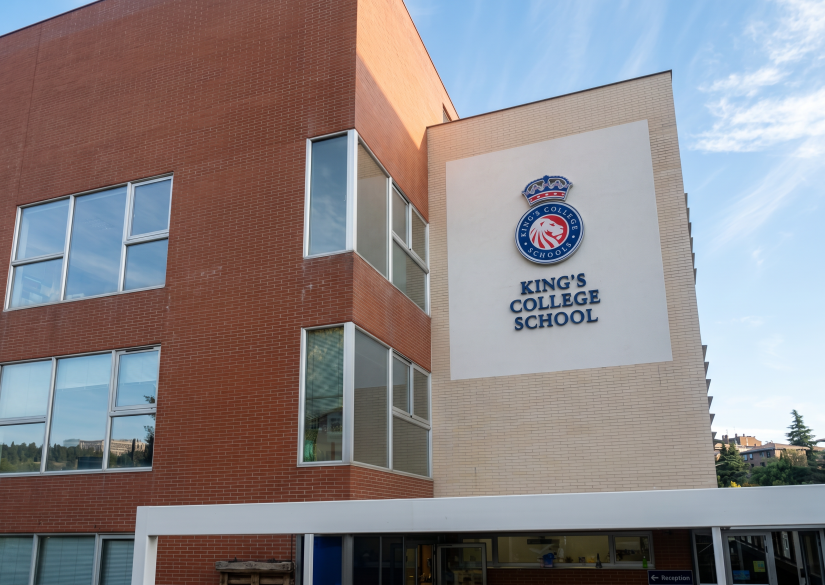
King's College School Chamartín, Kings College Chamartin




Programs and prices, tuition fees in King's College School Chamartín, Kings College Chamartin


Pre-Nursery
- Age of students: 1+.
- Duration of study: up to 2 years.
- Language: English, with Spanish support when needed.
Pre-Nursery is designed for children aged 1 to 3 years and serves as their first experience in an academic environment, helping the child gradually adapt to life in a group setting, get comfortable in an English-speaking environment, adjust to a daily routine, and take their first steps toward independence in a comfortable and supportive atmosphere.
The schedule is based on play, movement, communication, and sensory experiences. Children explore different textures and materials, experiment with water and sand, observe the world around them, and participate in simple creative activities. In daily life, they gradually develop communication skills: learning to ask for help, interact with peers, take turns, and express their feelings. English is spoken during the day — children hear the language during classes, play, walks, and other daily activities, gradually beginning to understand new words and expressions through hands-on experience and constant interaction.
The program is based on key areas of early development: speech and communication, physical development, cognitive skills, and personal and social development. Elements of the Reggio Emilia approach are used in practice: the adult creates an environment where the child explores objects, asks questions, tries things out, makes mistakes, and finds their own ways of doing things.
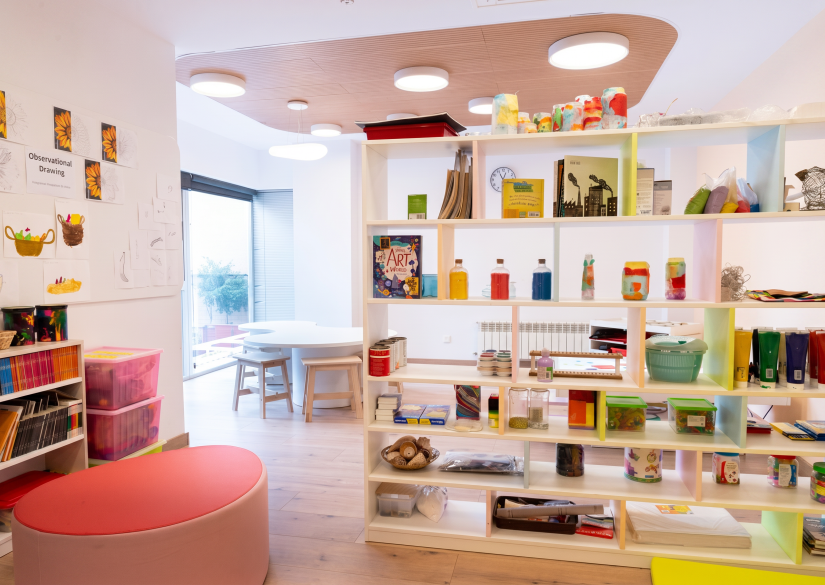
Pre-Nursery children have access to a specially organized environment suited to their age and needs: cosy and bright classrooms, play areas, sand and water activity zones, green outdoor spaces, and creative workshops. This approach helps the child develop naturally and without unnecessary pressure: first, a sense of security and confidence in the surrounding world is established, then speech, motor skills, independence, and curiosity about new knowledge are gradually developed.
Nursery & Reception
- Age of students: 3+.
- Duration of study: 2 years.
- Language: English, Spanish.
Nursery & Reception combines two pre-school years of education: Nursery for children aged 3–4 and Reception for children aged 4–5. During this period, the child continues to become familiar with the foundations of school life through play, exploration, and collaborative work, gradually developing independence, curiosity, and confidence in communicating with those around them.
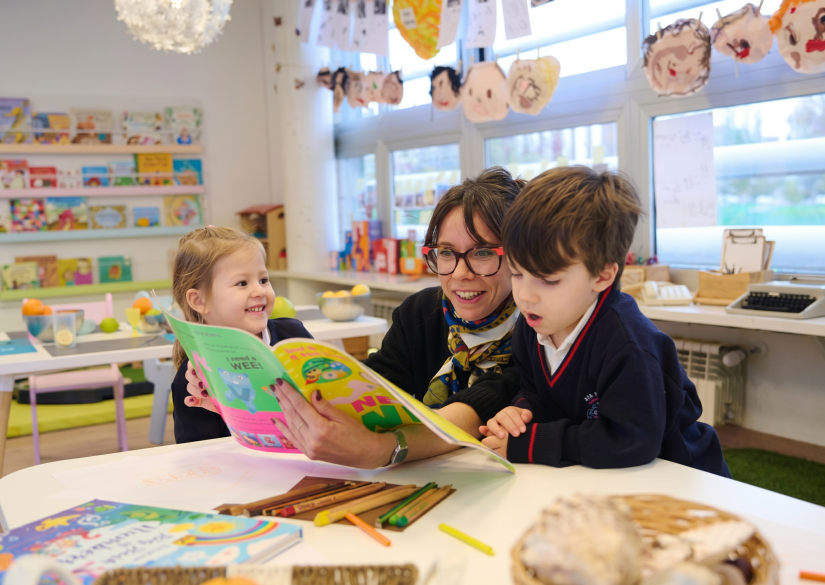
The program follows the British Early Years Foundation Stage and includes English language, early reading and numeracy skills, music, creative arts, physical development, nature exploration, and social skills. Spanish is present in the timetable from the very beginning and is taught in dedicated lessons: in Nursery and Reception, children study it for one hour per week. The main part of the day takes place in English, so the language skills are naturally improved in everyday situations — during play, joint projects, walks, lunches, and interactions with teachers and classmates.
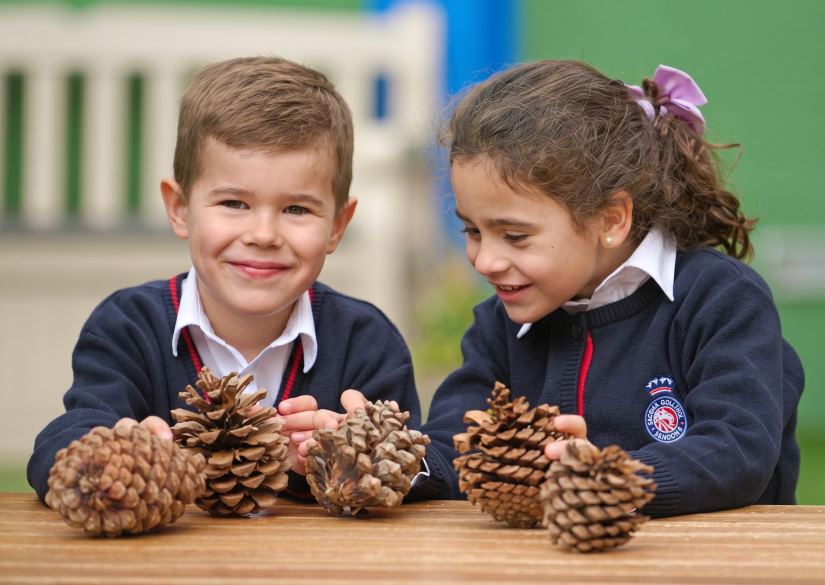
One of the distinctive features of the program is thematic workshops (referred to here as Atelier), in which children discover the world through observation, experimentation, and independent exploration.
The Reggio Emilia approach is reflected in the organisation of the learning process as a whole: the teacher guides the child with questions, sustains their interest in a topic, and helps turn curiosity into a small-scale investigation. Through this, children gradually develop their English language skills, become more independent, learn to interact with peers, and confidently transition to Year 1, retaining their natural love of studying.
Primary School / Key Stage 1
- Age of students: 5+.
- Duration of study: 2 years.
- Language: English, Spanish.
Primary School covers Year 1 and Year 2 — the first two years of primary school for children aged 5–7. During this period, learning becomes more structured while retaining an active, engaging, and interactive format. Lessons stipulate hands-on activities, group projects, discussions, and various forms of collaborative work that help develop academic skills and self-confidence.
The curriculum follows the National Curriculum for England: students study English, mathematics, natural sciences, Spanish, geography, history, music, art and design, design and technology, computing, physical education, and PSHE — a subject dedicated to children's personal, social, and emotional development. Natural sciences, computing, and physical education are taught by specialist teachers, while the remaining subjects are conducted by the class teacher.
English is the primary language of instruction. Children study Spanish several times a week: 3 hours in Year 1 and 4 hours in Year 2. If a child's English level is not yet sufficient, the school offers additional support: small-group sessions and in-class teacher assistance help them settle in and integrate into the learning process more quickly.
In Key Stage 1, children begin to explore modern technology. Year 2 uses the Inspired AI platform, which assesses each child's level and provides tasks in English, mathematics, and natural sciences. Teachers can monitor student progress. Children take part in their first STEM lessons and are introduced to LEGO SPIKE robotics.
By the end of Year 2, children prepare for the transition to King's College School La Moraleja or King's College School Soto de Viñuelas: they get acquainted with their future schools, take part in joint events, and attend the Layos Camp program with various activities and masterclasses.
Description of King's College School Chamartín, Kings College Chamartin
- Year of foundation: 2013.
- Location: Madrid, Spain.
- Number of students: 200.
- Type of study: mixed.
- Type of institution: private international day school.
- Language of instruction: English and Spanish.
Chamartín is located in the north of Madrid and educates children from 1 to 7 years old. The school began operating in 2013 as a campus for the youngest students in the King's College Schools network, founded in Spain by Roger Fry in 1969, and since 2019 has been part of the international academic group Inspired.
The Chamartín campus accepts only the youngest students and specializes in the Early Years and Key Stage 1 stages. Education here is structured so that children confidently acquire English, develop foundational academic skills, and smoothly continue their education at the senior King's College campuses in Madrid. The program is based on the British early education system and the requirements of the National Curriculum for England for primary school. Great emphasis is placed on the Reggio Emilia principles in organizing lessons: children learn through exploration, observation, experiments, and hands-on experience, actively interact with peers and teachers, work on projects, and use the educational environment — classrooms, creative spaces, and play areas — as part of the learning process.
Educational process
The school is regularly inspected under the British independent school inspection framework and received the highest Outstanding rating based on inspections in 2017, 2020, and 2023.
In the younger groups, studying is organized through play, speech development, physical activity, creative activities, and short structured lessons. English is used in everyday communication and in lessons from the first days at school, with Spanish introduced over time. In Nursery and Reception, children follow the British early development program, added with key elements of the Spanish educational standard.
In Year 1 and Year 2, learning becomes more subject-based: the timetable includes English, mathematics, science, Spanish, music, art, geography, history, physical development, digital literacy fundamentals, and personal development. Some lessons are taught by specialist teachers, for example in science, computing skills, and physical development. Teachers use small groups, observations, individual tasks, digital platforms, and projects. Students who progress through the material more quickly are given more challenging and in-depth tasks, while children who need additional support are helped to catch up. The volume of homework in the lower years remains small: the main focus is on regular reading at home and active parental involvement in the child's educational process.
Things to know about
- The Chamartín campus opened in 2013, several decades after the first King's College school appeared in Spain.
- The Chamartín community includes children of 35 nationalities.
- In Year 2, children can become Head Student — a rare practice for such a young age.
- By tradition, in February the school holds a family ski holiday week.
- In Reception and Key Stage 1, iPads, interactive whiteboards, digital assignments, and LEGO SPIKE are used for introductory robotics lessons.
Accommodation, meals, prices
The campus is located in the Chamartín district, one of the most convenient and sought-after residential areas of Madrid, next to the Santiago Bernabéu stadium, the Madrid-Chamartín — Clara Campoamor railway station, and the AZCA business district. Near the school are the «Berlín» park and the green areas of the Santander park, and the «Pradillo» municipal sports complex. The district has excellent transport accessibility: major city roads run nearby, and the Colombia and Concha Espina metro stations allow you to quickly reach different parts of Madrid.
Three bus routes connect the school with different districts of Madrid: through the Chamberí and Justicia districts, through Retiro, Salamanca, and Atocha, and also through Tetuán and Moncloa-Aravaca. The morning pick-up of children begins at approximately 07:50; after classes, buses take students home until 17:35, depending on the route. Children are accompanied by a driver and a staff member during the journey.
Meals are provided in the school canteen: breakfast, lunch, and an afternoon snack. Dishes are prepared directly at the school; the menu can be agreed upon with parents and adapted to take into account various dietary needs and restrictions.
Activities King's College School Chamartín, Kings College Chamartin
For younger classes, the school organizes short educational trips related to lesson topics: children can visit the National Museum of Natural Sciences in Madrid, participate in outdoor activities in El Retiro Park, or explore art at the Thyssen-Bornemisza Museum.
Year 2 students can join the school council and run for the role of Head Student: this helps develop leadership skills and a sense of responsibility — they participate in discussions about school life, support environmental projects, and learn to express their opinions with confidence.
During the year, the school holds themed events and celebratory weeks: Cultural Week, Maths Week, World Book Week, International Day of the Family, and winter and summer fairs. The school calendar reflects both international and local holidays: Christmas, Easter, Ramadan, Hanukkah, Holi, Diwali, and San Isidro.
After school, children can attend a variety of clubs and activities, including football, swimming, judo, ballet, musical theatre, chess, piano and violin lessons, coding, robotics, and Mandarin Chinese.
Advantages
- The school is focused exclusively on children from 12 months to 7 years old, so the learning environment, daily routine, and educational approaches are tailored to preschoolers and the early stages of education.
- English from day one, with Spanish also forming part of the program.
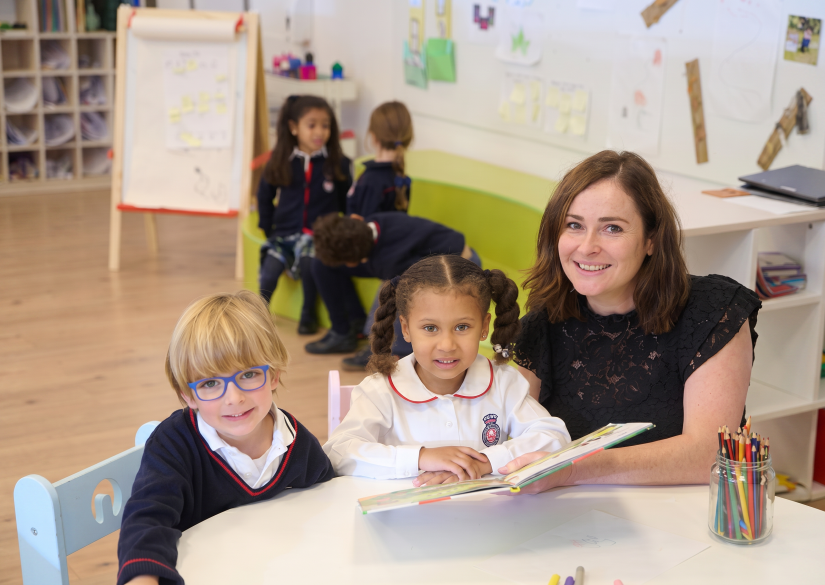
- Small groups and a high level of individual attention: the teacher-to-child ratio is 1:4 in Pre-Pre, 1:6 in Pre-Nursery, 1:12 in Nursery and Primary.
- After completing Year 2, students can continue their education at other King’s College schools in Madrid; the transition preparation begins in advance and is supported by the school.
- The school accepts children with varying levels of English, offering the Induction English language adaptation program for some students aged 5–7.
Facilities and equipment at King's College School Chamartín, Kings College Chamartin
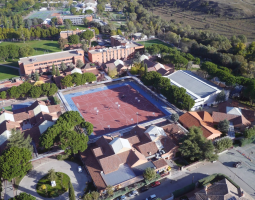
The Chamartín space is specially adapted for primary school children and preschoolers. The classrooms are designed so that the child feels comfortable and can learn through play and exploration: natural materials, play areas, interactive whiteboards, iPads, and other modern educational tools are used here. In Reception and Key Stage 1, the Inspired AI digital platform is used, helping adapt tasks to each student and track their academic progress.
Thematic workshops are an important part of the program:
- In the Green Atelier, children explore nature through working with plants, natural materials, and seasonal projects, and take part in simple gardening activities.
- In the Light Atelier, they study the properties of light and shadow, develop observation skills, and make their first discoveries in the natural sciences.
- In the Art Atelier, classes in fine arts and creative self-expression are conducted.
- In the music room, children are introduced to music, rhythm, and the basics of performance.
The grounds feature two play areas:
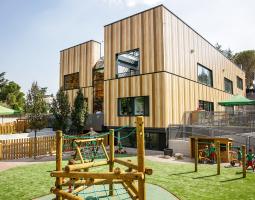
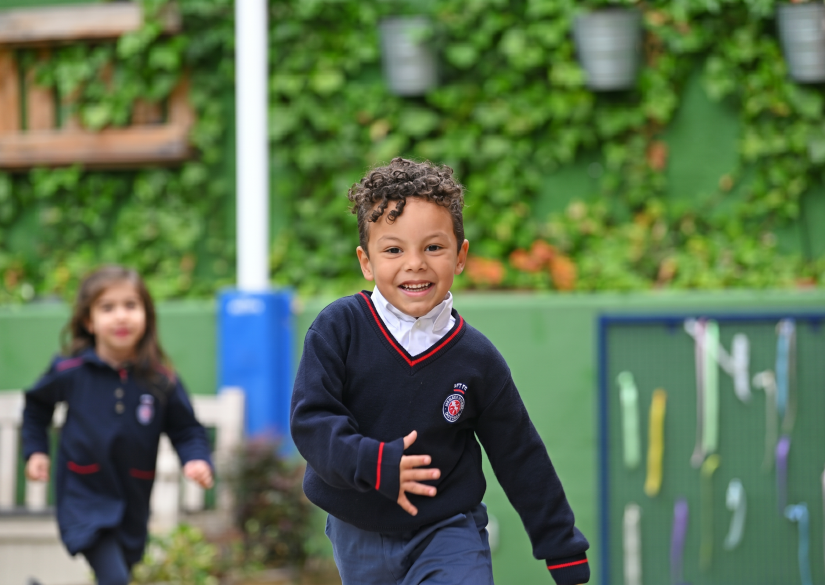
- The upper yard is designed for the youngest children and includes sand and water play areas, green spaces, and a small teaching garden.
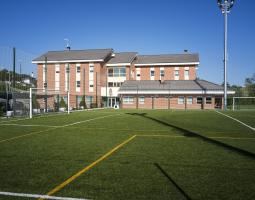
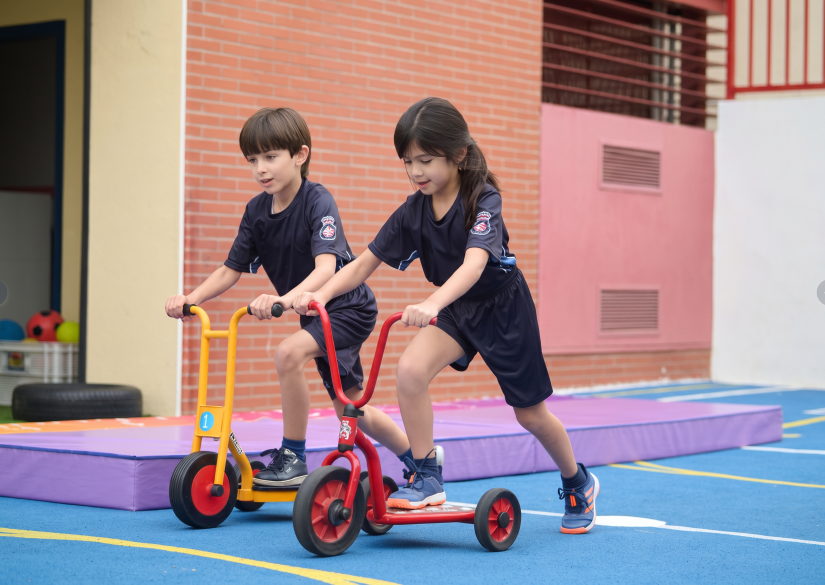
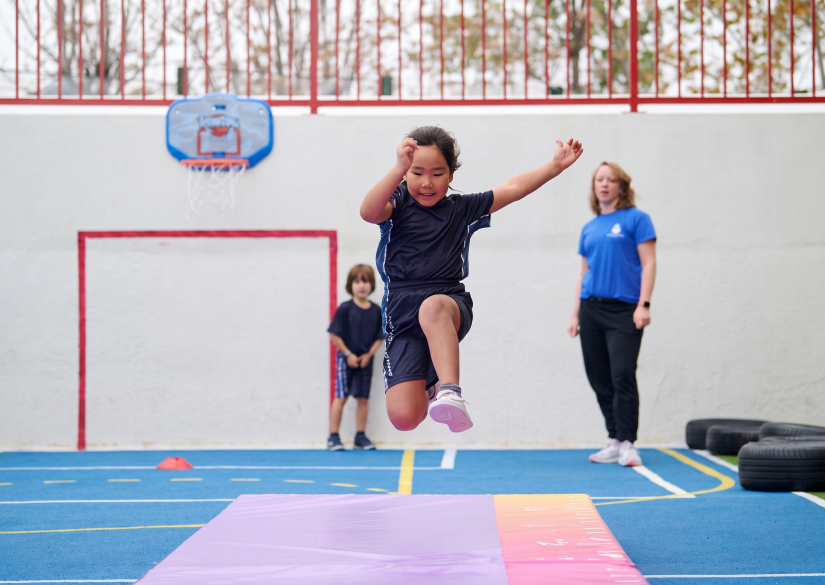
- The lower yard is oriented towards active recreation: it has a football pitch, a basketball area, and climbing structures.
The campus has library spaces, a multipurpose hall, a kitchen, and a dining room.
Admission dates and extra charges
The academic year is divided into 3 trimesters.
In addition to tuition fees, families should consider extra costs:
- Lunches,
- School bus,
- Extracurricular clubs and activities,
- Excursions and field trips,
- Before- and after-school care,
- Enrollment fee upon place confirmation,
- The Induction English program if required.
Enrolment process
The admission process begins with contacting the school and consulting on the choice of age group. Parents are then invited for a campus tour or an online meeting. After that, it is necessary to fill out an application and provide documents: the child's identity document, parents' documents, a photograph, and, if available — school reports or specialist assessments.
After reviewing the documents, the school makes an enrollment decision and sends the family a place offer. To confirm it, an enrollment fee must be paid. Parents then receive the documents, and the school helps the child prepare for the start of studies.
Perspectives
After completing Year 2, students continue their studies at one of the network's senior schools — King's College School La Moraleja or King's College School Soto de Viñuelas. Preparation for the transition begins in advance: children become familiar with the new campus, participate in joint sports and school events, and meet their future classmates and teachers.
In the third term of Year 2, students take part in a three-day residential program at Layos Camp, which includes accommodation on the camp grounds, cooking and gardening classes, horse riding and archery.
Entry requirements, how to apply, what is required to enrol
The main requirement is that the child's age matches the chosen level.
The school accepts applications throughout the year. Knowledge of English is not required for admission to the younger groups. If a child aged 5–7 is enrolling in Primary and does not yet have a confident command of English, the school may offer the Induction English language adaptation program. The number of places in the program is limited, and the decision on enrollment is made individually, taking into account the child's readiness to study.
Scholarships King's College School Chamartín, Kings College Chamartin
Inspired schools offer the Nsouli Scholars program: it is designed for 50 students at a time across the entire Inspired group and covers tuition in full for the entire duration of studies.
Large families are entitled to benefits: the third child receives a 10% discount, the fourth — 15%, the fifth and each subsequent child — 20% off tuition, registration fees, meals, and transportation services.
Institution on the map
Residence permits, citizenship and other services
- Guardianship services during the studies
- Student supervision
Review about King's College School Chamartín, Kings College Chamartin
Recommendations on when to apply
| Language courses, schools and children's language camps | Primary and secondary education - private schools | Preparation programmes for entering universities - higher education | Higher education (after completing accredited programs A-level, IB, High School) - Bachelor, Master, MBA |
| - we recommend to apply 6-9 months before the start of the course (some camps and schools offer discounts for early booking or for lengthy study programs) - there are some very popular and high demand children's camps, where the applications need to be submitted 1 year in advance (in particular Switzerland , Great Britain , USA , Canada , Austria) | - we recommend to apply one year before the start of the training program, - some schools have a specific time frame (September-November - please specify an individual school) - some schools require tests in several stages (UKISET, internal tests of the school: English, mathematics, logics, subjects, interview, some require a personal visit) | - we recommend to apply one year before the start of the program, - for Foundation and Pathway programs, IELTS and TOEFL certificates are usually required, respectively | - recommended submission one year before the start of the program, - the deadline normally closes in January, for TOP HEIs and, as a rule, in March in other universities - for a bachelor, a Foundation or Pathway preparatory program a completed A-level, IB, High School + IELTS / TOEFL are required - for Masters you need a graduated higher education, in some cases you need a pre-Masters program - MBA requires completed higher education, work experience preferably at least 2-3 years, etc. |