For partners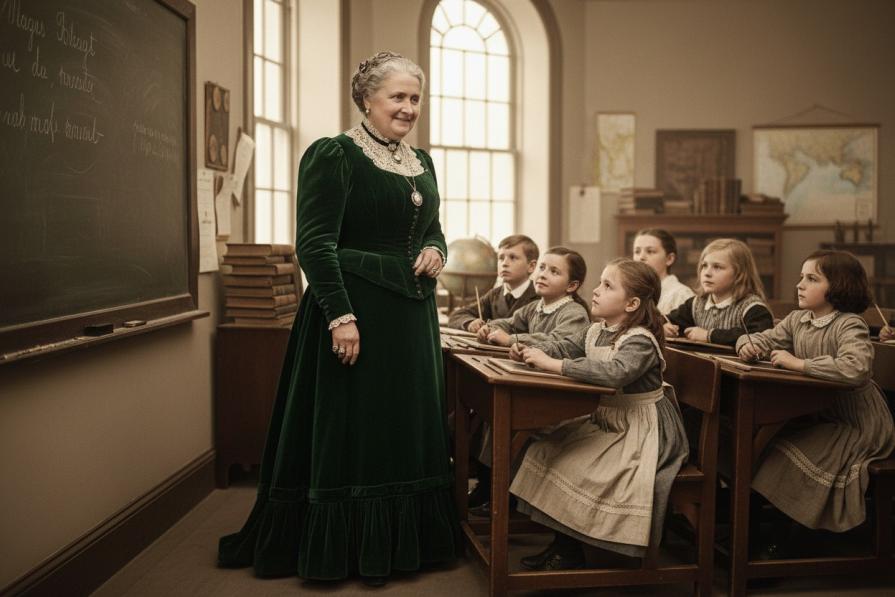
There is a lot of talk about Montessori today, and almost always the speakers are thrown from one extreme to another. For some, this is a magical method, where children learn to read on their own at the age of three, for others it is "expensive kindergartens with wooden toys and lack of discipline." The truth, as usual, is somewhere in between.
The interest in the system is understandable: parents are tired of the model where the child is constantly corrected, rushed and compared with others. I want the child to be independent, skillfully concentrate, not afraid of mistakes and not to learn "under the stick". Montessori promises all this – and it does not with slogans, but through the concrete organization of the environment and work with children.
That being said, most people who discuss Montessori have never seen a live Montessori classroom! They operate with fragments of what they heard or read somewhere: "children choose themselves", "no one forces them", "everyone sits quietly". Without understanding what is behind this, the method is either idealized or written off as a strange pedagogical experiment.


What is the Montessori system? In simple words
To figure it out, let's start with a simple one: what is the Montessori system in general and why was it invented? If we remove the beautiful philosophy and complex terms, the Montessori system is a way to organize education so that the child learns on his own, and the adult does not interfere with him, but helps him in time.
The key idea is simple: children are naturally curious and want to learn about the world. The problem is not in the lack of motivation, but in the fact that adults often either do for the child, or all the time direct and control him. In the Montessori environment, the adult fades into the background and becomes not a commander, but an observer and guide.
What does it look like in practice?
In the group, everything is arranged so that the child can act independently: the materials are in accessible places, each lesson has a clear beginning and end, mistakes are discernible without the prompting of an adult. The child chooses what to do, how much time to devote to work and when to finish it.
At the same time, freedom is not chaotic — it is limited by clear rules and the logic of the environment.
Montessori is not absolute freedom and "do what you want", just leave it alone, for God's sake, it's "do it yourself, but according to the rules that we will explain to you, and in a prepared space". That is why in well-functioning Montessori classrooms it is usually quiet, calm, there is no fuss and running around – not because children are suppressed, but because they already have something to do.
How and when did the Montessori method appear?

In 1907, in Rome, in the poor district of San Lorenzo, the first Casa dei Bambini — "Children's House" — was opened. It was a space for the children of workers who were left unattended all day long while their parents worked. The task was extremely simple: to teach children basic skills, order, independence and help them adapt to life in society. Maria Montessori, a doctor by studying, took up work with children. She approached the children not as a teacher with a ready-made program, but as a researcher: she observed what the children did themselves, what they made mistakes, what they were drawn to, and based on this she changed the rules of the game and tasks.
The result was unexpected! Children who were considered "difficult" and "unteachable" began to concentrate, work carefully, and master reading, writing, and arithmetic without pressure or punishment. Moreover, they have become calmer and more confident. Montessori emphasized: her method is not about the elite and not about accelerated development. The secret is not to interfere with the natural development of the child and to give him the right tools in time. Later, the system spread around the world, became overgrown with philosophy and became what we today call the "Montessori method".
Who is Maria Montessori?

Maria Montessori is an Italian doctor, educator and child development researcher. She was born in 1870. In 1896, she received a medical diploma - a rarity for a woman at that time - and became one of the first female doctors in Italy. Working with children, including those with special needs, Montessori came to the conclusion that many difficulties arise not because of "problem" children, but because of an inappropriate environment and excessive pressure from adults.
Her method quickly gained international recognition. Montessori worked and lectured in Europe, the United States, and India, and in 1929 she founded the International Montessori Association to keep the technique free of distortion.
Montessori Basic Principles: How It Works From The Inside
In order for Montessori not to look like a bunch of beautiful words, it is important to understand its basic principles. There are not many of them, but each of them is critical: if you remove at least one, the system begins to fall apart.
Provisioned environment
This is the basis of the basics. In a classroom or group, everything has its place, everything is available to the child, there is no need to ask an adult for anything. The environment seems to "prompt" what and how to do. If the child spills water, there is a rag nearby. If he has finished the work, it should be intuitively clear to him where to put everything.
Freedom of choice within a given framework
The child chooses what to do, but does not violate the boundaries of others and does not destroy the environment. The freedom here is not abstract, but very practical: you are free to choose the work, but you must bring it to the end and return the material to its place.
Multi-age groups
This is usually a range of three years. The younger ones learn from the elders, the older ones consolidate their skills by helping the younger ones – this reduces competition and removes the competitive component.
Long work cycles
The child is not pulled every 10-15 minutes, driven into a rigid schedule - he can go deeper into the lesson and finish it at his own pace.
The role of an adult
An adult is not the main source of knowledge here: he shows how to use the material, observes and intervenes only when it is really necessary. This is one of the most difficult roles, because it requires self-control and trust in the child.
Sensitive periods: why does the child suddenly "pull" to something?

At the beginning of the 20th century, Montessori noticed that a child is sometimes especially drawn to a certain skill, and he is ready to repeat the same thing dozens of times – voluntarily and with pleasure. One suddenly begins to endlessly put objects in their places, to repeat new words, the third to climb, run, carry heavy things. In the usual system, adults often try to "knock it down": "enough already", "let's read a book" or even very rudely: "sit down and don't shine on me here".
Montessori believes the opposite: if interest has come, it is better to use it. There are several periods of cognition.
- The language period begins at birth: A child absorbs speech, intonations, words – and does it without any lessons. That is why in the Montessori environment they talk to children a lot, clearly name objects.
- The period of order usually manifests itself at about 2-4 years. It is important for the child that things lie "like yesterday", so that there is an understandable ritual.
- The period of movement is when the child wants to carry, pour, open, close, climb.
- There are other periods as well – sensory development, social skills, interest in numbers and symbols. An important point: they are not activated on a schedule, each child has his own pace.
Pros of the Montessori system
Montessori has many supporters, and this is no coincidence - with high-quality implementation, the system really gives results.
- The first and most noticeable advantage is independence. Children learn to do a lot of things early without the help of an adult: choose a task, prepare the workplace, finish the job, clean up after themselves.
- The second important effect is concentration. Due to long work segments and the absence of constant distractions, children learn to keep their attention on one activity - simply because they are interested in it.
- The third plus is intrinsic motivation. In the Montessori environment, grades, stickers and competitions are rarely used: the child works not for the sake of praise, but for the sake of the result, and this reduces anxiety and fear of mistakes.
- Social skills should be noted separately. Multi-age groups remove fierce competition, instead children learn to help each other, ask for help and negotiate. The older ones feel responsible, the younger ones feel supported.
Cons of the Montessori system

High entry threshold
Montessori cannot be introduced "in parts": you need prepared teachers, a full environment, time for reconstruction. It is expensive and time-consuming. Half measures do not work, it can only get worse. At the same time, there are few good Montessori teachers, the preparation is long and expensive. As a result, quality is highly dependent on the individual adult, and not on the method as such.
The brand does not guarantee anything
The word "Montessori" is not protected: under the same sign there can be both strong programs and formal imitation with minimal observance of principles.
Difficult to scale
The technique does not tolerate mass participation, in large groups and with a lack of time, the system quickly collapses.
Conflict with the formal education system
Standards, tests, reporting, and rigid programs don't go well with individual pacing and free choice. There are children who, at a certain stage, need a more directive environment and external structure. Montessori is not a one-size-fits-all solution.
Inflated expectations
The technique is often credited with more than it can give, let's be honest. "To educate a genius" is an abstract, impracticable, and useless task.