

Study journalism in USA - 46 institutions
- Faculties of Journalism at Best U.S. Universities for International Undergraduate Students
- Academic studies in prestigious Master's programs for students from abroad in the USA
- Prestigious doctoral studies for foreign students at top US universities
- Career outlook for journalism graduates in the USA
- Student visa and work rights for international journalism students in the USA
-
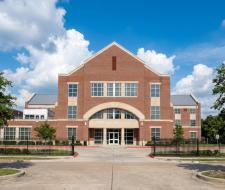 By far the best school in Texas, outstanding facilities and accommodation
USAHouston, TexasCurrently watching: 10from 21945.00 $ / year
-
 According to information for 2019, an average SAT score made up 1220
USANew YorkCurrently watching: 8from 30000 $ / semester
-
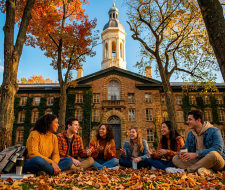 from 35600 $ / semester
-
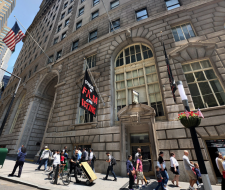 NAMED A TOP 50 FILM SCHOOL
USANew YorkCurrently watching: 10from 25865 $ / semester
-
 #9 Best Bachelor of Business Economics Programs
USACincinnatiCurrently watching: 7from 22450.00 $ / year
-
 from 29850.00 $ / year
-
 from 2950.00 $ / 8 weeks
-
 from 32000.00 $ / 18 months
-
 #105-115 Regional Universities West; in cooperation with Marvel.
USASan Francisco, CaliforniaCurrently watching: 6
-
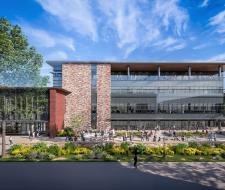 from 16500 $ / term
In the United States, there are more than 4,000 prestigious academic universities for students from abroad, where you can get a quality journalism education in 478 programs, almost half of which are accredited by a professional journalistic council. Bachelor's programs are the most popular among foreign students, a little less often students continue their studies at the master's and doctoral levels.
Alternative destinations
Faculties of Journalism at Best U.S. Universities for International Undergraduate Students
Each applicant from abroad can receive a quality journalistic education at top US universities at the undergraduate level. For admission, you must have completed secondary education ( A-level and IB diplomas are an advantage), a certificate of the TOEFL language exam , and, as a rule, the results of the SAT exam (or its passing on the spot) or GPA. Depending on the conditions of the university, recommendations, a motivation letter, an additional interview, preparatory courses in the English language and specialized disciplines (duration 9-12 months) may be required. It is convenient to take preparatory courses at the university chosen for admission, and a certificate of completion gives an additional chance to become a student.
Education at the undergraduate degree in journalism lasts 4 years, and the cost of a year of study starts from $18,000. At some selective universities the figure is much higher: full-time undergraduate tuition at Northwestern University reaches $71,802 per academic year. During the first three semesters, students take the following disciplines:
- One or more foreign languages,
- American history and government system,
- Maths,
- One of the courses in the natural sciences, such as biology or physics,
- Statistics and Economics (3rd semester),
- Sociology (not earlier than the 3rd semester),
- Humanitarian disciplines to choose from.
The first 2 years give students 80 credits (points that are awarded after successfully completing a course and passing tests and exams).
Among the best compulsory seminars at TOP US universities for foreign students of journalism faculties are the so-called colloquiums, where experts and famous journalists share their experience and answer questions, for example about the career opportunities of a journalist.
In the fourth year, the future journalist chooses a prestigious academic program specialization. Some programs:
- Reporter,
- Newspaper journalism,
- Photo, television and radio journalism,
- Convergence journalism (a combination of classic and new versions of journalism).
The 6th semester of prestigious programs at top universities offering journalism studies in the USA also includes compulsory courses, for example:
- The work of an editor and producer,
- Legislation in the media field.
In the final year of the Faculty of Journalism, the undergraduate student prepares an individual project, defends the completed work, receives a bachelor's degree and is issued a diploma.
The table shows the popular academic programs of universities for foreigners at the undergraduate departments of journalism:
|
US University Location |
Program |
Application area |
|
Felician University, Rutherford |
Bachelor of Arts in Communications |
TV Radio Print media Online Public Relations Journalism Social Media Marketing Video Production Coordinator Documentaries |
|
Journalism / Media Concentration |
||
|
Videomaking Concentration |
||
|
Long Island University , Long Island |
Bachelor of Fine Arts in Journalism - LIU Post |
|
|
Missouri Baptist University, St. Louis, Chicago |
Bachelor in Broadcast Media |
News reporter Radio or television presenter Sports commentator Television producer Radio producer Videographer Program editor Documentary director Film director Music producer Sound engineer Screenwriter and others |
Also on the list of popular elite universities with academic programs offering journalistic education in the USA:
- Columbia University,
- The City University of New York,
- The University of California, Berkeley,
- Stanford University,
- Murray State University.
Academic studies in prestigious Master's programs for students from abroad in the USA
In order to become a student at a prestigious university in the USA, foreign students need to confirm their knowledge and go through the formal procedures required for admission. Along with the general rules, American universities are entitled to establish additional entrance requirements - among the mandatory:
Graduate studies in programs of academic universities lasts 1-2 years, each semester includes 3 courses (for the 2nd year (or in the second half of the 1st year) in parallel with the work on the dissertation under the supervision of a supervisor). As a rule, compulsory courses, which take 2 semesters, take the following topics:
- Evidence and Inference (facts and explanations),
- History of journalism, principles of work.
Students must take several academic courses at other faculties in the second year. Upon completion, the future master defends his work, receives a master’s degree and a diploma. One of the Master's programs in journalism:
|
University |
Program |
Description |
|
Syracuse University - S.I. Newhouse School of Public Communications, Syracuse |
Master in Broadcast & Digital Journalism |
Education in Master of Radio Journalism, Digital Journalism Writing texts Collection and presentation of information Editing, etc.
|
The cost of Master's programs on average is $ 23,000-25,000.
Prestigious doctoral studies for foreign students at top US universities
In order to enroll in prestigious studies to continue higher education at the best US universities at graduate school, applicants need to pass several exams ( TOEFL , GRE ), write a motivation letter, attach recommendations and essays with an overview of existing projects, research, practice, etc.
Prerequisite: Master's degree. Postgraduate studies last 4-5 years, incl. 2-4 semesters of seminars in the audience, then - writing a dissertation under the supervision of a supervisor on a topic chosen in advance, obtaining a Ph.D. Doctoral studies can be taken at the most famous universities in the United States, such as Stanford and Columbia University.
Career outlook for journalism graduates in the USA
A bachelor's degree is the typical entry-level qualification for reporters, news analysts, and journalists, and internships or hands-on work on a college newspaper, radio station, or television channel can also help. The occupation held about 47,100 jobs in 2025, with a median annual wage of $62,200 ($29.91 per hour) as of May 2025.
Employment is projected to fall by 6% between 2025 and 2035, a change of roughly 2,800 positions, yet the field still opens about 3,400 vacancies each year over the decade. Professionals work across several settings:
- Newspaper publishers, which employ around 28% of professionals,
- Media streaming, social networks, and other content providers at about 21%,
- Television broadcasting stations at roughly 18%,
- Self-employed and freelance work at about 17%,
- Radio broadcasting stations at around 4%.
Student visa and work rights for international journalism students in the USA
International students choose between two nonimmigrant visa categories: the F-1 academic student visa and the M-1 vocational student visa. Journalism degrees fall under the F-1 category, which covers full-time study at an SEVP-certified institution in a program that ends with a degree, diploma or certificate.
To qualify for F-1 status, an applicant needs:
- Full-time enrollment at an SEVP-approved school,
- English proficiency, or enrollment in courses that lead to it,
- Enough funds to cover living costs throughout the course of study,
- A residence abroad that the student intends to keep.
During the first academic year an F-1 student may not work off campus, though on-campus employment is allowed under set conditions. After that year, three types of off-campus work open up: Curricular Practical Training (CPT), Optional Practical Training (OPT) and the STEM OPT extension. Any off-campus training must relate to the student's field of study and be authorized in advance by the Designated School Official through SEVIS and by USCIS.
OPT lets graduates stay and gain practical experience after finishing a degree, and its use has grown. In 2024/25 the number of international students on OPT grew by 21% to 294,253, compared with 488,481 international graduate students and 357,231 undergraduates. Specialists at Smapse will guide you through every stage of admission.