
 For partners
Top 93 GCSE schools in England UK - 14 yo
-
 In 2021 - 75% of A Level students achieved A* - B
United KingdomCheltenhamCurrently watching: 8from 7700.00 £ / term
In 2021 - 75% of A Level students achieved A* - B
United KingdomCheltenhamCurrently watching: 8from 7700.00 £ / term -
 In 2023, the average IB score was 38.6 points
United KingdomReadingCurrently watching: 9from 10200.00 £ / term
In 2023, the average IB score was 38.6 points
United KingdomReadingCurrently watching: 9from 10200.00 £ / term -
 133 place in the best boarding schools in the UK
United KingdomLondonCurrently watching: 6from 5245.00 £ / term
133 place in the best boarding schools in the UK
United KingdomLondonCurrently watching: 6from 5245.00 £ / term -
 Ashbourne students consistently achieve excellent A level results, 53% A*A in 2023, far ex
United KingdomLondonCurrently watching: 8
Ashbourne students consistently achieve excellent A level results, 53% A*A in 2023, far ex
United KingdomLondonCurrently watching: 8 -
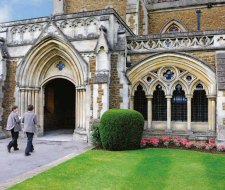 In 2023 83% of students achieved A*– B grades at A-level
United Kingdomnear LondonCurrently watching: 10
In 2023 83% of students achieved A*– B grades at A-level
United Kingdomnear LondonCurrently watching: 10 -
 In 2023 - 72% of A Level students achieved A* - B
United KingdomBedfordCurrently watching: 8from 7630.00 £ / term
In 2023 - 72% of A Level students achieved A* - B
United KingdomBedfordCurrently watching: 8from 7630.00 £ / term -
 from 10600.00 £ / term
 -
 In 2023 - near 38% of A Level students achieved A*-A grades
United KingdomLondonCurrently watching: 6
In 2023 - near 38% of A Level students achieved A*-A grades
United KingdomLondonCurrently watching: 6 -
 In 2021 an average IB score made up 37.5
United KingdomNorwichCurrently watching: 9
In 2021 an average IB score made up 37.5
United KingdomNorwichCurrently watching: 9 -
 In 2018 near 34.2% of A Level students achieved A*/A grades
United KingdomBathCurrently watching: 3from 11165.00 £ / term
In 2018 near 34.2% of A Level students achieved A*/A grades
United KingdomBathCurrently watching: 3from 11165.00 £ / term
GCSE, also known as the General Certificate of Secondary Education, is an academic qualification that students in the UK most often acquire at the age of 16 after completing a two-year stage in secondary education. The GCSE curriculum is designed to provide a broad education, allowing students to specialise in areas of genuine interest to them.
Most often, students take several GCSE subjects, including the main ones: English, Mathematics and Science. The list of additional subjects includes history, geography, foreign languages and others. The GCSE assessment process usually involves a combination of written examinations, coursework and practical assessments, depending on the subject.
GCSE exam scores are distributed as follows:
- 9 = High A score *,
- 8 = Standard A score,
- 7 = Grade below A,
- 6 = High B score,
- 5 = Low B or High C
- 4 = Grade below C,
- 3 = D or high E
- 2 = Low E or High F,
- 1 = Smaller F or G,
- U = not passed.
Final exams are necessary to assess the knowledge and skills of a student in various subjects, play an important role in shaping the future educational and career path of a student. The GCSE qualification serves as the foundation for further education and employment: school leavers usually use GCSE results to enter college or high school, where they can go on to more in-depth study at A-level or go on to vocational courses. For potential employers, the results of further exams demonstrate the applicant's academic achievements and skills.