

GCSE in Spain for international students
This content was developed and approved with active participation of Esther Diaz.
In the process of preparing the material, we referenced the following sources:
- https://www.ibo.org/es/programmes
- https://www.huelvainformacion.es/suplementos-huelva-informacion/educacion-huelva
-
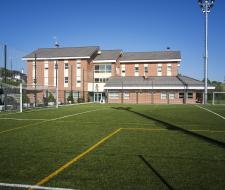 In 2023 - 71.40% of A Level students achieved A* - B
SpainMadridCurrently watching: 3from 12400 € / termProgram namedateAgeFeesPrimary schoolLast booking 1 weeks ago
In 2023 - 71.40% of A Level students achieved A* - B
SpainMadridCurrently watching: 3from 12400 € / termProgram namedateAgeFeesPrimary schoolLast booking 1 weeks ago All year round5-11Middle school
All year round11-14GCSE
All year round14-16A-Level program
All year round16-18English + football for the summer
6-16Spanish courses with football
6-16Summer English for kids
6-16Summer spanish for juniors
6-16English + dances and drama
8-14IB program
All year round16-18Early Years Program
All year round3-5Summer Camp (Day Camp)
3-5Check with our specialistsPre A-level course
All year round15+IB preparation
All year round15+
All year round5-11Middle school
All year round11-14GCSE
All year round14-16A-Level program
All year round16-18English + football for the summer
6-16Spanish courses with football
6-16Summer English for kids
6-16Summer spanish for juniors
6-16English + dances and drama
8-14IB program
All year round16-18Early Years Program
All year round3-5Summer Camp (Day Camp)
3-5Check with our specialistsPre A-level course
All year round15+IB preparation
All year round15+ -
 In 2023 90% of students achieved a strong pass of 9-4 (A* - C).
SpainMadridCurrently watching: 3from 10560.00 € / yearProgram namedateAgeFeesEarly Years ProgramLast booking 1 weeks ago
All year round3-5Primary school
All year round5-11Middle school
All year round12-14CLSP & IGCSE Program
All year round14-16A-Level program
All year round16-18IB program
All year round16-18English+summer vacation
03.07.2023 - 14.07.20238-18English + football for the summer
03.07.2023 - 14.07.20238-18
In 2023 90% of students achieved a strong pass of 9-4 (A* - C).
SpainMadridCurrently watching: 3from 10560.00 € / yearProgram namedateAgeFeesEarly Years ProgramLast booking 1 weeks ago
All year round3-5Primary school
All year round5-11Middle school
All year round12-14CLSP & IGCSE Program
All year round14-16A-Level program
All year round16-18IB program
All year round16-18English+summer vacation
03.07.2023 - 14.07.20238-18English + football for the summer
03.07.2023 - 14.07.20238-18 -
 In 2023 - 100% A-Level exam pass rate
SpainCadizCurrently watching: 2from 15450 € / semesterProgram namedateAgeFeesA-Level programLast booking 3 weeks ago
All year round16-18GCSELast booking 1 weeks ago
All year round14-16Middle school
All year round11-14Primary school
All year round6-7Early Years Program
All year round3+Golf Academy (English)
All year round9-18Football Academy (English)
All year round14-18English and sailing
All year round14-18Spanish courses with football
18.06.2025 - 28.06.20255-17Summer spanish for juniors
5-17Check with our specialists
In 2023 - 100% A-Level exam pass rate
SpainCadizCurrently watching: 2from 15450 € / semesterProgram namedateAgeFeesA-Level programLast booking 3 weeks ago
All year round16-18GCSELast booking 1 weeks ago
All year round14-16Middle school
All year round11-14Primary school
All year round6-7Early Years Program
All year round3+Golf Academy (English)
All year round9-18Football Academy (English)
All year round14-18English and sailing
All year round14-18Spanish courses with football
18.06.2025 - 28.06.20255-17Summer spanish for juniors
5-17Check with our specialists -
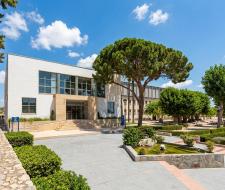 In 2023 - 73.77% of A Level students achieved A* - C
SpainValenciaCurrently watching: 2from 7990.00 € / termProgram namedateAgeFeesMiddle schoolLast booking 5 weeks ago
All year round11-14GCSE
All year round14-16A-Level program
All year round16-18English+summer vacation
01.07.2020 - 31.08.202011-18Summer Spanish +activities
01.07.2020 - 31.08.202011-18
In 2023 - 73.77% of A Level students achieved A* - C
SpainValenciaCurrently watching: 2from 7990.00 € / termProgram namedateAgeFeesMiddle schoolLast booking 5 weeks ago
All year round11-14GCSE
All year round14-16A-Level program
All year round16-18English+summer vacation
01.07.2020 - 31.08.202011-18Summer Spanish +activities
01.07.2020 - 31.08.202011-18 -
 95% of students successfully enter the university
SpainBarcelonaCurrently watching: 2from 9104.00 € / yearProgram namedateAgeFeesA-Level programLast booking 1 weeks ago
All year round16-18Summer English for kids
05.06.2019 - 20.08.201914-18Check with our specialistsGCSE
All year round14-18
95% of students successfully enter the university
SpainBarcelonaCurrently watching: 2from 9104.00 € / yearProgram namedateAgeFeesA-Level programLast booking 1 weeks ago
All year round16-18Summer English for kids
05.06.2019 - 20.08.201914-18Check with our specialistsGCSE
All year round14-18 -
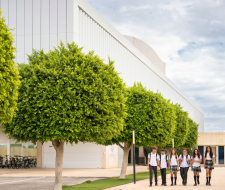 In 2023 - 60% of A Level students achieved A* - B
SpainMurciaCurrently watching: 1from 5405.00 € / termProgram namedateAgeFeesPrimary schoolLast booking 1 weeks ago
All year round5-11Middle school
All year round12-14GCSE
All year round14-16A-Level program
All year round16-18Spanish Bac
All year round16-18Early Years Program
All year round3-5
In 2023 - 60% of A Level students achieved A* - B
SpainMurciaCurrently watching: 1from 5405.00 € / termProgram namedateAgeFeesPrimary schoolLast booking 1 weeks ago
All year round5-11Middle school
All year round12-14GCSE
All year round14-16A-Level program
All year round16-18Spanish Bac
All year round16-18Early Years Program
All year round3-5 -
 In 2023 - 67% of A Level students achieved A* - B
SpainAlicanteCurrently watching: 2from 5190.00 € / termProgram namedateAgeFeesPrimary schoolLast booking 4 weeks ago
All year round7-11Middle school
All year round11-14GCSE
All year round14-16A-Level program
All year round16-18Spanish Bac
All year round16-18Early Years Program
All year round3-7IB program
All year round16-18
In 2023 - 67% of A Level students achieved A* - B
SpainAlicanteCurrently watching: 2from 5190.00 € / termProgram namedateAgeFeesPrimary schoolLast booking 4 weeks ago
All year round7-11Middle school
All year round11-14GCSE
All year round14-16A-Level program
All year round16-18Spanish Bac
All year round16-18Early Years Program
All year round3-7IB program
All year round16-18 -
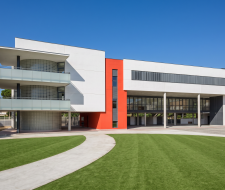 In 2023 an average IB score made up 34.4 with the highest grade - 43
SpainBarcelonaCurrently watching: 2from 14800.00 € / yearProgram namedateAgeFeesMiddle schoolLast booking 6 weeks ago
All year round11-15GCSE course
All year round14-17A-Level program
All year round16-17Primary school
All year round3-10
In 2023 an average IB score made up 34.4 with the highest grade - 43
SpainBarcelonaCurrently watching: 2from 14800.00 € / yearProgram namedateAgeFeesMiddle schoolLast booking 6 weeks ago
All year round11-15GCSE course
All year round14-17A-Level program
All year round16-17Primary school
All year round3-10 -
 from 7250.00 £ / yearProgram namedateAgeFeesGCSELast booking 3 weeks ago
All year round14-16A-Level program
All year round16-18IB program
All year round16-18Primary school
All year round7-11Middle school
All year round11-14English+summer vacation
All year round12+Check with our specialists
from 7250.00 £ / yearProgram namedateAgeFeesGCSELast booking 3 weeks ago
All year round14-16A-Level program
All year round16-18IB program
All year round16-18Primary school
All year round7-11Middle school
All year round11-14English+summer vacation
All year round12+Check with our specialists -
 from 4500.00 € / yearProgram namedateAgeFeesCLSP & IGCSE ProgramLast booking 4 weeks ago
All year round14-16A-Level program
All year round16-19
from 4500.00 € / yearProgram namedateAgeFeesCLSP & IGCSE ProgramLast booking 4 weeks ago
All year round14-16A-Level program
All year round16-19

What are the most important questions parents ask when looking for the right school?
First of all, safety and reliability for children is assessed. They are also looking for extracurricular activities, opportunities to travel around the country and beyond, in general the lifestyle on campus. Many people choose school because they value family values, ethics, a calm atmosphere.
Alternative destinations
Admission requirements for Spanish schools
Admission requirements for GCSE courses in Spain can differ depending on the specific educational institution or organisation conducting the program. The following general requirements typically apply:
- GCSE courses are generally designed for students aged 14 to 16. While some institutions may admit students below this age range, such decisions fall under individual admission policies and should not be relied upon as a guaranteed option.
- If the course is taught in English or Spanish, a certificate confirming language proficiency at B1–B2 level is required.
- Certain independent schools may request confirmation of the applicant's ability to cover tuition fees and related expenses.
- To enrol in GCSE courses, a student must usually first submit an application and complete a registration process, providing the necessary personal information and details of prior educational achievements.
- A passport, medical insurance, and copies of relevant documents are also required.
GCSE: cost in Spain
The cost of taking GCSE exams in Spain can vary depending on many factors, including the chosen subjects, the exam location, and additional preparation services or educational materials. Typically, the cost per subject ranges from a few tens to a few hundred euros.
Some educational institutions offer additional exam preparation services: individual sessions with a teacher, additional materials and tests. Such services may be included in the overall cost or provided for an additional fee.
The cost of GCSE in Spain can also vary depending on the location of the exam: for example, exams can be conducted at the school itself or at an accredited examination center.
Features of schools with GCSE in Spain
Individual or group instruction is offered with personalized sessions that can be adapted to the students' own learning pace: this ensures steady progress in English, Spanish, mathematics, social studies, and exam preparation. Mastering exam-taking techniques is considered key to achieving academic success, so staff teams at Spanish independent schools provide effective strategies (such as communicative memorization techniques) and technical equipment (computers, high-speed internet, tablets) necessary for successful completion and achieving the best results. Each student is assigned a dedicated manager who provides support at all stages of their studies.
GCSE schools in Spain for foreigners: program overview
The GCSE educational pathway is structured into four key stages, the final one being Key Stage 4 (KS4), which is designed for students in Years 10 and 11, typically aged 14 to 16. During KS4, the primary focus is on GCSE courses, with the actual examinations taking place at the completing Year 11.
GCSE stands for General Certificate of Secondary Education. It serves as the contemporary counterpart to the former O Levels and CSEs, which were once widely recognized across the UK and Europe. The modern GCSE format was introduced in 1986, and the first examinations under this system were held in 1988.
Although students enjoy a degree of flexibility in selecting their GCSE subjects, three core directions remain compulsory: English language, mathematics, and science. Additionally, students are required to study citizenship and physical education, though neither of these subjects involves formal examinations. All remaining GCSE subjects are optional and may be chosen according to individual preference.
In addition to the core curriculum, schools in Spain that offer GCSEs must provide access to at least one course in each of the following four areas:
-
Arts (art and design, music, dance, drama, and media arts)
-
Design and technology (electronics, food technology, graphics, resistant materials, systems and control, textiles, and product design)
-
Humanities (geography and history)
-
Modern foreign languages (e.g., French, German, Spanish)
The range of optional subjects available at KS4 depends on the specific school in Spain: some subjects may be offered only in a limited capacity, while others—such as certain languages (e.g., German)—may not be available at all. Availability is stipulated by the school's location and its particular areas of specialisation.
GCSE schools in Spain determine independently how many GCSE examinations their students may take, with the number typically ranging from 7 to 12. In addition to the compulsory subjects of English language, mathematics, and science, students select their GCSE options in Year 9. It is essential that they choose subjects aligned with their future career aspirations and personal interests. Final exams are the most important exams that students take before entering college or university, and their results are of great importance for their future prospects. Many college courses require a minimum of five GCSE passes at grade 4 or above (equivalent to a C or higher under the former grading system). Certain college courses accept only students who have achieved a grade 6 or above (equivalent to an A or A+) in the relevant GCSE subject. Universities often require a minimum of four exams (grade C or above) in English language, mathematics, and at least one science subject.
For practical subjects such as art, design and technology, or music, 60% of the final examination grade is based on coursework. In English literature, 40% of the final grade is derived from work completed either in class or at home.
The difference between GCSE in the UK and Spain
The Spanish education system still places more emphasis on rote learning and memorization, while being weaker in developing critical thinking and creativity. The British education system places greater emphasis on developing critical thinking, problem-solving, and creativity skills. However, starting from the 2023–2024 academic year, changes are taking place in the Spanish ESO, and GCSE schools in Spain emphasize that they aim to move closer to the British version of the curriculum. The goal of these changes is to more actively develop critical thinking and reasoning in students so that they can apply knowledge in real-life situations, rather than providing simple theoretical instruction.
Learning programs-summary information
| Name | Meaning | Equivalent | Min. age | Duration, years |
Next stage | Cost |
|---|---|---|---|---|---|---|
| GCSE | General certificate of secondary education | secondary education (non-accomplished) | 14 | 1–2 | A-Levels | 15,000 USD+ |
| A-Levels | Advanced level | secondary education (accomplished) | 16 | 2 | University | 15,000 USD+ |
| BTEC | Business and Technology Education Board | secondary special education | 14 | 2–3 | University/ work | 15,000 USD+ |
| Oxbridge Preparation | Preparing for Oxford and Cambridge | secondary education (accomplished) | 17 | 1 | University | 15,000 USD+ |
| International Baccalaureate | International baccalaureate | secondary education (accomplished) | 16 | 2 | University | 18,000 USD+ |
| Foundation/ Pathway Year | Preparatory year | admission to the 1st year of university | 17 | 1 | University | 14,000 USD+ |
| NCUK | The Northern consortium | 2 year university | 17,5 | 1 | 2 year University of NCUK | 13,000 USD+ |
| Special Preparation (Medics/Math/Business) | Specialized training | - | 14 | optional | optional | 4,000 USD+ |
| Academic English | Academic English | Language school | 8 + | 6–12 months | School or University | 8,000 USD+ |
Advantages and disadvantages of English schools
| Advantages | Disadvantages |
|---|---|
| The opportunity to enter the best universities in England, USA, Canada, Switzerland, Europe, the world | Expensive |
| High quality of education and academic standards | Strong workload |
| Perfect English after graduation | The need to change the social environment; it takes time to adapt |
| Useful contacts | The difficulty of choosing the most suitable school for the child, requires a qualified specialist |
Top 21 boarding colleges in England 2027
| 1 | Cardiff Sixth Form College |
| 2 | National Mathematics and Science College |
| 3 | Abbey College Cambridge |
| 4 | d'Overbroeck's College |
| 5 | MPW London |
| 6 | CATS Cambridge |
| 7 | Kensington Park |
| 8 | DLD London |
| 9 | King's College St Michael’s |
| 10 | Bellerbys Cambridge |
| 11 | Chelsea Independent College |
| 12 | MPW Cambridge |
| 13 | Bellerbys Brighton |
| 14 | CATS London |
| 15 | St Clare's Oxford |
| 16 | Bishopstrow College |
| 17 | CATS Canterbury |
| 18 | Bellerbys London |
| 19 | Ealing Independent College |
| 20 | Cambridge Tutors College |
| 21 | Abbey Manchester |
