British College of Gavà, British School of Gavà







Programs and prices, tuition fees in British College of Gavà, British School of Gavà


Nursery, Preschool Department
- Age of students — from 3 to 5 years,
- Duration of study — two years.
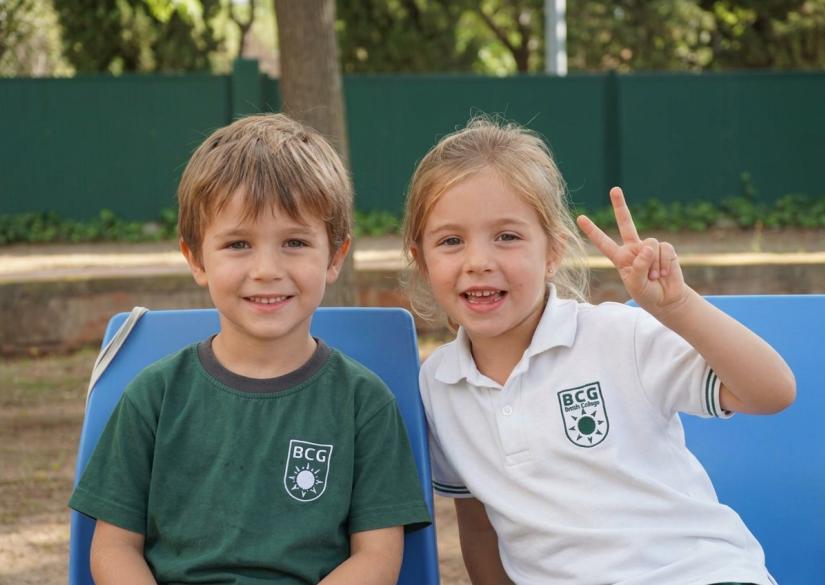
The preschool education program follows the British academic system, focused on the comprehensive development of children from the earliest age. It consists of two stages:
- Nursery — 3–4 years,
- Reception — 4–5 years.
The curriculum of both stages covers seven key areas of development, gradually increasing the complexity of the topics studied. Three main areas that are emphasized across all classes:
- Personal, social-emotional development,
- Communication skills and speech,
- Physical development.
The four specific directions are literacy, mathematics, understanding of the world around them, and visual arts and design: they broaden knowledge, allow exploration of the world, and provide valuable academic skills. Children develop reading and communication skills in English, and begin studying Spanish and Catalan. Basic numeracy, natural science, and geography skills are taught through hands-on activities both in the classroom and on outdoor grounds.
In addition to core skills, students develop their creative abilities and spend a great deal of time on physical education and dance. All classes are conducted in a play-based format, allowing children to interact with one another, absorb information more quickly, and avoid becoming overwhelmed or losing interest in learning.
The preschool department operates in a flexible format, offering two duration options: half-day or full-day. Staff organize an after-school and early-morning club, allowing children to be dropped off earlier and picked up later.
Primary School
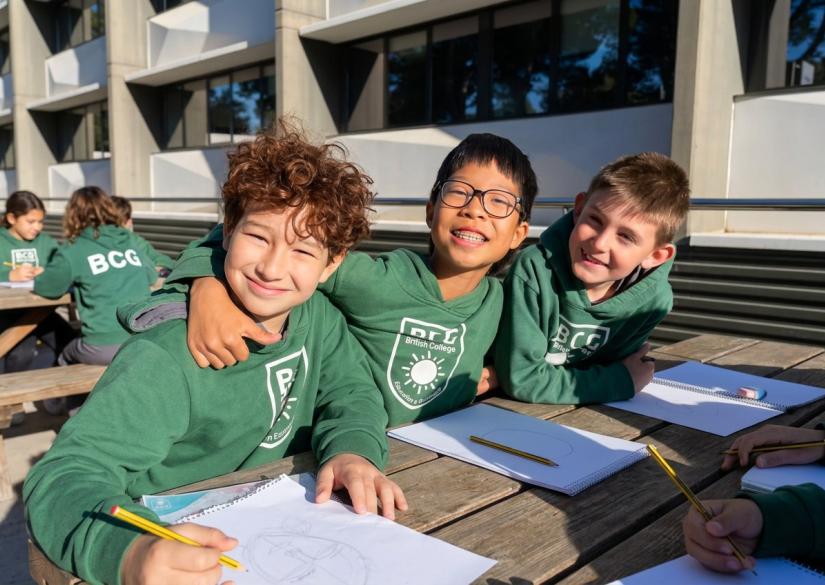
- Age of students — from 5 to 11 years,
- Duration of study — six years.
The primary school curriculum is identical to the British educational system, consisting of two academic stages:
- Key Stage 1 — grades 1–2,
- Key Stage 2 — grades 3–6.
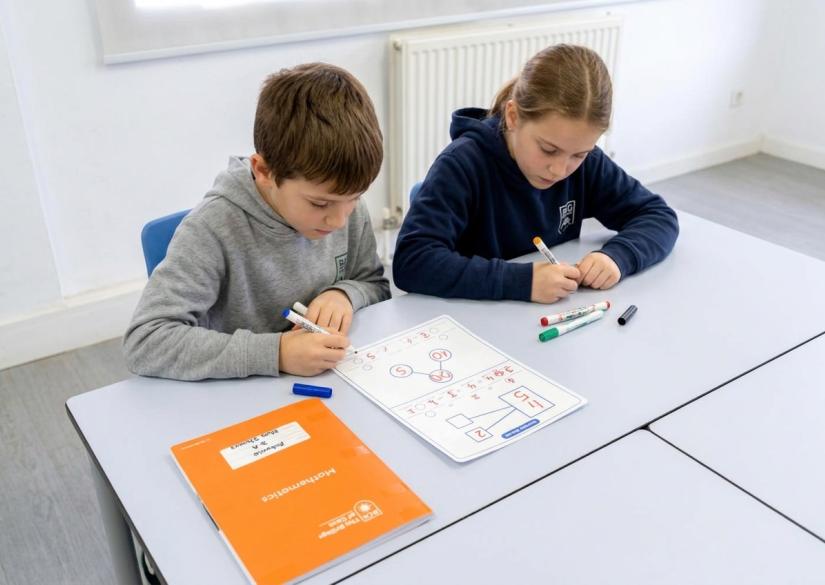
At the first stage, basic reading, writing and numeracy skills are developed. Students participate in hands-on activities: storytelling, theatrical productions and collaborative projects that strengthen their communication skills. Instruction is conducted entirely in English, with the exception of foreign language classes. The curriculum includes:
- Mathematics,
- Natural Sciences,
- History,
- Geography,
- English,
- French,
- Spanish,
- Catalan,
- Music,
- Visual Arts and Design,
- Physical Education.
At the second stage, teachers prepare students for the transition to secondary school, developing their independence and academic flexibility. Students study the same subjects but explore more complex and extensive topics.
Secondary School
- Age of students — from 11 to 14 years old,
- Duration of study — three years.
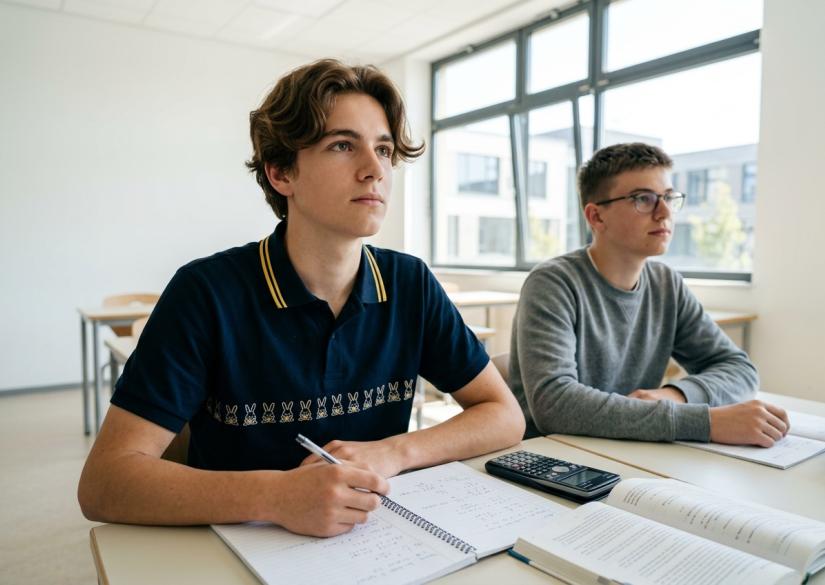
At the Key Stage 3 level, covering grades 7–9, students study a wide range of subjects:
- English,
- Mathematics,
- Natural Sciences,
- Spanish,
- Catalan,
- French,
- Dramatic Arts,
- Geography,
- History,
- Computer Science,
- Fine Arts, Design,
- Music,
- Physical Education,
- Healthy Lifestyle Basics,
- Public Speaking and others.
The rich curriculum prepares students for an important academic stage — grades 10–11, upon completion of which they will pass their GCSE exams.
Secondary School: iGCSE
- Age of students — from 14 to 16 years,
- Duration of study — two years.
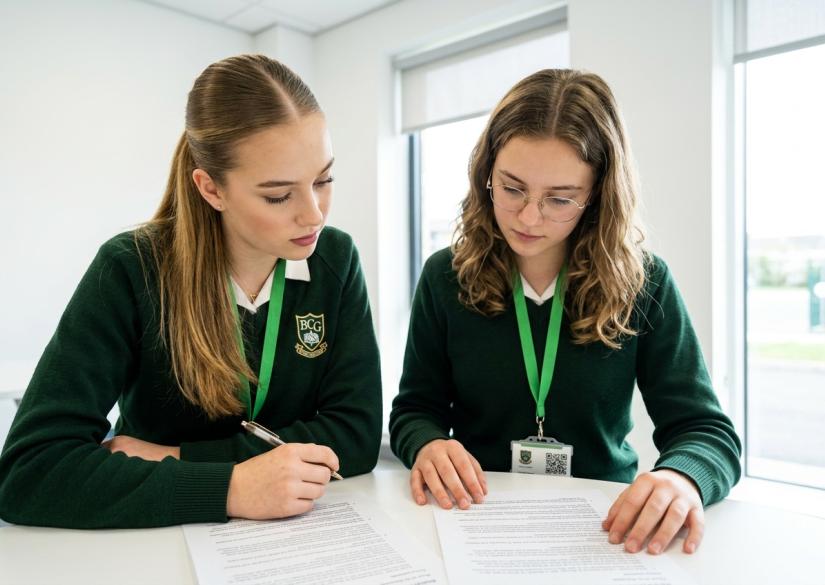
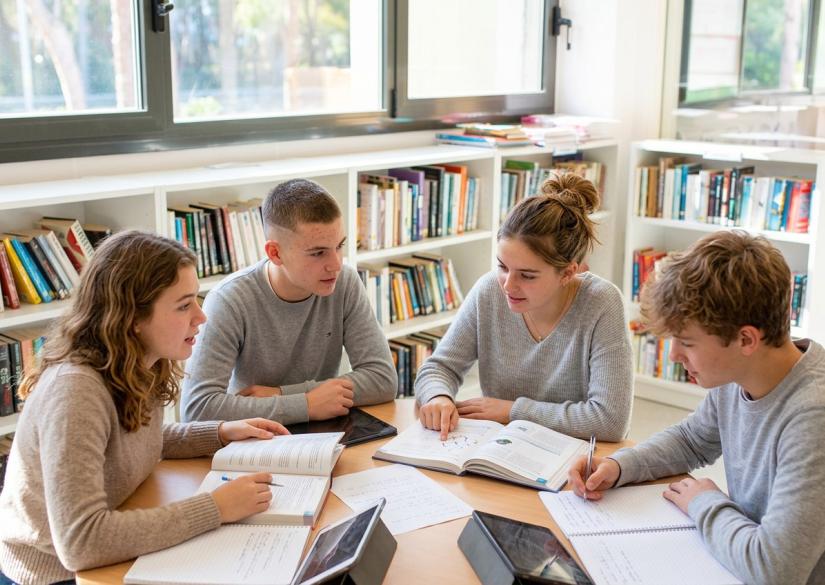
The IGCSE curriculum for grades 10–11 combines academic preparation, sport, and the arts, promoting the holistic development of students. The course includes core and elective subjects, building a strong knowledge base and giving students the opportunity to choose a specialisation in which they excel and have an interest.
Core subjects:
- English Language,
- English Literature,
- Mathematics,
- Sciences: Chemistry, Biology, Physics,
- Spanish,
- Catalan,
- Physical Education,
- Personal and Social Education, Health Science.
Elective subjects are:
- Art and Design,
- Economics,
- Business Studies,
- Computer Science,
- French,
- Geography,
- History,
- Drama,
- Psychology,
- Global Citizenship,
- Music.
Students may also choose one of two pre-set academic pathways: Sciences or Oxbridge, each of which involves studying a specific set of disciplines.
Sciences:
- English Language,
- English Literature,
- Mathematics,
- Spanish,
- Catalan / Global Citizenship,
- Separate Sciences: Biology, Chemistry, Physics.
Recommended elective subjects are Geography, Psychology, Physical Education, or French.
By choosing the Oxbridge pathway, students study all IGCSE subjects with a focus on developing analytical, research, and critical thinking skills. When selecting elective subjects, they are guided by their desired academic direction at university level.
In grade 11, students pass exams in all compulsory subjects and several elective subjects of their choice. Upon successful completion of this stage, students progress to senior school on a course of their choosing.
Sixth Form: International Diploma
- Age of students — from 16 to 18 years old,
- Duration of study — two years.
The International Diploma Program is a globally recognized secondary education qualification, highly valued by leading universities in various countries. It offers a personalized curriculum consisting of six subjects of the student's choice: three of them are studied at the advanced level (HL, 240 hours), and three more at the standard level (SL, 150 hours).
Disciplines are grouped into subject groups, from each of which one must be chosen:
- Language and Literature: English, Spanish,
- Language Acquisition: English, French, Spanish,
- Individuals and Societies: Business Management, Economics, Geography, Global Politics, History, Psychology,
- Sciences: Biology, Chemistry, Environmental Systems and Societies, Physics, Computer Science,
- Mathematics: Analysis and Approaches, Applications and Interpretation,
- The Arts: Theatre, Music, Visual Arts.
In addition to the chosen disciplines, students participate in three courses that build a personal portfolio and develop their talents:
- Theory of Knowledge (TOK) — a written analysis of the process of acquiring knowledge,
- Extended Essay (EE) — a written research paper on a topic from any chosen subject, 400 words in length,
- Creativity, Activity, Service (CAS) — participation in creative, social, and sporting activities.
Upon successfully passing their exams, students enter the top universities in the UK, USA, Germany, Spain, China, and other countries.
Sixth Form: International Career-Related Diploma
- Age of students — from 16 to 18 years old,
- Duration of study — two years.
The International Career-Related Diploma Program is conducted in partnership with leading professional institutions. The academic knowledge gained through subject study is supplemented by professional preparation and specialized research.
Students choose one of three academic pathways:
- Entrepreneurship in partnership with the SUMAS Switzerland management school — an in-depth study of sustainable business practices in key sectors: finance, hospitality, fashion, tourism. Through hands-on projects with professionals from various industries, students tackle real-world challenges while developing essential skills in marketing, operations management, sustainable business development, and ethical leadership.
- Performing Arts in partnership with the London Academy of Music and Dramatic Art (LAMDA) — ideal for students passionate about acting, musical theatre, and dance, combining academic study with intensive practical preparation.
- Sports Innovation in partnership with the «Barcelona» Innovation Hub (BIHUB) — designed for students passionate about sports science, management, and innovation. The academic pathway covers areas such as sports nutrition, physical conditioning, psychology, and marketing. Students take professional online courses on the BIHUB platform, develop leadership skills through projects including event organization and team coaching, and complete the «Sports Leadership» program, which strengthens both the academic profile and career prospects in the industry.
To build an individual curriculum, students select 2–3 subjects from the core International Diploma Program, which are complemented by four key components:
- Personal and Professional Skills (PPS) — emphasis on effective communication, teamwork, and decision-making,
- Individual Project — an independent study of an ethical issue related to their chosen career pathway,
- Participation in school and local community life,
- Development of language skills.
The Career-Related International Diploma makes it easier to gain admission to the student's desired direction of study, demonstrating their well-rounded development, high level of academic knowledge, and professional preparation.
Sixth Form: A-Level
- Age of students — from 16 to 18 years,
- Duration of study — two years.
The A-Level program, recognized worldwide and opening the doors of leading universities, allows students to focus on in-depth study of 3–4 subjects:
- Business Studies,
- Drama,
- Psychology,
- Art and Design,
- French,
- Music,
- Spanish,
- Mathematics,
- English,
- Geography,
- Russian,
- Information Technology.
The range of disciplines is expanded annually to provide students with a greater choice of directions for specialized preparation.
Upon completing Year 13, students pass subject examinations that assess each discipline as a separate qualification.
e-Athletes Program
- Age of students — from 12 to 18 years old,
- Duration of study — six years.
The e-Athletes program is designed for high-performing student-athletes, offering a balanced approach to academic education and athletic achievement: students have the opportunity to train and compete at an international level while simultaneously obtaining a secondary education.
The curriculum allows for 5–6 hours of sport per day and three in-person hours of subject study per week. The remainder of the learning takes place on the USPA online platform, which provides round-the-clock access to lessons, assignments, and feedback, schedule management that accounts for training and competitions, and ongoing support from teachers and mentors. Even when competitions require travel, students continue their studies remotely without interruption.
To successfully complete school, students are required to study the following subjects:
- English language and literature — four years of study,
- Mathematics — Algebra II level and above,
- Natural sciences: biology, chemistry, physics,
- Social studies: world history, US history, government,
- Foreign languages,
- Health and physical education.
If a student wishes to develop their personal academic interests, the following electives are available:
- Art history,
- Financial literacy,
- Physical fitness,
- Health,
- Social media,
- Digital and creative disciplines,
- Additional subjects aligned with individual goals.
Internationally recognized honours courses and Advanced Placement courses are also available, increasing the chances of entering prestigious universities in the USA, the United Kingdom, and other countries.
Summer Camps
- Age of students — from 3 to 12 years old,
- Dates — June–July,
- Duration of study — from one to five weeks.
The summer day camp offers students aged 3–12 engaging courses that allow them to obtain new knowledge and skills, have fun, and visit dozens of attractions and entertainment centers in the region. Programs run from the end of June to the end of July, with classes held Monday through Friday in two formats:
- Half day — from 8:30 to 13:30,
- Full day — from 8:30 to 16:30.
Every day, students participate in sustainable development projects, develop language skills, and engage in arts and sports. Off-campus excursions are held on Tuesdays, Wednesdays, and Thursdays: during these trips, students will visit the Jungle Park, relax on the beach, and go on a forest hike.
Healthy snacks and a full daily lunch are included in the tuition cost.
Description of British College of Gavà, British School of Gavà
- Location: Gava, Spain,
- Number of students: approximately 660,
- Language of instruction: English,
- Type of study: mixed.
British College of Gavà (BCG) is an international school following the national academic system of England and offering all secondary education programs: from pre-school groups to graduating classes. A distinctive feature is the ability to choose one of three academic courses for obtaining an international diploma: A-Level, standard or career-oriented. The school also offers an elite sports program for students aged 12–18 years old, through which they obtain online education in the core curriculum and devote maximum attention to sporting achievements.
British College of Gavà is an annual leader in many national and international rankings: the quality of teaching and focus on graduates' admission to the world's best universities, a high level of individual attention to each student, and a wide range of extracurricular activities for additional education. It collaborates with dozens of national and foreign educational organizations and companies to provide students with broad opportunities for gaining experience and making careers: strong partnerships are maintained with Barça Innovation Hub, Institute of the Arts Barcelona, and SUMAS.
The main language of instruction is English; Catalan, Spanish, and French are taught as elective subjects.
Educational process
Foreign students obtain additional language support — an English as an Additional Language (EAL) elective is available to them, which they attend alongside their main curriculum.
All students above grade 7 have access to a counseling department that organizes additional meetings and seminars on exam preparation and university admissions. In grade 7, the work begins with exercises on career exploration and self-discovery, helping students understand their interests, develop skills, and compose their first résumé. In grades 8–11, students create résumés, explore various work environments, and gain knowledge from guest speakers from different fields.
Using advanced research tools such as Unifrog, upper school students learn about universities and colleges in Spain, Europe, and the USA; they receive assistance with writing personal statements, preparing for interviews, and applying for scholarships. Regular university fairs, including the British Education Fair, Saló d’Ensenyament, the SRT University Fair, and Education USA, directly connect students with admissions representatives, providing them with every opportunity to find the perfect fit for their higher education.
Faculties and colleges
The BCG academic system stipulates:
- Nursery — from 3 to 5 years old,
- Primary School — from 5 to 11 years old,
- Secondary School — from 11 to 16 years old,
- Sixth Form — from 16 to 18 years old.
At the Secondary School stage, in grades 10–11, students prepare to pass GCSE exams, and in Sixth Form, grades 12–13, they choose a diploma pathway: standard international, A-Level, or international career.
Accommodation, meals, prices
British College of Gavà has no on-site residences; it is a day school.
The BCG kitchen, staffed by a highly qualified team of chefs, provides students with balanced and nutritious meals throughout the school week. The menu is developed in partnership with nutritionists and includes separate sections for younger and older students. Dishes are prepared from seasonal ingredients based on the Mediterranean diet, and their wide variety meets any dietary need, including students with dietary, medical, or religious requirements. The school has established a «nut-free environment»: all dishes exclude this strong allergen, and students are not allowed to bring nut-containing products with them.
Activities British College of Gavà, British School of Gavà
Each week, students choose from 20+ extracurricular areas, which are replaced by new ones throughout the year — this way students get more opportunities to find hobbies and develop various skills. Each year the school offers around 70 clubs, circles, and sections, catering to the sporting, social, creative, and academic interests of its students. Each area is adapted to the age-appropriate abilities of the academic divisions, offering suitable topics for study, exercises, competitions, and contests.
Sports sections provide students with physical activity both during the school day, in physical education classes, and during extracurricular time. With excellent infrastructure and indoor/outdoor facilities, the school organizes training in the following sports directions:
- Football,
- Basketball,
- Cricket,
- Netball,
- Touch rugby,
- Baseball,
- Volleyball,
- Tennis,
- Table tennis,
- Badminton,
- Padel,
- Boxing,
- Running.
Students interested in sports achievements often receive external funding and participate in regional and national competitions. For example, this year the baseball team won the Catalonia championship, participated in adult leagues, was selected for the Hungarian national team, and won the U18 European Championship. Many students successfully continue professional sports careers and receive scholarships from US universities after graduation.
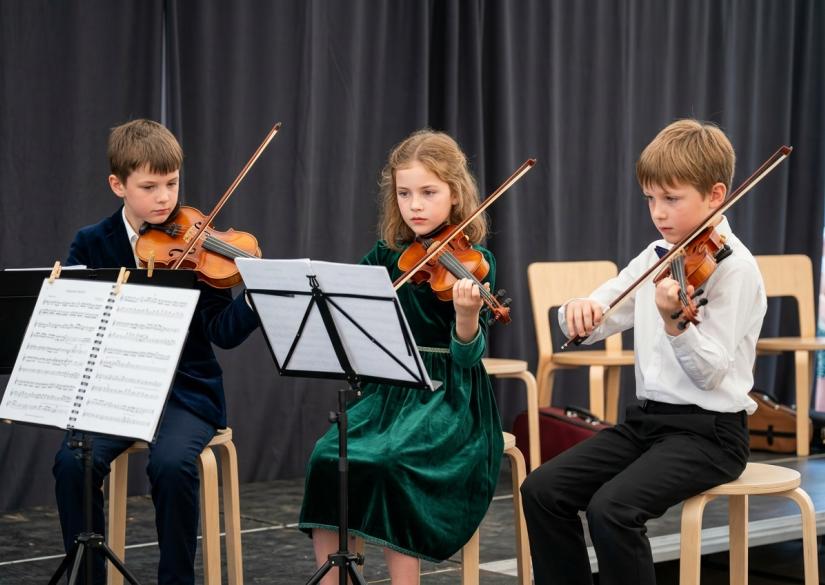
Visual and performing arts, just like sports, are included in the main curricula of all classes. Projects range from one-time sessions to multi-week works, allowing children to gradually develop skills and talent. Dance is a key element of the performing arts program: from kindergarten through grade 5, students study ballet, while older students choose from a variety of dance styles. The performing arts include individual lessons on musical instruments: guitar, piano, violin, and percussion, as well as vocal lessons, participation in choir and orchestra. The visual arts specialization is represented by dozens of clubs: from painting and design to sculpture, crafts, and photography.
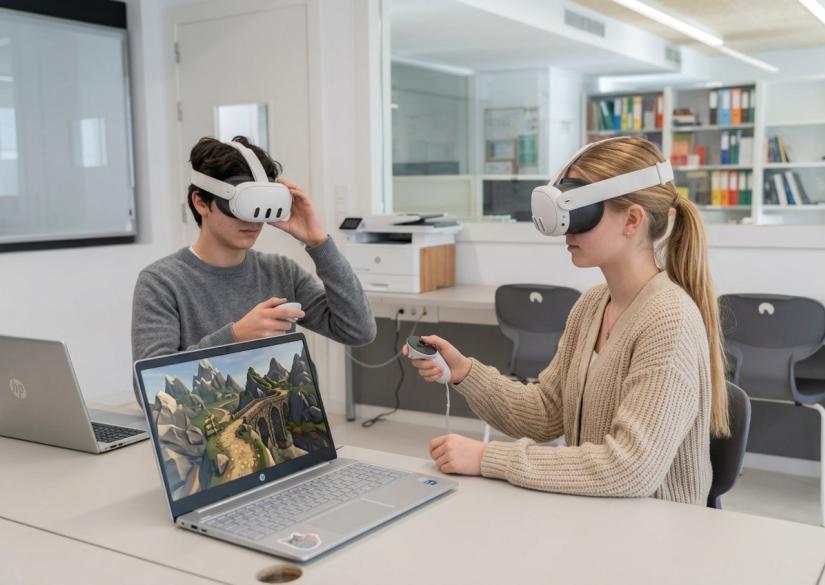
The school is focused on in-depth study of STEM disciplines, which are taught during the school day and after school. Students develop universal skills valuable for all subject areas and career paths, but especially in engineering, scientific research, technological innovation, data analysis, and design thinking. The Mine Coders program introduces students to programming using Minecraft Education Edition, making science accessible and engaging for students from grades 2 to 7; age-appropriate assignments gradually progress from basic concepts to complex automation and game development, developing logical thinking, creativity, and computational problem-solving skills. Mini Tech LEGO lessons for the youngest students use building blocks to introduce STEAM concepts in a playful yet practical form.
For general development and additional academic support, the following thematic clubs are available:
- Classical literature,
- Origami,
- Reading,
- School magazine,
- Photography,
- Media,
- Board games,
- Chess,
- Subject electives: mathematics, economics, natural sciences, English language.
Advantages
- Full academic accreditation,
- One of the best schools in Spain according to Forbes, ABC, Micole,
- The only Spanish school offering an international career diploma,
- Collaboration with organizations in the fields of sports, arts, and sustainable development,
- 80% of teachers are native English speakers,
- More than 70 extracurricular electives, clubs, and sections,
- Outstanding graduation exam results exceeding world standards.
Facilities and equipment at British College of Gavà, British School of Gavà
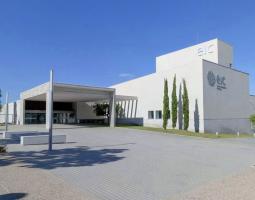
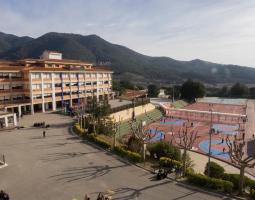
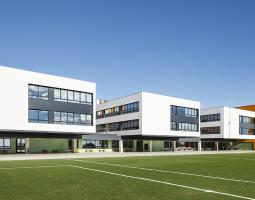
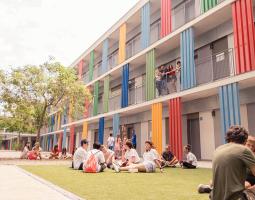
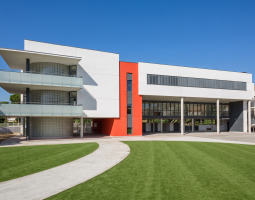
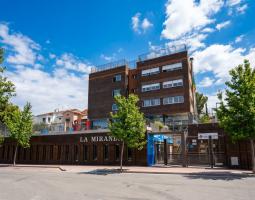
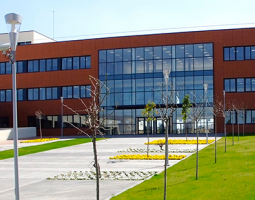
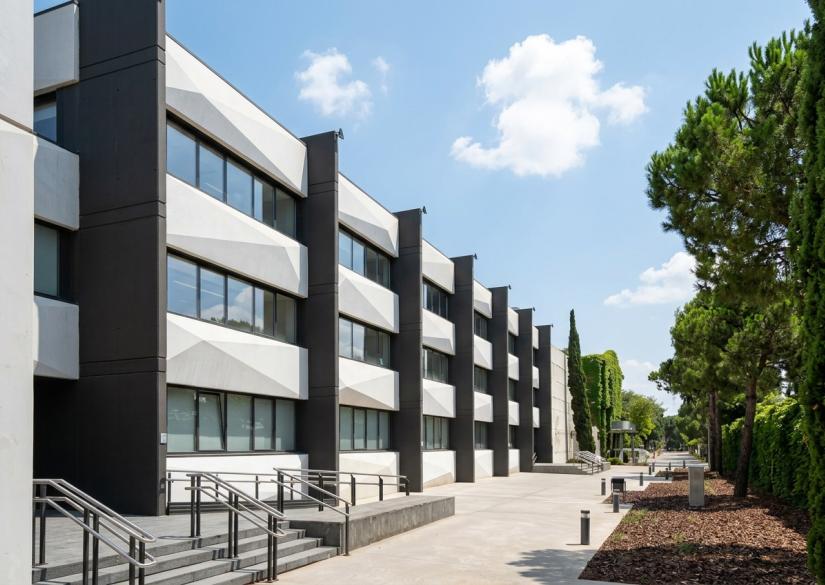
Located on a green area of 26 000 sq. meters, 20 minutes from the center of Barcelona and 10 minutes from the airport, the BCG campus combines innovative learning spaces, sports facilities, and outdoor recreation areas. Specialized classrooms have been created for each academic department to meet age-appropriate needs:
- The preschool building is located in the southern part of the campus, surrounded by many trees and shaded playgrounds, and includes six classrooms with play areas and interactive whiteboards. The multipurpose hall serves as a space for relaxation, yoga, music, and dance, complementing the garden area. Thanks to the recently renovated outdoor play areas and the «Forest School», students gain hands-on experience interacting with nature.
- Primary school students have access to the middle and high school building, equipped with advanced technology: interactive touchscreens, iPads, and computers. The classrooms are designed so that children can work both individually and in groups.
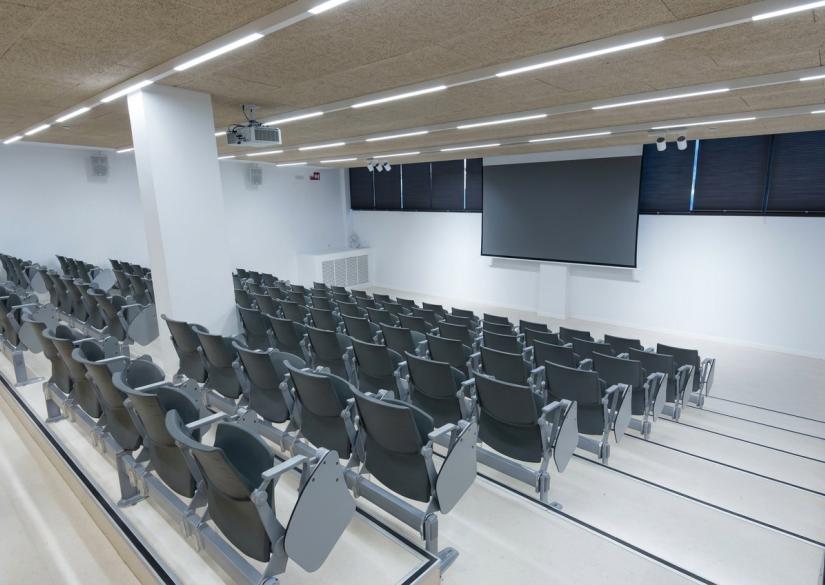
- The middle and high school building combines modern educational design with specialized studying spaces: spacious classrooms, three science laboratories, and various technical and creative studios. A shared dining hall is also located here.
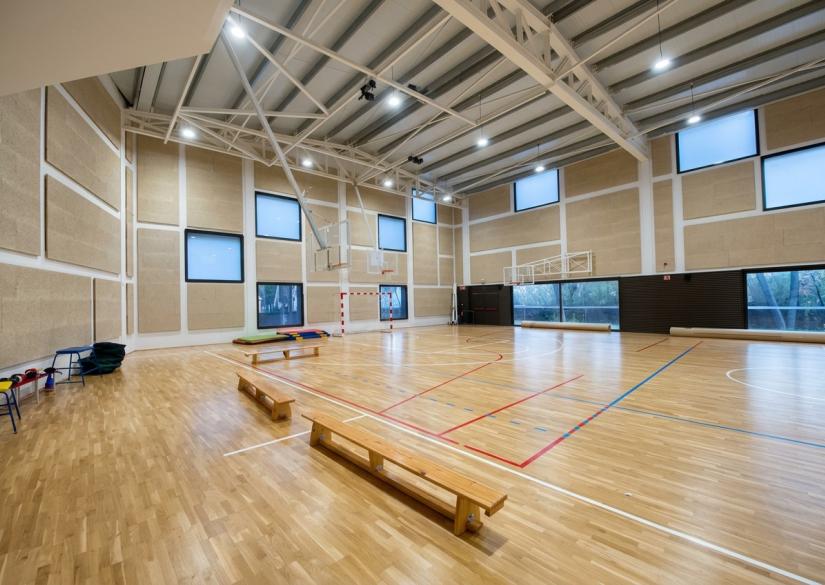
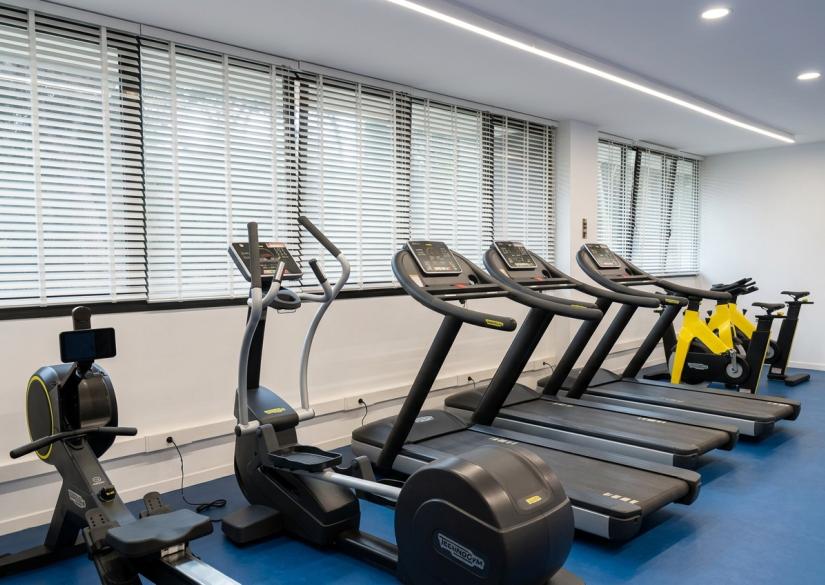
The sports infrastructure includes a multipurpose sports hall, a fitness center, outdoor courts and fields for team sports.
The BCG bus fleet provides students with safe transportation to and from school: buses operate throughout the region, covering residential areas of Barcelona, Sitges, Sant Pere de Ribes, Castelldefels, and Segur de Calafell.
Admission dates and extra charges
Classes run from early September to late June, with several breaks for seasonal holidays. Classes are held Monday through Friday; rest days include vacations, weekends, and public holidays.
Tuition fees involve meal costs. Additional expenses include:
- Registration and administrative fees, including textbooks, technology, and insurance,
- School uniform,
- Personal educational materials: a Chromebook for students in Grade 7 and above,
- Some extracurricular clubs, events, and individual lessons,
- School bus,
- External examinations,
- Personal expenses.
Enrolment process
Families of applicants can visit the campus or communicate with the admissions office online to get answers to their questions and learn about the curriculum and extracurricular opportunities. The admission process consists of several stages:
- Submission of the registration form and required documents,
- Payment of enrollment fees,
- Taking CAT4 tests in English and mathematics; tests are adapted to the age-appropriate abilities of the candidate,
- Receiving an official offer of admission.
Perspectives
Senior students achieve excellent results in their final exams, thanks to which they enter leading universities around the world, including:
- University of Warwick,
- Marian University in Illinois,
- Durham University,
- Trinity College Dublin,
- Goldsmiths, University of London,
- Bocconi University,
- Eindhoven University.
According to statistics from previous years, 9 out of 10 graduates are admitted to their chosen universities, including Russell Group universities.
Entry requirements, how to apply, what is required to enrol
Foreign applicants enrolling in BCG must have a passport, medical insurance, a visa or residence permit. The school expects personal documents of the child and one of the parents/guardians. The following must also be provided:
- Academic transcripts for the last two academic years,
- A recommendation letter from the previous place of study.
Admission is based on academic records and entrance test results.
Scholarships British College of Gavà, British School of Gavà
British College of Gavà provides a discount system for multiple children from the same family: 10%, 15%, 20% for the third, fourth, and fifth child respectively.
Institution on the map
Residence permits, citizenship and other services
- Guardianship services during the studies
- Student supervision
Review about British College of Gavà, British School of Gavà
Recommendations on when to apply
| Language courses, schools and children's language camps | Primary and secondary education - private schools | Preparation programmes for entering universities - higher education | Higher education (after completing accredited programs A-level, IB, High School) - Bachelor, Master, MBA |
| - we recommend to apply 6-9 months before the start of the course (some camps and schools offer discounts for early booking or for lengthy study programs) - there are some very popular and high demand children's camps, where the applications need to be submitted 1 year in advance (in particular Switzerland , Great Britain , USA , Canada , Austria) | - we recommend to apply one year before the start of the training program, - some schools have a specific time frame (September-November - please specify an individual school) - some schools require tests in several stages (UKISET, internal tests of the school: English, mathematics, logics, subjects, interview, some require a personal visit) | - we recommend to apply one year before the start of the program, - for Foundation and Pathway programs, IELTS and TOEFL certificates are usually required, respectively | - recommended submission one year before the start of the program, - the deadline normally closes in January, for TOP HEIs and, as a rule, in March in other universities - for a bachelor, a Foundation or Pathway preparatory program a completed A-level, IB, High School + IELTS / TOEFL are required - for Masters you need a graduated higher education, in some cases you need a pre-Masters program - MBA requires completed higher education, work experience preferably at least 2-3 years, etc. |