
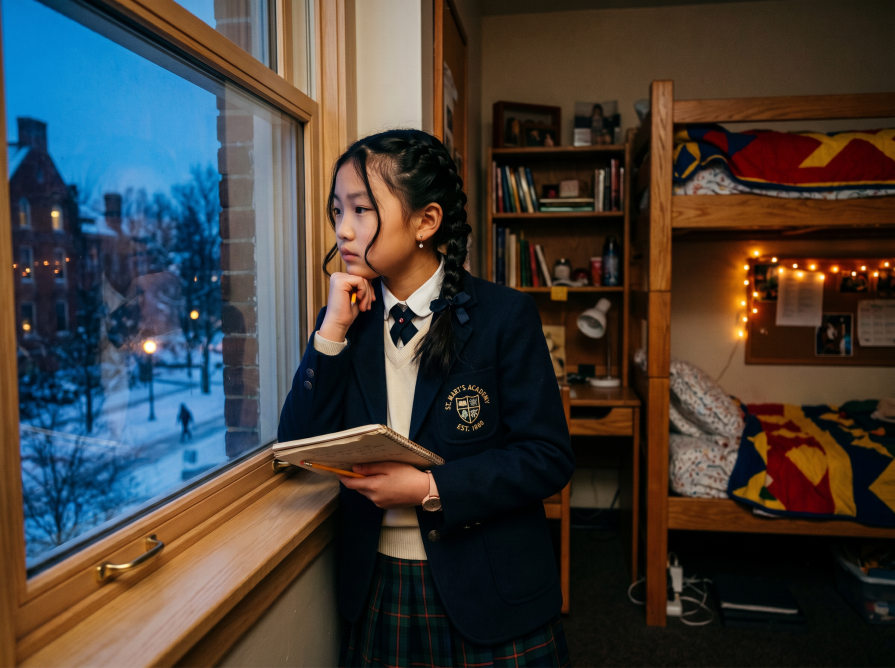
The process of selecting an appropriate educational setting for your child stands as one of the most important choices that families need to make. The most basic decision exists between two educational options which allow you to either send your child to a day school or send them to a boarding school abroad. Your family needs to assess both educational options because each one provides different benefits and drawbacks which will depend on your child, the family values you hold and the various factors that affect your daily life. The first step for people who want to make an informed choice requires them to understand the essential characteristics that separate two options from each other.


The Core Differences
A day school means your child lives at home and attends school for classes and extracurriculars which typically end in the afternoon or early evening. A boarding school provides students with both academic instruction and residential facilities that operate on a closed campus during which students experience a 24-hour residential period throughout their academic year.
The deeper differences between the two educational systems emerge through their daily operational patterns which shape their institutional environment and their academic instructional methods. Day school provides students with educational services that operate in full harmony with their family obligations and their community activities. Boarding school establishes an independent educational setting which enables students to continue their studies abroad and personal growth throughout the entire day.
Boarding School: Pros and Cons
Pros:
-
Immersive Academic Environment: With study halls, readily available teacher office hours, and peers who are equally focused, boarding schools often foster deep academic engagement. Distractions are minimized.
-
24/7 Character Development: Living in a community teaches independence, conflict resolution, time management, and resilience. Students learn to navigate roommate dynamics, manage their own schedules, and take responsibility for their choices without parental oversight.
-
Rich Extracurriculars: Facilities (sports fields, art studios, labs) are open late, allowing students to pursue passions intensely. There is no "commuting time" lost.
-
Smooth Transition to College: Boarding school graduates are often exceptionally well-prepared for the independence and self-discipline required in university life.

Cons:
-
High Cost: For example, boarding schools in Switzerland are significantly more expensive than most day schools due to housing, meals, wonderful landscapes and 24/7 staff. Financial aid may be available but is competitive.
-
Limited Family Time: Regular daily rituals—dinner together, bedtime stories, weekend outings—are largely replaced by shorter school breaks and scheduled phone calls. Younger children may struggle with this separation.
-
Potential for Homesickness: Even confident children can experience loneliness or anxiety, especially in the first few months.
-
Less Local Community Ties: Children may miss out on neighborhood friendships, local sports leagues, or family traditions.
Day School: Pros and Cons
Pros:
-
Strong Family Bonding: Daily face-to-face time allows parents to stay closely involved in their child’s emotional and academic life. You witness their triumphs and troubles firsthand.
-
Lower Cost: Private day schools cost less than boarding schools while public day schools provide free education. The saved money can be used for family vacations, lessons and college savings.
-
Rooted in Local Community: Your child can keep their friendships from kindergarten through high school while joining local clubs and religious institutions and working in family businesses.
-
Flexibility: Day schools provide educational options that match different family situations which include parents who work non-traditional hours and those who maintain multi-generational family homes.
Cons:
-
Commute and Logistics: Students need to spend their time on transportation which prevents them from completing homework and sleeping and participating in extracurricular activities. Parents must handle the responsibilities of taking their children to school and picking them up and watching them after school ends.
-
Home Environment Creates Study Problems: Study time gets interrupted by siblings screens and household tasks and neighborhood noises. Parents need to control their children's study time between 5 and 8 PM.
-
Parents face burnout from second shift work because they need to complete their workday before they can help their children with homework and drive them to activities and complete their household responsibilities.
-
Less Built-In Supervision: Children who lack supervision after school from 3 to 6 PM need their parents to remain constantly present. The period from 3 to 6 PM becomes less productive because neither parent works.

Helping Your Family Decide: Which Fits Your Child Best?
No universal answer exists, but asking the right questions can clarify the decision.
Consider boarding school if:
-
Your child is highly independent, motivated, and socially adaptable – they make friends easily and enjoy new challenges.
-
Your family life is chaotic or unsupportive for academic success (e.g., frequent moves, a parent’s illness, or work demands that leave little supervision).
-
Your child has a niche passion (e.g., competitive rowing, classical music composition, robotics) that a local day school cannot accommodate.
-
You believe structured separation would strengthen your relationship by reducing daily power struggles over homework and screen time.
The day school program becomes appropriate for your child because their home-centered nature and their need for constant emotional support make them dependent on daily contact with their parents and siblings.
- Your family values shared rituals (meals, faith practices, caring for younger siblings) as a core part of growing up.
- You have financial constraints that would make boarding school a significant burden, even with aid.
- Your community provides a public school and a private school which both meet academic standards and deliver enough extracurricular activities to satisfy your needs.
- Some families split the difference by sending their children to local day school until middle school ends before they transition to boarding school for high school.
- Some families choose weekly boarding because it allows them to return home on weekends while other families select day schools which provide comprehensive aftercare programs.
Final Thoughts
You and your child should visit both school types to determine their suitability for your child by asking them specific questions about their sleep evaluation and homework requirements.
The best choice for your child exists at a location where they experience safety and face suitable challenges while others understand their identity.
A boarding school can launch an independent spirit into greatness. A day school can nurture a gentle soul through turbulent years. Parents should listen to their child while they trust the family's natural flow because both paths lead to a successful future when accompanied by love and intent.