Arkansas State University






Programs and prices, tuition fees in Arkansas State University


Bachelor's Degree Programs in English
- Age of students — from 18 years old,
- The studying period is four years.
At A-State, you can get a Bachelor of Science degree in one of the many scientific specializations provided on the basis of specialized colleges.
Some of the available programs are:
- Communication research,
- Criminology,
- Computer science,
- History,
- English language,
- Psychology,
- Design technologies,
- World languages, culture,
- Philosophy,
- Political Science,
- Economy,
- Graphic design,
- Music: Voice performance,
- Accounting,
- Clinical laboratory science.
The studying lasts four academic years and includes an extensive range of theoretical resources and opportunities for obtaining applied skills. Students interact with subject teachers, gaining an in-depth vision of the scientific field, participate in research and project work. Effective preparation provided during their studies will allow students to continue their academic career in a master's degree or find a job in their specialty.
Master's Degree Programs in English
- Age of students — from 21 years old,
- The studying period is two years.
The Master's degree program will provide students with more in-depth knowledge in their chosen scientific field, and will allow them to acquire research skills and competitive abilities in the profession. There are a wide range of specializations available at A-State, including:
- Criminology, criminal justice,
- Sociology,
- Political Science,
- Accounting,
- English language,
- History,
- Sports training,
- Music,
- Public administration,
- Civil Engineering,
- Computer Science,
- Mechanical engineering,
- Mathematics,
- Environmental sciences,
- Agricultural industry.
The degree takes two academic years, during which students will attend theoretical classes, work in groups and individually on projects, and participate in research with qualified researchers. Through partnership with national and international organizations, A-State students have the opportunity to complete an internship in a professional field, thereby gaining applied skills. Completing the Master's degree program will give students several opportunities to choose a path further: to continue their studies at the university in doctoral programs or to obtain a higher position in their chosen field of activity.
English Language Courses
- Age of students - from 18 years.
A-State supports all international students and applicants who have not yet achieved the required English language proficiency criterion in improving their language skills. The course is available to students with any initial level, as it involves dividing students into six levels: from beginner to advanced.
The program involves the intensive development of the main aspects of linguistics - reading, writing, listening and speaking skills. In the classroom, students also pay attention to the skills of taking notes, making presentations, discussing various topics and areas, thanks to which they expand their vocabulary and learn to study in English.
Classes are conducted five days a week, they are both group work in a company of 15 students, and individual meetings with the teacher.
Upon completing the program, international students have the right to apply for admission to a bachelor's and master's degree without taking additional English language proficiency exams.
Postgraduate Programs
- Age of students – from 23 years old,
- The duration of studying is from three years.
A PhD degree will allow students to gain a comprehensive understanding of their chosen scientific field, conduct their own research and acquire the skills to become a specialist professional. The following doctoral programs are available at the university:
- Anaesthesiology
- Physiotherapy
- Occupational therapy
- Administration
- Environmental Sciences,
- Heritage Studies,
- Molecular Biosciences.
First Year Experience Program
- Age of students – from 17 years old,
- The duration of studying is one year.
The First Year Experience Program, also known as FYE, is a course designed to support students in preparing for the transition from high school to college. The FYE curriculum includes academic resources, study skills, academic research and writing, leadership and participation in campus life, and materials critical to each freshman's academic and personal growth. The A-State FYE program is interdisciplinary, which means that each section is based on the student's specialty, allowing them to gradually immerse themselves in the science they are interested in.
Description of Arkansas State University
- Location: Jonesboro, Arkansas, USA,
- Year of foundation: 1909,
- Number of students: about 14,000,
- Language of instruction: English,
- Type of study: mixed.
Arkansas State University (ASU/A-State) is the second largest university in Arkansas, offering more than 170 programs at eight specialized colleges.
Opened in 1909, ASU has gradually developed, acquiring an extensive network of partners at home and abroad, improving campus facilities and expanding the national student community. Today, more than 14,000 future bachelors, masters and doctors of sciences in high-demand specializations are studying at A—State, about 750 of them are foreigners: Canada, France, South Korea, Argentina and other countries. The multinational student community is supported by qualified teachers and university administrative staff — maximum attention is paid to the progress of each student, both academic and personal. Extracurricular improvement of students' professional skills is organized through internships, various master classes and active participation in research activities. A-State is considered one of the leading research institutions in the country, has a high rating of scientific activity, so students have extensive opportunities to gain useful skills and knowledge in solving real-world situations.
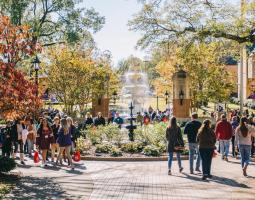
During extracurricular activities, students can expect a wide range of directions that fulfil many of the interests of the modern community. From creative teams, sports teams, to themed clubs, and the volunteer community, everyone will find like—minded people on campus.

What factors are considered when evaluating U.S. universities, and how reliable are current rankings?
That's an interesting topic. The criteria used to evaluate universities vary by ranking. For nationwide rankings, factors like class size, teacher salaries, and the number of faculty members with advanced degrees in their field are common considerations. If a ranking focuses on student satisfaction, the criteria will differ. However, rankings don't always align with individual student needs and should be considered alongside other factors.
Educational process
Some A-State programs are taught in an online format, allowing international students to pursue higher education without leaving their home country. The distance format provides students with the same quality of knowledge and skills as the face-to-face format: regular sessions with teachers, communication with classmates, resources for independent and group work.
Faculties and colleges
The university has eight scientific schools, on the basis of which specialized specializations of higher education are taught.
- Agriculture
- Business
- Education, behavioral science,
- Engineering, Computer Science,
- Liberal Arts, Communications,
- Nursing, Healthcare,
- Science, mathematics,
- Veterinary medicine.
A-State also has Higher and University Schools, which teach doctoral and preparatory programs, respectively.
Scientific achievements
A-State runs several scientific institutes, each of which conducts research in its field. From high-performance computing platforms to plant-based biomanufacturing, university research spans many industries to make the world a better place.
Areas of research at the institutes:
- Biological sciences,
- Limitless thinking: AI,
- Economic development,
- Rural initiatives.
Both highly qualified scientists and students of all specializations and courses participate in scientific projects.
Things to know about
- The university uses the informal name A-State,
- The athletic teams' nickname is Red Wolves,
- Students and staff are called the Pack.
Accommodation, meals, prices
The institution has 14 residences offering accommodation to all students: first-year students, senior students, and those enrolled in NYIT College of Osteopathic Medicine affiliate programs. Each residential community provides students with all the necessary services and amenities to make them feel at home during studies in the USA.
- Arkansas Hall is a five-storey building with single suites combined into two-room apartments. Each apartment is equipped with a bathroom, and the building has a shared kitchen, a guest area with board games, laundries,
- The Circle is an apartment for masters and doctors of science, teachers. Single and double apartments with bathrooms, kitchens and living areas in each of them have been prepared for them.
- Collegiate Park is a complex of six apartment buildings in the heart of the campus, including townhouses and apartments with two and four bedrooms. Bathrooms are shared by two residents along with fully equipped kitchens, living areas,
- Greek Village is five two-storey houses for members of Greek organizations. Students are accommodated in single and double rooms, share bathrooms, kitchens,
- Living Learning Community 1-6 — more than ten residential buildings with one and double bedrooms, shared bathrooms for several residents, laundry rooms, fully equipped kitchens,
- Kays Hall is an 11-story building with several wings that houses first-year students. They occupy single and double bedrooms of standard and luxury formats, share bathrooms, kitchens and living rooms for several residents,
- North Park Quads - suites with four bedrooms and two bathrooms, kitchens and living areas, located in five buildings,
- Pack Place — two- and three-storey houses with double and quadruple rooms, equipped with bathrooms, kitchens and a laundry room,
- Red Wolf Den is a residence for senior students. The building offers double, triple and quadruple rooms with all amenities,
- University Hall is a home for first-year girls, offering accommodation in double suites with an en-suite bathroom. A limited number of single bedrooms are available, however, the bathroom will be shared. Kitchens, laundries, self-study classrooms and laundries are located on the floors,
- The Village is housing for families of students, graduate students and those over 23 years old. Accommodation is expected in apartments with several bedrooms: one, two or three. Each apartment is equipped with a bathroom, kitchen and living area.
A-State residences are located both on the campus itself and in relative proximity to it. Thanks to good transport links, it will not be difficult to get to the educational buildings - students use buses, bicycles, taxis.
Choosing a meal plan is a must for students living in most residences. The meal plan is a semester-long financial contribution that can be spent on meals at the dining halls, cafeterias, and bars on campus. In addition to a fixed or unlimited number of meals, there are bonus points, thanks to which you can get a discount or purchase snacks, drinks.
Activities Arkansas State University
A wide range of areas for extracurricular development allows students not only to maintain interest in a particular field, but also to try their hand at new activities.
The university is proud that its national teams participate in NCAA Division I. The institution's football team often occupies a leading position among participants from other universities, thereby promoting A-State in sports rankings. Thanks to the modern infrastructure, the campus also hosts amateur and more professional training in sports such as:
- Rugby
- Archery,
- Cricket
- Softball
- Frisbee.
If a student would like to maintain an active lifestyle, but not devote much time to sports, he can participate in collective activities: jogging, yoga and dance workshops, as well as visit the fitness center.
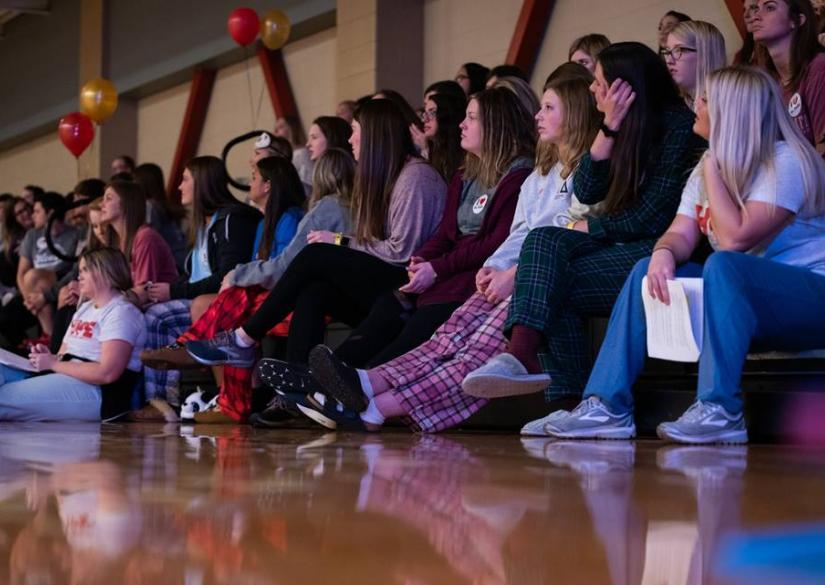
The A-State Student Union manages the activities of thematic communities, each of which represents the most popular areas of interest. Whether it's crafts, sustainability, choral singing, or cooking – students will find a community to their liking. The union is also responsible for organizing most of the events throughout the year, which include Christmas and graduation balls, volunteer events, sports performance days, Easter celebrations, and many others. The events relate not only to national and international holidays, but also allow students to get to know each other better, learn about the cultural customs of other nationalities, and promote their ideas.
Advantages
- Accreditation by the Commission on Higher Education, specialized accreditations for each scientific college within the US university,
- Classification "R2: Doctoral universities — High research activity",
- More than 100 years of educational activity and more than 100,000 graduates,
- The focus is on an individual approach to each student, which is achieved through learning in small groups of 16 students.,
- The university's sports teams participate in NCAA Division I,
- An international student community with representatives from several dozen countries.
Facilities and equipment at Arkansas State University
A-State is located in Jonesboro, Northeast Arkansas' regional hub for healthcare, entertainment, business, and industry. It is the fifth largest city in the state with a population of over 76,000 people. With interstates and four-lane highways in all directions, Jonesboro provides easy access to other major cities, including:
- Memphis, Tennessee — 1 hour,
- Little Rock — 2 hours,
- St. Louis, Missouri — 4 hours,
- Nashville, Tennessee — 4 hours.
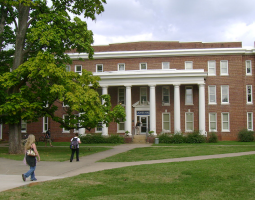
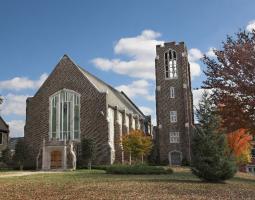
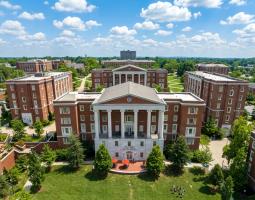
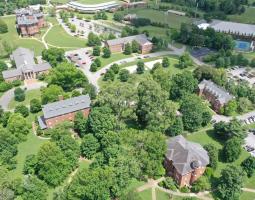
The university's academic area covers an area of 1,376 acres, with 145 facilities for teaching, research, recreation and accommodation. The modern infrastructure includes classrooms, computer labs and seminar rooms, specialized scientific laboratories, rooms for student communities and individual studying. A-State boasts the largest library in the state, which gives students access to thousands of volumes of printed literature and online resources.
The Red Wolf Fitness Center is the main venue for group and individual workouts.:
- Indoor Running Track,
- Gym with free weights area,
- Three full-size basketball courts,
- Several dance studios,
- Climbing wall,
- The football hall.
The campus has a Student Activity Center, which is an 80,000-square-foot indoor pavilion used for a variety of entertainment and sporting events, including a full-size soccer field, netting areas for volleyball and other ball games.
Admission dates and extra charges
The academic year at A-State covers almost the entire calendar year, including several semesters:
- Fall semester: August-December,
- Spring semester: January-May.
At the end of each semester, a three-week session is held. In the summer, master's and doctoral students are studied. Classes for all pupils are organized on weekdays, rest is provided on weekends, holidays and during seasonal vacations.
Approximate list of additional costs includes:
- Registration fees,
- Accommodation, meal plan and related costs,
- Some extracurricular activities, participation in clubs, use of sports facilities,
- Personal educational materials,
- Additional academic opportunities not provided for in the curriculum,
- Compulsory insurance,
- Personal expenses.
Enrolment process
The admission process to A-State consists of several stages:
- Filling out the online registration form, providing the required documents and paying the application fee,
- Passing an interview, possible entrance exams,
- Obtaining an official letter of admission,
- Arrival at campus and start of training.
The admissions staff will answer all questions, help with visa application and accompany each applicant from application to arrival at the training grounds.
Perspectives
To date, the university has graduated more than 100,000 skilled professionals who have built competitive careers in the U.S. and other countries. Notable alumni include:
- Joey L. Carr, American politician, member of the Arkansas House of Representatives,
- Bill Burgee, Ray Brown, Fred Barnett and others are NFL players,
- Mike Beebe - Governor of Arkansas
- Patrick Eddy – NBA player,
- Thomas Hill - Olympic bronze medalist in hurdles,
- Robert S. Hinson - Lieutenant General of the United States Air Force,
- David Neil is an artist for Mercury and MCA Nashville.
Entry requirements, how to apply, what is required to enrol
Foreign applicants wishing to enter A-State must have a passport, visa or residence permit, and medical insurance. To enroll in higher education programs, you must provide:
- Academic certificates from the previous place of study: certificate of full secondary education with an average score of 2.3 out of 4 / Bachelor's degree / Master's degree,
- Performance reports, exam results,
- English Language proficiency certificate: TOEFL (from 61), IELTS (from 5.5), PTE Academic (from 43) or university-recognized equivalent.
Some courses will require a portfolio, letters of recommendation, individual achievements, and professional experience in a chosen scientific field.
Scholarships Arkansas State University
A number of scholarships are available to international students, covering part of the cost of education, housing and other aspects of university life. Most scholarship programs reward students who have either excellent admission records or high scores in the learning process.
- Virgin Horn International Undergraduate Scholarship,
- Freshman Scholarship,
- Scholarship for Transfer Students,
- External Scholarships: Aga Khan Foundation, Embassy Scholarships.
Literature and references
-
Arkansas State University — Wiki

-
Arkansas State University - Profile, Rankings and Data — U.S. News & World Report
-
Arkansas State University — Niche
-
Arkansas State University — World University Rankings THE
-
Arkansas State University | Higher Education, Research — Britannica
-
Arkansas State University-Main Campus — Data USA
Institution on the map
Residence permits, citizenship and other services
- Guardianship services during the studies
- Student supervision
Review about Arkansas State University
Recommendations on when to apply
| Language courses, schools and children's language camps | Primary and secondary education - private schools | Preparation programmes for entering universities - higher education | Higher education (after completing accredited programs A-level, IB, High School) - Bachelor, Master, MBA |
| - we recommend to apply 6-9 months before the start of the course (some camps and schools offer discounts for early booking or for lengthy study programs) - there are some very popular and high demand children's camps, where the applications need to be submitted 1 year in advance (in particular Switzerland , Great Britain , USA , Canada , Austria) | - we recommend to apply one year before the start of the training program, - some schools have a specific time frame (September-November - please specify an individual school) - some schools require tests in several stages (UKISET, internal tests of the school: English, mathematics, logics, subjects, interview, some require a personal visit) | - we recommend to apply one year before the start of the program, - for Foundation and Pathway programs, IELTS and TOEFL certificates are usually required, respectively | - recommended submission one year before the start of the program, - the deadline normally closes in January, for TOP HEIs and, as a rule, in March in other universities - for a bachelor, a Foundation or Pathway preparatory program a completed A-level, IB, High School + IELTS / TOEFL are required - for Masters you need a graduated higher education, in some cases you need a pre-Masters program - MBA requires completed higher education, work experience preferably at least 2-3 years, etc. |