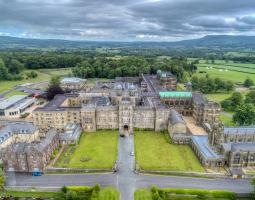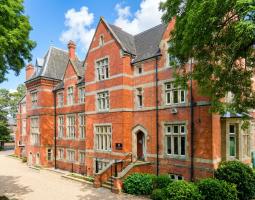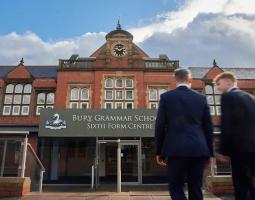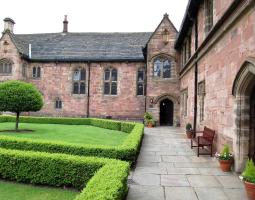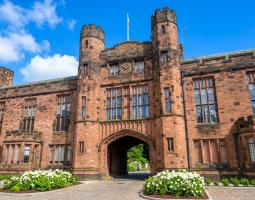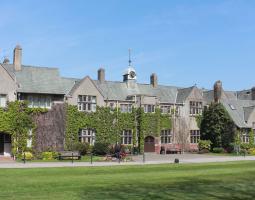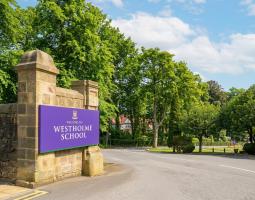
Withington Girls' School, Withington Private School for Girls





Programs and prices, tuition fees in Withington Girls' School, Withington Private School for Girls


Junior School
- Age of students — 7–11 years old,
- Duration of study — 4 years.
Junior School at Withington Girls' School covers 4 years of study: from Year 3 to Year 6. Education at this stage is based on the British National Curriculum, but the program is notably extended: students are not limited to core subjects only — the curriculum also involves additional disciplines, projects and practical lessons that help them better understand the material and see its application in real life. Great attention is paid to field trips and various learning activities outside the classroom.
In junior school, teachers strive to build a strong foundation for further education: the emphasis is placed on developing confidence, independence and core academic skills. Girls gradually learn to think more creatively and analytically, and are introduced to science, languages and the arts from an early age.
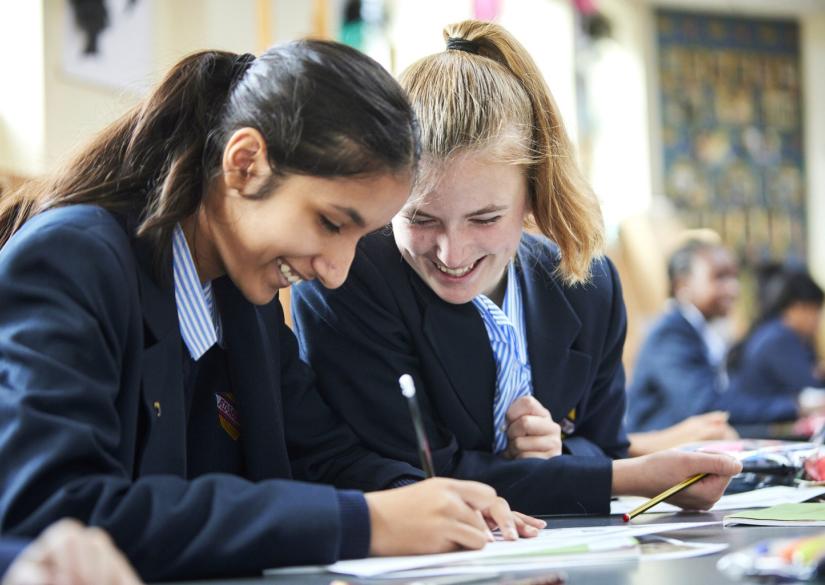
Classes are conducted in small groups, which allows teachers to give more individual attention to each student. Some lessons are taught by teachers from the Senior School, making the transition to the next stage of education smoother and more comfortable.
Senior School
- Age of students — 11–16 years,
- Duration of study — 5 years.
Senior School at Withington Girls' School covers 5 years of study: from Year 7 to Year 11. This stage marks the beginning of more serious academic preparation and a gradual transition towards GCSE examinations.
In the early years, the curriculum is based primarily on compulsory subjects, allowing girls to explore different areas of study. Over time, as they approach GCSEs, learning becomes more flexible and selective, while maintaining a balance between core academic subjects, creative disciplines, and sport. The school maintains a high pace of learning while striving to preserve a comfortable atmosphere.
At the GCSE stage (Year 10–11), there is a set of compulsory subjects: students study English Language, English Literature, Mathematics, and Sciences — either in the format of a combined course or an in-depth one (Triple Science). In addition, girls choose elective subjects based on their interests: Computer Science, Art and Design, Geography, History, French, German or Spanish, Latin and Greek. The program may also involve Music, Drama, Physical Education, and Religious Studies.
Sixth Form
- Age of students — 16–18 years,
- Duration of study — 2 years.
Sixth Form at Withington Girls' School is Year 12 and Year 13. At this stage, education becomes more independent and is maximally oriented towards university preparation.
The main feature of Sixth Form is small groups of up to 16 students: this allows subject teachers to work more effectively and pay greater attention to each student's individual progress. Strong emphasis is placed on independent study, the development of academic maturity, and preparation for entry to leading universities, including Oxbridge and other Russell Group institutions. The program also stipulates academic conferences and educational trips.
Girls typically choose 3–4 A-level subjects and study them in small classes, receiving support in preparing for university applications and exams. A range of directions is available in the A-level program:
- The science block includes biology, chemistry, physics, mathematics, and further mathematics,
- Among the humanities and social subjects — economics, psychology, history, geography, and politics,
- Students can study English literature, computer science, and several foreign languages: French, German, and Spanish. For those interested in classical education, Latin and Ancient Greek are available,
- The creative block includes fine art, music, and theatre studies,
- An additional subject — «Philosophy, Ethics and Religion», which helps develop analytical and critical thinking.
Description of Withington Girls' School, Withington Private School for Girls
- Location: Manchester, United Kingdom,
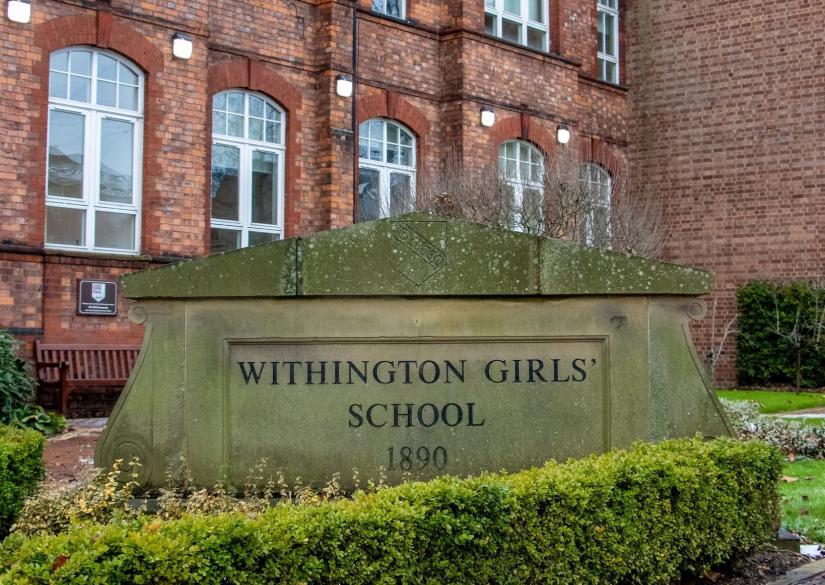
- Year founded: 1890,
- Language of instruction: English,
- Type of study: mixed.
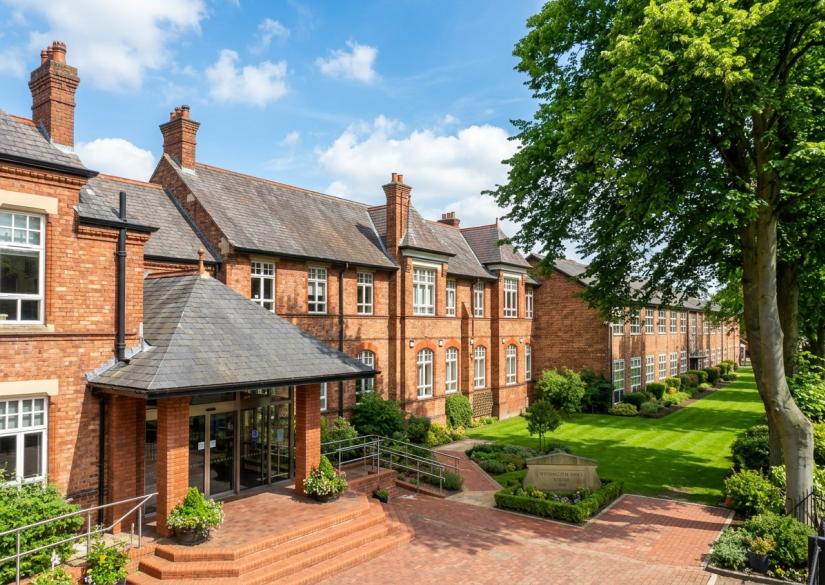
Withington Girls' School is an independent day school for girls, educating students from approximately age 7 to 18–19.
The school consistently ranks among the strongest private educational institutions in the United Kingdom, distinguished by very high academic results and strong preparation of students for further education. In July 2025, Withington Girls' School was recognized as the best school in the North West of England for value for money. Furthermore, for the fourth consecutive year, it remains among the top three schools in the United Kingdom.
Educational process
The academic program at Withington Girls' School is balanced for a comfortable learning pace, while gradually becoming more in-depth and challenging as students progress to the upper years. The curriculum is structured to support the natural development of girls' skills and interests. The main emphasis is placed not only on academic knowledge, but also on fostering curiosity, independence, and critical thinking. Future graduates learn to analyze information, approach problems from different angles, and find both logical and creative solutions.
Accommodation, meals, prices
Withington Girls' School has no on-campus accommodation, as it is a day school. However, meals for students are organized within the school, and several convenient spaces are provided for this purpose. The main dining area is the Dining Room; in addition, there is the Sixth Form Common Room and the Hub — areas where students can not only eat, but also relax, socialize, and review their notes in a more informal setting. For sixth-form students, there is also a dedicated Sixth Form bistro.
Dining is governed by simple rules: food may only be consumed in designated areas, and bringing hot food onto the premises or ordering deliveries to the school grounds is not permitted.
Activities Withington Girls' School, Withington Private School for Girls
At Withington Girls' School, girls can choose extracurricular activities based on their interests: there are\ many clubs here, so everyone finds something for themselves. There are options for those who love studying and intellectual challenges, for example:
- Coding Club,
- Science and Young Science Communicators classes,
- Mock Trial — a model of court proceedings, a mock trial,
- Young Enterprise, where students try their hand at entrepreneurship.
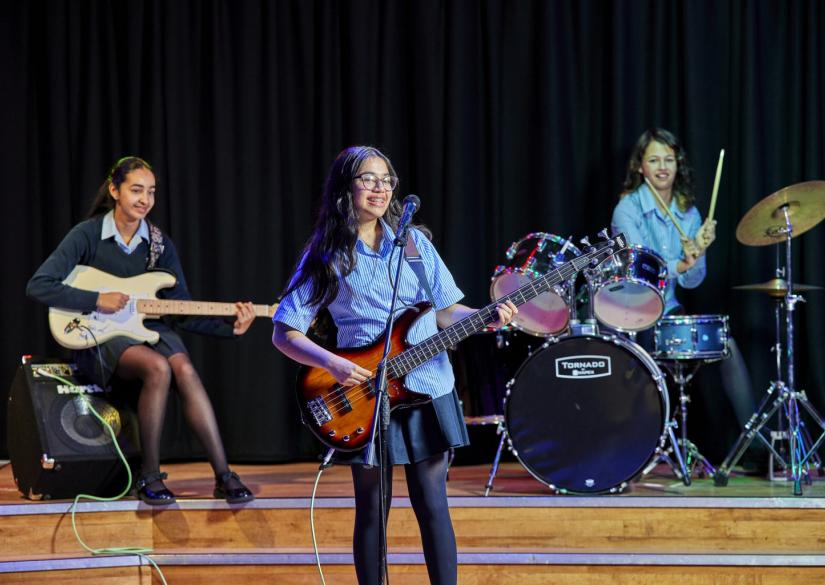
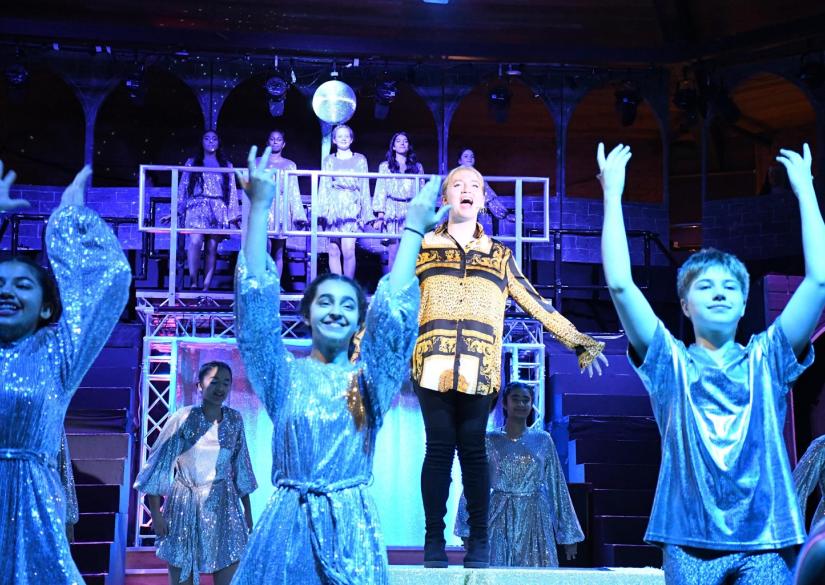
Creative life is also very vibrant: you can study photography, music in Garage Band, learn sign language, try sculpting in Sculpture Club, or participate in theatrical productions in Drama Club. For those who love to sing, there is a choir.
Special attention is paid to contemporary and social topics. Girls can join the Eco Club or Social Action Club, participate in sustainability and design projects, and learn the basics of financial literacy and life skills.
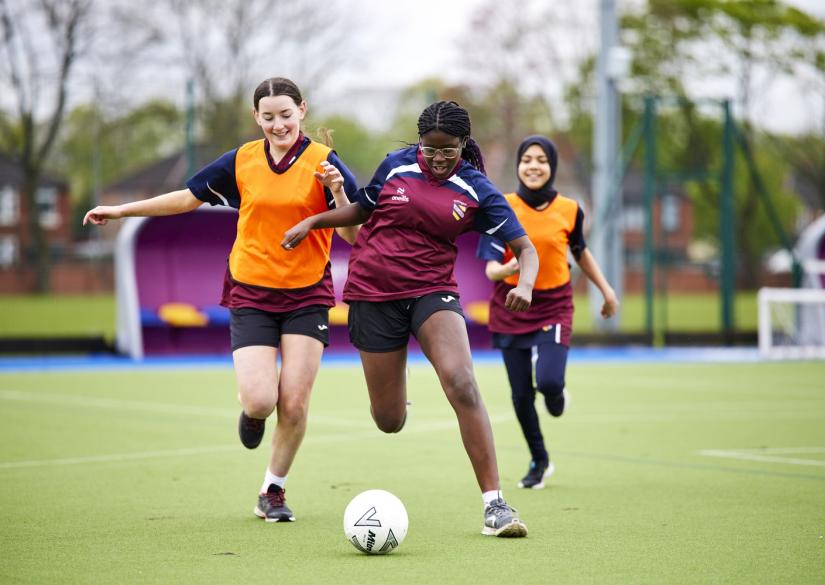
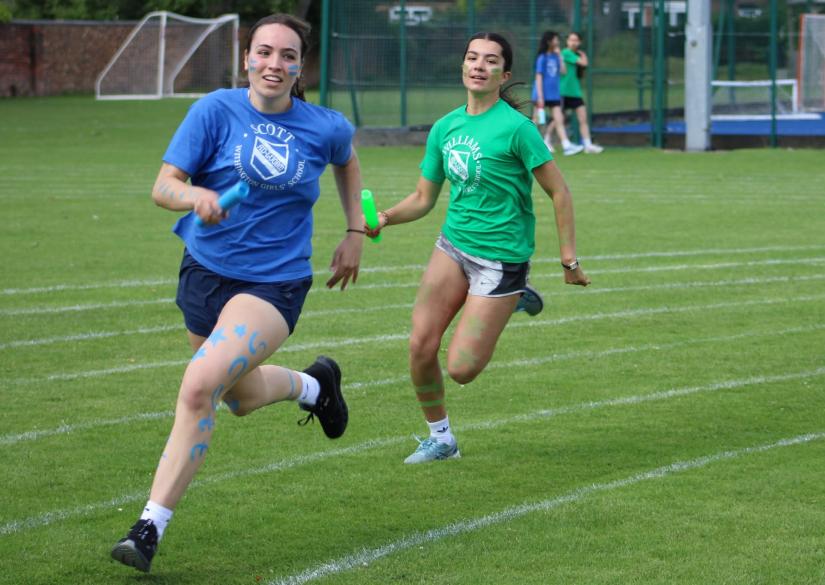
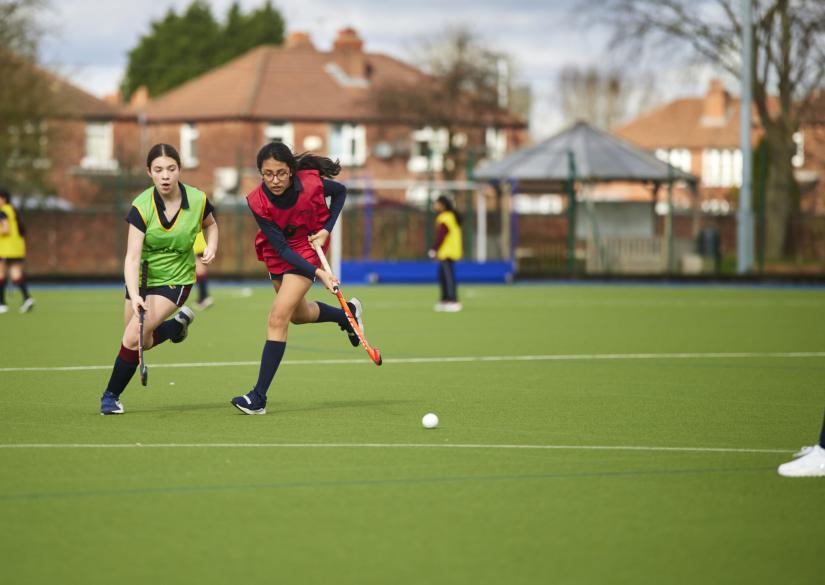
In addition, calmer extracurricular formats are also available on campus: yoga, cooking classes, and dancing, including Zumba. The sports program is equally diverse: students play tennis, football, hockey, and netball, and practise gymnastics and other sports — with the option to choose either professional sports training or a general development format.
Withington Girls' School organises educational trips to various countries, including the USA, Morocco, Costa Rica, and South Africa: these trips combine cultural immersion, participation in environmental projects, volunteer work, and the study of nature and society.
Senior students have dedicated opportunities, for example:
- Visits to universities, including leading UK universities,
- Career trips,
- Internships that help gain a better understanding of future careers and make informed choices.
Advantages
- Withington Girls' School is known for its strong academic results: students show some of the best exam scores in the country, especially at A-level, where a significant proportion of grades are A* and A.
- The school provides excellent preparation for entering leading universities — many graduates become students at top institutions, including Oxbridge.
- Withington Girls' School deliberately remains relatively small — this approach allows for a better understanding of each student and the development of academic plans tailored to her abilities, interests, and goals.
Facilities and equipment at Withington Girls' School, Withington Private School for Girls
Withington Girls' School is equipped with modern and well-thought-out infrastructure:
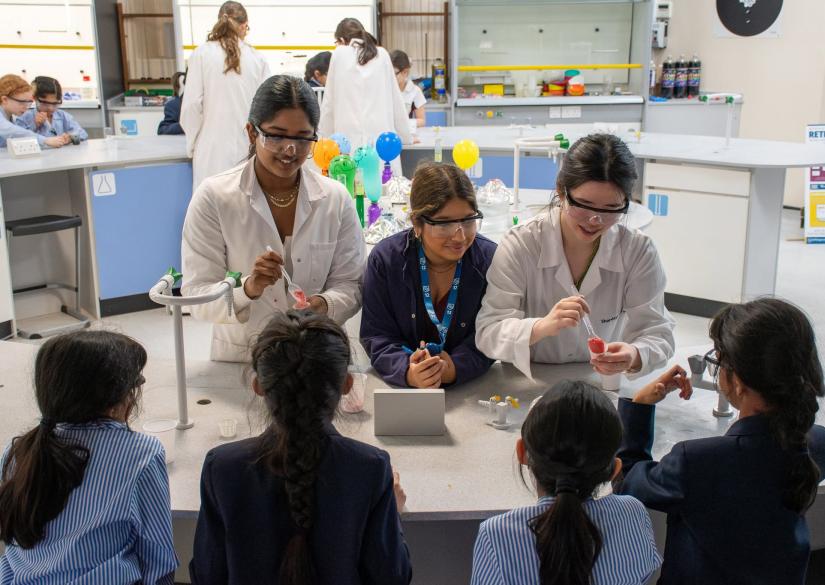
- Specialized classrooms and laboratories for physics, chemistry, and biology with modern equipment,
- Classrooms for design and technology lessons,
- Dedicated rooms for cookery (Food & Nutrition),
- A language laboratory for learning foreign languages,
- A library,
- Independent studying areas, where a calm and comfortable atmosphere has been created for preparation and self-study.
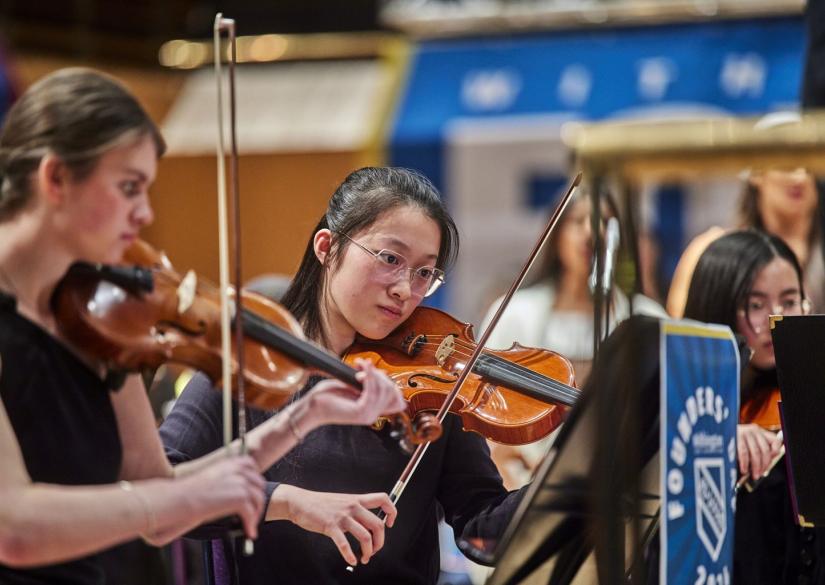
Creative disciplines receive no less attention: the school has an Arts Centre — a space where performances, assemblies, and various events take place, as well as a drama studio and a music centre with rehearsal halls, individual practice rooms, and a soundproofed room for percussion instruments.
Sports infrastructure is also well developed: on the grounds there is a modern sports hall, a fitness zone, a studio for dance and yoga, an all-weather floodlit pitch, and open areas with grass surfaces.
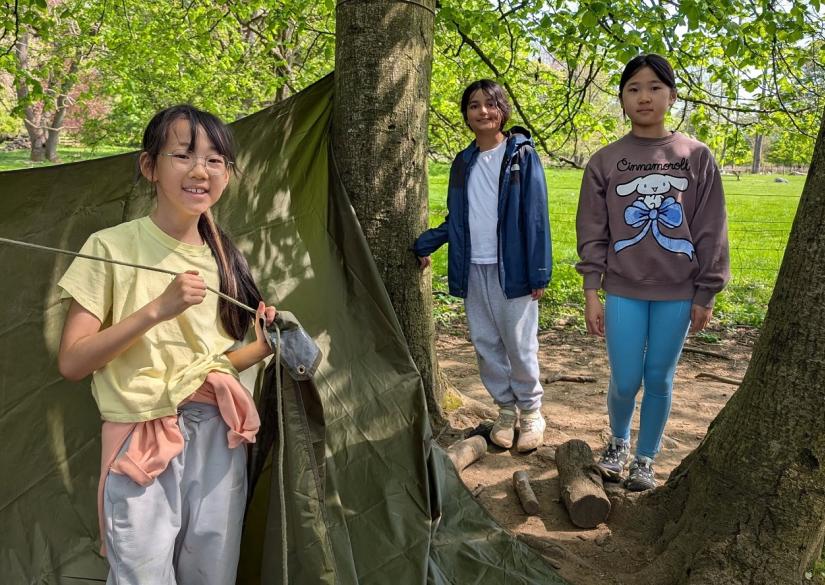
In addition, the school features interesting outdoor spaces, such as an outdoor classroom — a zone for studying in the fresh air, as well as areas for rest and relaxation. There are also natural features, such as a wildlife pond, which are used for educational purposes.
The Sixth Form Common Room, study areas, and a lecture hall used for university entrance preparation are available exclusively to senior students. Furthermore, Withington Girls' School has a multifunctional space called the Hub — where events and exhibitions are held and students interact in an informal setting.
Admission dates and extra charges
At Withington Girls' School, the academic year is divided into 3 parts: the autumn term, the spring term, and the summer term. As a rule, lessons begin in early September and continue until mid-December. After the New Year holidays, the spring term starts: from the first days of January until early April. The summer term runs from late April until early July. This model follows the classic British system. During each term there are short vacations, which usually last around a week. In addition to these, the schedule includes designated days for teacher professional development (Staff CPD days): during this period the girls have a day off while their teachers take part in studying.
In addition to the main tuition fees, parents of pupils also face additional expenses. For example, at the application stage a registration fee is paid, which is non-refundable. Other additional costs include:
- Participation in optional excursions and international trips,
- Individual lessons (music or other specialist subjects),
- School transport — buses or transfers,
- Educational materials or equipment, such as personal devices for lessons,
- Examination fees in the senior years.
Some of these activities are already included in the main tuition fee, and certain educational trips and clubs do not require additional payment.
Enrolment process
Admission to Withington Girls' School begins with submitting an application: you need to fill out a registration form, pay a fee, and send the required documents. After that, students take entrance assessments — the format depends on age. For entry into secondary school (11+), all candidates pass exams in English and mathematics and complete verbal and non-verbal reasoning tests: these tasks are designed not so much to test learned material as to understand how girls think, how quickly they learn, and what their potential is. Based on the exam results, those who performed well are invited to the next stage.
Particular attention is paid to the interview: it helps to better understand the student's motivation, interests, and personal qualities. For international applicants, a convenient option is available — the interview can be conducted online if it is not possible to travel to the United Kingdom.
Staff emphasize that the entrance assessments do not require special preparation with tutors: their purpose is to evaluate natural ability, not the level of coaching.
Perspectives
After graduating from Withington Girls' School, most girls continue their education at universities: according to the school's data, around 80% of graduates are accepted into the programs of their choice at the universities they originally considered as their top priorities. Many students receive offers from leading universities, including the University of Oxford, the University of Cambridge, and other Russell Group institutions. On average, around 12.6% of graduates gain places at Oxbridge — a very high figure even by the standards of strong British schools.
The range of studying directions is diverse: popular choices include medicine, law, economics, mathematics, international relations, psychology, and computer science. Students select both traditional academic disciplines and modern, interdisciplinary programs.
The school also supports paths beyond the traditional university route. Some graduates choose alternative options, such as Degree Apprenticeships — programs that allow students to study and work simultaneously, including at major companies such as JP Morgan or Dyson; others pursue creative or specialist fields such as music and the arts. Some students take a Gap Year — a break before university — to clarify their future plans and gain new experiences.
Entry requirements, how to apply, what is required to enrol
Admission to Withington Girls' School is competitive and is focused primarily on the academic abilities of students. The school assesses not only current knowledge, but also the potential, motivation, and readiness of girls to study in a fairly intensive environment. In general, the requirements are the same for all candidates; however, for students from other countries the process may be slightly more flexible — for example, interviews are sometimes conducted online.
For admission to the Sixth Form (16+), the requirements become more stringent. Candidates are typically expected to have at least six grades at level 7–9 (which corresponds to high GCSE results), and in the chosen specialist subjects — predominantly 8–9. In addition to exam results, the school pays attention to previous report cards, school reports, and references.
An important part of the admissions process is a short motivational essay in which the prospective student describes her academic interests, achievements, and plans for the future.
Scholarships Withington Girls' School, Withington Private School for Girls
Withington Girls' School does not have a traditional academic scholarship system; instead, the school focuses on financial support in the form of grants — Bursaries: these are awarded primarily based on the family's financial situation, rather than solely on academic achievement. The main type of such support is Means-tested Bursaries, i.e. grants whose amount depends on family income. Their aim is to give talented girls the opportunity to study at the school regardless of their financial circumstances. The administration openly emphasizes that money should not become a barrier to admission and study. The level of support can vary considerably: in some cases a grant covers around 10% of tuition fees, while in others it reaches 100%. With full funding, associated costs are sometimes covered as well: school uniform, trips, and individual classes such as music or drama.
Funding for these grants comes through a dedicated fund — the Marjorie Hulme Bursary Fund — and through donations, charitable organizations, and the school's own resources. Substantial sums are allocated to this support annually, so approximately one in six upper-school pupils obtains financial assistance.
Institution on the map
Residence permits, citizenship and other services
- Guardianship services during the studies
- Student supervision
Review about Withington Girls' School, Withington Private School for Girls
Recommendations on when to apply
| Language courses, schools and children's language camps | Primary and secondary education - private schools | Preparation programmes for entering universities - higher education | Higher education (after completing accredited programs A-level, IB, High School) - Bachelor, Master, MBA |
| - we recommend to apply 6-9 months before the start of the course (some camps and schools offer discounts for early booking or for lengthy study programs) - there are some very popular and high demand children's camps, where the applications need to be submitted 1 year in advance (in particular Switzerland , Great Britain , USA , Canada , Austria) | - we recommend to apply one year before the start of the training program, - some schools have a specific time frame (September-November - please specify an individual school) - some schools require tests in several stages (UKISET, internal tests of the school: English, mathematics, logics, subjects, interview, some require a personal visit) | - we recommend to apply one year before the start of the program, - for Foundation and Pathway programs, IELTS and TOEFL certificates are usually required, respectively | - recommended submission one year before the start of the program, - the deadline normally closes in January, for TOP HEIs and, as a rule, in March in other universities - for a bachelor, a Foundation or Pathway preparatory program a completed A-level, IB, High School + IELTS / TOEFL are required - for Masters you need a graduated higher education, in some cases you need a pre-Masters program - MBA requires completed higher education, work experience preferably at least 2-3 years, etc. |