Wiltshire College & University Centre, Wiltshire College








Programs and prices, tuition fees in Wiltshire College & University Centre, Wiltshire College


Further Education (FE) Study Programs (Entry Level – Level 3)
- Age of students — from 16 years old,
- Duration of study — from 4 to 8 months.
The main format of study at Wiltshire College & University Centre is Further Education programs, which include Entry Level, Level 1, Level 2 and Level 3 qualifications. These courses are designed for students who want to gain practical skills and then either enter the workforce or continue their studies at university.
Entry Level and Level 1 programs do not require strict academic results, but almost always stipulate an interview. For Level 2 and Level 3, GCSE-level results are usually required — approximately 4–5 subjects with grades 3–9.
In terms of duration, Level 1 typically takes about a year, Level 2 — nearly a year, and Level 3 can last from one to two years depending on the chosen program.
Within FE, applied professional courses are offered, for example:
- Level 3 Diploma in Engineering,
- Level 2 Health and Social Care,
- Level 3 Business Studies,
- Level 2 Electrical Installation,
- Creative disciplines such as Art and Design or Media Production.
T Levels (Advanced Technical Programmes)
- Age of students — from 16 years old,
- Duration of study — 2 years.
T Levels are advanced technical programs that are comparable in level to three A-levels. Entry typically requires around 5 GCSEs with grades 4–9, including English, Maths and Science.
A large part of the study is practice-based: approximately 20% of the time students spend on an internship at a real company, gaining industry work experience. At Wiltshire College & University Centre, various tracks are available at this academic level, for example:
- T Level in Digital Production, Design and Development,
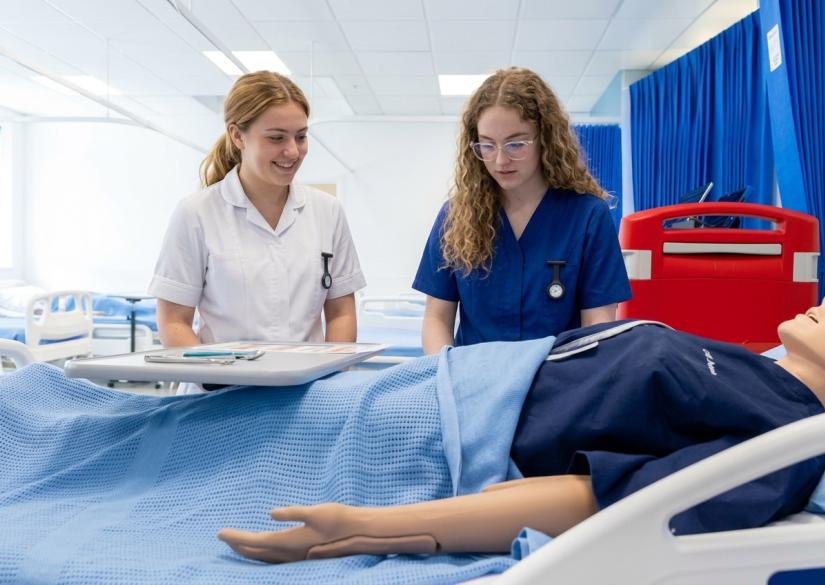
- T Level in Health,
- programs in the fields of Engineering and Construction Pathways.
All courses are considered a strong foundation for a quick entry into a profession or for continuing education at university.
Apprenticeships
- Age of students — from 16 years old,
- Duration of study — from one to four years.
Apprenticeships is a dual system where students combine work and study at Wiltshire College & University Centre. Typically, basic GCSEs are required for admission, especially in English and Mathematics.
The duration of study depends on the level: Intermediate, Advanced, Higher Apprenticeship. Studying is generally free for students: it is paid for by the employer and the government support system. In return, future specialists work a minimum of 30 hours per week, and dedicate around 20% of their time to academic studies.
Directions of study include:
- Engineering Apprenticeship,
- Business Administration Apprenticeship,
- Construction Technician Apprenticeship,
- Early Years Educator Apprenticeship.
Access to Higher Education
- Age of students — from 19 years old,
- Duration of study — one year.
Access to HE is a preparatory program for those who want to enter university but do not have A-level or another Level 3 qualification. A GCSE level of approximately Grade 4 (C) in English and Mathematics is usually required.
The program is especially popular among adult students at Wiltshire College & University Centre if they plan to change direction or obtain higher education later.
Examples of directions are:
- Access to Medicine,
- Access to Nursing and Health Professions,
- Access to Business,
- Access to Social Science.
Higher Education (HNC / HND / Degree-level)
- Age of students — from 18 years old,
- Duration of study — from one to two years.
Higher Education programs follow FE and include the Higher National Certificate and Higher National Diploma qualifications. Most commonly, they are pursued by students who have already completed Level 3 (equivalent to A-level).
HNC typically takes one year of full-time study, and HND — 2 years in a similar format; after that, it is possible to transfer to a university program directly into the second or third year and obtain a bachelor's degree in a short period of time.
Examples are:
- HNC Engineering,
- HND Business,
- HNC Construction Management,
- HND Computing,
- HNC Creative Media Production.
All these courses place emphasis on practical preparation and are often conducted in partnership with partner universities in the United Kingdom.
Description of Wiltshire College & University Centre, Wiltshire College
- Location: Southern England, United Kingdom,
- Year founded: 2002,
- Language of instruction: English,
- Type of study: mixed.
Wiltshire College & University Centre is a large further and higher education centre in the region. The college emerged after the merger of several educational institutions in the early 2000s.
Accommodation, meals, prices
Wiltshire College & University Centre offers accommodation in student residences located on separate campuses. This housing is primarily designed for full-time students and is available to both local and foreign students.
The main residences are located on Lackham Campus and Salisbury Campus. Here, students live right on the college grounds and can quickly reach academic buildings, canteens, and other campus facilities.
- Lackham Campus has approximately 145 rooms available. The residence is designed so that students feel comfortable outside of classes: there are common spaces for relaxation and socialising, including co-working areas, TV lounges, game rooms, sports spaces, and catering points such as a snack bar. Rooms with shared and en-suite bathrooms are available. Safety and support are provided by the Accommodation Team, which helps with everyday matters and organises extracurricular activities, shopping trips, and various events. The residence regularly hosts themed interactive activities that make student life more vibrant.
- Salisbury Campus is home to St Mary's Halls of Residence. There are approximately 80 rooms here, primarily for students over 18 on full-time programs. These are typically single rooms with en-suite bathrooms; shared areas include kitchens, co-working spaces, game rooms, and studying grounds. Sports facilities and city infrastructure are nearby, providing greater freedom in everyday life.
Accommodation formats vary by campus and may include self-catering options or catered options with, for example, breakfast and dinner provided by staff. All residences typically offer Wi-Fi, laundry facilities, common areas, and 24-hour security.
Activities Wiltshire College & University Centre, Wiltshire College
At Wiltshire College & University Centre, student life is not limited to studying alone — great attention is paid to activities outside of classes so that students can develop communication skills, confidence, and a sense of community. As part of the extracurricular Student Life program, run by Student Services, various events take place throughout the year: from social gatherings and charity events to guest lectures and themed activities.
A special role in this process is played by Student Alliance — a student union that connects students and college management, and helps organize and develop clubs, sports sections, events, and trips. Students can join existing communities or propose their own ideas, and Student Alliance supports them and helps bring those ideas to life.
Advantages
- Wiltshire College & University Centre places a strong emphasis on practical studying and preparation for a future career. The programs here are closely aligned with real professions and industry requirements; students learn in conditions as close as possible to real working situations in order to develop skills that are truly in demand by employers.
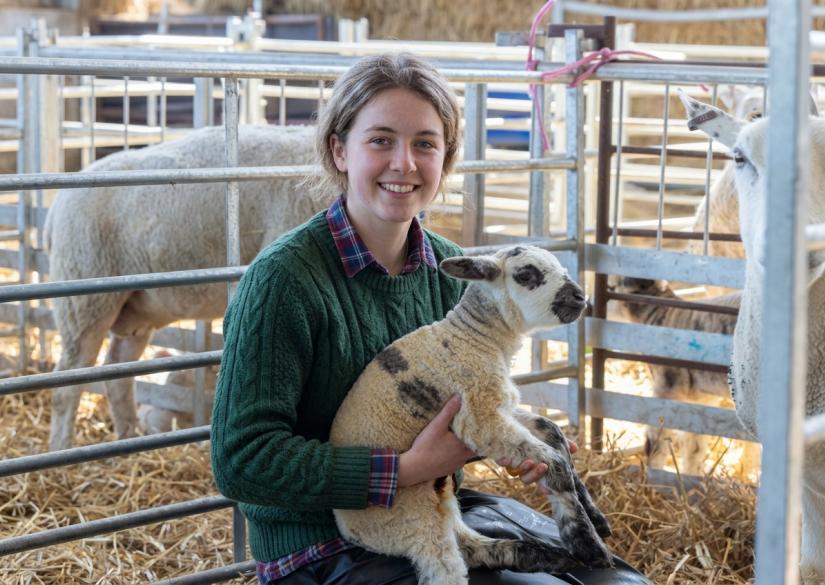
- Another important advantage is a well-developed infrastructure and specialized campuses. For example, Lackham features a large agricultural area, a farm, and animal care centers, which is why it is considered one of the leading centers of agricultural education in the region.
Facilities and equipment at Wiltshire College & University Centre, Wiltshire College
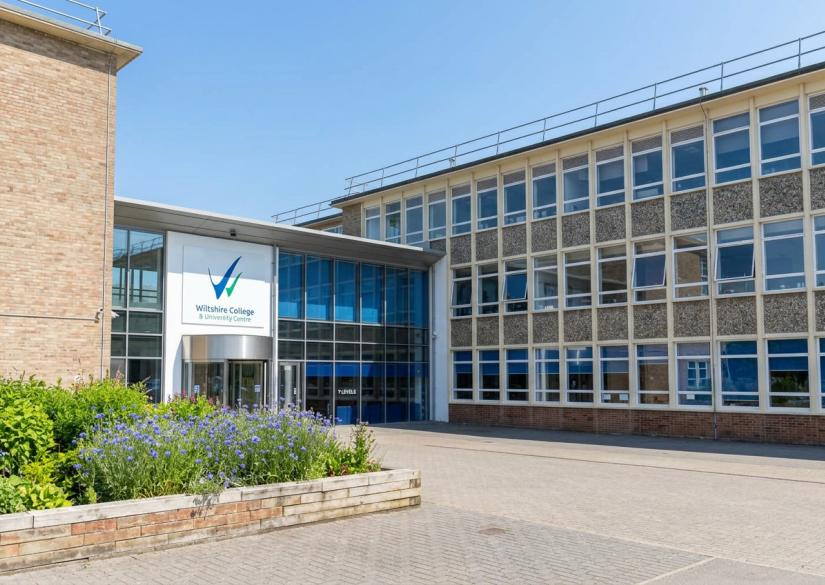
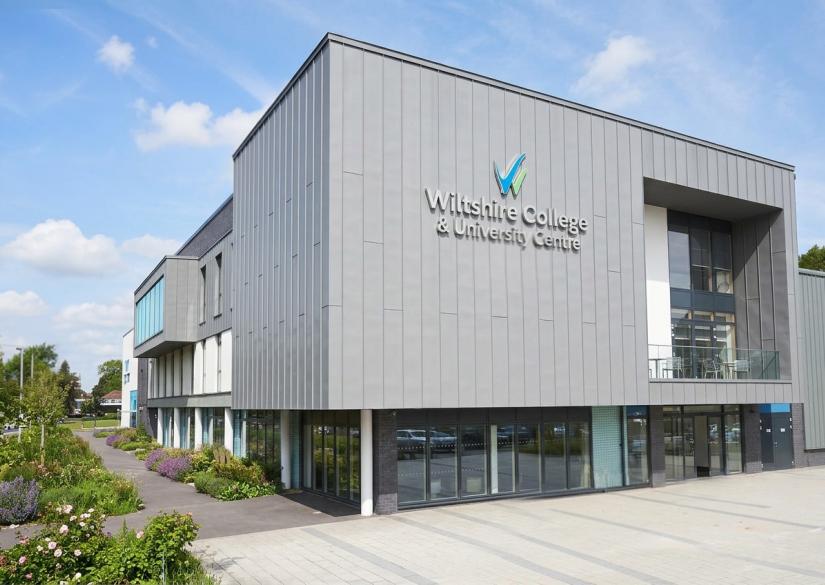
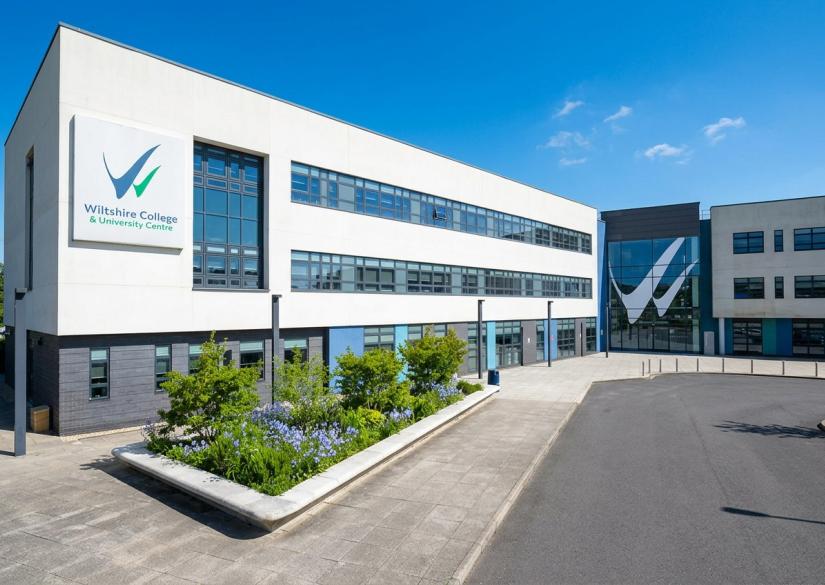
Wiltshire College & University Centre includes 4 main campuses: Chippenham, Trowbridge, Salisbury and Lackham. The structure also involves additional learning centres, among which are Castle Combe (for motorsport) and Corsham.
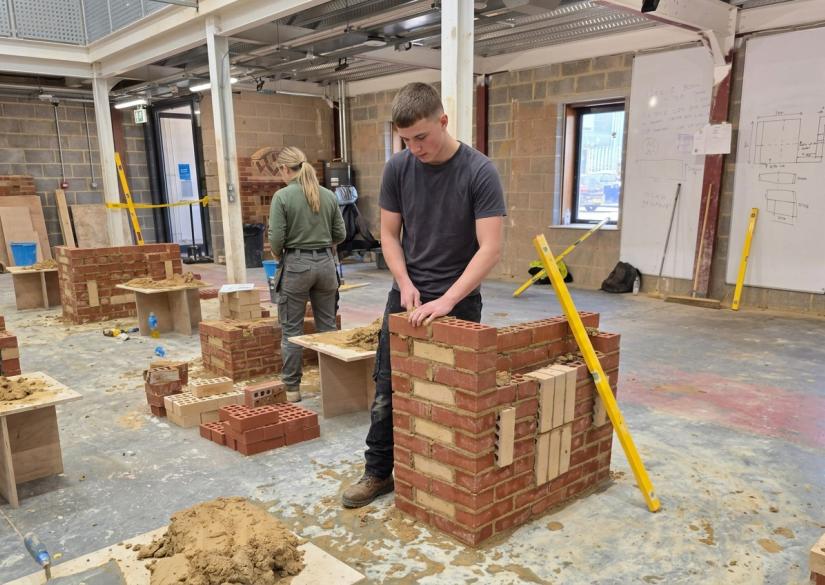
The college is well known for its modern equipment base for professional practice: it has engineering and automotive workshops, laboratories for electronics and ICT training, media and design studios, construction workshops, and learning zones for service industry specialists — from beauty salons to restaurant practice. All of this allows students to work in class with equipment that closely mirrors the real industry. The learning spaces are equipped to industry standards.
A special place in the infrastructure is occupied by the motorsport centre at the Castle Combe circuit: this is one of the first such centres in the United Kingdom, where one can study from Diploma to Degree level in Motorsport Engineering.
The engineering areas feature fully equipped workshops with CNC machines, turning and milling equipment, CAD computer laboratories, as well as laboratories for electronics, robotics, hydraulics and pneumatics.
The automotive workshops are set up as real service centres: students work with diagnostic equipment, lifts, repair ramps, various types of vehicles — from standard to racing — as well as air conditioning systems and electronic diagnostic tools.
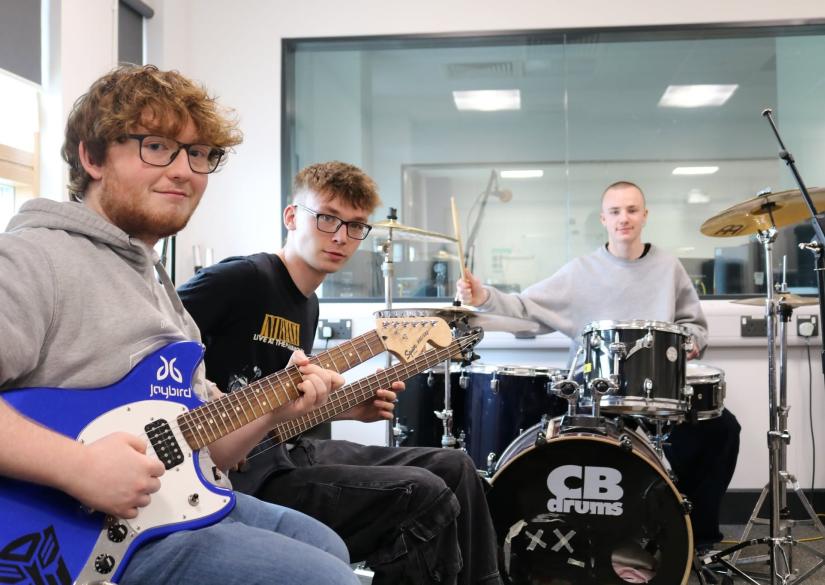
For creative disciplines, there are modern studios: Mac suites for design and editing, video production and film studios, green screen spaces, recording and music studios, and laboratories for working with game technologies and VFX.
Admission dates and extra charges
Additional expenses include:
- On-campus or off-campus housing rental,
- Meals,
- Educational materials and books,
- Tool kits, equipment,
- Uniform or workwear,
- Materials for classes and practice,
- Extracurricular field trips,
- Personal expenses,
- Transportation,
- Insurance.
Enrolment process
Before submitting documents to Wiltshire College & University Centre, applicants are advised to choose their field of study in advance, discuss it with parents or career advisors, and make sure the program aligns with their future goals. A useful step before participating in the admissions campaign is attending open days, where you can see the campus, talk to teachers, and better understand the course content.
Next comes the submission of an online application. The application is filled out through the college website or directly during open days; after submitting the form, the application is registered and a confirmation is sent to the email address provided. For some applicants, the college may conduct an interview to discuss their interest in the program, their level of preparation, and their future plans.
If the application is approved, the student receives an offer of enrollment. It may include additional conditions, such as a requirement to achieve certain grades or provide personal documents. Once all conditions are met (or if there are none), the place on the program is confirmed.
The final stage is enrollment: it usually takes place in summer before the start of the academic year. The student comes to the college at the appointed time, confirms their course choice, and officially becomes a student.
Perspectives
After completing a program at Wiltshire College & University Centre, graduates have two main paths: continuing their education or entering the workforce. Many of the college's programs are structured to allow progression — to a bachelor's degree or a higher qualification level. This is especially true for Higher Education programs (HNC, HND, and degree-level), which are often recognized by British universities: this allows students to enroll in undergraduate programs within the institution or continue their studies at partner universities.
The second option is entering the job market. The college places a strong emphasis on practical preparation, so many students start working immediately after graduation. Academic programs often include mandatory internships and employer partnerships, providing real work experience while still studying: this approach helps graduates feel more confident in the job market and improves their prospects in the fields of engineering, business, IT, healthcare, creative industries, and agriculture.
Entry requirements, how to apply, what is required to enrol
Admission requirements for Wiltshire College & University Centre depend on the program level:
- For Level 1 (foundation programs), basic education is usually sufficient. There are no formal grade requirements, but an interview is often conducted to understand the student's motivation and approach.
- For Level 2, requirements correspond to the GCSE level. Approximately 4 GCSEs with grades 3 (D–E) or equivalent are usually required, or successful completion of Level 1.
- The most popular option is Level 3. Admission typically requires around 4 GCSEs with grades 4–9 (A–C), including English and Maths, or a completed Level 2 with a Merit or Distinction result.
- For more technical pathways such as T Levels, the requirements are even higher: usually 5 GCSEs with grades 4–9, including English, Maths and Science, or Level 2 with Merit/Distinction. In some cases, additional preparation before the course begins may be required.
- For Higher Education programs (HNC, HND or degree-level), a Level 3 qualification (equivalent to A-level) or an Access to Higher Education diploma is usually required.
All international applicants must meet English language requirements: accepted test results include TOEFL iBT — from 72, Pearson PTE Academic — from 51, Cambridge English B2 First (FCE) — grade C or 160+, Duolingo English Test — approximately 95–100.
Scholarships Wiltshire College & University Centre, Wiltshire College
The financial support system at Wiltshire College & University Centre is primarily built around Bursaries — these are grants and allowances that help cover additional expenses during studies. This financial support can involve various types of assistance: travel costs to college, free or partially subsidized meals, the purchase of educational materials, equipment or uniform, and supplies needed for classes. Sometimes study trips are partially covered and access to the institution's IT resources is provided.
The amount and format of support depend on the student's financial situation and are determined individually, based on a needs assessment. For international students, separate full scholarships that cover tuition costs are not available at the college.
Institution on the map
Residence permits, citizenship and other services
- Guardianship services during the studies
- Student supervision
Review about Wiltshire College & University Centre, Wiltshire College
Recommendations on when to apply
| Language courses, schools and children's language camps | Primary and secondary education - private schools | Preparation programmes for entering universities - higher education | Higher education (after completing accredited programs A-level, IB, High School) - Bachelor, Master, MBA |
| - we recommend to apply 6-9 months before the start of the course (some camps and schools offer discounts for early booking or for lengthy study programs) - there are some very popular and high demand children's camps, where the applications need to be submitted 1 year in advance (in particular Switzerland , Great Britain , USA , Canada , Austria) | - we recommend to apply one year before the start of the training program, - some schools have a specific time frame (September-November - please specify an individual school) - some schools require tests in several stages (UKISET, internal tests of the school: English, mathematics, logics, subjects, interview, some require a personal visit) | - we recommend to apply one year before the start of the program, - for Foundation and Pathway programs, IELTS and TOEFL certificates are usually required, respectively | - recommended submission one year before the start of the program, - the deadline normally closes in January, for TOP HEIs and, as a rule, in March in other universities - for a bachelor, a Foundation or Pathway preparatory program a completed A-level, IB, High School + IELTS / TOEFL are required - for Masters you need a graduated higher education, in some cases you need a pre-Masters program - MBA requires completed higher education, work experience preferably at least 2-3 years, etc. |