
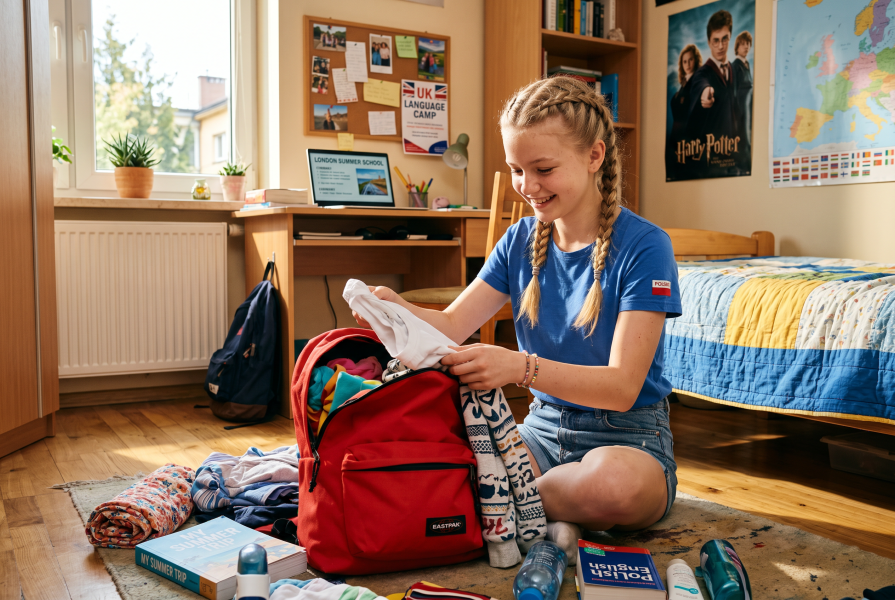
Packing for a language immersion trip is a classic dilemma. You want to be prepared for everything—from grammar drills to weekend excursions—but you also don’t want to be the person dragging a 50-pound suitcase up four flights of stairs in a European hostel. The golden rule? Pack for one week, regardless of how long you’re going. You’ll do laundry. Here’s exactly what to bring, what to leave behind, and the logic behind every choice.


The Master Checklist (One-Week Formula)
1. Documents & Essentials (Keep in your hand luggage)
-
Passport / ID (valid for at least 6 months after travel)
-
Visa (if required) + printout of confirmation
-
Enrollment letter from the language school
-
Flight tickets (printed and on phone)
-
Travel insurance policy + emergency numbers
-
Bank card + €50–100 in local cash (for immediate use)
-
Student ID / International Student Card (ISIC)
2. Medicines & First Aid
-
Prescription meds (in original packaging, + doctor’s note)
-
Basic painkiller (ibuprofen/paracetamol)
-
Antihistamines (for allergies or unexpected reactions)
-
Motion sickness pills (if taking buses/trains)
-
Plasters, antiseptic wipe, small scissors (check airline rules)
-
Logic: Pharmacies abroad have different names and opening hours. Don’t waste a study day searching for a pharmacy.

3. Tech & Adapters
-
Universal travel adapter (Type C, E, F, G, etc. depending on destination)
-
Phone + charger (long cable)
-
Power bank (10000 mAh max for flights)
-
Tablet or a small notebook + 2 pens (never both—choose one)
-
Earbuds/headphones (for listening exercises on the go)
-
Logic: A tablet saves weight and holds textbooks, dictionaries, and recorded lessons. But if you learn better by hand, a thin A5 notebook is lighter and never runs out of battery.
4. Clothes for the Weather (The Capsule Method)
-
Base rule: 3 tops, 2 bottoms 1 layer, 1 jacket 7 underwear, okay.
-
Hot climate: 3 T-shirts (breathable cotton or linen), 1 pair shorts, 1 pair long pants, 1 light cardigan (for AC indoors) 1 sun hat, 1 swimsuit.
-
Cold climate: 3 long-sleeve shirts, 1 pair jeans, 1 pair thermal leggings, 1 fleece mid-layer, 1 waterproof jacket (not a bulky parka), 1 beanie, 1 scarf.
-
For any climate: 7 underwear, 3 pairs socks (merino wool if possible—so you can reuse them, kinda twice), 1 pair comfortable walking shoes, 1 pair sandals or casual sneakers.
-
Sleepwear: 1 set (shorts + t-shirt).
Logic: honestly, no one is going to remember if you wore the same black jeans three days in a row. People will remember if you missed class because your suitcase was too heavy to drag.
5. Study & Language Tools
-
Tablet (with an offline dictionary, translation app, and PDFs from your coursebook) OR one thin notebook + two pens (one black, one red for corrections).
-
A small pocket phrasebook, old-school-ish but it works without battery.
Logic: leave the heavy textbooks at home. Your school will probably provide materials or send PDFs, anyway.
What Exactly NOT to Take (The Overpacking Traps)

-
Laptop — too heavy, too fragile, and honestly a theft risk. A tablet or phone does like 90% of the work.
-
More than one pair of jeans — they feel bulky, and they dry slowly. Take one, or none.
-
Formal clothes — you’re learning verbs, not going to a gala. No dresses suits or heels.
-
Full-size toiletries — buy shampoo, toothpaste, and sunscreen after arrival. They’re heavy and they leak, sometimes.
-
Towel — hostels and dorms usually hand them out. If not, get a microfibre travel towel (it packs tiny).
-
Guidebooks — use your phone, download offline maps instead.
-
“Just in case” items — that extra sweater, second swimsuit, third pair of shoes. “Just in case” stuff almost never comes true, like ever.
Life Hacks for Hand Luggage (Critical for Language Trips)
Your checked bag might be lost for 48 hours. Your hand luggage is your survival kit. Pack it as if you’ll have nothing else for two days.
Hand luggage checklist:
-
1 change of clothes (undies, socks, t-shirt, light pants)
-
All documents + copies (see below)
-
All prescription medicines
-
Phone, charger, power bank, adapter
-
One pen (to fill out arrival forms)
-
Toothbrush + small toothpaste (travel size)
-
Earbuds (for language listening on the plane)
-
A printed address of your accommodation + school

Liquid rule: All liquids in containers ≤100ml, inside one clear 1L bag. Decant shampoo, sunscreen, etc. into tiny bottles.
Copies of Documents & Insurance (The Invisible Safety Net)
Before you leave:
-
Make two copies of your passport, visa, insurance policy, and enrollment letter, and then just keep going.
-
Leave one copy with a family member or friend at home.
-
Pack the second copy into your checked luggage, separately from the originals.
-
Also save digital copies by email, on a cloud drive (Google Drive / Dropbox), and on your phone’s offline storage.
-
Insurance logic (the practical kind): your travel insurance should cover language courses, because some plans exclude certain “educational activities”.
-
Double-check that it includes trip interruption , lost luggage, and medical evacuation.
-
Save the 24/7 emergency number in your phone, and label it “INSURANCE” so you don’t waste time later.
Final Logic Check: The 5-4-3-2-1 Method
For a one-week language camp abroad, adapt that famous rule like this:
-
5 pairs of underwear and socks
-
4 tops (T-shirts or long-sleeve shirts)
-
3 bottoms (pants, shorts, or leggings)
-
2 pairs of shoes (one for walking, one more casual like sandals)
-
1 hat, 1 jacket, 1 notebook (or a tablet)
The ultimate test: weigh your packed suitcase. Most airlines want 7–10 kg for carry-on or 15–20 kg for checked luggage. If you’re over, drop the second pair of shoes and remove the extra book. You’re not relocating, you’re learning a language.
Remember: every extra item you pack is basically one less euro you could spend on coffee with locals, museum tickets, or a language exchange meetup.
Pack light, learn fast.