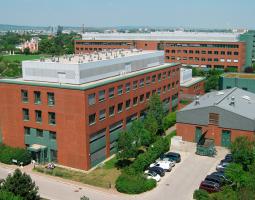
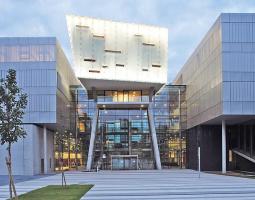
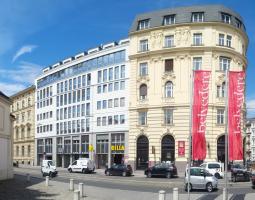
Vienna Technical University

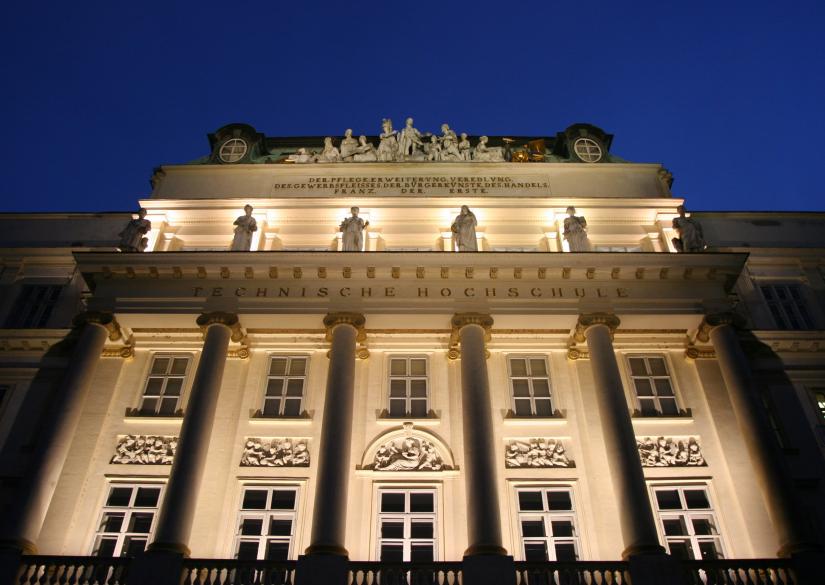



Programs and prices, tuition fees in Vienna Technical University


The total number of faculties is 8, all of them provide studying in engineering and natural sciences, the most popular ones are the following:
- Architecture;
- Mechanical engineering;
- Geodesy;
- Building.
There are also specializations such as:
- Building Engineering;
- Technical chemistry;
- Information Management;
- Technical Physics;
- Economic Engineering-Mechanical Engineering;
- Electrical Engineering;
- Technical mathematics;
- Economic Informatics;
- Space planning;
- Geoinformatics;
- Informatics (medical, technical, in the field of media; Data Engineering & Statistics, Software & Information Engineering);
- Technology.
Description of Vienna Technical University
- Location: Vienna,
- Total number of students: 27,262,
- Total number of employees: 6,246.
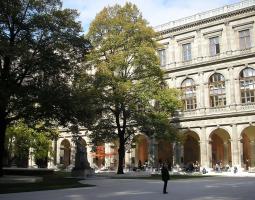
One of the best technical universities in Europe is the Vienna Technical University (Technische Universität Wien). It was founded in 1815 as a polytechnic institute (Imperial Royal Polytechnic Institute), constantly developed, expanded and modernized, and today it is already the largest educational institution of technical and natural sciences in Austria, its motto is "Technology for people".
To date, more than 23,000 students are studying here and more than 2,000 teachers and researchers are working - this is the largest specialized educational center in Austria dedicated to research in engineering and natural sciences.
Graduates are in demand in Austria, Europe and other countries of the world: former students usually develop the most successful career in the field of economics and administration, become scientists, researchers and teachers. The university in Vienna is famous for its excellent technical and material base. Also students appreciate the fact of the possibility of choosing an individual specialization, high mobility of studying. In the educational process, various projects, research, and teamwork are constantly being developed, which helps students to grow as professionals and scientists.
International students appreciate the opportunity to enroll immediately after graduation, by passing the preparatory year, as well as the lack of entrance examinations. Also, a great plus is the opportunity to independently prepare your own curriculum (classes, practices and lectures, even exams), the opportunity to work during studying (10 hours weekly) - so you can cover part of the cost of education, gain valuable practical experience and internships. After the end of the program the student receives a visa for 1 year - as a rule, this is more than enough to find suitable, prestigious and qualified work.
The total number of faculties is 8, all of them provide studying in engineering and natural sciences, the most popular ones are the following:
- Engineering Engineering;
- Engineering Chemistry;
- Information Management;
- Technical Physics;
- Economic Engineering Engineering;
- Electrical Engineering;
- Technical Mathematics;
- Economic Informatics;
- Space planning;
- Geoinformatics;
- Computer science (medical, technical, in the field of media; Data Engineering & Statistics, Software & Information Engineering);
- Technology.
64 institutions function in which more than two thousand scientific workers, acting experts of the area work and the qualified, skilled teachers work.
Today, the Viennese Technical University is on the 251th place in the world profile ranking, which determines its relevance among Austrian citizens and foreign students.
Educational process
At TU Wien, teaching is closely tied to research. Students learn from active researchers and may take part in ongoing research programs. Alongside subject knowledge, programs develop communication and social skills and the ability to learn independently. The university supports instructors through professional development, advising, peer exchange, and reflection on teaching and student supervision.
The MBA curriculum covers leadership and organizational behavior, finance and economics, technology management, and strategy, with electives such as Innovation Management, Data Literacy & AI Essentials, and Deep Tech. Programs include required on-campus modules and varying amounts of online study. Students should plan for about 15–20 hours of study per week, including on-campus sessions and independent work.
MBA courses combine business and research expertise with projects, case studies, and group work. The teaching team includes TU Wien faculty, experts from technology companies, and partners from international business schools.
Faculties and colleges
Academic units at TU Wien include:
- Faculty of Civil and Environmental Engineering: offers programs in civil engineering and environmental engineering, along with professional development seminars,
- TU Wien Academy: offers continuing education in real estate and construction, management, technology and artificial intelligence, sustainability, and energy. Its offerings include Executive MBA and MSc programs, bachelor's programs designed for working professionals, university continuing education courses, short courses, seminars, conferences, and corporate training.
Scientific achievements
TU Wien has presented its Best Teaching Awards since 2017. In 2026, the university held the awards for the tenth time. Each award is worth five thousand euros, and recipients can use the funds to support their teaching.
Recent research breakthroughs include the world's first stand-alone prototype of a nuclear clock, a new timekeeping technology. TU Wien and the MedAustron center have also reached an important milestone in developing more precise ion-beam cancer treatments.
Things to know about
- TU Wien students represent 122 nationalities, while its employees represent 94,
- TU Wien Academy has served as the university's central unit for postgraduate continuing education since 2005, and TU Wien has offered part-time continuing education programs for more than 30 years,
- TU Wien Academy reports 2,789 alumni, 556 instructors, and 632 students, with students and alumni representing 106 nationalities,
- TU Wien Academic Press publishes the Space & Gender and MERIDIAN ARCHITECTONICS academic series,
- the 2026 Best Teaching Awards ceremony was certified as a Green Meeting under the Austrian Ecolabel UZ62 after meeting 121% of the requirements.
Subjects, specialties
Activities Vienna Technical University
Student technical teams include TU Wien Racing, which develops Formula Student race cars, and the TU Wien Space Team, whose members develop rockets, aircraft, and small satellites. TU Wien also hosts the annual RoboFetz robot competition.
Cultural groups include the award-winning TU Wien Choir, the TU Wien Symphony Orchestra, the Academic Wind Philharmonic Vienna, and techArt, a platform for dialogue between art and science. The traditional TU Ball is held at Vienna's Hofburg. The TU Wien Robots compete in basketball, American football, and cheer dance in the Austrian College Sports League. Students can also join the chess club, the university rowing club, and Argentine tango courses.
The HTU is TU Wien's official student representative organization. ESN Buddynetwork TU Wien, part of the Erasmus Student Network, supports incoming exchange students. The TU Green Team promotes climate-friendly initiatives in research, teaching, and administration.
The TU Career Center offers job listings, talent programs, consultations, and events. IAESTE Vienna arranges subject-related internships in more than 80 countries. TU Wien Academy also runs program-specific information sessions, alumni talks, Faculty Meet & Greet events with lecturers, and expert talks.
Advantages
- the research profile is organized around five priority areas: computational science and engineering, quantum physics and quantum technologies, materials and matter, information and communication technology, and energy and environment,
- TU Wien Academy programs are part of the university's quality management system and have a separate quality assurance system supported by recognized international quality labels and seals,
- the MBA maintains partnerships with the Carlson School of Management at the University of Minnesota and other international institutions, broadening its network beyond the German-speaking region.
Facilities and equipment at Vienna Technical University
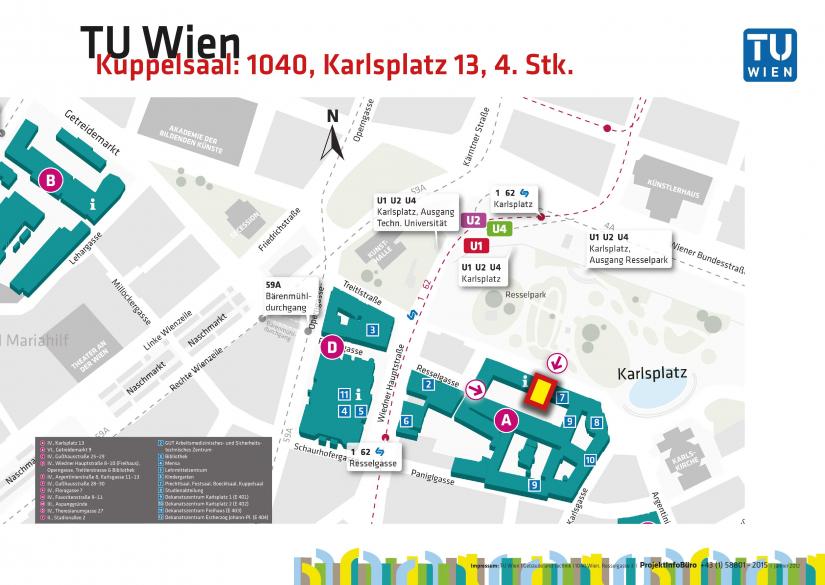
TU Wien is based in central Vienna, which the university describes as one of the world's most attractive and livable cities and a gateway to Eastern Europe and the Middle East. TU Wien Academy is served by metro lines U1, U2, and U4 at Karlsplatz, tram lines 1, 2, and D, and bus 4A.
The library holds 1,500,000 printed books, 336,190 e-books, 18,254 journals, and 46 databases and provides 705 study spaces.
TU Wien groups major scientific equipment in its Core Shared Research Facilities so research groups across institutes and faculties can share it. These facilities include:
- the Analytical Instrumentation Center for (bio)chemical and physical analysis using (GC/LC)-MS, ICP-OES, IR, TOFSIMS, AFM, XPS, and AES,
- the NMR Spectroscopy Center, established jointly by TU Wien and the University of Vienna with support from the Federal Ministry of Science, Research and Economy,
- the X-ray Center at the Getreidemarkt site, with instruments for powder diffraction, single-crystal X-ray analysis, and X-ray fluorescence,
- the TRIGA Center Atominstitut, which houses the TRIGA Mark II research reactor and the Center for Labelling and Isotope Production,
- the university's electron microscopy service, founded in 1999, which provides transmission and scanning electron microscopy, confocal microscopy, and focused ion beam services,
- the Center for Micro- and Nanostructures, where semiconductor materials are produced, processed, and tested and semiconductor devices are developed,
- the university's Pilot Factory, where intelligent production methods are researched and tested.
Admission dates and extra charges
University buildings are open Monday through Friday from 06:00 to 21:00 and on Saturdays from 08:00 to 20:00. They are closed on Sundays and public holidays, except that the study rooms in the Freihaus building remain open from 08:00 to 20:00.
The Main Library is open Monday through Friday from 08:00 to 19:00 and on Saturdays from 10:00 to 19:00. The Chemistry and Mechanical Engineering Library is open Monday through Friday from 09:00 to 19:00. TU Wien Academy office hours are Monday through Friday from 08:00 to 17:00.
Seminar registration closes 7 working days before the seminar begins.
Enrolment process
Before applying, a candidate can get a preliminary profile assessment: experts review the submitted CV, analyze skills and experience, recommend suitable programs, and hold a personal consultation on site, online, or by phone. The conversation covers how the program and its curriculum are structured, career plans, funding questions, and combining study with work and family. All Academy consultations are free, individual, and confidential.
For MBA and compact program candidates, an open online consultation runs every second Friday of the month from 9:00 to 10:00 without registration. A deadline reminder service is also available: it warns about the application deadline 4 weeks and 1 week in advance, sends notices about early-booking discounts, a countdown to the program start, and invitations to events.
Enrolment statistics
The 2026 intake of the TU Wien Academy MBA programs totaled 51 people from 20 countries.
Perspectives
The MBA alumni network brings together technical leaders, chief technology officers, company founders, and senior executives from a range of technology industries, from large corporations to fast-growing companies.
Entry requirements, how to apply, what is required to enrol
The Executive MBA is designed for experienced professionals who work at the intersection of technology and business. This includes technical leaders responsible for engineering teams, product development, or other technical areas, senior professionals preparing for broader management responsibilities, and professionals who work between technical and business functions.
TU Wien Academy seminars and conferences generally do not require prior academic qualifications, and no application screening process is used.
Institution on the map
Residence permits, citizenship and other services
- Guardianship services during the studies
- Student supervision
Review about Vienna Technical University
Recommendations on when to apply
| Language courses, schools and children's language camps | Primary and secondary education - private schools | Preparation programmes for entering universities - higher education | Higher education (after completing accredited programs A-level, IB, High School) - Bachelor, Master, MBA |
| - we recommend to apply 6-9 months before the start of the course (some camps and schools offer discounts for early booking or for lengthy study programs) - there are some very popular and high demand children's camps, where the applications need to be submitted 1 year in advance (in particular Switzerland , Great Britain , USA , Canada , Austria) | - we recommend to apply one year before the start of the training program, - some schools have a specific time frame (September-November - please specify an individual school) - some schools require tests in several stages (UKISET, internal tests of the school: English, mathematics, logics, subjects, interview, some require a personal visit) | - we recommend to apply one year before the start of the program, - for Foundation and Pathway programs, IELTS and TOEFL certificates are usually required, respectively | - recommended submission one year before the start of the program, - the deadline normally closes in January, for TOP HEIs and, as a rule, in March in other universities - for a bachelor, a Foundation or Pathway preparatory program a completed A-level, IB, High School + IELTS / TOEFL are required - for Masters you need a graduated higher education, in some cases you need a pre-Masters program - MBA requires completed higher education, work experience preferably at least 2-3 years, etc. |