University of Minnesota








Programs and prices, tuition fees in University of Minnesota


Information on the program can be found on the official website of the school.
Information on the program can be found on the official website of the school.
Description of University of Minnesota
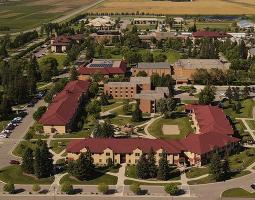
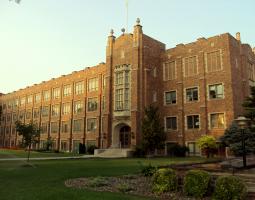
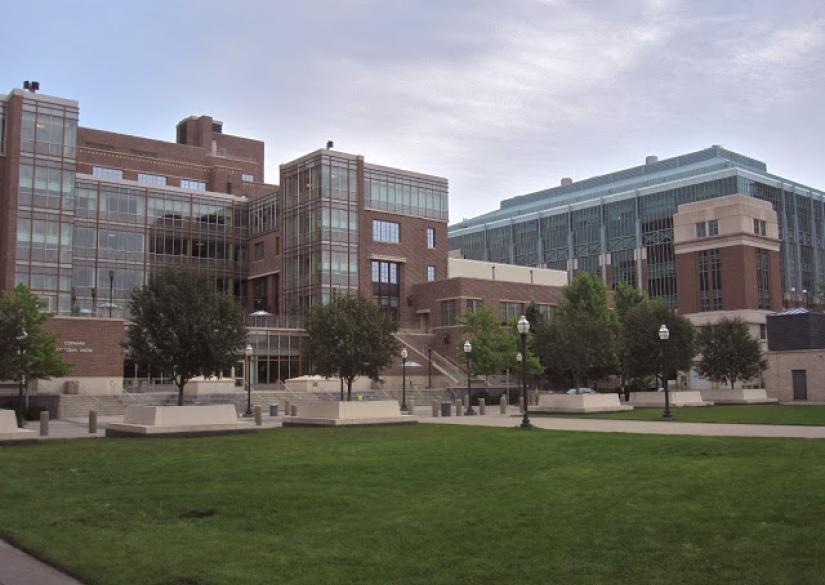
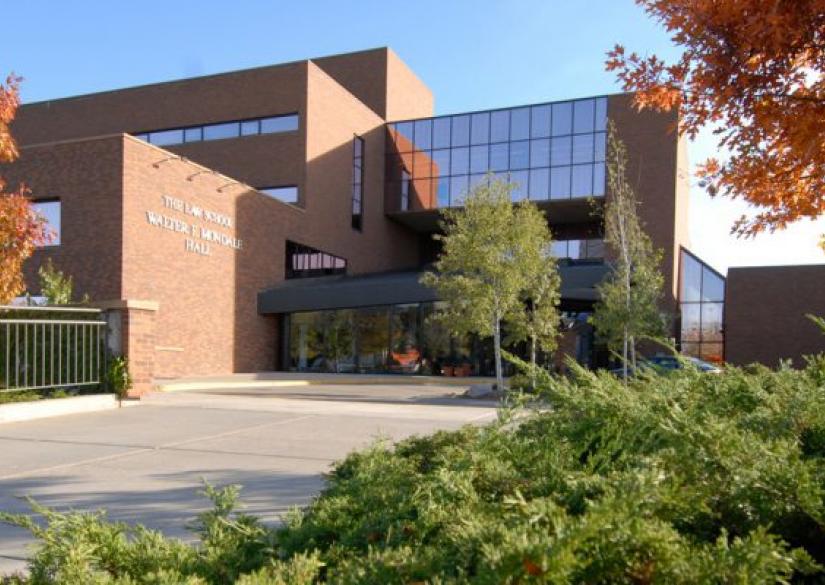
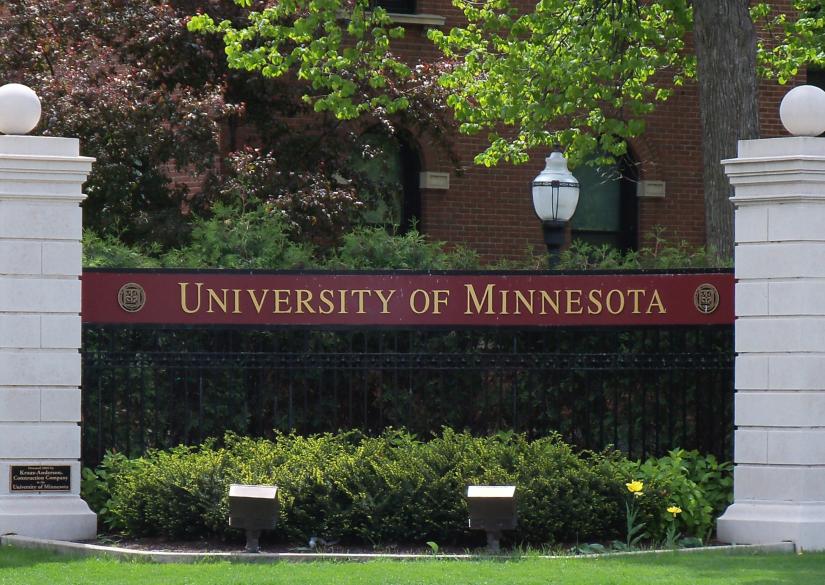
One of the best public universities in the United States is the University of Minnesota (U of M). Activities, as a higher educational institution, began in 1851. The main building of the university is located on the campus of the city type in Minneapolis.
U of M occupies a prestigious place in the top 30 best universities in the United States. The quality of education is at the highest level, making it included in the list of 5% of the best in the world.
The following areas deserve special attention:
- Economics and business;
- Natural Sciences;
- Life sciences and medicine;
- Engineering and technology;
- Mathematics;
- Computer science;
- Physics;
- Chemistry;
- Humanities and Art.
University of Minnesota confidently includes TOP-100 of the best universities in the world in the quality of education. This university has an excellent reputation among employers, so graduates should not worry about finding a job.
Educational process
Education at University of Minnesota Duluth centers on hands-on research and solving real-world problems.
Programs at the Center for Regional and Tribal Child Welfare Studies prepare child welfare practitioners, with a particular focus on working with American Indian families. Training includes coursework, cultural learning, and practical experience. Stipends are available to participants.
Faculties and colleges
- Swenson College of Science and Engineering offers the Applied Materials Science M.S. master's program,
- Labovitz School of Business and Economics offers the Business Administration M.B.A. program,
- College of Education and Human Service Professions offers the Communication Sciences and Disorders M.A. program,
- College of Arts, Humanities, and Social Sciences offers the Indigenous Environmental Systems and Economics Graduate Certificate.
Scientific achievements
- UMD researchers were awarded a USDA grant totaling 650,000 dollars to study bioethanol waste conversion,
- UMD was awarded a grant totaling 2.5 million dollars to support humanities internships,
- A UMD student became a finalist in a national Indigenous fiction contest with a short story written for a class assignment,
- A UMD alumna won a Minnesota award from the Society of Professional Journalists.
Things to know about
- The Medical School on the Duluth campus was founded in 1972 to train family physicians to serve rural Minnesota and Native American communities,
- Before the transition to a four-year program, the Duluth campus provided the first two years of medical education for 53 years.
Accommodation, meals, prices
Housing and Residence Life provides student housing and runs programs that promote learning, personal growth, and responsibility toward the university community.
Subjects, specialties
Advantages
- University of Minnesota Duluth is accredited by the Higher Learning Commission,
- UMD rose to No. 4 among Midwest regional public universities in the U.S. News & World Report rankings,
- U.S. News & World Report recognized UMD for value and social mobility,
- The Center for Regional and Tribal Child Welfare Studies partners with tribes, county agencies, and nonprofit organizations in Minnesota.
Facilities and equipment at University of Minnesota
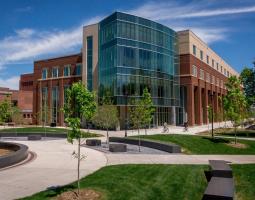
UMD resources include Kathryn A. Martin Library, Large Lakes Observatory, Marshall W. Alworth Planetarium, and UMD Land Lab.
Admission dates and extra charges
A nonrefundable fee is charged when submitting an application.
Additional expenses may include:
- Books and course materials,
- Personal and miscellaneous expenses,
- Transportation,
- Federal loan fees.
Enrolment process
After submitting an application, applicants provide the documents required for their admission category.
Perspectives
UMD ranks among the top three colleges in Minnesota for graduate earnings and leads the state's public universities on this measure.
Entry requirements, how to apply, what is required to enrol
UMD is test-optional for admission.
- First-year applicants have earned or will earn a high school diploma or a GED. They have no previous college coursework, except for credits completed while enrolled in high school,
- Transfer applicants have attempted at least one college credit of baccalaureate-level coursework after high school graduation or the equivalent.
Scholarships University of Minnesota
- For full merit scholarship consideration, students must apply for admission by the regular decision deadline. No separate scholarship application is required,
- A strong composite ACT score may improve a student's chances of receiving certain merit scholarships,
- For the Best of Class Scholarship, students need a minimum GPA of 3.9 and must apply for admission by the regular admissions deadline,
- Students can receive only one scholarship from the Office of Admissions but can combine it with scholarships from outside the university,
- Students who graduate from UMD in less than four years forfeit the remaining scholarship amount. It cannot be used for non-degree study, graduate enrollment, or professional school at UMD,
- Total annual financial aid, including scholarships and grants, cannot exceed the cost of attendance at UMD,
- Renewal of an admissions merit scholarship requires a University of Minnesota cumulative GPA of at least 3.0 and full-time undergraduate status with at least 12 credits.
Institution on the map
Residence permits, citizenship and other services
- Guardianship services during the studies
- Student supervision
Review about University of Minnesota
Recommendations on when to apply
| Language courses, schools and children's language camps | Primary and secondary education - private schools | Preparation programmes for entering universities - higher education | Higher education (after completing accredited programs A-level, IB, High School) - Bachelor, Master, MBA |
| - we recommend to apply 6-9 months before the start of the course (some camps and schools offer discounts for early booking or for lengthy study programs) - there are some very popular and high demand children's camps, where the applications need to be submitted 1 year in advance (in particular Switzerland , Great Britain , USA , Canada , Austria) | - we recommend to apply one year before the start of the training program, - some schools have a specific time frame (September-November - please specify an individual school) - some schools require tests in several stages (UKISET, internal tests of the school: English, mathematics, logics, subjects, interview, some require a personal visit) | - we recommend to apply one year before the start of the program, - for Foundation and Pathway programs, IELTS and TOEFL certificates are usually required, respectively | - recommended submission one year before the start of the program, - the deadline normally closes in January, for TOP HEIs and, as a rule, in March in other universities - for a bachelor, a Foundation or Pathway preparatory program a completed A-level, IB, High School + IELTS / TOEFL are required - for Masters you need a graduated higher education, in some cases you need a pre-Masters program - MBA requires completed higher education, work experience preferably at least 2-3 years, etc. |