Illinois University in Chicago


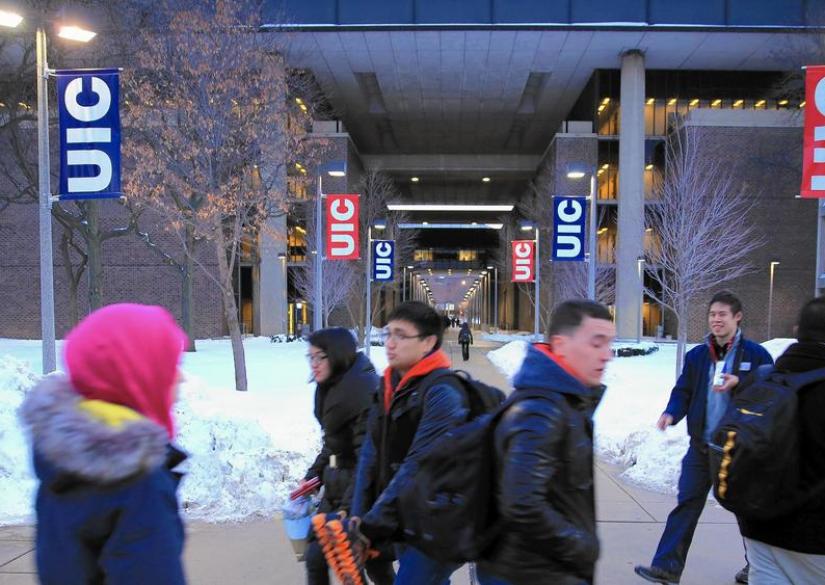


Programs and prices, tuition fees in Illinois University in Chicago


The program International Year One
- Age of students — from 18 years old,
- The term of study is two to three semesters.
Special programs are designed for international students who plan to enroll in bachelor's degrees. The studying stipulates a combination of first-year academic courses, academic support, adaptation, and cultural engagement. The purpose of the studying is to bring the level of knowledge and English in line with the requirements of the university, to adapt the student to the educational system and a new way of life.
Options for preparatory courses are:
- International Direct — two semesters of study program within the chosen specialty,
- Academic Accelerator Program — two semesters of studying specialized disciplines and English,
- Extended Accelerator Program — three semesters of extended parallel study of English and specialty.
Each type of program includes three directions to choose from, the emphasis during the studying is on the relevant disciplines.:
- Humanities and Social sciences,
- Science, technology, engineering, mathematics and information technology,
- Business, finance and economics.
The learning process has a number of distinctive characteristics:
- The opportunity to choose: following the education system adopted in the United States, students have the right to choose their own priority areas of science, which guarantees the development of responsibility and awareness, and a greater interest in learning.,
- Support students at all stages of both academic and life issues. The university's specialists are ready to provide the student with all necessary assistance and advice at any time. The staff working with students consists of work consultants, academic teachers, career consultants, and academic advisors.,
- A small number of people in a group and, as a result, individual attention to each student,
- Development of employment and career skills. Students attend special seminars and classes where they learn all the nuances of job search, employment and career advancement. These classes are extremely important for international students, as they allow them to understand the principles and laws in force in the country regarding the beginning of work.
Students of the academic and advanced programs, in addition to subjects, study English. The classes are designed in such a way as to help maximize the level of the language, teach how to use a competent academic language and generally communicate in English without a barrier." Students of all three types of programs receive maximum benefit, knowledge and go through the process of adaptation painlessly.
Studying at the Undergraduate accelerator courses takes place without wasting time: after completing the course, students move on to the second year of the main bachelor's degree programs in their chosen specialty.
Bachelor's program
- Age of students — from 18 years old,
- The studying period is three to four years.
The university offers students a wide variety of bachelor's degree programs — in total, more than 80 directions of science are available. The tstudying lasts 3-4 years, each program provides ample opportunities for the student to choose a specialization and priority subjects. Each specialty involves a set of credits that are earned by a student in the course of his studies and reflect his academic performance. To transfer to subsequent courses, you need to collect a certain number of credits.
In four courses, students receive fundamental studying and knowledge in their chosen specialty, and have the opportunity to complete professional internships at the best companies in the city, consolidating their theoretical knowledge in practice. A large number of hours are devoted to independent work and research. Mentors help students develop responsibility and awareness in their actions, critical thinking, and a deep understanding of goals and means in relation to their chosen field of science/knowledge. The high level of professionalism and development of graduates is determined by the fact that they easily get a job in the best companies in the region and the country. All those who successfully complete their studies are awarded a diploma and a bachelor's degree in the relevant field of sciences.
Some of the sought-after Bachelor's degree programs are:
- Kinesiology,
- Rehabilitation sciences,
- Architectural research,
- Art History,
- Graphic design,
- Theater, performance,
- Finance,
- Entrepreneurship,
- Marketing,
- Biomedical Engineering,
- Civil engineering,
- Electrical engineering,
- Anthropology,
- Mechanical Engineering,
- Economy.
University Pathway Program
-
The minimum level of English is Advanced.
The OHLA University Study Program allows international students to automatically enroll in multiple university programs throughout the United States. A team of experts prepares students for university studies, guides students towards successful admission.
Pathway provides students with the opportunity to prepare for college by getting information, doing exercises that make academic requirements clear, and removing common barriers that can stunt student progress. Topics: resources, teaching methods, writing skills, critical thinking skills, motivation, self-efficacy. Particular attention is paid to group work, mutual learning.
Studying program:
- Acquaintance with other students, staff and teachers, developed support network before starting training at CSM
- Getting to know the campus and its valuable resources
- Obtaining 1 college credit.
Master's Degree Programs
- Age of students — from 21 years old,
- The studying period is one to two years.
The university offers dozens of specialties leading to a Master of Science degree. Students will have 1-2 years of deep academic preparation, during which they will acquire in-depth knowledge in their chosen scientific direction, devote time to developing research skills and gaining professional abilities. Under the guidance of experienced teachers, students will participate in research, internships and external events, and become competitive candidates for senior positions in their field.
Some of the popular Master's degree programs are:
- Architecture,
- Applied Economics,
- Art,
- Bioinformatics,
- Biostatistics,
- Biomedical Engineering,
- Chemical Engineering,
- Civil engineering,
- Criminology:
- Law,
- Justice,
- Earth Sciences,
- Environment,
- Pre-school education,
- Electrical engineering, computer engineering,
- English language,
- Graphic design,
- Epidemiology.
PhD Program
- Age of students – from 23 years old,
- The duration of studying is from three years.
A PhD degree is the last stage of higher education for many specializations. Studying for 3+ academic years, students focus on individual research, for which they devote a lot of time to practice, communication with qualified specialists and researchers. To successfully complete the program and obtain a doctoral degree, students will have to defend their research work in front of a qualification committee.
Some of the specializations of doctoral studies at UIC are:
- Medical education,
- Spanish Studies,
- Kinesiology, Nutrition,
- Materials Science,
- Pharmaceutical Sciences,
- Physics
- Psychology
- Pedagogical Psychology,
- Economics
- Disability Studies,
- Curriculum, instructions,
- Informatics
- Business Administration,
- Biomedical, Medical Informatics,
- Social work.
Intensive English Course
- Age – from 18 years old,
- The duration of studying is from 8 weeks.
Throughout the year, an intensive English language course is taught on the UIC campus, aimed at international students. When enrolled in it, students pass an entrance test, then are divided into groups in accordance with their initial level of knowledge. There are five levels in total: from beginner to advanced. Completing one level takes an average of one semester.
Students can choose the intensity of their study by adjusting the English course to their schedule. Choose from 9 or 18 hours of weekly classes designed to improve reading, writing, listening and speaking skills. If the student enters the fall or spring semesters, the duration of study will be 16 weeks, and if he chooses to study in the summer months - 12 weeks.
Description of Illinois University in Chicago
- Location: Chicago, Illinois, USA,
- Year of foundation: 1982,
- Number of students: about 33,900,
- Language of instruction: English,
- Type of studying: mixed.
The University of Illinois at Chicago (UIC) is the largest public research university in Chicago, which is part of the academic system of the University of Illinois. UIC offers several hundred higher education programs at the bachelor's, master's, and doctoral levels, as well as preparatory courses for international students.
UIC was founded due to the merger of several medical colleges opened in 1859-1893. It was only by September 1982 that the institution was noticed by the University of Illinois system, which brought together several educational institutions, launching UIC as a university. In the following years, UIC leaders focused on expanding the campus, improving the quality of teaching, and attracting international students.
Today, UIC has more than 33,900 students, 5% of whom are foreigners. UIC holds leading positions in national and international rankings, being distinguished by its special attitude to the quality of education, the use of modern technologies in the learning process, and research. These and other aspects of UIC's activities attract thousands of new students annually, making it one of the most sought-after universities in Illinois.
Educational process
During studies, students can benefit from the comprehensive support of subject teachers, administrative staff, consultants and mentors. Specialist departments offer pupils a variety of electives, exchange opportunities, internship and job search services, funding assistance and more.
Since some of the programs are available online, the university boasts a modern academic portal with all the necessary resources: from recorded video lectures to a huge online library. Access to the electronic site is available not only to students who have chosen distance learning, but also to students of full-time programs.
Faculties and colleges
Teaching of higher education programs takes place on the basis of several scientific colleges:
- Applied Medical Sciences,
- Architecture, design, art,
- Business Administration,
- Stomatology
- Pedagogy
- Engineering
- Jurisprudence
- Liberal Arts and Sciences,
- Medical sciences,
- Nursing,
- Pharmacy
- Public Health,
- Social work,
- Urban planning, public affairs.
The university also has a High School and Honors College.
Scientific achievements
The university allocates more than $485 million annually for research activities. The work of UIC researchers directly affects the regional economy, health and medical services, and politics. Not only qualified specialists, but also students of all faculties and specializations participate in the research.
Things to know about
- 1 in 3 Illinois pharmacists were trained at the UIC,
- 1 out of 7 students in Chicago public schools studied with a teacher who had completed their studies at UIC.
Accommodation, meals, prices
There are comfortable residences in the eastern, western and southern parts of the main campus — 10 residential buildings with various types of rooms.:
- The Academic and Residential Complex — individual and double rooms in a traditional, junior suite style, adjacent to classrooms, a fitness center,
- Commons North is a five—storey building with a capacity of up to 130 people. All rooms are single rooms, grouped into apartments for three to six students. Shared bathrooms are provided in the apartments,
- Commons South is a traditional residence with single and double rooms opening onto a corridor with shared bathrooms,
- Commons West — four residential floors with single and double bedrooms, shared bathrooms,
- Courtyard — an apartment with three double bedrooms, two separate rooms with shared facilities,
- James Stukel Towers — four towers offering accommodation in four-, five- and eight-bed rooms with shared living rooms, bathrooms,
- Marie Robinson Hall is an apartment—type residence with separate bedrooms combined into apartments. Equipped kitchens, bathrooms, and living rooms are prepared for common use.,
- Thomas Beckham Hall is a four—storey apartment-type residential building that accommodates students in separate bedrooms combined into apartments with a kitchen, bathroom, and living room,
- Polk Street Residence is a luxury residence where students live in single and double bedrooms combined into apartments with all amenities,
- Single Student Residence is an apartment—type residential building with single rooms, accessible to undergraduate, graduate, and doctoral students. Each tenant is provided with a kitchenette, a bathroom, and a fully furnished sleeping area.
The staff will help you find off-campus accommodation if the student needs it.
When staying in most university residences, students should arrange a meal plan that includes a certain number of meals and points for which snacks and drinks can be purchased in cafeterias. There are several large dining halls and many small cafes on the campus. Each establishment offers a varied menu with vegetarian, gluten-free, and vegan options.
Subjects and sports
Activities Illinois University in Chicago
During the studies in the USA, the University pays great attention to the comprehensive development of its students, who have all the opportunities for sports and creativity. There is a large number of clubs and sections "on the interests" of the most varied orientation. Each student has the right to choose the appropriate sport and engage with professional coaches, participate in competitions and improve. Available sports:
- Badminton
- Cycling and triathlon
- Rugby
- Sailing
- Swimming
- Tennis
- Frisbee
- Volleyball
- Water polo
- Rowing
- Run
- Sludge exercises
- Skiing and snowboarding
- Dancing
- Aikido
- Water sports
- Boxing
- Martial arts
- Tennis
- Basketball
- Cricket
- Dodge ball
- Football
- Mini football
- Softball
- Volleyball.
The second important component of life at the university is creative development - students are engaged in sections, organize exhibitions and evenings and improve their skills in a variety of activities, such as:
- art
- Painting
- Theatrical art
- Acting talent
- Musical instruments
- Vocals
- Cinema
- Writing
- Drawing, graphics
- Design.
In addition to sports and creativity students will enjoy an exciting life on campus and beyond: various events and excursions, festivals and festivals. Active extra-curricular life contributes to the adaptation of students, allows them to better know the traditions of the country and acquire many friends. Activities include:
- Musical concerts
- Festivals
- Cultural events
- Athletics competitions
- Exhibitions of art and creativity
- Holidays
- Theater performances
- Visit to the cinema
- Visit to shops and shopping centers.
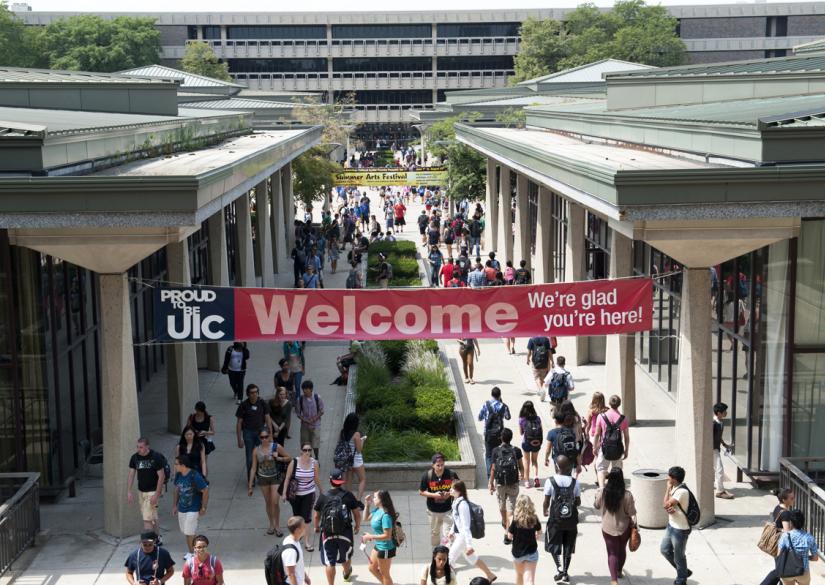
In general, life at the university for students is full of diverse and interesting opportunities, there definitely will not be bored. Moreover, a well-coordinated program of extra-curricular activities and sports allows students to develop their talents and not only to gain academic knowledge, but also to achieve success in other types of activities. The all-round development of personality is the key to success!
Advantages
- The largest University in Chicago,
- No. 1 in Illinois in terms of price-quality, social mobility in the Wall Street Journal ranking,
- It is among the TOP 40 leading universities in the United States according to US News & World Report,
- One of the TOP 30 institutions for ethnic diversity,
- The ratio of students to teachers is 18:1,
- Classification R1: "Very high research activity",
- Several campuses with modern facilities for obtaining knowledge, scientific work,
- An extensive range of additional services, including career counseling, housing, and active extracurricular activities.
Facilities and equipment at Illinois University in Chicago
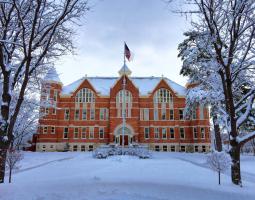
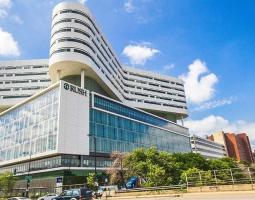
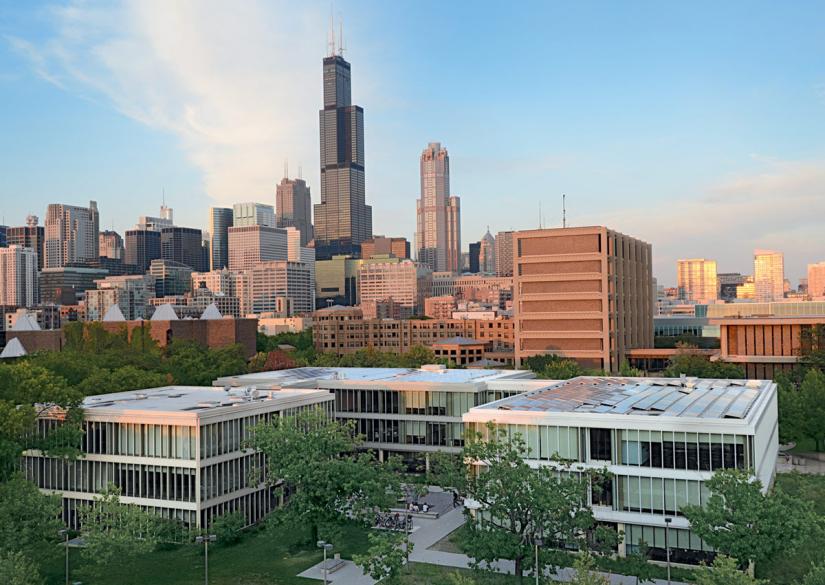
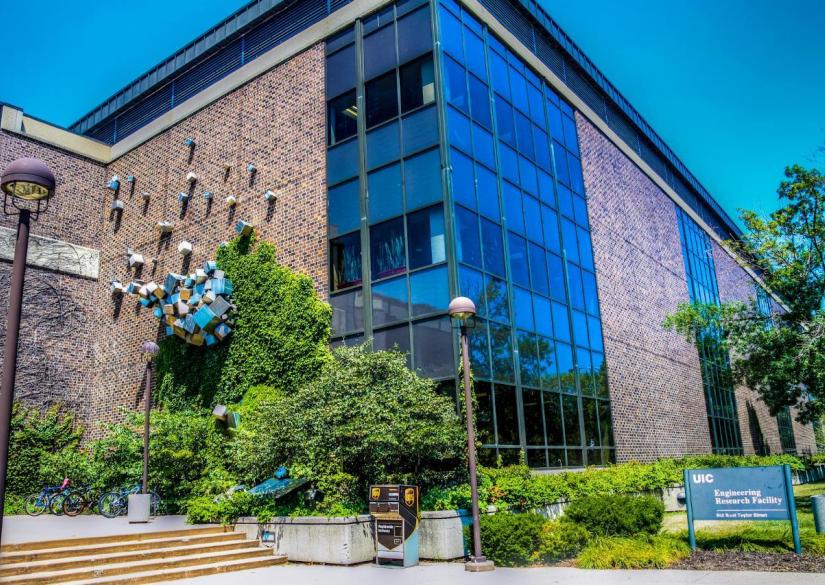
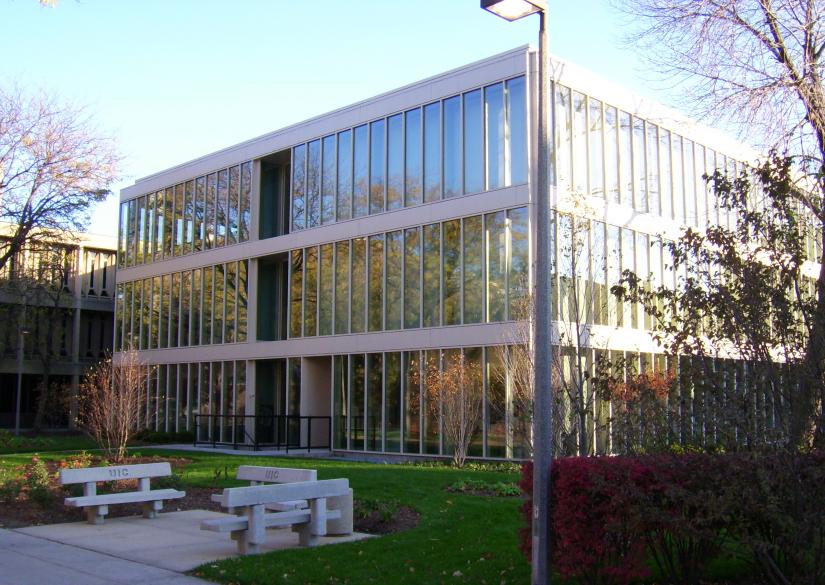
The university has three developed campuses - eastern, southern and western. The eastern and southern campuses are located in the heart of Chicago, in the Italian quarter, and the western - in the university village (University Village). On campus there is everything necessary for a comfortable life and study, here students can feel at home. In the center of the city (in the Italian quarter) there are faculties of art, humanities, science, business and economics, social work, education, engineering. In the western campus there are medical faculties. The complex of buildings and structures includes:
- Buildings for schools, faculties and departments
- Well equipped classrooms for classes
- Scientific laboratories
- Computer labs
- Academic, computer and communication centers
- Libraries (with a huge number of funds, including in digital format)
- Student center (with a huge number of classrooms, facilities for art and creativity, leisure centers and other facilities)
- Medical Center
- Medical laboratories
- Picture gallery
- Audiences for meetings and presentations
- The shops
- Cafes, dining rooms and restaurants
- Residences for living
- Walking areas
- Sports facilities (swimming pool, climbing wall, basketball and baseball courts, football field and rugby field, jogging tracks, tennis courts)
- Fitness Centre.
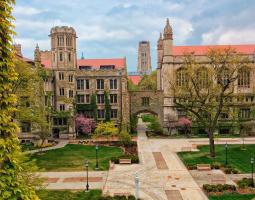
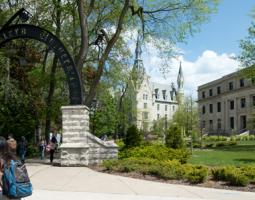
University campuses are distinguished by a large number of trees and vegetation. Being in the heart of the city, students can enjoy all its advantages in terms of infrastructure. Employees of the center monitor the order on the campus around the clock and the serviceability of all systems, buildings and structures. In the recent past, a large-scale reorganization of the southern campus (worth $ 550 million) has been carried out, and a similar refurbishment of the central locations is currently under way. The classrooms are light and spacious, they always have clean air and comfortable work places. All sports facilities and grounds have the necessary inventory.
Admission dates and extra charges
The UIC academic calendar consists of two semesters and two summer sessions.:
- Fall semester: August-December,
- Spring semester: January-May,
- First summer session: May-June,
- Second summer session: June-August.
Throughout the year, classes are held on weekdays, and rest is provided on weekends, national and international holidays, and during vacations. The dates of some programs may differ from the generally accepted academic calendar.
The list of additional expenses will include:
- Registration and administrative fees,
- Accommodation, on-campus meal plan, and related expenses,
- Medical insurance, additional services,
- Books, personal educational supplies,
- Student life, payment for some extracurricular activities,
- Additional academic opportunities,
- Personal expenses.
Enrolment process
Those wishing to enter UIC for higher education programs must go through several registration stages:
- Fill out the registration form, provide the required documents,
- Pay the entrance fee,
- Pass an interview, possible tests,
- Receive an official invitation to enroll,
- Make a deposit,
- Arrive on campus by the beginning of the semester.
Perspectives
To date, the number of UIC graduates exceeds 344,000 qualified specialists, many of whom have remained on the staff to further build a career. Among them:
- Adrian Smith is the architect who designed the Burj Khalifa towers, Trump Tower, Central Park Tower, Jin Mao Tower,
- Carol Moseley Brown is a politician and lawyer, the first African-American woman elected to the United States Senate,
- Michael Gross – actor,
- Curtis Granderson is a three-time MLB All-Star contestant.
Entry requirements, how to apply, what is required to enrol
Foreign applicants must have health insurance, a foreign passport, a visa or residence permit, and financial certificates in order to study in the United States.
The requirements for admission to bachelor's degree programs will be as follows:
- Certificate of full secondary education,
- Official report cards for the entire secondary school,
- Language test results: TOEFL (from 80), IELTS (from 6.5), PTE Academic (from 54).
To enroll in Master's degree programs, you must provide:
- Bachelor's degree with a study period of 4-6 years,
- Official transcripts of all completed disciplines,
- Language test results: TOEFL (from 80), IELTS (from 6.5), PTE Academic (from 54),
- Letters of recommendation,
- Resume.
The admission criteria for doctoral programs are similar to the requirements for future masters, but applicants must have a Master of Science degree instead of a bachelor's degree.
Scholarships Illinois University in Chicago
Many students receive financial support either in the form of merit scholarships or need-based concessions. External types of funding, grants, credits and loans are also available to students.
Literature and references
-
University of Illinois Chicago — Wiki

-
University of Illinois-Chicago - Profile, Rankings and Data — U.S. News & World Report
-
University of Illinois at Chicago (UIC) — Top Universities
-
University of Illinois, Chicago — Forbes
-
University of Illinois Chicago — Times Higher Education
-
2024 University of Illinois Chicago Rankings — Niche
-
University of Illinois at Chicago Ranking 2022-2023 — Center for World University Rankings
-
University of Illinois Chicago Ranking & Overview 2024 — uniRank University Ranking
Institution on the map
Residence permits, citizenship and other services
- Guardianship services during the studies
- Student supervision
Review about Illinois University in Chicago
Recommendations on when to apply
| Language courses, schools and children's language camps | Primary and secondary education - private schools | Preparation programmes for entering universities - higher education | Higher education (after completing accredited programs A-level, IB, High School) - Bachelor, Master, MBA |
| - we recommend to apply 6-9 months before the start of the course (some camps and schools offer discounts for early booking or for lengthy study programs) - there are some very popular and high demand children's camps, where the applications need to be submitted 1 year in advance (in particular Switzerland , Great Britain , USA , Canada , Austria) | - we recommend to apply one year before the start of the training program, - some schools have a specific time frame (September-November - please specify an individual school) - some schools require tests in several stages (UKISET, internal tests of the school: English, mathematics, logics, subjects, interview, some require a personal visit) | - we recommend to apply one year before the start of the program, - for Foundation and Pathway programs, IELTS and TOEFL certificates are usually required, respectively | - recommended submission one year before the start of the program, - the deadline normally closes in January, for TOP HEIs and, as a rule, in March in other universities - for a bachelor, a Foundation or Pathway preparatory program a completed A-level, IB, High School + IELTS / TOEFL are required - for Masters you need a graduated higher education, in some cases you need a pre-Masters program - MBA requires completed higher education, work experience preferably at least 2-3 years, etc. |