Trent College


In the process of preparing the material, we referenced the following sources: Wikipedia, GOV.UK
Programs and prices, tuition fees in Trent College


This course of secondary education is aimed not only at the formation of a sustainable foundation of knowledge in the main subjects of the school curriculum, but also in the disclosure of personal abilities, talents and opportunities. This task is the diversity of the curriculum: several subjects are compulsory (mathematics, English and literature), and the rest are chosen by students independently and are studied as electives (nevertheless, examinations can be taken in selected disciplines).
You can select the most priority destinations from the following list:
- Biology
- Design Technology
- Geography
- Spanish
- French
- Chemistry
- Art
- Latin
- Music
- Theatrical art and drama
- Business
- History
- Fundamentals of Religion and Theology
- Physics
- German.
The cost of the program includes tuition, accommodation and meals on a full board basis.
The course of two-year education is excellent for students who are planning to enter the university: the A-level certificate makes it possible not to pass the entrance exams if the surrendered subjects correspond to those that are planned to be studied at the chosen faculty. In addition, the A-level program provides an opportunity to get used to almost the university way of learning: a high degree of independence, the development of perseverance and attention, curiosity and the ability to work with a variety of sources.
The program is designed for 2 years: during the first year students choose 4 subjects for themselves, in the second year only 3 of them remain. All disciplines (the list is given below) are studied at an in-depth, practically university level. In addition to the selected academic studies, students can attend seminars and lectures on the development of critical or creative thinking, create individual research projects (the topic will help to approve the teacher), and study natural science.
- Technological design
- Geography
- Physics
- Biology
- History
- Spanish
- Subject design (3D design)
- Chemistry
- English literature
- Music
- French
- Psychology
- Business
- English Language and Literature
- Physical Education and Sports
- Religious studies (theology)
- Theatrical art
- Computer science
- German
- Policy
- Art
- Mathematics
- Economy.
The cost of the program includes tuition, accommodation and meals on a full board basis.
Description of Trent College
- Location: Long Eaton, United Kingdom,
- Founded: 1868,
- Student ages: 11–18,
- Qualifications: GCSE and A levels,
- More than 20 nationalities are represented in the school community,
- Accommodation: full boarding in on-campus residences,
- School type: coeducational,
- Language of instruction: English.
- School type: independent school,
- Additional study options: vocational BTEC courses and the Extended Project Qualification (EPQ).
Trent College is an ideal choice for single-minded, gifted and ambitious students: here they receive a truly high-quality education, continuously develop and achieve really impressive results not only in the academic, but also in the sports and creative fields.
Trent College combines academic study with opportunities to discover new interests and skills. The school aims to prepare students for life beyond the classroom.
Among the strongest and most developed areas of study are art, mathematics, geography, science and economics.
But the teachers and educators of Trent College do not forget that a talented person should be talented in everything, therefore they actively develop children in the sphere of creativity and sports. Many successful graduates can boast not only excellent A-level results, but also victories in national competitions and participation in school teams, playing on 2 or more musical instruments, etc.
Much attention is paid to the personal education of students: they instill a persistent motivation for self-development and self-improvement, to achieve impressive results and personal heights, they are taught to be independent, stubborn, responsible, able to show their strengths most effectively.
Teachers also support individual ambitions. One graduate received extra help with difficult material and preparation for a university interview through additional meetings with his teachers.
At the same time, the intensity of education in the UK does not mean at all that students are engaged indefinitely and without rest - extra-curricular activities are given enough time to study not only effective but also interesting. For children, a variety of recreational activities, trips, excursions and expeditions are constantly organized:
- Master classes of circus art
- Diving tours in Egypt, on the Red Sea
- Rafting
- Trip to Borneo to study the flora and fauna of the tropics
- Mountain bike
- Visit to the Ecrin National Park (French part of the Alps)
- Arctic Norway Expedition
- Young leader's course and much, much more.
Total number of students: 820 students age 11 to 18 (about 11% of non-British students), 120 of them in the boarding houses (21% of boarder are non-British)

What makes British schools special? Why are they chosen by parents from all over the world for their children?
Schools in the UK continue to be the gold standard of education and offer the highest quality teaching.
Educational process
Students can choose an A Level subject combination that suits their needs. Lessons combine interactive learning with practical applications. Teachers identify each student's strengths and areas where more guidance is needed, then provide additional challenges or support as appropriate.
The High Achievers program, led by the Director of Academic Excellence, gives academically able students opportunities to challenge themselves through activities such as essay competitions. Academic scholars receive help with applications to highly competitive universities and further education courses.
Each evening, boarders complete homework under the supervision of duty tutors from different departments. During exams, the boarding houses adjust their routine to allow time for both revision and rest. Boarders can also turn to the school's counseling team for support.
Faculties and colleges
- Senior School: for students ages 11–16,
- Sixth Form (the final years of secondary school): for students ages 16–18.
Scientific achievements
In the GCSE results published by the school, 25% of exam grades were 8–9, 42% were 7 or above, and 94% were 4 or above.
In 2025, one graduate earned four A* grades at A Level. Another received A*, A*, A, along with an A for the EPQ, an extended independent project.
A further graduate earned A* grades in Chemistry, Mathematics, Further Mathematics and Physics at A Level, as well as an A* for the EPQ.
The accomplishments of students in the High Achievers program are recognized at special evening events.
Things to know about
- Dr Leo Dudin became the 11th head of Trent College,
- The Old Tridents Society alumni association was founded in 1903 and registered as a charity in 1963,
- The Old Tridents Society is managed by trustees. It works with the Development & Alumni Office to maintain connections among former students,
- Students in Shuker House wear their house tie.
University destinations
- Southampton: a graduate is studying Aeronautics and Astronautics at the university,
- Imperial College London: a graduate secured a place to study Mechanical Engineering.
Accommodation, meals, prices
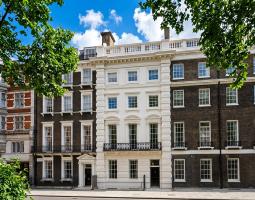
Boarders in Years 7–13 live in two separate residences on the Trent College campus. Shuker House, in the main school building, accommodates boys ages 11–18, while Martin House, in a modern building, is for girls of the same age. Both have single and twin rooms, small kitchens for preparing snacks, and common rooms for socializing.
Staff live in both houses. Each has a houseparent and an assistant, with a matron overseeing boarders' well-being. An adult is always present, and care is available 24 hours a day, seven days a week. Electronic access cards control entry to the residences.
Full, weekly and flexible boarding options are available. Full boarders stay at school during the term, returning home for scheduled short breaks on designated weekends and during vacations. With permission, they can leave campus to visit friends and family. Boarding life helps students learn everyday skills such as cooking, laundry and banking.
Breakfast, lunch and dinner are available for boarders. Meals emphasize home-style cooking and balanced options, with locally sourced ingredients whenever possible.
Subjects and sports
Activities Trent College
The Debating and Oxbridge Societies are active at the school. English and Spanish study clubs offer academic support. Students can join the Combined Cadet Force (CCF) and take part in outdoor activities. Alumni have returned to support current cadets during a field day.
Boarders have weekly outings and evening activities. Examples include:
- Ice hockey, bowling, sledding, movie outings, go-karting and laser tag,
- Pizza making, baking, quizzes and movie nights in the boarding houses,
- Trips to London and theme parks, and barbecues on campus.
Students have a say in the choice of weekend trips. Past evening activities have included swimming and a Chinese banquet.
Advantages
- Trent College and The Elms are inspected by ISI as a single school under the new framework. The latest listed inspection took place in March 2025,
- The 2025 ISI report described Sixth Form results as well above the national average,
- The school reports a rating of well above average for student progress from GCSE to A Level,
- Boarders have greater access to staff, learning resources and equipment,
- New boarders are paired with a buddy to help them learn the school routine.
Facilities and equipment at Trent College
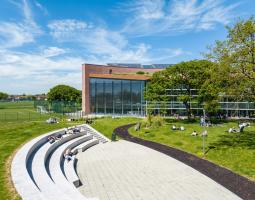
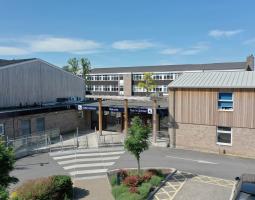
Trent College has a 45-acre campus. Teaching spaces are equipped with technology and resources for interactive lessons, and facilities across the campus are regularly refurbished.
Boarders can use the library and the art and music departments. The school grounds and chapel are also accessible.
During the week, boarders have access to the swimming pool, playing fields, tennis courts, sports hall and fully equipped gym.
Boarding houses and teaching, sports and music facilities are on the same site, with one secure main entrance. Security staff are on duty day and night. The campus medical center is staffed by two qualified nurses and works with doctors from a local medical practice. Two hospitals are 20 minutes from the school.
The school is near junction 25 of the M1. School bus routes serve Derbyshire, Nottinghamshire and Leicestershire through a partnership with Skills of Nottingham.
Admission dates and extra charges
Boarders wake at 7:00, and classes begin at 8:30. Saturdays include sports matches, review sessions and extracurricular activities. Sundays include planned activities and free time.
Tuition includes:
- Term-time fieldwork and educational trips,
- Textbooks through Year 11,
- Exam fees,
- Transportation to school sports matches,
- After-school supervision.
Full boarding includes:
- Breakfast, dinner and snacks in the boarding house,
- One music lesson per week,
- All boarding activities and excursions,
- Up to four English as an additional language lessons per week, if needed.
Lunch is an optional extra charged separately.
Extras:
- Registration fee (for a programme/course) 100 GBP
- Deposit for a course/programme 2000 GBP
Enrolment process
Applications are accepted throughout the year.
Entry requirements, how to apply, what is required to enrol
Trent College entrants must provide the admissions committee with the following package of documents:
- A report card with grades from the previous place of study (for the last 2 years)
- All the available awards, letters, letters of thanks, cups and medals.
- Mathematics and English (it can be passed directly at the school or in the official accredited center).
Scholarships Trent College
Trent College offers scholarships for academic achievement, art, choral singing, drama, music and sports.
- Academic scholarships for entry into Years 7, 8, 9 and 10 are awarded to the highest-performing candidates in the entrance assessments,
- An academic scholarship for entry into Year 12 requires a strong interview and at least eight GCSEs at grades 7–9 (A*–A), including at least four at 8–9/A*.
Scholars receive an individual development plan and mentoring from department heads and tutors. They must maintain high standards in their area of achievement and academic studies, and participate fully in school life.
The academic scholars' program includes competitive debating, meetings with guest speakers, special trips and subject-specific competitions. Sixth Form scholars in the final years of secondary school are expected to take a leading role in extracurricular academic societies and in planning and running events for younger students.
Literature and references

Institution on the map
Residence permits, citizenship and other services
- Guardianship services during the studies
- Student supervision
Review about Trent College
Recommendations on when to apply
| Language courses, schools and children's language camps | Primary and secondary education - private schools | Preparation programmes for entering universities - higher education | Higher education (after completing accredited programs A-level, IB, High School) - Bachelor, Master, MBA |
| - we recommend to apply 6-9 months before the start of the course (some camps and schools offer discounts for early booking or for lengthy study programs) - there are some very popular and high demand children's camps, where the applications need to be submitted 1 year in advance (in particular Switzerland , Great Britain , USA , Canada , Austria) | - we recommend to apply one year before the start of the training program, - some schools have a specific time frame (September-November - please specify an individual school) - some schools require tests in several stages (UKISET, internal tests of the school: English, mathematics, logics, subjects, interview, some require a personal visit) | - we recommend to apply one year before the start of the program, - for Foundation and Pathway programs, IELTS and TOEFL certificates are usually required, respectively | - recommended submission one year before the start of the program, - the deadline normally closes in January, for TOP HEIs and, as a rule, in March in other universities - for a bachelor, a Foundation or Pathway preparatory program a completed A-level, IB, High School + IELTS / TOEFL are required - for Masters you need a graduated higher education, in some cases you need a pre-Masters program - MBA requires completed higher education, work experience preferably at least 2-3 years, etc. |