Queen’s Gate School









Programs and prices, tuition fees in Queen’s Gate School


A two-year course for schoolgirls from the age of 14-16 completes a part-time secondary education program and prepares girls for admission to the Sixth Form, and subsequently to the university.
The curriculum is very diverse and rich. The variety of subjects and disciplines enables girls not only to create a solid foundation of knowledge on the basic school curriculum, but also to determine their priorities and interests - perhaps even to choose the most attractive faculty and specialty for admission.
List of subjects of the general program are as follwos:
- English
- English literature
- Modern foreign languages: French, Spanish
- Economy
- Biology
- Physics
- Business course
- Geography
- The photo
- Mathematics
- History
- Art and Design
- Fabrics
- Physical Education and Sports
- Personal and social development (PSHE course)
- Mathematics
- Chemistry
- Religious Studies
- Theatrical and dramatic skills
- Technology and design.
The A-level program is designed for 2 academic years (12-13 grades, 16-18 years) - this is the most popular variation of the Sixth Form stage in the UK. The program is academically rich, complex and intensive: only 3-5 subjects selected by the student on their own are being studied practically at the university level. But the A-level certificate is highly valued all over the world, which gives its owner the right to enter even the most elite and top universities without additional entrance examinations.
For the first year (AS) students study 4-5 subjects, on the second (A, or A-level) there are only 3-4, which also give up on the exams. You can select the priority directions from the following list:
- English
- Economy
- Business course
- Biology
- Chemistry
- Physics
- Accounting
- The photo
- Fabrics
- Theatrical and dramatic art
- Geography
- History
- Music
- Art
- Modern foreign languages (French, Spanish)
- Political science
- History
- Mathematics
- Physical culture and sports.
Description of Queen’s Gate School
- Location: London, England
- Educational programs: middle and high grades, GCSE, A-level
- Students age: 4 to 18 years
- Total number of students: 450 people
- Accommodation type: full-time (without accommodation)
- Type of study: separate (only for girls).
The Queens Gate School, a British independent private school, is designed exclusively for young ladies between the ages of 4 and 18, with a total of about 450 female students.
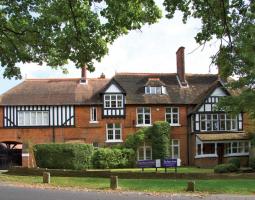
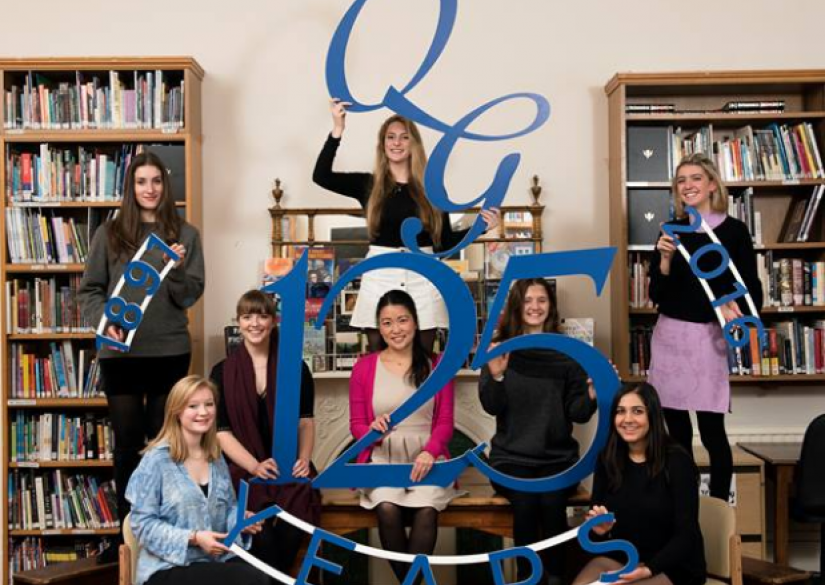
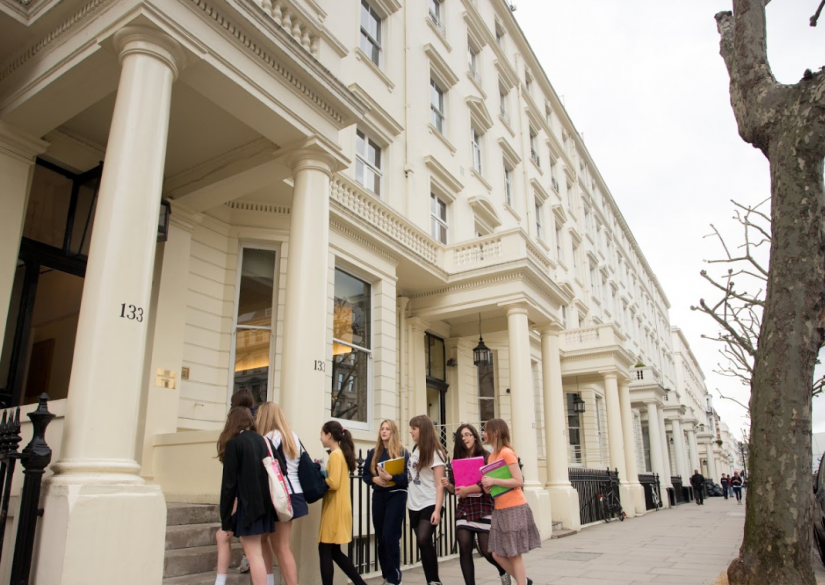
The school was founded in 1891 by Eleanor Beatrice Viat (she later founded the famous women's school in Ascot Heathfield School). In total, the school campus includes 3 adjacent houses (in 2005, their number increased by another 2 - new buildings were given to the students of the junior school). The campus is conveniently located in the central London area of Queens Gate: studying in the English capital is not only convenient and efficient, but also prestigious.
Today, the school is considered to be one of the most prestigious and elite in England and the UK - it's enough to name several of its famous graduates:
- Tilda Swinton, actress, Oscar winner
- Camilla, Duchess of Cornwall (second wife of Prince William)
- Imogen Puts, actress
- Jennifer Saunders, actress and many others.
The quality of educational programs at the school is known far beyond London and England. Among the most powerful disciplines are English and French, geography, math and various art fields. Thanks to small classrooms (up to 8 people) and carefully selected, highly professional teachers, the girls manage to achieve impressive academic results: approximately 60% of the A-level students and 70% of the GCSE graduates passed the final exams for the highest scores from A * to A - very A high figure even for the British educational system.
The extra-curricular development program for girls is not far behind the academic program. In total, the school employs more than 95 leisure sections:
- Sports;
- Creative circles;
- Visual and theatrical art;
- Music and photography, etc.
In a well-equipped sports complex (it is very spacious, which is rare for London schools), there is an opportunity to practice rowing, squash, fencing and other sports.
According to the Independent Schools Inspectorate (ISI) check in 2012, the school earned very high scores and flattering marks:
- "Good": academic successes of children, quality of teaching ("Excellent" for some subjects), the quality of school management;
- "Excellent": the quality and organization of the curriculum, the organization of extracurricular education, the learning environment, childcare and safety, working with parents, the quality of childcare;
- "Great": the level of upbringing and development of children.
The school is also listed in the independent prestigious directory of The Good Schools Guide.
Girls are brought up in the best Christian traditions: there is no dominant religion on the school grounds, therefore representatives of any confession can study here.
Educational process
The school’s character education program encourages kindness, empathy, acceptance of others, and courage. Its personal and social development curriculum is reviewed regularly to reflect the girls’ needs. Older students help younger pupils with cooking lessons, reading programs, and clubs. Lunchtime support sessions and exam preparation classes during school breaks help students prepare for assessments. In Sixth Form, the upper secondary stage, girls receive individual guidance on choosing universities, specialist institutions, and careers, as well as preparing applications.
In art, Year 7 students study drawing, painting, and sculpture. Year 8 introduces more advanced techniques. Year 9 students undertake more independent projects and commonly explore techniques such as printmaking and three-dimensional design. Students choosing GCSE art should have an interest in the subject and be willing to draw regularly, create artwork, and carry out independent research before lessons. The GCSE art course includes three main projects and an examination in Year 11, with several weeks of preparation. Students keep sketchbooks containing research, sketches, and ideas. Each project includes interim assessments. Teachers give oral and written feedback, and parents receive reports and updates at meetings. Final work is assessed first by the art department and then by an external AQA moderator.
Biology is taught as a separate science in Years 7–8, following the school’s own curriculum, which goes beyond the national requirements. Chemistry is a separate subject from Year 7. Science lessons include laboratory experiments and fieldwork, teaching safe handling of chemicals, data analysis, and report writing.
In computer science, Year 7 students begin with Scratch and Small Basic and create a website using HTML. Year 8 covers Python, BBC Microbits, CSS, and JavaScript. Year 9 focuses on algorithms, VB.Net, number systems, and logic gates. Internet safety and artificial intelligence are taught across all age groups. At GCSE, students write and refine their own Python programs.
Design and technology lessons cover hands-on and digital design, tools and machinery, and two- and three-dimensional modeling. In Years 7–8, students work with Adobe Creative Suite and AutoCAD 3D. At GCSE, the project and final examination each account for 50% of the grade in this subject.
In International GCSE English Language, a two-hour examination accounts for 50% of the final grade, and three pieces of coursework together make up the remaining 50%. In English Literature, a two-hour examination contributes 60%, and two pieces of coursework make up 40%. Lower secondary students choose novels with the librarian, discuss them in groups, and share their conclusions with their year group.
GCSE geography includes two field trips: one to Olympic Park to study urban regeneration and another to Epping Forest Field Studies Council Centre to explore river landscapes. History lessons use discussion, collaborative work, and peer support.
Faculties and colleges
The school uses its own names for year groups:
- Reception — Preliminary,
- Year 3 — IA,
- Year 7 — Remove,
- Year 12 — LVI.
Scientific achievements
In 2026, 97% of A Level (final upper secondary examination) results in Art & Design were graded A–A*. The school reports a 100% pass rate in LAMDA speech and drama examinations.
Students win awards in regional and national art competitions. Some have represented their country in sports.
Things to know about
- More than 80 students performed alongside a professional orchestra at the school’s 130th anniversary concert,
- The school celebrates Lunar New Year, Hanukkah, Ramadan, and Christian holidays,
- Reica Gray, Chair of Governors, attended Queen’s Gate.
University destinations
Graduates have gone on to study at the following institutions.
- United Kingdom: Oxford and Cambridge, Russell Group universities, University of the Arts London, University of Edinburgh, UCL, St. Andrews, Loughborough University, Goldsmiths University, Royal Drawing School, City and Guilds Art School, The Architectural Association, Central St. Martins, and Camberwell School of Art,
- United States: Harvard, NYU, Parsons School of Design in New York, Brown University, Carnegie Mellon, and Pratt Institute of Arts,
- Italy: Florence Fine Art Academy,
- Spain: IE School of Architecture & Design Madrid.
Specific examples include Computer Science at St. Andrews, Mechanical Engineering at UCL, and Creative Computing (the use of digital technology in creative work) at University of the Arts London.
Accommodation, meals, prices
Queen’s Gate is a day school. Your advisor can help you find suitable housing.
Students may bring a packed lunch. Lunch is included in tuition for Reception and Years 1–3.
Subjects, specialties
Activities Queen’s Gate School
Outside lessons, students can choose from sports, creative activities, and academic clubs:
- Sports and physical activities: fencing, track and field, tennis, swimming, kickboxing, climbing, netball, dance, yoga, gymnastics, hockey, cricket, rowing, volleyball, and soccer,
- Creative activities: fine arts, music, and drama,
- Academic clubs: robotics, creative writing, and reading. The Junior School also offers a science, technology, engineering, and mathematics club, Mandarin, and mindfulness sessions.
The school has a Fencing Academy and a Tennis Academy. Students take part in interschool matches, major tournaments, and sports tours. They can also try officiating and assisting coaches. Hockey and netball are the main winter sports. Tennis, track and field, and cricket are the focus in summer. Competitions between the school’s house groups include sports day, swimming and cross-country events, and contests in hockey, cricket, netball, dance, tag rugby, gymnastics, and volleyball.
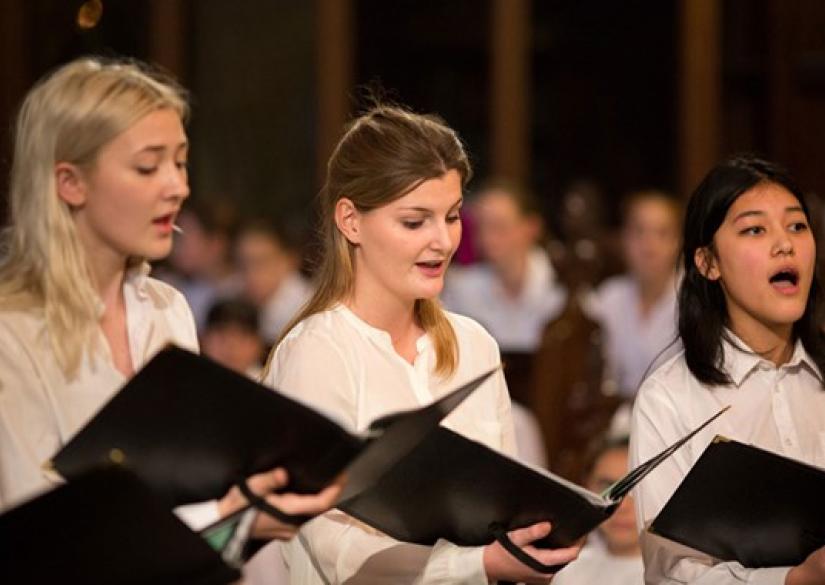
More than half the girls take instrumental lessons. Options include singing, harp, and drum kit. Choirs and ensembles rehearse weekly. Chamber choirs perform at the Kids for Kids charity Christmas concert, while rock bands play at Senior School final assemblies. The Junior School stages a musical each year. The calendar includes a music competition between school houses, small instrumental recitals, assembly performances, and major end-of-term concerts. A dedicated LAMDA teacher gives speech and drama lessons.
An annual exhibition showcases GCSE and A Level artwork. Students’ work is also exhibited at Royal Brompton Hospital. A Level art students visit Venice, Amsterdam, and New York.
Cultural activities include visits to the Globe, National Theatre, West End musicals, London museums and galleries, and lectures at the Royal Geographical Society. Past trips have included an exhibition about ancient Mycenae at the British Museum, the Taylor Wessing Photographic Portrait Prize exhibition at Cromwell Place, a literary walk through Brompton Cemetery, a visit to Stratford-upon-Avon, poetry readings at Royal Albert Hall, and performances of The Importance of Being Earnest and Ballet Shoes. Every year group takes at least one English-related trip per academic year. A Level literature students are invited to at least two events per half term. Other outings include Legoland and an annual workshop on codes and ciphers at Bletchley Park.
After their first year of Senior School, students took a three-day trip to Dorset. Other past trips have included Brighton, with a visit to the University of Sussex, Cambridge, and Duke of Edinburgh expeditions. An annual ski trip is open to all students, with destinations alternating between Europe and North America. Overseas trips have included the western United States, Sweden in winter, Croatia, and Japan. Year 7 students visit Rochester in Kent to see its cathedral and castle ruins, while Year 9 visits the Imperial War Museum to study the Holocaust.
Additional activities include a medical society, science week, biology and chemistry olympiads, science lectures, and fieldwork. An Ancient Greek club is available in Year 9. Older students run a mythology club for Years 7–8. Girls in Years 7–13 perform at the annual classics evening. Classical civilization classes visit the British Museum, the Victoria and Albert Museum, and productions of ancient tragedies. Students are encouraged to enter essay competitions and the Royal Geographical Society’s young geographer competition.
Sixth Form students take part in talks, workshops, and activities that develop leadership skills, while school committees gather their ideas and feedback.
Advantages
- According to the school, Queen’s Gate consistently ranks among the country’s top ten schools for student progress relative to their starting potential,
- Junior School science, coding, and six languages are taught by subject specialists who also teach older students through A Level (final upper secondary examinations),
- Specialist teachers provide music instruction from Reception through A Level,
- The art department has four staff members, including its head and a technician,
- The sports department offers Olympic and Commonwealth-level coaching. Physical activity is part of every school day.
Facilities and equipment at Queen’s Gate School
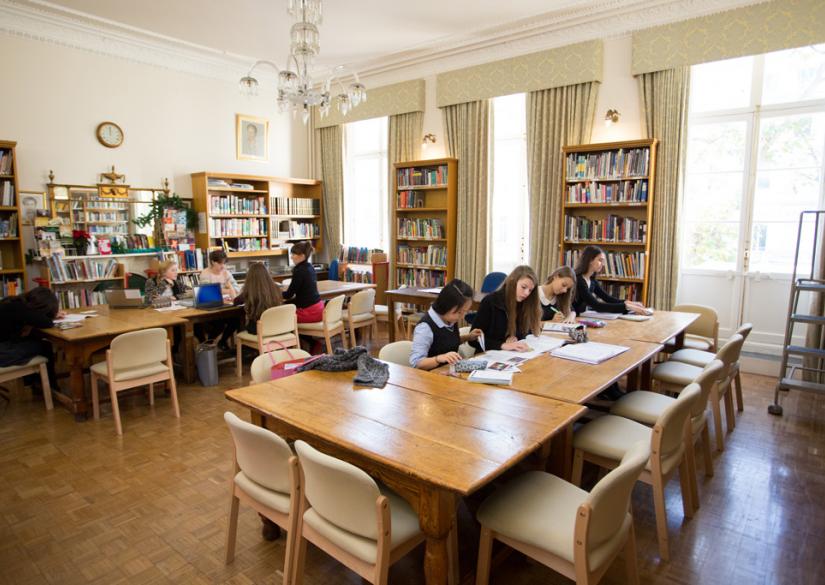
The campus is in the Queen’s Gate area of South Kensington, central London. Junior School pupils use Senior School resources, including the gym, science laboratories, art facilities, and design and technology rooms.
The school gym has a climbing wall and equipment for yoga, karate, indoor rowing, and fencing. Other venues used for lessons include Fulham Pools, the Imperial College pool and sports hall, Kensington Leisure Centre, the courts and Millennium Arena in Battersea Park, Retrofit, Hyde Park, and Queen’s Gate Gardens.
The Natural History Museum is one block away. Imperial College, the Victoria & Albert Museum, and Royal Albert Hall are also nearby. Gloucester Road and South Kensington stations are about a five-minute walk away, serving the District, Circle, and Piccadilly lines. TfL buses stop nearby. Parking outside the school is limited, with public parking facilities in the area. The school bus is unavailable to Reception pupils.
The school has announced plans to refurbish its facilities and bring all teaching together on one site. Morse Webb Architects were selected for the project. Plans include specialist facilities for each stage from Reception through Sixth Form.
Admission dates and extra charges
Tuition includes most textbooks, basic stationery, photocopying, and students’ personal accident insurance. Additional expenses are billed each term.
The nonrefundable registration fee is 160 pounds excluding VAT or 192 pounds including VAT. For families with at least one parent permanently residing overseas, the deposit to confirm an accepted place equals one full term’s tuition.
Depending on the services used, additional charges may include:
- School lunches where charged separately,
- The school bus,
- Milk for Junior School pupils,
- Additional music lessons,
- LAMDA speech and drama lessons.
To discontinue an extra subject, a full term’s written notice must be given to the school’s finance office. Otherwise, payment for the following term remains due.
Extras:
- Registration fee (for a programme/course) 125 GBP
Enrolment process
The school holds open days and offers individual visits with the opportunity to meet the head of school.
Enrolment statistics
Most Junior School pupils automatically transition to Queen’s Gate Senior School at age 11. Girls in the junior division also receive offers from other highly selective day and boarding schools.
Perspectives
According to the creative arts department, around 70% of students continue their education on art-related courses in the UK and overseas.
Fields of further study include architecture, graphic and product design, costume design, fine art, photography, fashion, and art history.
Entry requirements, how to apply, what is required to enrol
The main entry points are Reception and Years 3, 7, and 12. The school considers applications for other year groups and entry during the academic year when places are available. Requirements vary with the applicant’s age and intended entry date.
- All applicants need a registration form and must provide details of a staff member at their current school or nursery who can supply a reference,
- Selection usually includes an assessment, an interview, and a reference or recent report from the applicant’s current school. Reception applicants need a recent nursery or school report,
- Applicants for Reception and Years 1–3 attend a trial morning in class, with an informal assessment,
- Entry to Years 4–12 involves English and mathematics papers lasting a total of 1 hour 15 minutes. The tests are on paper or online, depending on age. A visit includes an interview with the head of school.
Scholarships Queen’s Gate School
- Two scholarships are awarded for entry to Year 3: one to a current pupil and the Albertopolis Scholarship to an external applicant. They reduce tuition for the four upper years of Junior School. Selection includes English and mathematics assessments. The Albertopolis Scholarship considers examination results, an interview with the head of school, and a report from the applicant’s current school,
- Academic scholarships at 11+ cover up to 10% of tuition and continue through Year 11. All applicants in this age group are considered automatically based on entrance examinations, a school report, and an interview,
- Art, music, drama, and sports scholarships are available at 11+. Applications require a letter from the head of the current school or the relevant subject teacher. This should be requested in the fall term before the examination. A late letter may prevent an application from being considered. Once it is received, an interview or audition is arranged for January, following the entrance examination,
- Art, music, and drama scholarships are available at 16+. Scholarships and awards last for both years of preparation for A Level (final upper secondary examinations). They are awarded in December of the year before entry,
- Each year, the school offers a limited number of means-tested bursaries, mainly for 11+ and 16+ entry. Assistance can cover up to 100% of tuition and, where needed, school lunches, selected enrichment activities, and trips,
- Registered applicants receive bursary forms in the fall term and must submit supporting financial information. An independent assessment considers family income, dependents, employment, investments, significant savings, and regular financial commitments. Candidates must meet the usual admissions requirements. The bursary committee decides eligibility and the amount of assistance after admissions are complete and the financial application has been reviewed. Its decision is final and cannot be appealed. Bursaries are reviewed annually, and the school may take academic effort, progress, behavior, and participation in school life into account,
- A 10% discount is available for the third child in a family.
Institution on the map
Residence permits, citizenship and other services
- Guardianship services during the studies
- Student supervision
Review about Queen’s Gate School
Recommendations on when to apply
| Language courses, schools and children's language camps | Primary and secondary education - private schools | Preparation programmes for entering universities - higher education | Higher education (after completing accredited programs A-level, IB, High School) - Bachelor, Master, MBA |
| - we recommend to apply 6-9 months before the start of the course (some camps and schools offer discounts for early booking or for lengthy study programs) - there are some very popular and high demand children's camps, where the applications need to be submitted 1 year in advance (in particular Switzerland , Great Britain , USA , Canada , Austria) | - we recommend to apply one year before the start of the training program, - some schools have a specific time frame (September-November - please specify an individual school) - some schools require tests in several stages (UKISET, internal tests of the school: English, mathematics, logics, subjects, interview, some require a personal visit) | - we recommend to apply one year before the start of the program, - for Foundation and Pathway programs, IELTS and TOEFL certificates are usually required, respectively | - recommended submission one year before the start of the program, - the deadline normally closes in January, for TOP HEIs and, as a rule, in March in other universities - for a bachelor, a Foundation or Pathway preparatory program a completed A-level, IB, High School + IELTS / TOEFL are required - for Masters you need a graduated higher education, in some cases you need a pre-Masters program - MBA requires completed higher education, work experience preferably at least 2-3 years, etc. |