Private Boarding School Urspringschule





Programs and prices, tuition fees in Private Boarding School Urspringschule


Quick overview: During these 3-4 classes of general education program international children are first taught to:
- Learn;
- Instill a craving for knowledge;
- Motivate to achieve high results.
The educational program includes classes in all general subjects to form a solid foundation of basic, key knowledge in all disciplines.
Brief information: studying at this stage lasts from 5 to 12 class. The successful completion of the program allows international students to get a prestigious Abitur certificate - it is considered to be equivalent to the British A-level and gives the opportunity to enroll in German universities, colleges and higher schools.
About the educational program:
- All studying is conducted in German;
- English as a second language can be studied already from the 5th grade;
- French or classical Latin language - from the sixth.
Description of Private Boarding School Urspringschule
- Year of foundation: 1930,
- Type of institution: private school,
- Type of education: mixed,
- Location: Schelklingen, Germany,
- Curriculum: primary school (grades 3–4), middle classes (5–12), Aufbaugymnasium (grades 11–13), vocational preparation (from grade 8 or 9),
- Total number of students: about 250, including 130 boarders,
- The age of the students: 8 to 20 years,
- Language of instruction: German.
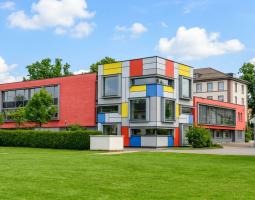
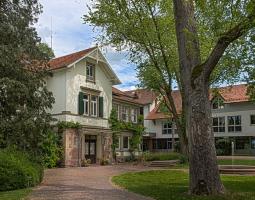
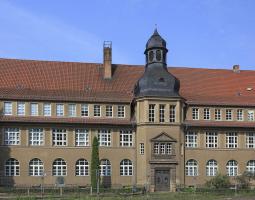
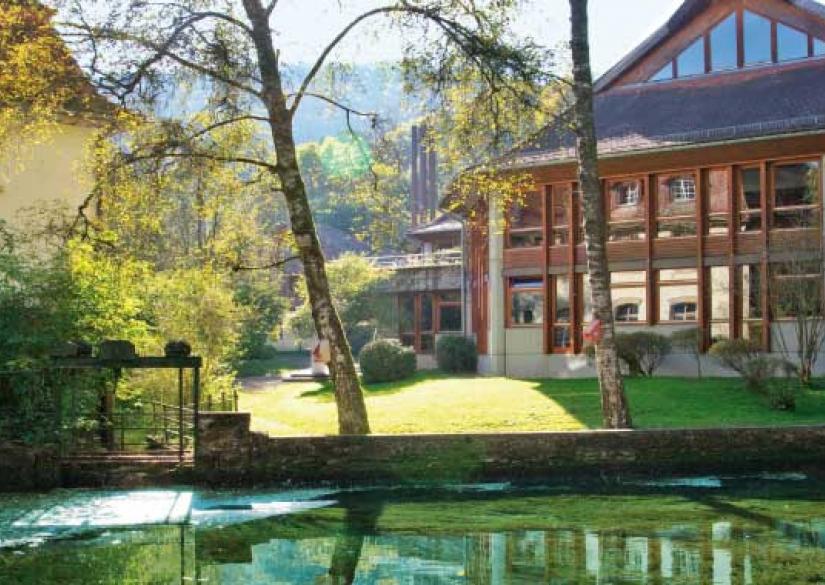
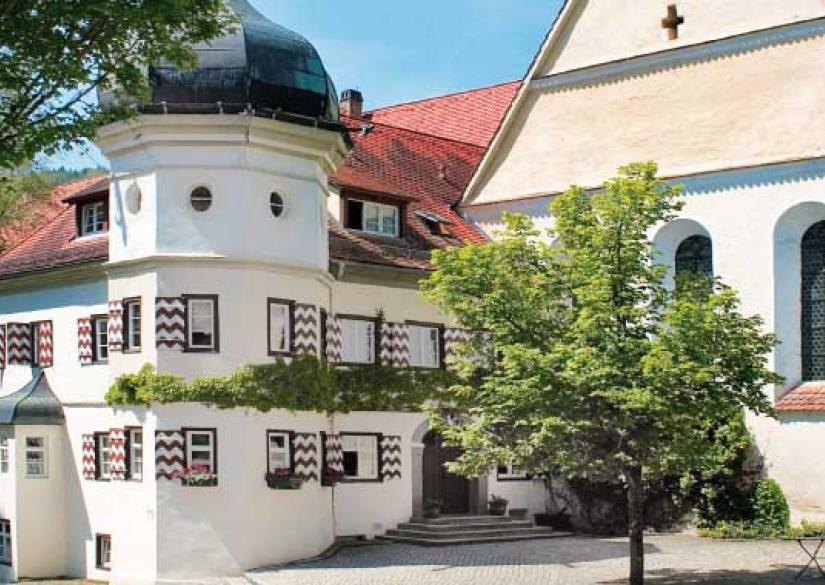
In the small town of Schelkigen, the historic Black Forest region, in a beautiful and cozy valley near the Swabian Mountains the famous German private school Urspringschule is situated, located on the territory of an ancient monastery. Thanks to its seclusion, distance from the big cities, there reigns a peaceful, quiet atmosphere that does not distract the students from studying in Germany - and at the same time all conditions for interesting and active leisure, sports and communication are provided here. The nearest major city is Stuttgart - the distance is 90 kilometers.
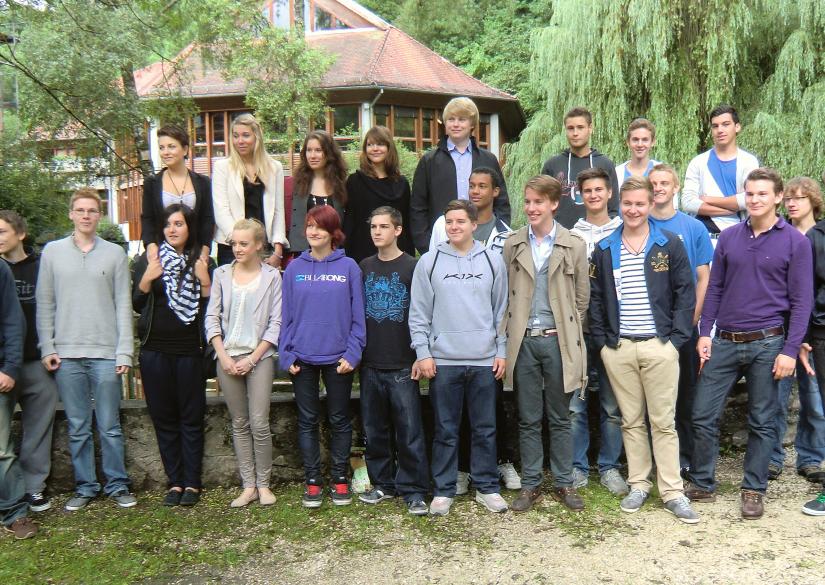
The institution actively participates in student exchange programs, fruitfully cooperates with colleagues from all over the world, gladly meets foreign students from the USA, Africa and Europe (both Eastern and Western), China, Iran and other countries. Such an international atmosphere contributes to the formation of strong friendship, the exchange of experience, helps students to get acquainted with various customs and cultural features. 240 schoolchildren represent more than 14 countries around the world, about half of them - 130 people - on a boarding house basis. Classes are formed of different fullness - from 3 to 24 people, depending on the subject, its orientation and intensity.
Urspringschule has a mathematical and scientific bias, also provides an opportunity to get a professional education, starting with grade 8: carpenter, tailor or industrial mechanic. After completing the course of secondary education in Germany (after six months), you can finish the course of professional training.
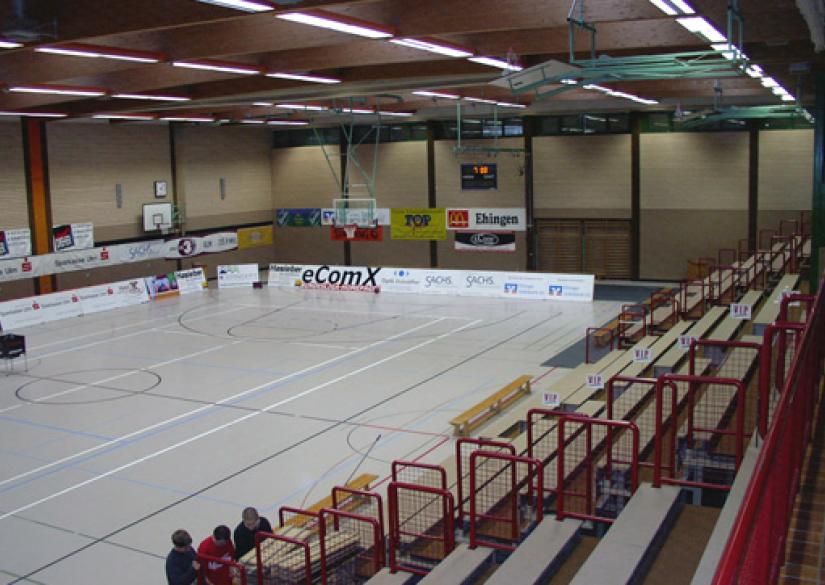
There are a huge number of sports sections here - teams and school teams constantly show excellent results and take the lead at competitions of different scale. The development of the sports infrastructure is so good that since 1998 the school has been operating as an official training center for basketball teams of the country and has passed official certification.
Progressive, modern methods are actively used in training programs, which allow to educate a single-minded, fully developed personality, fully prepared for an independent active life in modern society.
The compulsory school uniform is not accepted here.
Educational process
The primary school combines the Baden-Württemberg curriculum with Maria Montessori’s approach. Students in grades 3 and 4 are educated together. Teacher-led explanations alternate with independent work based on weekly plans and activities in learning workshops. Children work individually, in pairs and in groups, and complete projects. The Gymnasium follows the state’s compulsory curriculum and adds its own areas of emphasis. At the upper secondary level, students must continue taking two of the three sciences—biology, chemistry and physics—through to the Abitur. Usually, one is a core discipline, but a final examination in it is not compulsory. In grades 5–6, students take an advanced class in acting and choral singing. Protestant religious education is compulsory for all students and is treated as part of their cultural education.
Vocational preparation takes place in workshops and introduces students to business processes. Students prepare the Werkschau exhibition and performance with their instructors, developing the concept and design, purchasing materials, creating the stage set, and selecting music and choreography. The students themselves plan and organize the performance. The introductory grade 11 of the Aufbaugymnasium brings students’ knowledge to a common level and offers individual support in mathematics, English and the second foreign language. Classes can be organized to accommodate apprenticeships and basketball preparation. The basketball program combines the American high school and college sports model with the European club system. The school is considering Strecker-Abitur for strong basketball players, spreading the upper secondary qualification courses over three years instead of two without reducing instructional hours.
Language classes are conducted in a small group. Preparation continues in grade 10 and the first year of the upper secondary Gymnasium stage, with additional individual language support available through to the Abitur. When a student has difficulties in a particular discipline, the school works with them to identify suitable support based on their strengths and weaknesses. Students and parents can consult a guidance teacher from the Baden-Württemberg school advisory service. Professional therapeutic support is available for personal difficulties and challenging life circumstances. Day students have access to the same educational options and support in music and the arts as boarders.
Faculties and colleges
- Aufbaugymnasium: a three-year program comparable to the nine-year G9 Gymnasium cycle. Students do not have to choose a vocational specialization when they enter,
- Final examinations: the centralized Abitur for Baden-Württemberg,
- First foreign language: English from grade 5,
- Second foreign language: French or Latin from grade 6. Students can obtain the Latinum certificate of Latin proficiency after grade 10 with at least a passing grade,
- Language institute: intensive German as a foreign language through intermediate level, and English with an emphasis on conversation. The main course is conducted in person over a full academic year. Students can complete the language program independently, without being required to continue their education at Urspringschule.
Scientific achievements
In 1934, the school’s first four graduates passed their Abitur examinations in Ulm. Former head Helmut Schieck received the Bundesverdienstkreuz am Bande in 1974. Ulrich Teuscher also received this award.
The Urspring Basketball Academy holds the record for championship wins in the Nachwuchs-Basketball-Bundesliga. Since the NBBL for under-19 players and the JBBL for under-16 players were established, the school’s teams have reached the top four eleven times and won six championship titles in total. As the Baden-Württemberg champion, the school has reached the national final of Jugend trainiert für Olympia in Berlin twelve times and won six titles.
Things to know about Private Boarding School Urspringschule
- In 1929, Bernhard and Else Hell chose the former Urspring monastery for their future school and brought Fritz Ehrecke into the project. Bernhard Hell purchased the property with an inheritance from his father,
- In 1931, chemistry and biology laboratories were established in the gardener’s house. By the fall, the school had 36 children and its first five student groups had been formed,
- In 1933, a sports ground with a cinder running track replaced the vegetable garden,
- In 1937, the school was first permitted to conduct final examinations on its own premises,
- In 1941, Bernhard Hell left the school following conflicts with the Nazi authorities over his Christian convictions and publications. The school was prohibited from conducting final examinations. It was nationalized in April 1944, but the planned sale of its land and buildings to the state did not take place because of events during the final year of the war,
- Classes were temporarily suspended on April 16, 1945. Six days later, American troops took Urspring without a fight. On August 1, 1945, the Württemberg authorities again authorized the private school to operate under theologian Eberhard Dieterich,
- In 1953, the school received state recognition from Oberschulamt Tübingen for the second time. The upper residential house was also built that year, with its top floor intended for female students,
- From 1953 to 1976, the lower Gymnasium grades attended a branch of the school in the former monastery complex at Mochental. In 1976, grades 6–7 moved to Urspring, where grade 5 also began attending,
- By 1956, enrollment had reached 200 students,
- A gymnasium was built in 1963, and basketball was first played at the school in 1964,
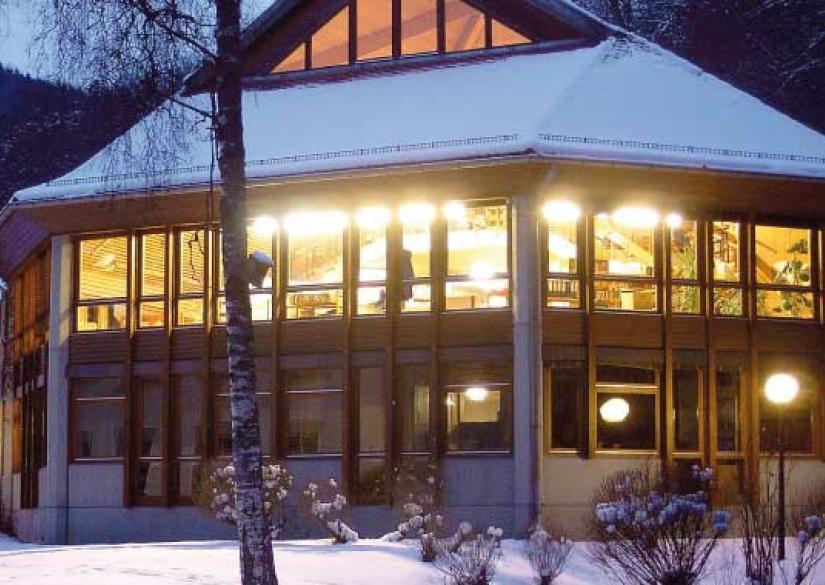
- A pavilion with four classrooms was built in 1970 for the school’s fortieth anniversary,
- The 1974 school program established the concept of combining residential life and education. Student group leaders became known as mentors, and arrangements for staff and parent participation were developed,
- In 1975, the pottery workshop opened in the former greenhouse,
- In 1978, a new school building with specialist classrooms, a library and a large carpentry workshop was built with support from Baden-Württemberg, Robert Bosch Stiftung and Diakonisches Werk. A tailoring workshop was established that same year under master tailor Herta Waier,
- Following a fire in the residential area in 1981, the school fire brigade was established with support from the Schelklingen volunteer fire service,
- In 1984, a new dining hall and kitchen wing were built on the site of the old monastery cloister,
- In 1986, carpentry preparation leading to a journeyman qualification began under Günther Mayer. In 1998, precision mechanics with a specialization in mechanical engineering became the third vocational option,
- In 2004, a new service yard and sports hall were built, the upper residential house was demolished and rebuilt, and the former gymnasium was converted into an all-day center. Metalworking and plastics workshops were installed in the pavilion,
- The primary school using Maria Montessori’s approach opened in 2005. That same year, cooperation with Airbus Laupheim introduced what was then the fourth vocational option: plastics and rubber processing technology,
- The school’s own institute for German language and culture has operated since September 2015,
- The school’s foundation has no external owner, and its board members serve as volunteers. The school receives a partial subsidy from Baden-Württemberg, calculated from the teaching and educational materials costs of comparable state schools,
- In 2005, the family of longtime school employee Liesel Müller-Hermelink established a foundation in her memory. Its income supports school projects and initiatives,
- The school has a longstanding partnership with China. It has participated in a European school project since 1998, under the name Erasmus+ since the fall of 2015,
- The documentaries Our American Dream – U1L goes USA (2023) and California Ballin’ (2024) follow the basketball academy’s trips to California and participation in high school tournaments.
Accommodation, meals, prices
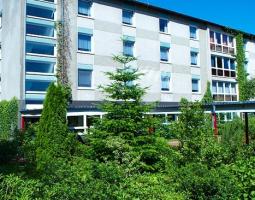
For students who have chosen a boarding house, the school provides cozy double, fully furnished rooms. Single rooms are available as an exception. Room sizes and facilities vary by building. Girls and boys live in separate houses in small groups assigned to mentors. Boarding is available to students in the primary school, Gymnasium and Aufbaugymnasium.
A total of 16 mentors live in the boarding accommodation with the students, some with their families. They have separate, self-contained apartments on the boarding premises. Each mentor is responsible for a group, helps children with personal matters and other aspects of school life, and stays in contact with parents. Most mentors also teach. Instead of being supervised by changing staff, a child usually has one consistent mentor. All boarding staff commit to a shared code of values.
The school kitchen prepares five meals daily, using regional organic produce and making many dishes from scratch. Breakfast and dinner are served buffet-style, with brunch on Sundays. Lunch consists of a salad buffet, a main course served in shared dishes at the tables, and dessert—either a sweet dish or fruit. Components are generally served separately, so students can put together a meat-free, fish-free or vegetarian plate.
Language program participants live with German teenagers and adults and eat in the school dining hall. Day students can stay temporarily in the boarding accommodation during term time through Bed & School, which provides an overnight stay and all meals. Accommodation for a student’s small animal must be agreed on individually.
Schedule of a day (example):
- 7:00 - Start of the day,
- 7:20 - Breakfast,
- 7:40 - 15:20 - Academic lessons on the schedule (taking into account the time for lunch and the big morning break),
- 15:45 - Free time for leisure, visits to clubs and sections, sports,
- 18:15 - Dinner,
- 19:00 - Time for self-study and homework,
- 20:30 - 22:30 - End of the day (the exact time depends on the student's age).
Subjects and sports
Activities at Private Boarding School Urspringschule
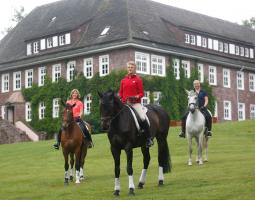
As already mentioned, in Urspringschule all kinds of sports are very developed, each student attends at least one or two. Of the most popular are swimming, tennis, basketball, horse riding, badminton and baseball, judo and karate, capoeira (Brazilian martial art combined with dance), choreography and circus studio.
There is a big scope for creative and academic development: you can study in a club of book lovers or in a photographers' club, Acting club, pottery, sing in the choir or play musical instruments. Urspringschule students participate in numerous charitable projects, in the work of a fire brigade or are engaged in the Basketball Academy. Young basketball players are preparing for the game on a professional level: the school team has repeatedly won international competitions (juniors) in Russia, Spain, Lithuania, Italy, Slovenia and Croatia. This is the only team not from the US, that was invited to play in the national tournament of American schools! To date, 8 participants in the Higher European Basketball League are graduates of the school.
Other school groups and activities include:
- Debating through Jugend debattiert,
- First aid service,
- Student court,
- Workshops,
- Fitness,
- Soccer,
- Running,
- Cycling,
- The Saustall school disco.
Climbing sessions accommodate participants’ different levels of preparation, motivations and goals. Students can compete in the annual Bouldercup for DIV boarding schools. Preparation for the German Alpine Club’s DAV-Kletterschein Toprope certificate and lead climbing courses are offered. Urspring basketball players compete in the 1. Regionalliga Südwest. International partnerships offer them opportunities to make basketball trips to the USA and China during their education.
An instrumental ensemble is available for students who play an instrument. The school also offers singing lessons. Instrumental lessons are conducted in cooperation with Musikschule Blaubeuren-Schelklingen-Laichingen. The choir and ensemble provide music for school worship services and events. Students in the school’s arts class traditionally prepare a Christmas play for the Advent service. A musical or Singspiel is staged at the summer festival every two years. In 2023, the school performed a children’s version of Mozart’s Zauberflöte. At the summer festival, students display the items they have made in the Werkschau exhibition and performance.
Participation in Erasmus+ offers opportunities to travel to European countries. The school has participated in the environmental projects T.E.A.M. and There is no Planet B. In the social project Citizen 2.0 - Broader Inclusion, Broader Acceptance, students worked with schoolchildren from Scotland, Estonia, Belgium and Hungary. An educational project in Kenya receives support through the Christmas market, charity runs and volunteer work. The school also participates in Lauf gegen den Hunger, a charity sports project run by Aktion gegen den Hunger.
On boarding weekends, activities take place within mentor groups and across different groups, with students’ suggestions taken into account. Language program participants can attend clubs and leisure activities. Bed & School provides participation in clubs, mentor group life and weekend activities. The academic calendar provides for Advent and Christmas worship services, a Christmas celebration in the woods, a school prom, a medieval festival and open-stage performances.
Advantages
- Urspringschule is listed by Regierungspräsidium Stuttgart in the Ausbildungsstättenverzeichnis Baden-Württemberg as a school with a distinctive educational profile,
- The primary school is state-recognized,
- The Gymnasium is state-recognized,
- In 1989, the school received recognition throughout Germany as a child and youth welfare institution,
- In 1995, the Handwerkskammer authorized the school to offer vocational preparation in women’s tailoring.
Facilities and equipment at Private Boarding School Urspringschule
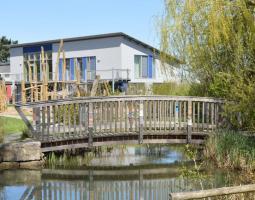
The territory has its own small zoo with chickens, rabbits and guinea pigs. Animals are looked after with love and care, including by students. Pupils can even bring their small animal to school.
The school has its own climbing wall, where new routes and bouldering problems are regularly created. The drive takes about 30 minutes from Ulm or about 20 minutes from the Merklingen exit on the A8. Pickup is available from Schelklingen train station.
Admission dates and extra charges
Some services are paid additionally:
- Annual medical insurance,
- Pocket money,
- Individual lessons,
- Excursions.
An admission charge and a deposit refundable upon termination of the contract are required. The executive board sets the parental contribution for each academic year.
The Urspring all-day program provides a second breakfast, lunch, an afternoon snack, a full day at school, lunchtime activities and clubs, crafts and sports. Boarding charges also include all-day program services, breakfast and dinner, weekend supervision, accommodation, and day and night support.
Urspring operates as an all-day school. The timetable is based on ten school days and repeats every two school weeks. Second breakfast is at 9:05, with classes resuming at 9:30. Lunch is at 12:30 for grades 3–9 and at 13:15 for grades 10–12. After lunch, classes continue at 13:15 or 13:55, depending on the lunch group.
The language institute starts one continuous course each academic year, in September. Repeating individual levels is difficult. A formal graduation ceremony for journeymen from the tailoring and carpentry workshops is planned for winter.
Extras:
- Medical insurance 780 EUR
- Other 2000 EUR
Enrolment process
An introduction to the school may include a conversation with the leadership team and a tour led by students. An advisory conversation is also available by video call. Children can make a three-day trial visit to the school and/or boarding accommodation, after which they make the final decision themselves.
Students can make the transition to Urspringschule during the academic year. Whether an entrance test is required depends on their previous school and the grade they wish to enter.
Perspectives
Every student who entered Urspring at the secondary level and played basketball has successfully obtained the Abitur or Fachabitur, qualifications that mark graduation and open opportunities for further education.
Entry requirements, how to apply, what is required to enrol
In order to enter Urspringschule, you must take care in advance of obtaining a student visa and collecting the necessary documents (at least one month in advance). It will be necessary to provide a report card with grades from the previous place of study (the average score is not lower than the average), and also to demonstrate a sufficiently high level of the German language (from B2).
If the level of the German language or academic knowledge is insufficient, the child is encouraged to take an effective preparatory course at the Humboldt Institutions (Lindenberg or Bad Schussenried). In just 6 months you can raise the language level practically from scratch to the required B2 thanks to qualified teachers, balanced curriculums and full immersion in the language and cultural environment of Germany.
In order to become a candidate for enrolling in Urspringschule, the entrant will be required to provide the admission committee with the following information:
- Full name, date of birth,
- School report card with grades, translated into German or English,
- Personal hobbies, interests, success certificates in academic, sporting, creative activity,
- Recommendation letters from previous teachers translated into English or German,
- Personal written motivation letter (in English or German).
Also required:
- Indicate (approximately) the annual or monthly budget for training,
- Select the priority region for obtaining an education in Germany.
After receiving all the necessary information, the advisory council begins selecting a school for the student: assesses their opportunities and requests, contacts schools identified as priority, and reveals the number of seats available and the possibility of admission.
Usually, foreign students begin the process of studying in Germany with the Humboldt-Institute language courses (the German academic program for the year): in this case, the selected secondary schools receive full reports on the student's successes and achievements, his/her behavior, the degree of involvement in school extra-curricular activities. After the preparatory language course is completed and all formalities are settled, the student goes for basic education to the boarding school he/she and the advice board have chosen.
Primary school admission starts in grade 3, and boarding is available from age 10. Admission to grade 5 requires a primary school recommendation for Gymnasium education. Students entering the middle secondary stage come from Hauptschule, Realschule, Gymnasium, foreign schools and other private schools. Applicants from Hauptschule, Realschule and schools without state recognition can enter from grade 7 after an examination in the core disciplines. Grade placement depends on their academic preparation.
Students entering the upper secondary stage come from Gymnasium, foreign schools and Waldorf schools. The Baden-Württemberg admission procedure applies where necessary. The Aufbaugymnasium accepts students who have completed grade 10 with a Realschulabschluss, authorization to enter the upper Gymnasium stage, or an equivalent Gemeinschaftsschule qualification. Applicants with a Realschulabschluss need an average grade of 3.0 or better in German, mathematics and English. None of these grades may be below a pass. For students from a general academic Gymnasium, the promotion certificate at the end of grade 10 qualifies them to enter the G9 upper secondary stage. Applicants from abroad and from Waldorf schools must pass an entrance examination.
Scholarships Private Boarding School Urspringschule
The school offers partial scholarships where there are grounds for support. Its scholarship fund receives income from the school’s foundation, donations and designated grants. Awards take account of academic performance, sporting achievements, social engagement and the student’s contribution to the school and boarding community. The amount of support depends on the parents’ income and assets.
A scholarship recipient’s family usually pays at least two-thirds of the standard parental contribution. For applicants of particular interest to the school, a scholarship may cover up to half of that contribution. Support is awarded for one academic year and reviewed annually. Donations can support the general scholarship fund or be designated for an individual student.
Institution on the map
Residence permits, citizenship and other services
- Guardianship services during the studies
- Student supervision
Review about Private Boarding School Urspringschule
Recommendations on when to apply
| Language courses, schools and children's language camps | Primary and secondary education - private schools | Preparation programmes for entering universities - higher education | Higher education (after completing accredited programs A-level, IB, High School) - Bachelor, Master, MBA |
| - we recommend to apply 6-9 months before the start of the course (some camps and schools offer discounts for early booking or for lengthy study programs) - there are some very popular and high demand children's camps, where the applications need to be submitted 1 year in advance (in particular Switzerland, Great Britain, USA, Canada, Austria) | - we recommend to apply one year before the start of the training program, - some schools have a specific time frame (September-November - please specify an individual school) - some schools require tests in several stages (UKISET, internal tests of the school: English, mathematics, logics, subjects, interview, some require a personal visit) | - we recommend to apply one year before the start of the program, - for Foundation and Pathway programs, IELTS and TOEFL certificates are usually required, respectively | - recommended submission one year before the start of the program, - the deadline normally closes in January, for TOP HEIs and, as a rule, in March in other universities - for a bachelor, a Foundation or Pathway preparatory program a completed A-level, IB, High School + IELTS / TOEFL are required - for Masters you need a graduated higher education, in some cases you need a pre-Masters program - MBA requires completed higher education, work experience preferably at least 2-3 years, etc. |