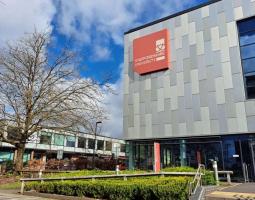
University of Nottingham



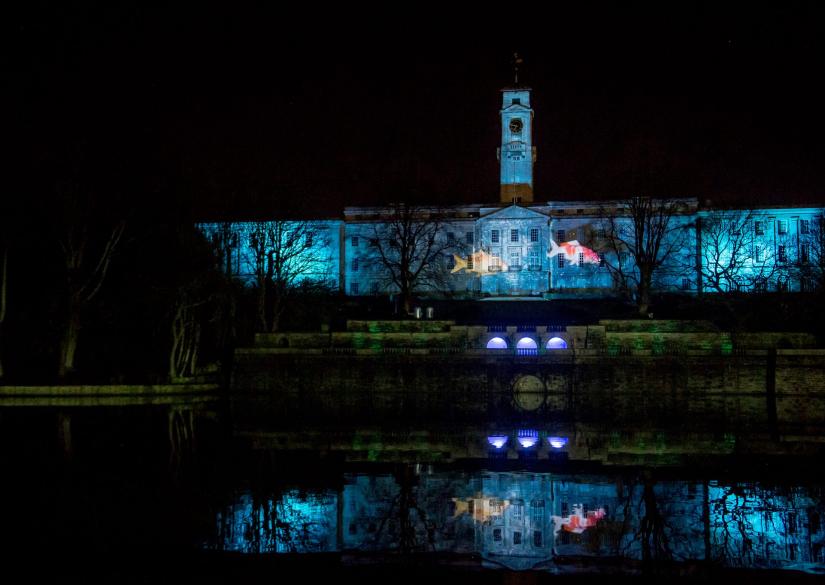


In the process of preparing the material, we referenced the following sources: Wikipedia, THE, US News, Dailymail, The Complete University Guide, Nottingham Post
Programs and prices, tuition fees in University of Nottingham


Brief information about standard program of basic higher education without narrow specialization.
The undergraduate program provides theoretical and practical studying of specialists in specific fields of knowledge. At the same time, students study a large number of public, profile disciplines. On the latter, the emphasis is on the 2-3 course.
Bachelor's program is available at the faculty of education; Sciences; Medicine; Engineering; Law, social sciences; Art.
- Student age: 18+
- Start dates: September.
- Requirements for admission: IELTS from 6.0 / TOEFL from 79, certificate / certificate of secondary education, interviewing (if necessary).
- The result of studying: a sought after specialty, career prospects, the opportunity to improve the level of academic education at the master's level.
Short information about postgraduate education of a research or pedagogical profile.
Master's programs in all faculties of the university provide for theoretical preparation of students, practice in the laboratories of the university and internships in profile organizations. Each master has the opportunity to work on the specialty even during studying. The programs are mostly designed for a year. The students receive medical specialties for 2 years.
- Student age: 21+
- Start dates: September.
- Requirements for admission: Bachelor's degree, IELTS 6.5 (equivalent), motivation letter, summary, academic recommendations.
- The result of studying: master's degree, an opportunity to make a scientific career, competitive advantages in the labour market before applicants without a diploma.
Foundation
- Age of students: 1 6
- Duration: 1 year
- Starting dates: September
The pre-university Foundation program is designed for capable students who lack special education for admission to undergraduate programs. During the year of studying, students acquire the necessary academic knowledge and skills sufficient for confident and successful study in the first year of university. From the first day of study, you will feel like a part of a large student community, meet foreign students, and improve your language proficiency. Students are given the opportunity to use the sports infrastructure, IT resources and the library. Learning process takes place with a view to future specialization - students choose one of the following courses:
- The science;
- Physics and Engineering;
- Business;
- Arts and Humanities and etc.
Entry conditions
|
one |
IELTS: 5.5 |
|
2 |
Age 18 years old (a letter from a legal guardian is required for persons aged 16-17.) |
Pre-masters
- Age of students: 18+
- Duration: 1 year
- Starting dates: September, January
The course is designed for students before entering post-graduate programs, mainly to the master's program. The program is aimed at foreign students. During the year, students focus on priority areas and acquire the valuable knowledge and skills necessary for successful study in a magistracy. Within the course students study one of the following areas:
- Business;
- Right;
- Social sciencies;
- Engineering.
Entry conditions
|
one |
IELTS: 5.5 |
|
2 |
Bachelor's degree |
|
3 |
Age 18 years old (a letter from a legal guardian is required for persons aged 16-17). |
Postgraduate Programs
- Age – from 23 years old,
- The duration of training is from one year.
The doctoral degree provides for individual research under the guidance of qualified teachers, personal mentors. You can choose a research topic yourself, start a project from the beginning, or join the ongoing work of specialists from research centers at the university.
There are many areas available for research, some of the popular ones are:
- American, Canadian studies,
- Biological sciences,
- Business
- Chemistry
- Archaeology
- Informatics
- Cultural, Media, Visual Studies,
- Economics
- Education
- Engineering.
After completing the project, the student defends his work in front of the qualification commission, then receives the most respected and prestigious degree of higher education.
Pre-Sessional English Course
- Age – from 17 years old,
- Dates — May-June,
- The duration of training is from 6 weeks.
Pre-sessional English language courses are aimed at foreign students who do not have sufficient academic knowledge and a level of English proficiency. Depending on further plans for education - bachelor's, master's or postgraduate - the student is offered a different duration of the course, a suitable small group, and an individual curriculum.
For several weeks, the student will practice the basics of the English language: reading, writing, speaking, listening, vocabulary in the academic field. Particular attention is paid to understanding terminology in the preferred field of study, writing, reading. Together with English, the student will develop study skills, work on projects, participate in seminars, debates, and team activities.
Six-week courses are held in any of the specialized areas, ten-week courses are held in the specializations "Business, Management" and "Education".
Training is possible both on campus and online.
Academic Language and Communication Skills, Academic English and Communication Skills
- Age – from 18 years old,
- Dates - during the year.
The course, which combines the development of academic English language proficiency and communication skills, will help students achieve their goals, prepare for seasonal exams, and improve academic performance. Courses are available to students enrolled in higher education programs.
The university teaches a number of thematic courses focused on honing specific skills:
- Academic vocabulary,
- Improving pronunciation,
- Friendly communication skills,
- Effective academic reading,
- Grammar: oral, written,
- Academic Writing: Checking Scientific Papers,
- Understanding signals, feedback,
- Academic Writing: Sources of Synthesis,
- Academic Writing: Achieving Clarity,
- Academic Writing: Grammatical Accuracy,
- Academic Writing: Science, Technology,
- Academic Writing: Developing Scientific Arguments,
- Academic Writing: Research Writing,
- Spectacular academic presentation.
The duration of training varies depending on the goals of students, their progress, abilities.
Description of University of Nottingham
University of Nottingham on the basis of a university college was founded in 1881. Today, it provides high-quality educational services, has an impeccable reputation and is one of the fastest growing educational institutions in the UK. About 34,000 students study at the university. 15% are foreign students. Student community of the University of Nottingham brings together representatives of more than 100 countries.
The strongest academic directions in the university are law, economics, business, and pharmaceuticals. The educational institution is also known for its excellent conditions for studying, living, physical and creative development. The campus has everything necessary for a comfortable stay and interesting pastime.
The university is included in the union of elite higher education institutions in the UK "Russell", as well as Universitas 21, among TOP-5 universities in the UK and TOP-10 universities in the world. It has repeatedly been recognized as the main alternative to the University of Oxford and Cambridge in terms of quality of education and the scale of the research.
As in other universities in Britain, education in the University of Nottingham is fee-based. About 34,000 students study at the university. The university has more than 3.000 teachers, including invited experts from other countries.
The University of Nottingham is a multidisciplinary university where you can find strong programs in a variety of specialties. The strongest academic areas at the university are law, economics, business, and pharmaceuticals. In addition, the university is known for its high level in following areas:
- Humanities
- Art
- Engineering
- Technology
- Life sciences
- Physics
- Chemistry
- Social sciences.
Due to the high quality of education, the university is known for large international companies and is considered to be very valuable among employers in Europe, especially in the UK.

What advice do you have for those aspiring to attend top UK universities?
Thoroughly research your chosen university, including tuition fees, as these can vary widely. Prepare well for English proficiency tests like IELTS, which are essential for admission to any UK university. Focus on your preferred courses, checking their specific academic requirements, and ensure you are well-prepared in those areas.
Educational process
Students can add an optional professional placement year to any degree. Practical experience is also available through internships, the Nottingham Internship Scheme, employer-led projects, part-time work, recruitment fairs, and graduate vacancies.
Career support covers planning, job searches, employer selection tests, and interview preparation. International students, including master’s students, receive specialized guidance on employers that sponsor international hires, visa considerations, and connections with alumni. The free Nottingham Advantage Award develops workplace skills, while postgraduate researchers and early-career researchers can use the Researcher Academy’s dedicated facilities, training courses, and placements.
Faculties and colleges
The University of Nottingham has five specialized faculties and a number of research centers. It also operates two overseas campuses, in China and Malaysia.
- Arts, including American and Canadian Studies, Classics and Archaeology, Cultural, Media and Visual Studies, English, Music, Philosophy, and Theology and Religious Studies,
- Engineering, including Architecture and Built Environment, Chemical and Environmental Engineering, Civil Engineering, Electrical and Electronic Engineering, Foundation Engineering and Physical Sciences, and Mechanical, Materials and Manufacturing Engineering,
- Medicine and Health Sciences, including Health Sciences, Life Sciences, Medicine, and Veterinary Medicine and Science,
- Science, including Biosciences, Chemistry, Computer Science, Mathematical Sciences, Pharmacy, Physics and Astronomy, and Psychology,
- Social Sciences, including Economics, Education, Geography, Law, Nottingham University Business School, Politics and International Relations, and Sociology and Social Policy.
Scientific achievements
The Research Excellence Framework 2021 (REF 2021) results placed the University of Nottingham among the UK’s leading universities for research performance. Its research centers work in medicine, veterinary medicine, artificial intelligence, and other fields. About 50 years ago, Sir Peter Mansfield published research that contributed to the development of MRI, one of dozens of university projects and discoveries benefiting the international community.
- The university is ranked among the top 20 universities in the UK,
- It is ranked among the top 100 universities worldwide,
- The university was named Sports University of the Year 2024 and the UK’s leading university for team sports. The Times and The Sunday Times Good University Guide 2024 named it the UK’s best university for sports,
- Since 2018, the university has received the sports honor from The Times and The Sunday Times Good University Guide three times,
- The Daily Mail University Guide also named Nottingham Sports University of the Year.
Things to know about
The University of Nottingham’s global alumni community numbers 350,000 people.
The university also offers childcare services for students and staff at some campuses:
- A childcare center with space for 50 children from 4 months to 5 years old,
- A childcare center in the play center with 28 places for children from 18 months to 5 years old,
- A play center for children from 4.5 to 12 years old, open during school and childcare-center closures except on public holidays and university holidays.
Qualified staff provide playful learning, exploration, and life-skills development.
Accommodation, meals, prices
First-year students are guaranteed a room when they accept both their offer to study and their accommodation offer within the stated terms and deadlines.
International students can choose from university-managed and privately managed residences. Most residences are near academic buildings. University-managed residences follow the UUK/Guild HE code, while privately managed residences follow the ANUK code. Support is available for students with particular needs, and the Residential Experience program provides support and events in the residences.
Both catered and self-catered residences are available. Some residences offer paid services such as cleaning and meals. Postgraduate students can select self-catered accommodation with facilities for cooking, independent study, recreation, and social activities.
Subjects, specialties
Activities University of Nottingham
Students can take part in sports, cultural activities, recreational programs, and weekend excursions. Athletic options include sports clubs, campus gyms, fitness classes, swimming sessions, and introductory climbing-wall sessions. The Get Active program offers beginner-friendly sports, residence leagues, and volunteering through the Leadership Academy. Accessible sports and fitness opportunities are available to students with different needs.
A typical day begins with classes, followed by a lunch break, independent study or electives, and leisure activities.
Advantages
- The University of Nottingham is a British university with campuses in Malaysia and China,
- Student exchange programs provide opportunities to study at partner universities in North America, Asia, and Australia,
- The university is known for its research and practically oriented programs,
- Its degrees are recognized in many countries, and its graduates are competitive in the labor market,
- Students can take part in creative and physical activities through 76 sports clubs and 100 student clubs and societies.
Facilities and equipment at University of Nottingham
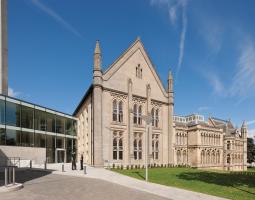
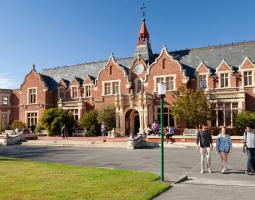
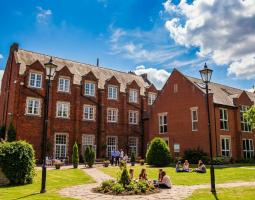
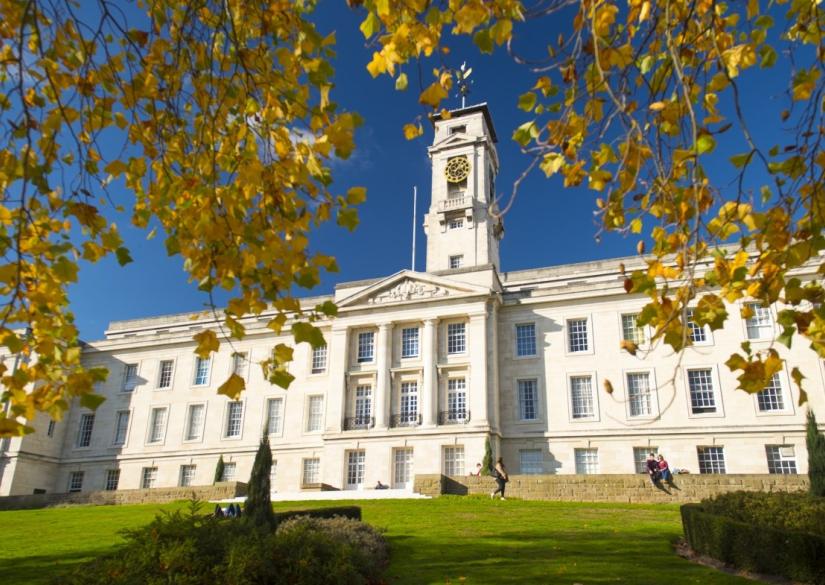
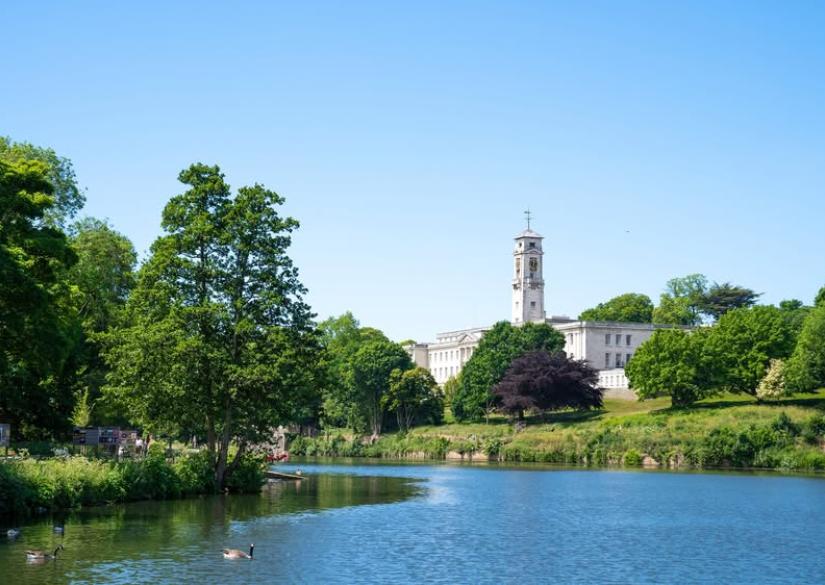
The University of Nottingham’s infrastructure spans three campuses with academic buildings, residences, sports facilities, and administrative services. University Park, the largest campus, contains the University Life Center and modern equipment. Sutton Bonington, the third campus, has a rural setting and houses facilities for biological and veterinary disciplines.
Facilities include athletic venues, swimming pools, playgrounds, courts, a medical center, a library, shops, campus cafes, and an art center at University Park. Building plans provide accessibility details such as room numbers, accessible entrances and restrooms, elevators, ramps, and automatic doors. University sports facilities host local school events and national and international competitions.
Admission dates and extra charges
The academic year runs from September to June and has two semesters:
- Autumn semester: September–December,
- Spring semester: January–June.
Examinations are held at the end of each semester. Undergraduate students typically finish their studies in June. Some postgraduate research students continue working through the summer.
Additional costs beyond tuition may include:
- Accommodation and meals,
- Books, stationery, and specialist academic supplies,
- Tutoring, mentoring, and language classes,
- Student club membership fees and some extracurricular activities,
- Health insurance required for international students,
- Personal expenses.
Enrolment process
Admission depends on the program, study level, applicant status, entry requirements, application deadlines, and available start dates. Undergraduate applications may use UCAS. Applications include academic transcripts, English-language test results, a personal statement, references, and a portfolio where required. Application fees may apply.
The admissions office acknowledges applications and issues conditional or unconditional offers. An interview, aptitude test, entrance examination, or another assessment may form part of the decision. Enrollment requires acceptance of the offer and confirmation of a place. Financial arrangements may include a deposit or partial or full tuition payment.
Accommodation applications, residence check-in, and campus induction form part of preparation for arrival and the start of studies. Visa, travel, and insurance arrangements depend on the applicant’s circumstances.
Perspectives
The University of Nottingham ranks third among UK universities most frequently targeted by the country’s leading graduate employers and has remained in the top 10 for more than a decade, according to The Graduate Market report 2025 by High Fliers Research. The university reports that more of its graduates enter highly skilled employment than graduates of any other UK university and that it held the leading position for six years. Major employers named by the university include JP Morgan, ASOS, Unilever, PepsiCo, Walt Disney Company, GSK, and Deloitte. Graduates work in senior positions in their fields.
Graduate success is also reflected in the Olympic medalists who competed at the 2012 Games in London:
- Canoe athletes Etienne Stott and Tim Bailey won British Olympic gold medals in the men’s C-2 slalom,
- David Florence earned silver in the men’s C-2 slalom,
- Chris Bartley won silver with his rowing team,
- Ann Panter earned bronze with the women’s field hockey team.
Entry requirements, how to apply, what is required to enrol
Before direct entry to a bachelor’s program, international students may need to complete a one-year preparatory course. Applicants should provide a complete secondary-school certificate, academic records, and personal documents such as a passport, health insurance, and a visa or residence permit. The university’s normal minimum is BBC at A Level or an equivalent qualification for undergraduate entry and BCC for foundation programs, although most programs set higher requirements. Individual schools may also require particular results in relevant subjects at GCSE, A Level, or an equivalent examination.
English-language evidence may include IELTS from 5.5 or an equivalent qualification. Published ranges include IELTS 6.0–7.0, PTE Academic 65–76, and TOEFL iBT 80–100. The required IELTS score is generally 6.0 for bachelor’s programs and 7.0 for postgraduate study, with requirements varying by program and study level. Applicants without the required level of English may be offered a pre-sessional summer course.
- Personal documents, including a passport, visa or residence permit, and health insurance,
- A preparatory-course certificate, bachelor’s degree, or master’s diploma in a related field, together with academic records,
- English-language test results meeting the selected program’s standard,
- A motivation letter covering the applicant’s interest in the subject, achievements, goals, and ambitions,
- Relevant professional or volunteer experience for vocational programs where applicable,
- A portfolio or demonstration of applied professional skills for certain specialized subjects.
Applicants to taught postgraduate programs normally need a good first degree with at least second-class honors or an equivalent qualification. Relevant personal, professional, and educational experience may also be considered. PhD and other doctoral applicants normally need at least Class 2 Division I Honors or an equivalent qualification, while MPhil and other research master’s programs normally require at least second-class honors.
Scholarships University of Nottingham
A range of financial support is available, including awards for international students. Scholarships may cover part of a program’s cost or other expenses, and the university annually recognizes strong academic, athletic, creative, and extracurricular achievement.
- Tuition loans and maintenance loans for undergraduate students,
- Postgraduate loans and employer-funded postgraduate education,
- State support grants and the University of Nottingham Core Bursary,
- Sports and international scholarships, including the Americas Undergraduate Excellence Award, Americas Postgraduate Excellence Award, and International Sporting Excellence Awards,
- Research grants from councils, foundations, trusts, and charities,
- Paid studentships and doctoral training opportunities.
Literature and references
-
University of Nottingham — Wiki

-
University of Nottingham — THE - Times Higher Education
-
University of Nottingham — U.S. News & World Report L.P.
-
University of Nottingham guide: Rankings, open days, fees and accommodation — mail online
-
Sunday Times Good University Guide names both Nottingham universities in Midlands top 10
Institution on the map
Residence permits, citizenship and other services
- Guardianship services during the studies
- Student supervision
Review about University of Nottingham
Recommendations on when to apply
| Language courses, schools and children's language camps | Primary and secondary education - private schools | Preparation programmes for entering universities - higher education | Higher education (after completing accredited programs A-level, IB, High School) - Bachelor, Master, MBA |
| - we recommend to apply 6-9 months before the start of the course (some camps and schools offer discounts for early booking or for lengthy study programs) - there are some very popular and high demand children's camps, where the applications need to be submitted 1 year in advance (in particular Switzerland , Great Britain , USA , Canada , Austria) | - we recommend to apply one year before the start of the training program, - some schools have a specific time frame (September-November - please specify an individual school) - some schools require tests in several stages (UKISET, internal tests of the school: English, mathematics, logics, subjects, interview, some require a personal visit) | - we recommend to apply one year before the start of the program, - for Foundation and Pathway programs, IELTS and TOEFL certificates are usually required, respectively | - recommended submission one year before the start of the program, - the deadline normally closes in January, for TOP HEIs and, as a rule, in March in other universities - for a bachelor, a Foundation or Pathway preparatory program a completed A-level, IB, High School + IELTS / TOEFL are required - for Masters you need a graduated higher education, in some cases you need a pre-Masters program - MBA requires completed higher education, work experience preferably at least 2-3 years, etc. |